What Is the Boiling Point of Water? Complete Guide
Updated on | Water science explained
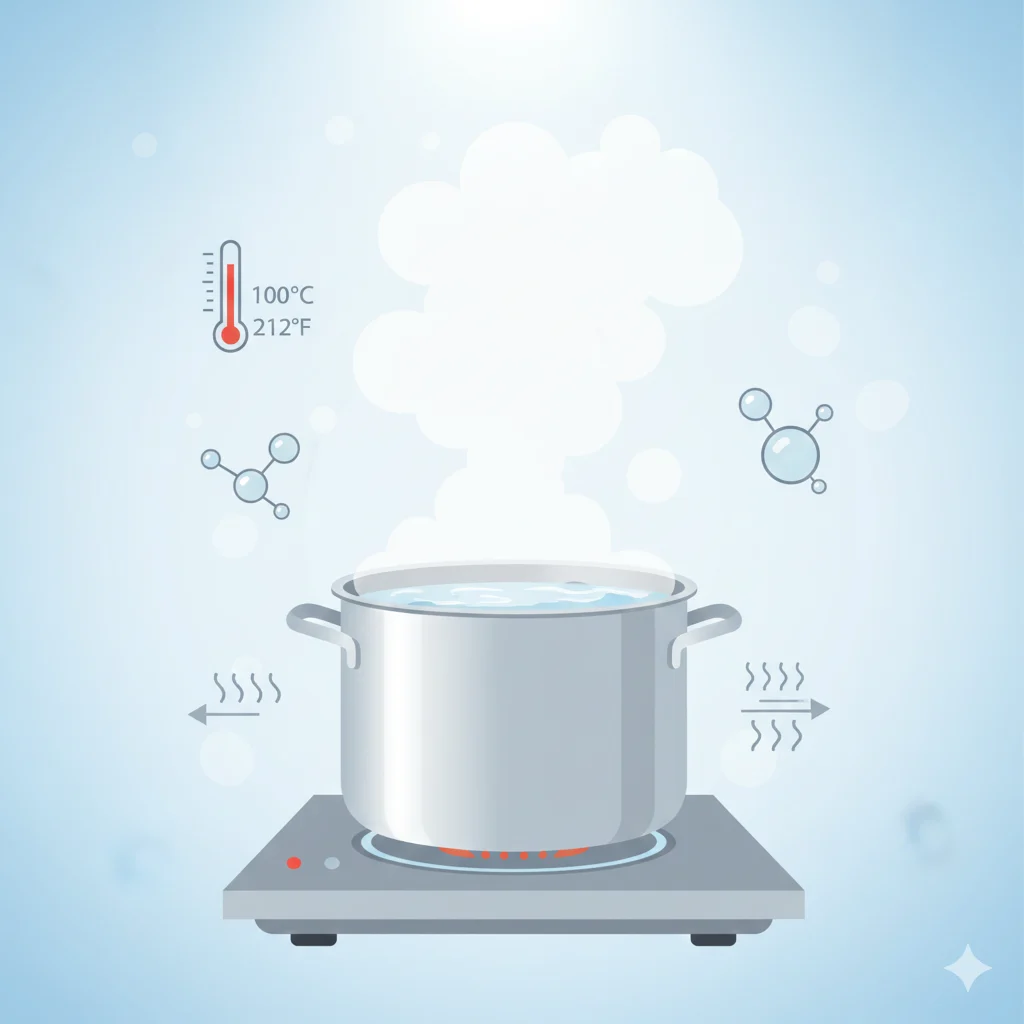
Quick Answer: The boiling point of pure water at standard atmospheric pressure (1 atm) is 100°C (212°F). However, altitude, air pressure, and impurities like salt can raise or lower this temperature.
- Standard boiling point: 100°C (212°F)
- Affected by: altitude, pressure, impurities
- Used in: cooking, distillation, sterilization, science
Water’s boiling point is one of the most important concepts in science, cooking, and daily life. From preparing meals to sterilizing tools to understanding weather patterns, knowing the temperature at which water boils and what changes that temperature helps us make better decisions. This guide breaks down everything you need to know in a simple and practical way.
What Is the Standard Boiling Point of Water?
At sea level and under 1 atmosphere (101.3 kPa) of pressure, pure water boils at:
- 100°C
- 212°F
This happens when water molecules gain enough energy to change from liquid to gas, and their vapor pressure equals the surrounding air pressure.
Factors That Affect the Boiling Point of Water
- Atmospheric Pressure: Lower pressure means water boils at a lower temperature. Higher pressure increases the boiling point.
- Altitude: Higher altitudes have lower pressure, causing water to boil sooner (at a cooler temperature).
- Impurities (Salt, Minerals): Dissolved substances increase the boiling point this is called boiling point elevation.
- Purity of Water: Distilled water boils at a consistent temperature due to its lack of impurities.
Boiling Point of Water at Different Altitudes
| Location / Elevation | Boiling Point (°C) | Boiling Point (°F) |
|---|---|---|
| Sea Level (0 ft) | 100°C | 212°F |
| Denver, CO (~5,000 ft) | 95°C | 203°F |
| Mount Everest (~29,000 ft) | 70°C | 158°F |
Everyday Uses of Water’s Boiling Point
- Cooking: Boiling, steaming, and adjusting recipes at high altitudes.
- Brewing: Water temperature affects coffee and tea extraction.
- Sterilization: Boiling water kills bacteria and viruses.
- Distillation: Turning water into vapor and back into liquid for purity.
- Science Experiments: Demonstrating heat, pressure, and molecular changes.
Related Guides
- How to Make Distilled Water
- What Is Still Water?
- Is Sparkling Water Good for You?
- How Long Can You Go Without Water?
FAQs
Does altitude affect the boiling point?
- Yes the higher the altitude, the lower the boiling point due to decreased air pressure.
Does salt raise the boiling point?
- Yes, impurities like salt increase the boiling point slightly.
Is boiling water enough to purify it?
- Boiling kills most bacteria and viruses, but does not remove chemicals or salts.
Why does boiling take longer at high altitudes?
- Because water boils at a lower temperature, meaning it’s not as hot and cooks food more slowly.