The best water for coffee is clean, chlorine-free tap water with a moderate mineral content, about 150 parts per million of total dissolved solids. For most homes that means filtered tap water, not distilled and not straight from a very hard tap. That 150 figure is the target in the Specialty Coffee Association of America’s 2009 brewing water standard, and it is what we aim for when we brew at home.
Tea follows the same logic with one twist: hard water leaves the thin film you sometimes see floating on a cup of black tea. Below is what we use for both, the numbers behind it, and how to check your own water in a minute.
What is the best water for coffee?
Filtered tap water is our pick for most kitchens. A basic carbon filter, such as a pitcher, removes the chlorine taste and smell, and leaves the calcium and magnesium that coffee needs to taste full.
The SCAA’s 2009 standard, as reproduced in its Water Quality Handbook, sets these targets for brewing water:
| Property | Target | Acceptable range |
|---|---|---|
| Total dissolved solids (TDS) | 150 mg/L | 75 to 250 mg/L |
| Calcium hardness | 68 mg/L (4 grains) | 17 to 85 mg/L |
| Total alkalinity | at or near 40 mg/L | – |
| pH | 7.0 | 6.5 to 7.5 |
| Sodium | at or near 10 mg/L | – |
| Total chlorine | 0 mg/L | – |
One honest caveat: the SCA’s current documents sit behind a membership wall, and some sources quote wider ranges. We use the 2009 figures because they are the most widely reproduced, and because the target, about 150 mg/L, lines up with what we taste.
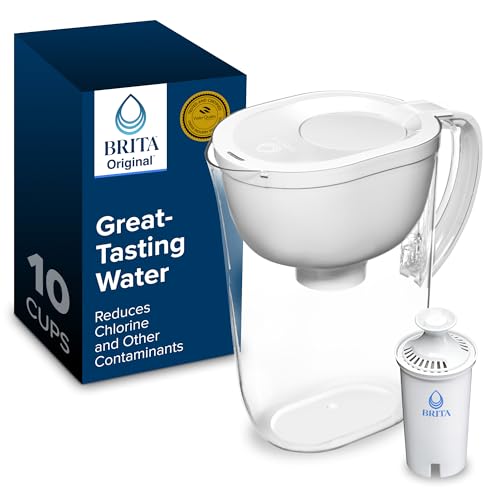
Brita Large 10 Cup Water Filter Pitcher, Includes 1 Filter, Bright White | WQA and NSF/ANSI Certified, Reduces Chlorine, Copper, Mercury & Cadmium, Lasts 2 Months, Household Essential
- The BPA-free Everyday water pitcher with filter holds 10 cups of water, enough to fill 3 24-ounce reusable water bottles; Product reservoir and lid may vary
- Get great-tasting water without the waste; by switching to Brita, you can save money and replace 1,800 single-use plastic water bottles* a year; *16.9 oz water;**Based on IRI data;***vs. tap
- This space efficient Brita pitcher fits perfectly on refrigerator shelves, features an easy-fill locking lid and is easy to pour; Height 10.47"; Width 5.59"; Length/Depth 10.94"; Weight 2.29 pounds
- Brita is the #1 water filter** reducing chlorine (taste & odor), Mercury, Copper, Zinc and Cadmium; always get cleaner***
- Compatible with Longlast and Standard water filters; for the freshest tasting water, replace your Longlast filter after 120 gallons or approximately every 6 months or Standard filter after 40 gallons or approximately every 2 months
As an Amazon Associate we earn from qualifying purchases.
Should I use distilled or purified water in my coffee maker?
No, not on its own. Distilled water has almost no dissolved minerals, so it sits far below the 75 mg/L floor in the table above, and coffee brewed with it tastes flat to us.
Machine makers say the same thing for a different reason. KitchenAid’s support pages say distilled water makes coffee grounds swell and slows the flow, leading to “bitter, over-extracted coffee or possible brew basket overflow,” and that it can slowly deteriorate the coffee maker’s hot water tube. For its espresso machines, KitchenAid is blunter: “Distilled water or mineral water can damage the Espresso Machine. Do not use either to brew espresso.” Keurig’s setup guide also advises against distilled and reverse osmosis water.
If you want full control, the coffee-enthusiast route is to start with distilled water and add a measured mineral packet back. Third Wave Water, for example, sells sticks that you add one per gallon of distilled or reverse osmosis water. We think that is worth it for pour-over hobbyists, and overkill for a drip machine.
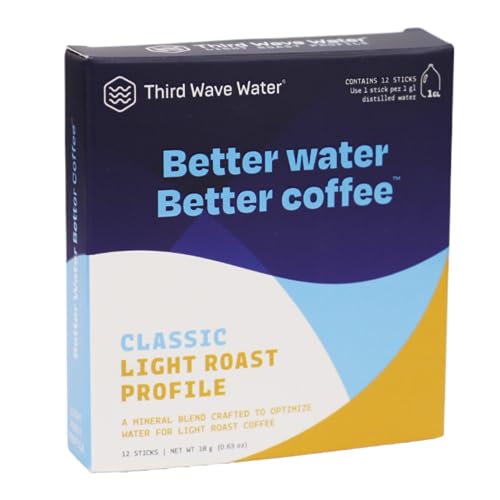
Third Wave Water Classic Light Roast For Brewing The Best Coffee, Classic Profile, 12 Single Gallon Sticks, As Seen On Shark Tank
- PRODUCES 12 GALLONS- Each package is packed with value offering the ability to make up to 12 gallons of minerally enhanced brewing water which allows you to enjoy more coffee.
- MINERALLY ENHANCED- After research and much trial and error we’ve found the optimized minerals for the perfect water for your coffee. We’ve added Magnesium for added sweetness and Calcium for a balanced body that we’re sure you will appreciate.
- SCIENTIFIC FLAVOR- Our blend of minerals has allowed us to enhance the flavor profile of coffee with a low alkalinity which provides a highlighted natural acidity of your favorite coffee bean.
- AS SEEN ON SHARK TANK – Find out why 5 out of 5 Sharks prefered Third Wave Water over tap water.
- WORKS WITH ALL MACHINES- Third Wave Water is a perfect addition to all types of coffee applications. Whether you choose to use a Keurig, Percolator, Moka Pot, French Press, Drip coffee maker, or Thermal coffee maker, Third Wave Water can help enhance the flavor.
As an Amazon Associate we earn from qualifying purchases.
Is spring water good for coffee?
Sometimes. Spring water varies a lot by brand, because each spring has its own minerals. A low-to-moderate mineral spring water near the 150 mg/L target works well. A high-mineral one will taste chalky in coffee, and KitchenAid warns against mineral water in its espresso machines.
Check the label or the bottler’s water quality report for “total dissolved solids.” Our ranking of mineral water brands lists the mineral content of the common ones.
Does filtered water make coffee taste better?
Yes, if your tap water smells or tastes of chlorine. Chlorine is the one item the coffee standard wants at zero, and a carbon filter is the cheap fix.
Filtering does not soften very hard water much, though. Pitcher filters such as Brita’s are certified for chlorine taste and odor and some metals, not for hardness. If your water is hard, read the next section first. Our guide to tap water that smells like chlorine explains why it is there in the first place.
What type of water is best for making tea?
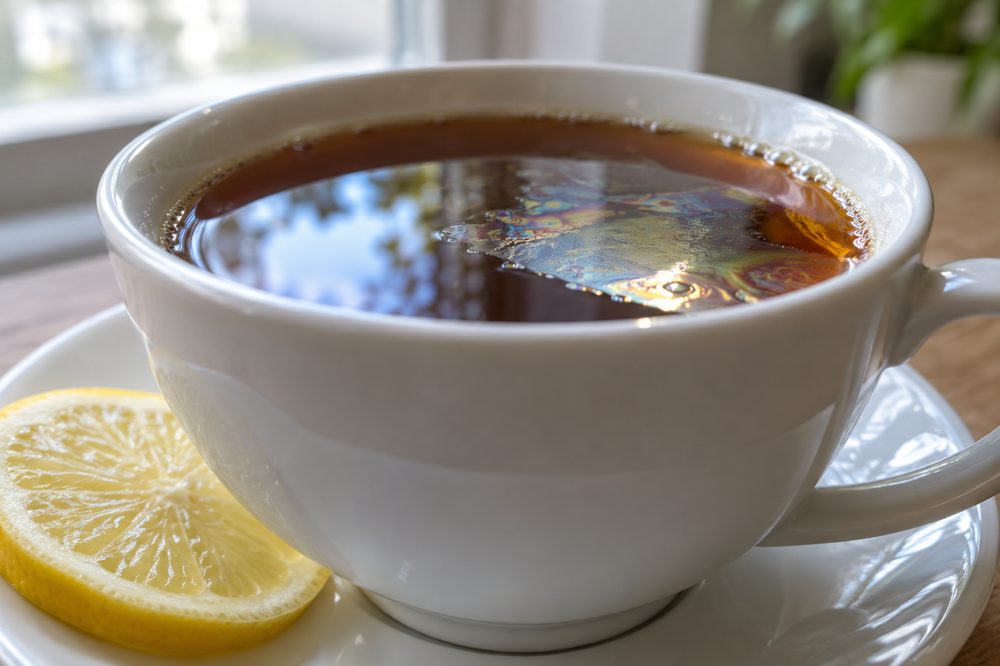
Fresh, filtered water that is soft to moderately hard. Hard water is the main problem for tea, because it causes the film that forms on top of the cup.
A 1993 study in Nature by Spiro and Jaganyi at Imperial College London traced that “tea scum” to calcium carbonate in the water reacting with compounds in the tea. A 2023 study from ETH Zurich in the journal Soft Matter went further and found that black tea formed a film about 20 nanometers thick at every water hardness level the team tested, and that green tea brewed in hard water formed brittle films. Earlier work from the same group, reported in 2021, found that adding an acid such as lemon weakened the film.
So for tea, we filter, we avoid very hard water, and we add a slice of lemon to black tea when the film bothers us. There is no official water standard for tea, so that is our recommendation, not a rule.
Can I use tap water for tea?
Yes, if it does not smell of chlorine and is not very hard. We run the tap until it is cold before filling the kettle, and we start with fresh water each time rather than reboiling what sat in the kettle overnight. If you are unsure about your city’s water, our page on whether tap water is safe to drink in your city shows how to read your local report.
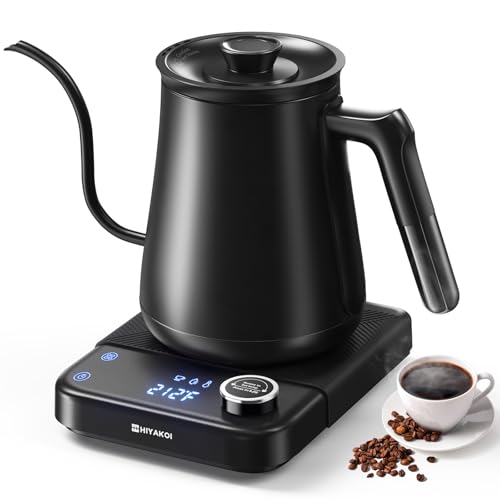
Gooseneck Electric Kettle HIYAKOI with ±1℉ Temperature Control, Pour Over Kettle for Coffee & Tea, 1200W Rapid Heating, Stainless Steel Water Boiler with 12H Keep Warm & Built-in Timer, 0.8L/27oz
- ±1°F Precise Temp Control: Our kettle features a precise digital thermostat with ±1℉ accuracy, allowing for custom temperature settings. Achieve optimal extraction for the nuanced flavors of Light Roast Coffee, Oolong, Green, or Black Tea.
- Precision Pouring for Perfect Brews: The HIYAKOI gooseneck kettle electric features a specially designed spout that ensures total control over water flow, delivering accuracy for consistent, flavorful pour-over coffee and tea.
- 1200W Rapid Heating: Boils 0.8L of water in just 5 minutes. Spend less time waiting and more time enjoying your favorite coffee or tea. Features Auto Shut-Off and Boil-Dry Protection for maximum safety. Note: Please do not touch the stainless steel body during heating.
- 12-Hour Keep Warm & Timer: Maintains your target temp for up to 12 hours. The built-in brew timer on the LED screen helps you track extraction for a consistent taste every time.
- 100% Stainless Steel Interior: Made with food-grade 304 stainless steel (lid and spout included). No plastic contact with hot water, ensuring pure taste and long-lasting durability.
As an Amazon Associate we earn from qualifying purchases.
How do you know if your water is right for coffee and tea?
Check two numbers: hardness and TDS. Your water utility publishes both in its annual water quality report. The U.S. Geological Survey classifies hardness, measured as calcium carbonate, like this:
| USGS hardness class | mg/L as calcium carbonate | What we do for coffee and tea |
|---|---|---|
| Soft | 0 to 60 | Filter for chlorine. Good for tea. |
| Moderately hard | 61 to 120 | Filter for chlorine. Close to the coffee target. |
| Hard | 121 to 180 | Filter, and expect film on black tea. |
| Very hard | more than 180 | Use bottled low-mineral water or distilled water with minerals added. |
A cheap TDS meter gives you the second number in seconds. It measures everything dissolved, not just hardness, so treat it as a quick check rather than a full test. For context, the EPA’s secondary standard for drinking water sets TDS at 500 mg/L, a level tied to taste and deposits rather than safety. The coffee target of 150 is well below that. Our guide to the ideal TDS level for drinking water covers the rest.
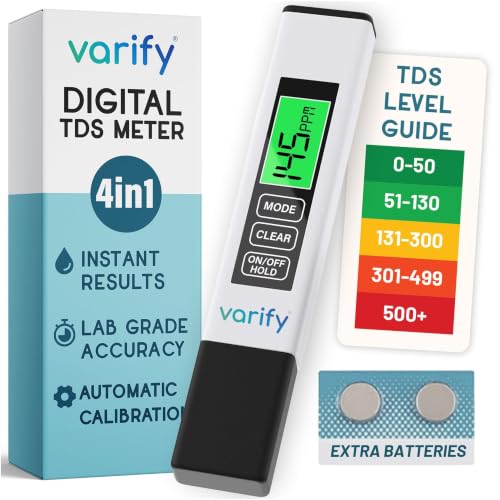
Varify TDS Meter Digital Water Tester for Drinking Water Instant 4in1 Test | Extra Batteries Included, Instant Results, Aquarium Safe, Hydroponics Ready, Portable Design, Accurate PPM Readings
- 4-IN-1 WATER TESTING METER – Measures Total Dissolved Solids (TDS), Electrical Conductivity (EC), and temperature in °C/°F. Compact digital design suitable for testing drinking water, aquariums, hydroponics, and RO systems.
- FAST DIGITAL READINGS – Provides TDS, EC, and temperature measurements within seconds. Features one-button operation and a backlit LCD display for clear visibility during testing.
- DURABLE DESIGN WITH TITANIUM SENSOR – Built with a titanium alloy probe, auto-off function, and compact handheld design. Suitable for home, aquarium, hydroponic, and water filtration testing.
- INCLUDES DIGITAL TDS GUIDE – Comes with a downloadable reference guide to help interpret TDS readings for common water applications such as drinking water and aquariums.
- COMPLETE TESTING KIT – Includes TDS meter, batteries, and a quick-start guide so you can begin testing right away.
- USA-BASED BRAND SUPPORT – Backed by dedicated customer support. Designed for reliable everyday water testing.
As an Amazon Associate we earn from qualifying purchases.
If your water lands in the very hard band, our guide on how to remove hardness from drinking water lays out the options.
Frequently asked questions
What is the best water for coffee?
Clean, chlorine-free water with about 150 mg/L of total dissolved solids, the target in the SCAA’s 2009 brewing standard. For most homes, filtered tap water gets close.
Should I use distilled water in my coffee maker?
Not on its own. It makes flat coffee, and KitchenAid says it can over-extract coffee and wear the machine’s hot water tube. Add minerals back, or use filtered tap water.
Is spring water good for coffee?
A low-to-moderate mineral spring water works well. High-mineral water tastes chalky, and KitchenAid advises against mineral water in its espresso machines.
What is the best water for tea?
Fresh, filtered water that is soft to moderately hard. Hard water causes the film on black tea, which research traces to calcium carbonate reacting with the tea.
Why does my tea have a film on top?
Calcium carbonate from hard water reacts with compounds in the tea and forms a thin film. Softer or filtered water, or a little lemon, reduces it.
What TDS is best for coffee?
The SCAA’s 2009 standard targets 150 mg/L, with an acceptable range of 75 to 250 mg/L. A TDS meter shows where your water falls.
Sources
- Specialty Coffee Association of America, 2009 brewing water standard, as reproduced in the SCAA Water Quality Handbook.
- KitchenAid product help: “Why is Using Distilled Water in a Coffee Maker Not Recommended?” and espresso machine water guidance.
- Keurig brewer setup guide: water recommendations.
- Spiro and Jaganyi, “What causes scum on tea?”, Nature 364 (1993).
- Giacomin and colleagues, “Tea film formation in artificial tap water,” Soft Matter (2023), ETH Zurich.
- U.S. Geological Survey, water hardness FAQ (hardness classes).
- U.S. EPA, Secondary Drinking Water Standards: Guidance for Nuisance Chemicals.