What Actually Differentiates Plain Sparkling Waters
Three variables account for nearly all the difference in how these taste:
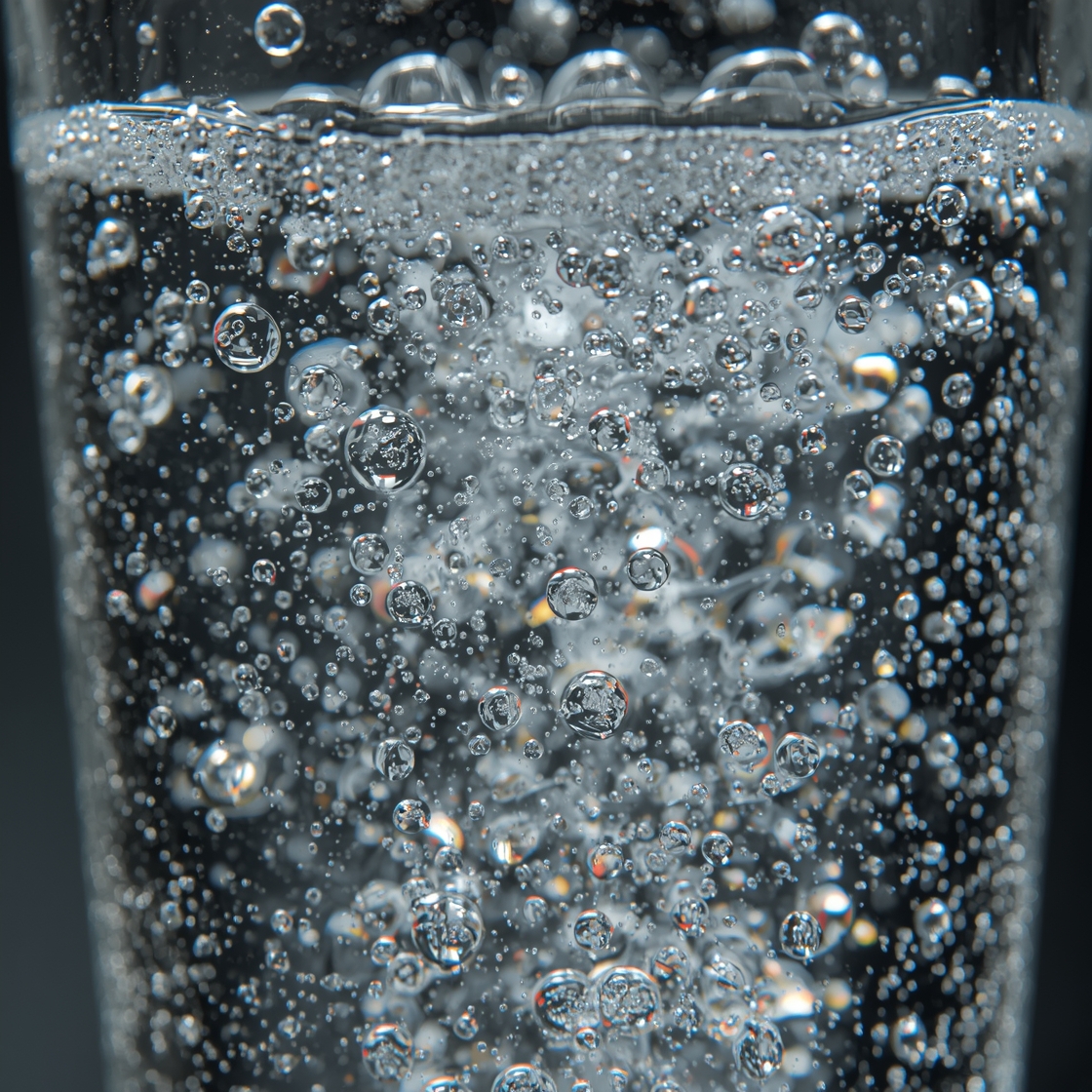
Carbonation intensity. This is the most immediately noticeable difference. Topo Chico and Gerolsteiner sit at the aggressive end — small, sharp bubbles that produce a genuine bite. Perrier is firm but rounder. San Pellegrino is noticeably softer, which is why it works well with food rather than competing with it. Purified seltzers like La Croix Pure and Waterloo sit in the middle with a lighter, more neutral fizz.
Mineral content (TDS). Total dissolved solids is the single number that best predicts how a plain sparkling water will taste. The scale runs from purified seltzers at under 50 mg/L to Gerolsteiner at 2,488 mg/L — a fifty-fold difference. Under 500 mg/L reads as light and clean; 500 to 1,500 mg/L has noticeable mineral character; above 1,500 mg/L is assertive enough that some people find it too much. Our guide to mineral vs purified water covers the difference in processing.
Packaging. Glass preserves carbonation and adds nothing to the taste. Aluminum chills faster and is infinitely recyclable but has a lining. PET plastic is cheapest and lightest, though it should be kept out of heat.
Mineral Analysis: The Actual Numbers
These figures come from official source analyses. Values are per litre.
| Brand | TDS | Calcium | Magnesium | Bicarbonate | Sodium |
|---|---|---|---|---|---|
| Gerolsteiner | 2,488 mg/L | 348 mg | 108 mg | 1,816 mg | 118 mg |
| San Pellegrino | ~1,109 mg/L | 166 mg | 49 mg | 252 mg | 31 mg |
| Perrier | ~456 mg/L | 150 mg | 3.9 mg | 420 mg | 9.6 mg |
| La Croix Pure | Under 50 mg/L | Trace | Trace | Trace | 0 mg |
| Waterloo Original | Under 50 mg/L | Trace | Trace | Trace | 0 mg |
Two things stand out. First, magnesium is what separates San Pellegrino from Perrier — 49 mg versus 3.9 mg per litre, more than a tenfold gap, while their calcium is nearly identical (166 vs 150 mg). Calcium alone tells you very little. Second, Gerolsteiner’s bicarbonate content of 1,816 mg/L is what gives it a balanced rather than harsh finish despite the extremely high mineral load — bicarbonate buffers the taste.
For context on daily intake: one litre of Gerolsteiner supplies roughly 35% of recommended daily calcium and about 27% of daily magnesium, with zero calories.
The Best Plain Sparkling Waters
1. San Pellegrino — Best Overall
Italian natural mineral water at 1,109 mg/L TDS with 166mg calcium and 49mg magnesium per litre — enough to give it body without Gerolsteiner’s intensity. Moderate, fine bubbles that are added at bottling rather than captured at source. It also tested at 0.31 ppt PFAS, the lowest of any natural mineral water in Consumer Reports’ analysis. Sodium sits at 31 mg/L. The glass bottles are the format to buy. If you drink sparkling water with meals, this is the default recommendation.
2. Gerolsteiner — Most Mineral-Rich
German mineral water from the volcanic Eifel region, and the mineral heavyweight of the category at 2,488 mg/L TDS — roughly double San Pellegrino and five times Perrier. Calcium 348mg, magnesium 108mg, bicarbonate 1,816mg per litre, pH 5.9-6.0. Firm carbonation. Sodium is 118 mg/L, the highest of the mineral waters here. This is the strongest choice if you actively want minerals rather than tolerate them; it is also the one most likely to taste like “too much” if you’re used to seltzer.
3. Topo Chico — Most Aggressive Carbonation
The sharpest, most persistent bubbles of any mainstream brand, sourced from a spring in Monterrey, Mexico. That intensity is why it dominates as a cocktail mixer. Sodium is 15mg per 12 fl oz serving per Coca-Cola’s published nutrition panel, roughly a tenth of the FDA’s 140mg “low sodium” threshold — the saline note you taste is mineral character, not a heavy sodium load. The caveat that does matter is PFAS: Topo Chico measured 9.76 ppt in a single sample in Consumer Reports’ 2020 test, the highest of the 47 products examined, and a later CR retest reported an average of 3.9 ppt. Those two figures use different sampling bases and no independent retest has confirmed the lower one. See our full breakdown on whether Topo Chico is bad for you.
4. Perrier — The Classic Middle Ground
Firm bubbles with CO2 captured at source and reinjected at bottling. At 456 mg/L TDS it is the lightest of the mineral waters here, with 150mg calcium but only 3.9mg magnesium and 9.6mg sodium per litre. Tested at 1.10 ppt PFAS — above the 1 ppt precautionary guideline but well below any enforceable limit. A safe pick when you want mineral water character without Gerolsteiner’s intensity. Full data in our Perrier PFAS investigation.
5. La Croix Pure — Best Zero-Sodium Purified
The unflavored version of La Croix, and a genuinely different product from the flavored line. Purified water, zero sodium, TDS under 50 mg/L, lighter carbonation, completely neutral taste. Tested at 1.16 ppt PFAS. If you want sparkling water that tastes like nothing but bubbles, this is the benchmark.
6. Waterloo Original — The Clean Alternative
Purified base, zero sodium, zero sweeteners, moderate fizz. No published independent PFAS data exists for Waterloo — see our guide on what is actually known about Waterloo and PFAS. Nutritionally identical to La Croix Pure; choose on flavor preference and availability.
Side-by-Side Comparison
| Brand | Carbonation | TDS | Sodium | PFAS (ppt) |
|---|---|---|---|---|
| San Pellegrino | Moderate | 1,109 mg/L | 31 mg/L | 0.31 |
| Topo Chico | Aggressive | Mineral, saline | 15mg/12oz | 9.76 single sample; 3.9 retest avg |
| Gerolsteiner | Firm | 2,488 mg/L | 118 mg/L | No data |
| Perrier | Firm | 456 mg/L | 9.6 mg/L | 1.10 |
| La Croix Pure | Light | Under 50 mg/L | Zero | 1.16 |
| Waterloo Original | Moderate | Under 50 mg/L | Zero | No data |
Topo Chico’s sodium is quoted per 12 fl oz from Coca-Cola’s published nutrition panel, as the brand reports it that way rather than per litre.
Which Plain Sparkling Water Should You Buy?
San Pellegrino. Softer bubbles complement food rather than competing with it, and 1,109 mg/L TDS adds body without overwhelming.
Topo Chico or Gerolsteiner. The aggressive carbonation gives you the bite that makes it feel like a real substitute.
Gerolsteiner. One litre supplies roughly 35% of daily calcium and 27% of daily magnesium at zero calories.
La Croix Pure or Waterloo Original — both zero sodium. Among mineral waters, Perrier at 9.6 mg/L is lowest.
Where to Buy
The picks that cover the main use cases, plus the option that lets you set carbonation yourself. As an Amazon Associate we earn from qualifying purchases; it never affects our rankings.
S.Pellegrino (Glass)
1,109 mg/L TDS with 166mg calcium and 49mg magnesium per litre, moderate fine bubbles, and the lowest tested PFAS of any natural mineral water.
Gerolsteiner Sparkling
348mg calcium and 108mg magnesium per litre from Germany’s volcanic Eifel region. One litre covers about 35% of daily calcium needs.
La Croix Pure
Completely neutral purified sparkling water. Zero sodium, TDS under 50 mg/L, light fizz — sparkling water that tastes like nothing but bubbles.
SodaStream Terra
Set your own carbonation level and skip bottled entirely. Pair with a filter and you control both fizz and water quality at a fraction of the cost.
Frequently Asked Questions
What is the best plain sparkling water?
San Pellegrino is the strongest all-round choice — 1,109 mg/L TDS with 166mg calcium and 49mg magnesium per litre, moderate fine bubbles, glass packaging, and the lowest tested PFAS of any natural mineral water at 0.31 ppt. For maximum minerals, Gerolsteiner at 2,488 mg/L. For zero-sodium neutrality, La Croix Pure.
Which sparkling water has the most minerals?
Gerolsteiner, by a wide margin — 2,488 mg/L total dissolved solids, with 348mg calcium, 108mg magnesium and 1,816mg bicarbonate per litre. That is roughly double San Pellegrino and five times Perrier.
Which sparkling water has the most bubbles?
Topo Chico and Gerolsteiner have the sharpest, most persistent carbonation of the mainstream brands. Perrier is firm but rounder. Purified seltzers like La Croix Pure and Waterloo are noticeably lighter.
What is the difference between San Pellegrino and Perrier?
Magnesium, mainly. San Pellegrino has 49mg per litre versus Perrier’s 3.9mg — more than a tenfold gap — while calcium is similar at 166 vs 150mg. San Pellegrino is roughly twice as mineralised overall (1,109 vs 456 mg/L TDS). Perrier’s CO2 is captured at source; San Pellegrino’s is added at bottling.
Is mineral water better than seltzer?
Neither is better — they serve different preferences. Mineral water contributes calcium and magnesium that add body and character. Seltzer is purified and neutral, and generally tests lower for PFAS because the purification removes contaminants along with minerals.
Does plain sparkling water hydrate as well as still water?
Yes. Carbonation does not meaningfully affect hydration. Plain sparkling water with no added sugar or sweeteners hydrates equivalently to still water.
Which plain sparkling water has the least sodium?
La Croix Pure and Waterloo Original are zero-sodium purified waters. Among mineral waters, Perrier is lowest at 9.6 mg/L, followed by San Pellegrino at 31 mg/L. Gerolsteiner is highest at 118 mg/L. Topo Chico reports 15mg per 12 fl oz on Coca-Cola’s nutrition panel — every option here is far below the FDA’s 140mg “low sodium” threshold per serving.
What does TDS mean on a water label?
Total dissolved solids — the combined weight of all minerals dissolved in a litre of water, measured in mg/L. Under 500 tastes light and clean, 500 to 1,500 has noticeable mineral character, and above 1,500 is assertive. Purified seltzers sit under 50 mg/L; Gerolsteiner is 2,488 mg/L.
Is glass or can better for sparkling water?
Glass preserves carbonation best and adds nothing to the taste, which is why premium mineral waters use it. Aluminum chills faster and is infinitely recyclable but has an interior lining. For pure taste, glass wins.
Why does unflavored sparkling water taste different between brands?
With no flavoring to mask anything, the two variables that remain are carbonation intensity and mineral content. A 2,488 mg/L water like Gerolsteiner tastes noticeably heavier than a purified seltzer under 50 mg/L, and sharper carbonation reads as more assertive on the palate.
Related Reading
- Healthiest Sparkling Water for Daily Drinking — the broader guide across flavored and unflavored
- Top Zero-Calorie Sparkling Waters — Flavored Options
- Sparkling Water Without PFAS — All 12 Tested Brands
- Is Topo Chico Bad for You?
- Waterloo Sparkling Water PFAS
- Low-Sodium Sparkling Water Brands Ranked
- Bottled Water Brands & PFAS Ranked
- Mineral vs Purified Water
References & Sources
- Gerolsteiner Brunnen — official source mineral analysis (TDS 2,488 mg/L, Ca 348, Mg 108, HCO3 1,816, Na 118, pH 5.9-6.0)
- San Pellegrino and Perrier — official label mineral analyses
- Topo Chico — Coca-Cola published nutrition panel (15mg sodium, 40mg calcium, 0 calories per 355mL / 12 fl oz)
- Consumer Reports — bottled water PFAS testing (2020)
- EPA — PFAS National Primary Drinking Water Regulation (April 2024)
- FDA — sodium in your diet, daily intake guidance (“low sodium” = 140mg or less per serving)
The Bottom Line
Plain sparkling water comes down to three choices: how much bite you want in the bubbles, how much mineral content you want, and how much PFAS data matters to you. San Pellegrino wins the all-round pick — 1,109 mg/L TDS with meaningful magnesium, moderate fine carbonation, glass packaging, and the lowest tested PFAS reading of any mineral water at 0.31 ppt. Choose Gerolsteiner if you want maximum minerals and can handle 2,488 mg/L, or Topo Chico if carbonation intensity is the priority and you are comfortable with its PFAS record. Choose La Croix Pure or Waterloo if you want zero sodium and a completely neutral profile. And if you drink enough of it that cost matters, a SodaStream paired with a good filter beats every bottled option on both price and control.