 PFAS forever chemicals” width=”1200″ height=”800″ loading=”lazy” decoding=”async” style=”width:100%;height:auto;border-radius:12px;” />
Sparkling Water PFAS Rankings — Every Brand With Published Data
These figures come from Consumer Reports’ 2020 testing of 47 bottled waters, which measured 30 different PFAS compounds. Lower is better.
| Rank | Brand | Total PFAS (ppt) | Type |
|---|---|---|---|
| 1 | Sparkling Ice Black Raspberry | None detected | Flavored seltzer |
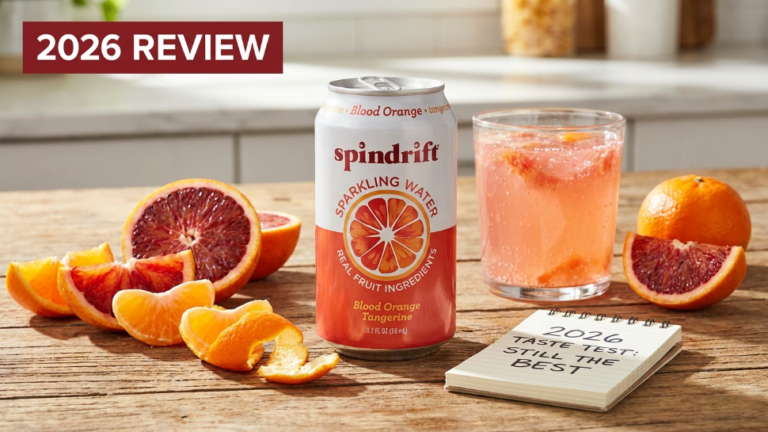
| 2 | Spindrift | 0.19 | Purified + real fruit |
| 3 | San Pellegrino | 0.31 | Natural mineral |
| 4 | Dasani Sparkling | 0.37 | Purified |
| 5 | Schweppes | 0.58 | Seltzer |
| 6 | Perrier | 1.10 | Natural mineral |
| 7 | La Croix | 1.16 | Purified |
| 8 | Canada Dry | 1.24 | Seltzer |
| 9 | Poland Spring Sparkling | 1.66 | Spring |
| 10 | Bubly | 2.24 | Purified |
| 11 | Topo Chico | 9.76 → ~3.9 after upgrades | Natural mineral |
| 12 | Polar | 6.41 | Seltzer |
Why Sparkling Water Tests Higher Than Still Water
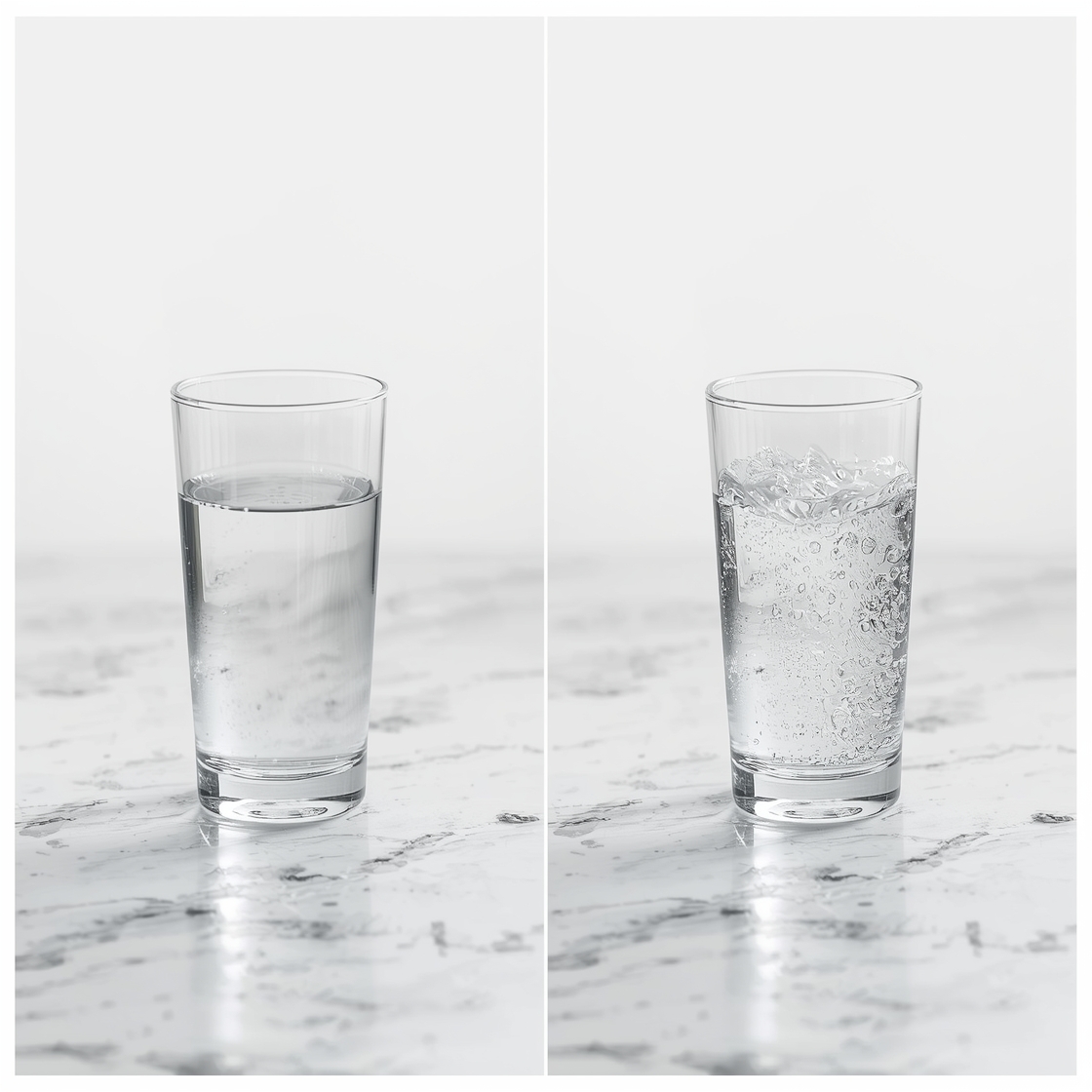
This is the finding that surprises most people. In the same Consumer Reports analysis, only two of 35 still waters exceeded 1 ppt, while seven of twelve carbonated waters did.
Researchers have suggested two likely explanations:
- The carbonation process itself — additional equipment, tubing, and processing steps create more opportunities for contact with PFAS-containing materials.
- Source water — many sparkling waters, particularly natural mineral waters, come from specific springs whose aquifers may carry higher background PFAS levels than a municipal supply that has already been treated.
There is a related pattern worth understanding: purified waters generally test lower than spring and mineral waters. Spring water is bottled close to its natural state, so whatever is in the aquifer travels into the bottle. Purified water goes through reverse osmosis or similar treatment, which strips out most PFAS. The counterintuitive result is that the “more natural” product is often the less filtered one. Our guide to mineral vs purified water covers the processing difference in detail.
How to Read These Numbers
A ppt figure only means something relative to a threshold, and there are several in play:
- 4 ppt — EPA’s 2024 legally enforceable limit for PFOA and PFOS individually in drinking water. Only Polar exceeds this among tested sparkling waters.
- 5 ppt single / 10 ppt multiple — International Bottled Water Association standard. All tested brands comply.
- 1 ppt — Environmental Working Group’s precautionary guideline. Seven of twelve tested sparkling waters exceed this.
Context that should temper any alarm: the FDA surveyed 197 bottled water products in April 2025 and found zero samples exceeding EPA limits. The category as a whole is compliant with enforceable standards. The debate is about whether those standards are conservative enough.
The Batch Variance Problem
Single-sample testing has a real limitation that gets lost when these numbers circulate as brand rankings. Consumer Reports tested one sample per brand. PFAS levels can vary across production batches, flavors, and bottling locations.
Spindrift demonstrates this clearly: it measured 0.19 ppt in 2020, but a different flavor retested at 2.62 ppt in 2025. Both readings are likely accurate for the specific samples tested. They are not contradictory — they show that a brand-level number is an approximation, not a fixed property.
In our own tracking of this dataset, the practical implication is this: use these rankings to identify general tiers rather than treating a 0.31 vs 0.37 gap as meaningful.
- Tier 1 (under 0.6 ppt): Sparkling Ice, Spindrift, San Pellegrino, Dasani, Schweppes
- Tier 2 (1.0–2.5 ppt): Perrier, La Croix, Canada Dry, Poland Spring, Bubly
- Tier 3 (above 3 ppt): Topo Chico, Polar
- Unknown: Waterloo, Liquid Death, AHA, Essentia, Smartwater
A brand consistently in Tier 1 is a reasonable choice; obsessing over decimal differences within a tier is not.
Beyond PFAS: Sodium, Caffeine, Enamel and Packaging
PFAS is the reason most people end up on this page, but it is not the only thing that separates one can of sparkling water from another. Four things come up repeatedly, and the answers are not the same across brands.
Sodium: seltzers have none, mineral waters do
This is the single biggest split in the category. Seltzers are carbonated purified water, so they carry 0 mg of sodium — that covers La Croix, Bubly, Waterloo, Polar and Spindrift. True mineral waters carry whatever their spring carries: Gerolsteiner runs about 118 mg/L, and Topo Chico is also naturally mineralised.
Neither is “better.” If you are on a sodium-restricted diet, a seltzer is the safer default. If you are drinking sparkling water partly for minerals, the sodium comes with the calcium and magnesium you actually want — Gerolsteiner carries roughly 348 mg of calcium and 108 mg of magnesium per litre alongside it.
Caffeine: only in specific product lines, not in the sparkling water itself
Plain sparkling water never contains caffeine. Confusion comes from brands that sell caffeinated drinks under the same name and in near-identical packaging:
- Waterloo — caffeine-free across every flavour, with no caffeinated line at all.
- Spindrift — the standard sparkling line is caffeine-free. The Half Tea Half Lemonade line is the exception.
- Liquid Death — the core Mountain Water and soda-flavoured sparkling lines have none. The Iced Tea line carries 30–40 mg a can, and the Sparkling Energy line carries 200 mg, about the same as a strong coffee. The cans look almost identical, so read the line name, not the brand.
- La Croix, Bubly, Polar — caffeine-free.
Dental enamel: the acidity is real but modest
Carbonation dissolves into carbonic acid, which puts sparkling water at roughly pH 4.5–5.5. That is acidic enough to soften enamel over time, but it sits far below sugary soda or citrus juice on the erosion scale, and plain unflavoured sparkling water is the mildest of the group.
What matters more than the drink is the pattern of drinking it. Sipping a can slowly across an entire afternoon keeps enamel in contact with acid the whole time; drinking it with a meal, when saliva flow is already high, neutralises it quickly. Flavoured versions with added citric acid are more erosive than plain.
Packaging: glass is the only fully inert option
Glass bottles shed no microplastics and have no internal lining at all, which makes them the cleanest vessel available — this is part of why Gerolsteiner and San Pellegrino in glass sit at the top of the rankings above. Aluminium cans are lined with an epoxy or polyester polymer; modern brands use BPA‑NI (non‑intent) linings, so bisphenol exposure is low, but a lining still exists. Plastic bottles are the weakest of the three for both microplastics and heat exposure.
Where to Buy Sparkling Water Without PFAS: Lowest-Tested Options
The brands that tested cleanest, plus the approach that beats brand-switching entirely. As an Amazon Associate we earn from qualifying purchases; it never affects our rankings.
Spindrift Sparkling Water
Lowest measured PFAS of any sparkling water in the 2020 analysis, and made with real squeezed fruit rather than “natural flavors.” Zero sodium.
S.Pellegrino (Glass)
The only natural mineral water to test under 0.35 ppt. Glass bottles, real minerality, and the lowest reading of any mineral sparkling water.
Sparkling Ice Black Raspberry
The only product in the analysis with no detectable PFAS at all. A flavored seltzer with sweeteners, so check the label if that matters to you.
SodaStream + PFAS Filter
Carbonate your own filtered water. A certified filter removes 94-99% of PFAS — far more than any brand switch — and you control the input.
The approach that actually solves this: Brand-switching moves you between 0.19 and 2.24 ppt. A reverse osmosis system certified to NSF/ANSI 58 removes 94-99% of PFAS from your tap water, at roughly $0.05 per liter versus $1.50-4.00 for bottled. See our best reverse osmosis systems and PFAS filter guide.
Frequently Asked Questions
Does sparkling water have caffeine?
Plain sparkling water contains no caffeine. Waterloo, La Croix, Bubly and Polar are caffeine-free across every flavour. The exceptions are separate product lines sold under the same brand: Liquid Death’s Iced Tea line carries 30 to 40 mg a can and its Sparkling Energy line carries 200 mg, and Spindrift’s Half Tea Half Lemonade line is caffeinated. The cans look almost identical, so check the line name rather than the brand.
How much sodium is in sparkling water?
Seltzers contain 0 mg of sodium because they are carbonated purified water, which covers La Croix, Bubly, Waterloo, Polar and Spindrift. Natural mineral waters carry whatever their spring carries: Gerolsteiner runs about 118 mg per litre, alongside roughly 348 mg of calcium and 108 mg of magnesium. Topo Chico is also naturally mineralised.
Is sparkling water bad for your teeth?
Carbonation forms carbonic acid, putting sparkling water at roughly pH 4.5 to 5.5. That is acidic enough to soften enamel over time, but far milder than sugary soda or citrus juice. How you drink it matters more than what you drink: sipping one can across an afternoon keeps enamel in contact with acid continuously, while drinking it with a meal lets saliva neutralise it quickly. Flavoured versions with added citric acid are more erosive than plain.
Which sparkling water has no PFAS?
Sparkling Ice Black Raspberry showed no detectable PFAS in Consumer Reports’ 2020 testing. Spindrift (0.19 ppt) and San Pellegrino (0.31 ppt) tested lowest among brands with measurable levels. No sparkling water can be guaranteed permanently PFAS-free, since levels vary by batch.
Why does sparkling water have more PFAS than still water?
In the same analysis, seven of twelve carbonated waters exceeded 1 ppt versus only two of 35 still waters. Researchers suggest the carbonation process introduces additional equipment contact points, and that mineral and spring sources used for sparkling water may carry higher background levels than treated municipal supplies.
Does Waterloo sparkling water have PFAS?
There is no published independent PFAS measurement for Waterloo — it was not included in the Consumer Reports test. Waterloo uses purified rather than spring water, and purified waters generally test lower, but no verified number exists.
Is 1 ppt of PFAS dangerous?
It is below every enforceable standard. The EPA’s 2024 limit is 4 ppt for PFOA and PFOS individually. The 1 ppt figure is the Environmental Working Group’s precautionary guideline, which is stricter than any regulation currently in force.
Has Topo Chico fixed its PFAS problem?
Partly. After testing at 9.76 ppt in 2020 — the highest of any brand — Coca-Cola upgraded filtration and current estimates place it around 3.9 ppt, below EPA’s 4 ppt limit but still above most competitors.
Should I stop drinking sparkling water because of PFAS?
For most people, no. The FDA’s 2025 survey of 197 bottled waters found none exceeding EPA limits. If you drink several servings daily and want to reduce cumulative exposure, choose a brand that tested under 1 ppt, or filter and carbonate your own water for a result you can actually verify.
How many sparkling water brands have actually been tested for PFAS?
Twelve carbonated products were included in Consumer Reports’ 2020 analysis, which remains the most comprehensive independent dataset. Many popular brands including Waterloo, Liquid Death, AHA, and Essentia have no published independent measurement at all.
Do PFAS levels change between batches of the same brand?
Yes. Spindrift measured 0.19 ppt in 2020 but a different flavor retested at 2.62 ppt in 2025. Levels vary by production batch, flavor, and bottling location, so treat any single figure as a snapshot rather than a permanent brand property.
Related Reading
- Healthiest Sparkling Water for Daily Drinking — the broader guide covering sodium, additives, packaging and teeth
- Bottled Water Brands & PFAS — Every Major Brand Ranked
- Is Topo Chico Bad for You? PFAS & Sodium
- Waterloo Sparkling Water PFAS — What’s Actually Known
- La Croix PFAS Testing — Full Investigation
- Perrier PFAS Testing (1.10 ppt)
- Gerolsteiner Review — Minerals, PFAS & Taste
- Poland Spring PFAS Testing (1.66 ppt)
- Best Water Filters That Actually Remove PFAS
- Best Reverse Osmosis Systems
References & Sources
- Consumer Reports — bottled water PFAS testing (2020), 47 products, 30 PFAS compounds
- EPA — PFAS National Primary Drinking Water Regulation (April 2024)
- FDA — bottled water PFAS survey (April 2025), 197 products
- Environmental Working Group — 1 ppt precautionary guideline
- International Bottled Water Association — voluntary PFAS standard
The Bottom Line
If you want the lowest-PFAS sparkling water available on shelves, the data points to Spindrift, San Pellegrino, and Sparkling Ice — all tested under 0.35 ppt, with Sparkling Ice showing none detected. Perrier and La Croix sit just above 1 ppt, which is fine by every enforceable standard but above the strictest precautionary guideline. Topo Chico and Polar are the two to reconsider if PFAS is your primary concern. But the honest answer is that brand-switching has limits. Half the market has never been independently tested, single samples don’t capture batch variance, and the difference between the best and worst tested brands is smaller than what a certified home filter removes. If truly sparkling water without PFAS is your goal, filtering your own water is the only route that gives you a number you can actually trust.