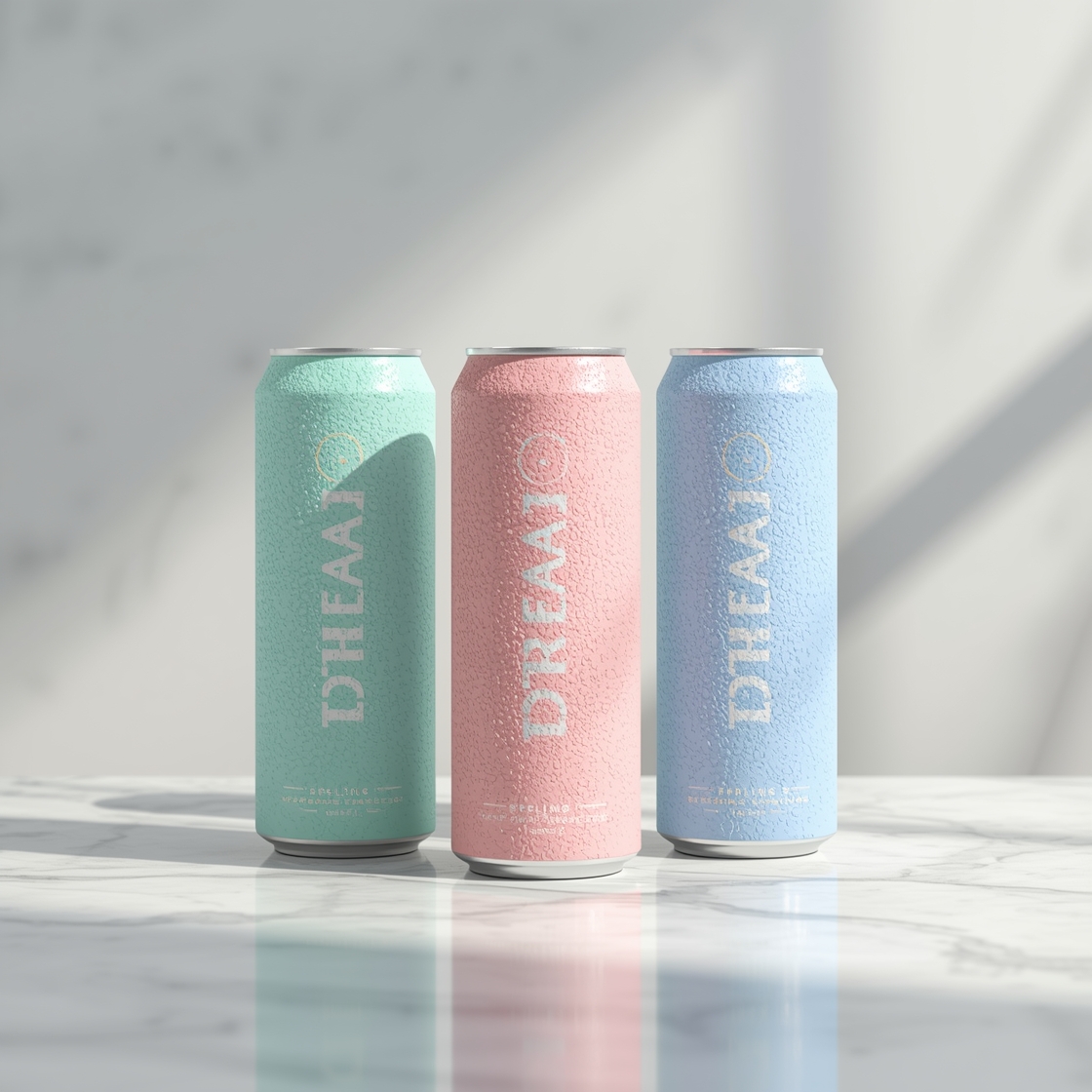
 sparkling water dual-flavor cans in pastel colors on a marble surface” width=”1200″ height=”800″ loading=”lazy” style=”width:100%;height:auto;border-radius:12px;” />
What Is AHA — and What Made It Different
AHA launched in November 2019 as Coca-Cola’s answer to the explosive growth of the sparkling water category that La Croix had largely created and Bubly (PepsiCo) had quickly entered. It wasn’t Coca-Cola’s first attempt — Dasani Sparkling had launched and been discontinued the same year after failing to gain traction, leaving the company looking for a more distinctive entry.
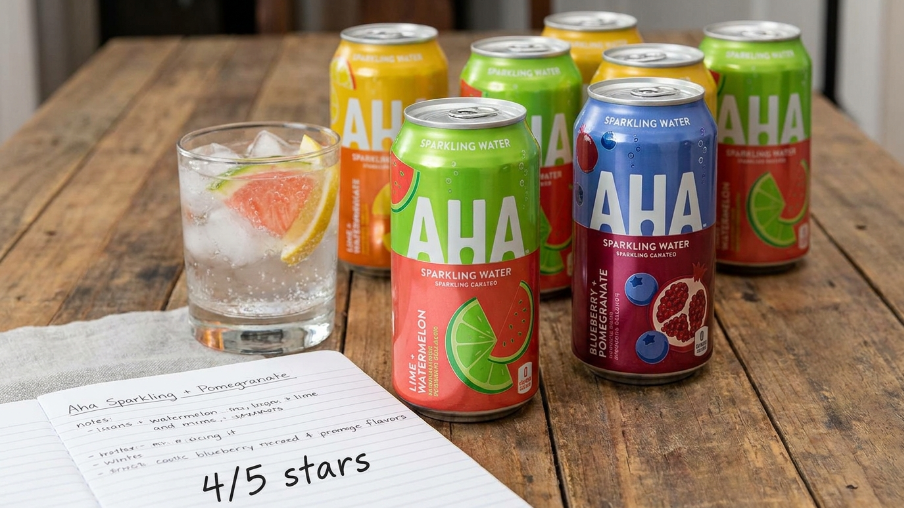
AHA’s distinguishing concept was the dual-flavor combination — pairing two complementary flavors in a single can rather than the single-note approach used by virtually every competitor. The eight launch flavors were: Apple + Ginger, Black Cherry + Coffee, Blueberry + Pomegranate, Citrus + Green Tea, Lime + Watermelon, Orange + Grapefruit, Peach + Honey, and Strawberry + Cucumber.
Coca-Cola’s development process was unusually thorough for the category — the company started with 800 potential flavor combinations, surveyed thousands of consumers including both existing sparkling water drinkers and people who had tried competitors without finding one they liked, and consulted retailers throughout a six-month development window before finalizing the launch lineup.
Two of the launch flavors — Citrus + Green Tea and Black Cherry + Coffee — contained approximately 30mg of caffeine, a genuinely novel feature that neither La Croix nor Bubly offered at the time. This caffeinated option positioned AHA as a potential bridge product between sparkling water and energy drinks for light caffeine users.
Ingredients — What’s in the Can
AHA’s formula is straightforward: carbonated water and natural flavors. Zero calories, zero sugar, zero sodium, zero sweeteners across the standard (non-caffeinated) lineup. No artificial flavors are used — Coca-Cola has been explicit about this positioning since launch.
The zero-sodium claim is worth highlighting specifically: AHA is sodium-free, which puts it in the same category as La Croix and Bubly but distinguishes it clearly from mineral waters like Topo Chico (~15mg sodium per 12oz) or San Pellegrino (~33-47mg per 250ml). For anyone managing sodium intake closely, AHA is a legitimate zero-sodium option.
No independent third-party PFAS testing data specifically for AHA has been widely published — similar to the data gap noted for several other Coca-Cola purified water brands in our comprehensive PFAS brand guide. As a purified municipal water product, AHA’s filtration process should theoretically produce low PFAS levels, but this remains an inference rather than a confirmed measurement.
What Happened to AHA — The Honest Decline Story
This is the part of the AHA story that most reviews skip entirely. Understanding it matters if you’re trying to figure out why your local grocery store has fewer AHA flavors than it used to — or none at all.
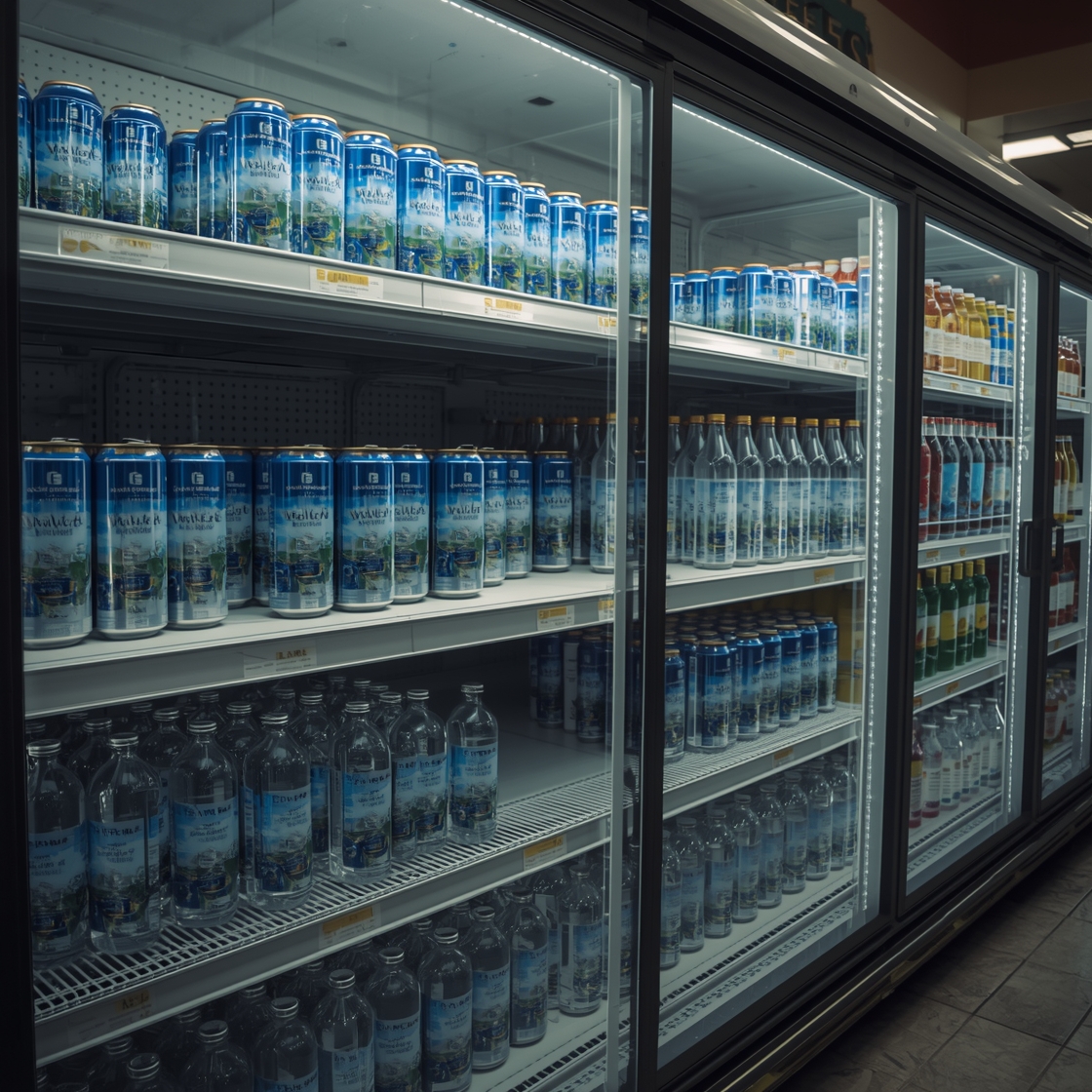 sparkling water shelf with empty gaps showing reduced AHA distribution” width=”1200″ height=”800″ loading=”lazy” style=”width:100%;height:auto;border-radius:12px;” />
2019-2022: Strong launch and growth. Coca-Cola invested heavily in marketing for AHA through 2021 and 2022, treating it as a genuine strategic priority in the fast-growing sparkling water category. Early reception was largely positive — PEOPLE magazine’s launch taste test ranked Lime + Watermelon as the standout flavor, “a shocking winner” that outperformed testers’ initial expectations.
2023: The caffeinated flavors disappear. At some point before early 2023, Coca-Cola discontinued both caffeinated flavors — Citrus + Green Tea and Black Cherry + Coffee. This removed AHA’s most distinctive competitive feature relative to La Croix and Bubly, neither of which offered caffeinated variants.
Q1 2023: Sales fall 42%. According to Beverage Digest, AHA’s sales dropped sharply in the first quarter of 2023. The combination of losing the caffeinated flavors and broader competitive pressure in an increasingly crowded sparkling water category appears to have hit AHA harder than its competitors. For context, La Croix remained category leader with roughly 14% of sparkling water category sales during this period.
2023: Publix delists AHA. Grocery chain Publix removed AHA from its shelves entirely — a significant blow given Publix’s strong presence in AHA’s southeastern US distribution footprint.
2023-2026: Coca-Cola redirects investment. Rather than fighting to rebuild AHA’s market position, Coca-Cola has shifted strategic attention and marketing investment toward Topo Chico — including the 2023 launch of Topo Chico Sabores (fruit juice and herbal extract-infused premium sparkling water), which Coca-Cola executives have stated they believe could reach $1 billion in annual sales. AHA has continued to exist but with a smaller footprint, reduced flavor count, and a lower marketing profile.
The Dual-Flavor Concept — Does It Actually Work?
AHA’s core differentiator deserves a fair evaluation independent of the business story. Does combining two flavors in one can actually produce a better drinking experience than the single-flavor approach used by competitors?
The evidence from consumer taste tests and reviews suggests: sometimes, and it depends heavily on the specific pairing.
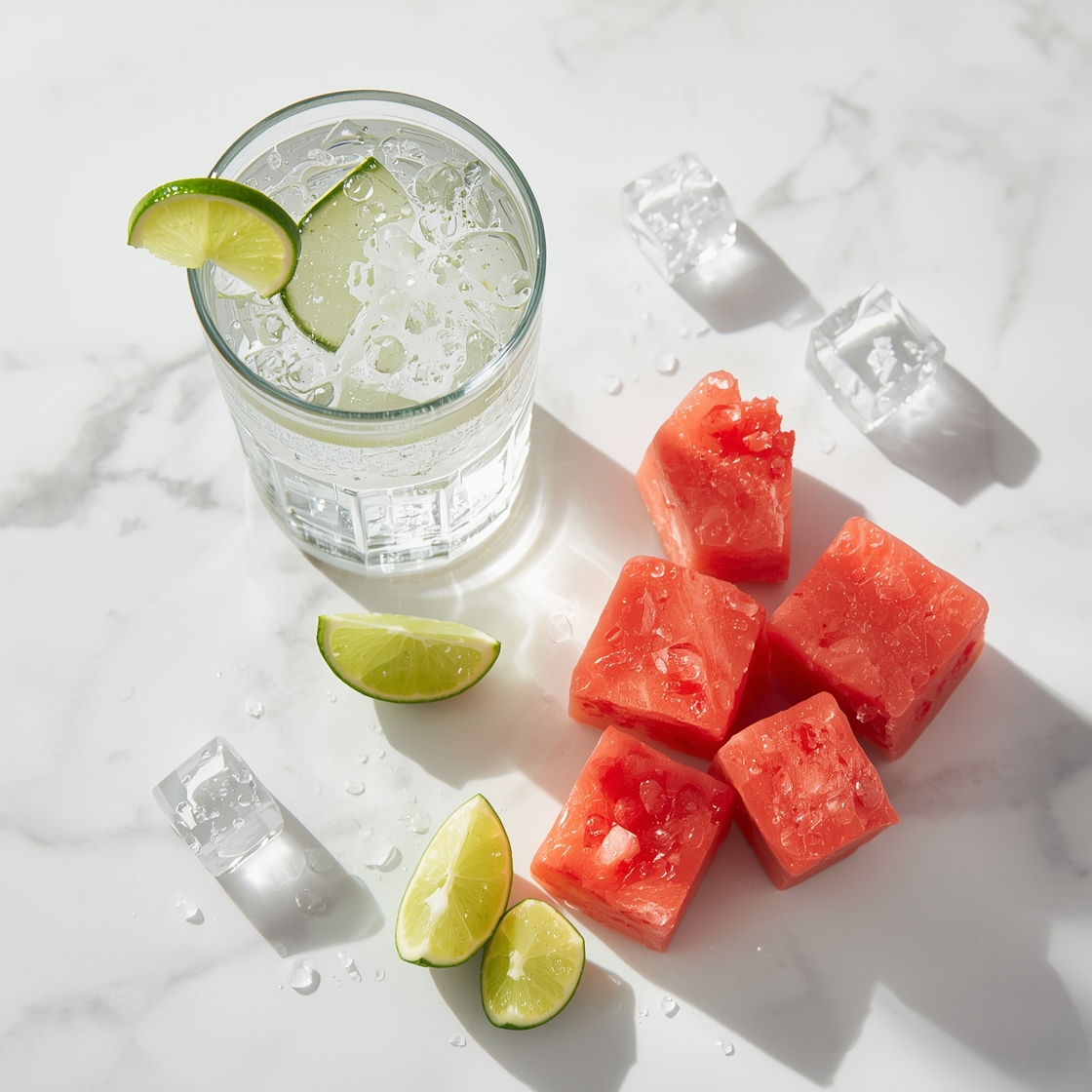
Lime + Watermelon is the clearest success — reviewers consistently describe it as more balanced and less cloying than single-note watermelon sparkling waters from other brands, with the lime cutting the watermelon’s sweetness in a way that single-flavor versions can’t replicate.
Blueberry + Pomegranate similarly benefits from the pairing — pomegranate alone can taste thin or overly tart in sparkling water, while blueberry alone can taste flat. Together they create more complexity than either delivers solo.
Some pairings were less successful. Early taste-test coverage noted that subtler combinations like Apple + Ginger or Peach + Honey sometimes resulted in one flavor dominating completely, with testers unable to detect the secondary flavor at all — “we couldn’t really smell the honey ingredient in the Peach + Honey profile,” as one early review noted.
The caffeinated pairings drew more mixed reactions specifically around the coffee and tea elements feeling disconnected from the fruit notes rather than integrated — part of why those flavors may have underperformed before their discontinuation.
Current AHA Flavors — What’s Actually Available Now
Based on current Coca-Cola product listings, the AHA lineup has been streamlined to approximately five core flavors, down from the original eight:
1. Lime + Watermelon — The Standout
The most consistently praised flavor since launch. Balanced sweetness, refreshing finish, works well chilled or over ice. If you try only one AHA flavor, this is the recommended starting point.
2. Blueberry + Pomegranate — The Complex Berry Option
Marketed with messaging around “renewed sense of hydration.” Delivers more flavor depth than most single-note berry sparkling waters on the market, including some Bubly and Waterloo berry options.
3. Pineapple + Passionfruit — The Tropical Pairing
A newer addition to the surviving lineup. Tropical and bright, comparable in concept to Waterloo’s Pineapple Coconut but with a more tart passionfruit edge rather than coconut’s creaminess.
4. Blackberry + Lemon — The Citrus-Berry Combo
Pairs blackberry’s deeper berry notes with lemon’s brightness. A reasonable alternative if Blueberry + Pomegranate isn’t available in your area.
5. Peach + Honey — The Subtle One
Survived the lineup cuts despite early reviews noting the honey element doesn’t come through strongly. Worth trying with tempered expectations about flavor complexity.
AHA vs Competitors — Honest Comparison
| Factor | AHA | La Croix | Bubly |
|---|---|---|---|
| Owner | Coca-Cola | National Beverage Corp | PepsiCo |
| Flavor concept | Dual-flavor pairs | Single flavor | Single flavor |
| Current flavor count | ~5 (reduced from 8) | ~21 | 18+ |
| Sodium | Zero | Near-zero | Near-zero |
| Caffeine option | Discontinued | None | Bubly Bounce |
| Retail availability | Reduced since 2023 | Wide | Wide |
| PFAS independent data | None published | 1.16 ppt (2020) | 2.24 ppt (2020) |
The honest takeaway: AHA’s product concept is genuinely interesting and its best flavors (Lime + Watermelon, Blueberry + Pomegranate) compete favorably with anything La Croix or Bubly offers. Its weakness isn’t the drink itself — it’s reduced availability and a smaller flavor selection following the 2023 business contraction. If you find AHA at a reasonable price, it’s worth trying; just don’t expect to find it everywhere or in every flavor that once existed.
Who Should Try AHA
Want more complex flavor profiles than single-note sparkling waters offer. Are curious about the dual-flavor concept. Find Lime + Watermelon or Blueberry + Pomegranate appealing on description alone. Are on a strict zero-sodium diet.
Loved the caffeinated flavors — they’re gone. Relied on a specific discontinued flavor like Strawberry + Cucumber or Apple + Ginger. Want guaranteed availability — check stock before planning around AHA specifically.
Want the widest possible flavor selection — La Croix or Bubly offer more variety. Want guaranteed retail availability without checking ahead. Need independent PFAS testing data to make your choice.
Where to Buy AHA (and the Best Alternatives)
Because AHA’s retail availability has shrunk since 2023, Amazon is now one of the most reliable places to find it — especially the standout Lime + Watermelon. If your favorite flavor is gone or out of stock, we’ve included the closest alternatives worth trying. As an Amazon Associate we earn from qualifying purchases; it never affects our verdict.
AHA Lime + Watermelon (18-Pack)
The most-praised AHA flavor and the one to start with. Zero calories, zero sodium, zero sweeteners. The most reliably stocked AHA option online.
AHA Variety Pack
Sample the dual-flavor concept across multiple pairings in one box — the easiest way to find your favorite before committing to a full pack.
Bubly Variety Pack
If AHA is hard to find, Bubly is the closest zero-everything match with 18+ flavors and far wider stock. PepsiCo’s answer to the same category.
Spindrift (Real Fruit)
Lowest tested PFAS (0.19 ppt) and made with real squeezed fruit instead of “natural flavors.” The cleanest flavored sparkling water if you want to trade up.
Frequently Asked Questions
What happened to AHA sparkling water?
AHA’s sales fell 42% in Q1 2023 according to Beverage Digest, following the discontinuation of its caffeinated flavors and Publix delisting the brand from its shelves. Coca-Cola scaled back distribution and marketing investment significantly afterward. The brand still exists with a reduced flavor lineup and lower retail presence than its 2021-2022 peak.
Does AHA sparkling water still have caffeine?
No. AHA originally launched with two caffeinated flavors — Citrus + Green Tea and Black Cherry + Coffee — at approximately 30mg each. Both have been discontinued, removing a key competitive differentiator. The current lineup is entirely caffeine-free.
What makes AHA different from La Croix or Bubly?
AHA’s signature feature is dual-flavor combinations (Lime + Watermelon, Blueberry + Pomegranate) rather than single-note flavors. It’s also zero-sodium like La Croix and Bubly, distinguishing it from mineral waters like Topo Chico.
Is AHA sparkling water healthy?
Yes nutritionally — zero calories, zero sugar, zero sodium, zero sweeteners, just carbonated water and natural flavors. Comparable to La Croix, Bubly, and Waterloo. No published independent PFAS data exists specifically for AHA.
Who owns AHA sparkling water?
Coca-Cola, which launched AHA in November 2019 as a successor to the discontinued Dasani Sparkling. AHA sits within Coca-Cola’s water portfolio alongside Smartwater, Topo Chico, and Dasani.
What were the original AHA flavors?
Eight launch flavors: Apple + Ginger, Black Cherry + Coffee, Blueberry + Pomegranate, Citrus + Green Tea, Lime + Watermelon, Orange + Grapefruit, Peach + Honey, and Strawberry + Cucumber. The lineup has since been reduced to approximately 4-5 flavors following the 2023 sales decline.
Is AHA sparkling water still available in stores?
Yes, but with reduced distribution. Publix delisted AHA in 2023 and Coca-Cola scaled back shelf presence elsewhere. It remains available at Walmart, Target, Kroger, and Amazon, though flavor selection varies significantly by location.
What is the best AHA sparkling water flavor?
Lime + Watermelon is consistently the most praised flavor, including being ranked top in a PEOPLE magazine launch taste test. Blueberry + Pomegranate is frequently cited as the best berry option in the lineup.
Does AHA sparkling water have sodium?
No. AHA is sodium-free across all flavors, distinguishing it from mineral waters like Topo Chico (~15mg per 12oz) and San Pellegrino (~33-47mg per 250ml). Comparable to La Croix and Bubly.
Why did AHA discontinue its caffeinated flavors?
Coca-Cola hasn’t publicly detailed the exact reasoning, but industry reporting suggests the caffeinated flavors underperformed relative to fruit-forward options, leading to lineup simplification. Their removal is cited as a contributing factor to the 2023 sales decline.
Is AHA sparkling water the same as other Aha brands?
No. AHA Sparkling Water specifically refers to Coca-Cola’s flavored sparkling water brand. Always check for Coca-Cola branding and the dual-flavor naming convention (e.g., “Lime + Watermelon”) to confirm you have the correct product.
AHA vs Bubly — which is better?
Both are zero-calorie, zero-sodium, zero-sweetener sparkling waters. AHA’s dual-flavor combinations offer more complex profiles, but Bubly has significantly wider flavor variety (18+ vs ~5) and far more reliable availability following AHA’s distribution cuts. For flavor complexity, AHA edges ahead; for availability, Bubly is the safer choice.
Related Reading
- Bubly Sparkling Water Review
- La Croix and PFAS — Independent Testing Investigation · Perrier PFAS Testing (1.10 ppt) — Full Investigation · Poland Spring PFAS Testing (1.66 ppt) — Full Investigation
- Waterloo Sparkling Water Review
- Topo Chico Review — Coca-Cola’s Mineral Water
- Bottled Water Brands & PFAS — Every Major Brand Ranked
- Healthiest Sparkling Water for Daily Drinking
References & Sources
- AHA Sparkling Water — Official Coca-Cola Product Page
- Food Dive — Coca-Cola Cuts AHA Distribution as Sales Decline (2023)
- Seltzer Nation — Coca-Cola Introduces AHA (2019 Launch Coverage)
The Bottom Line
AHA tells an unusual story in the sparkling water category: a genuinely interesting product concept that struggled commercially despite reasonably positive reception. The dual-flavor approach works particularly well in Lime + Watermelon and Blueberry + Pomegranate — flavor combinations that deliver more complexity than most single-note competitors. But the brand’s 2023 contraction — losing its caffeinated flavors, getting delisted by Publix, and seeing sales drop 42% in a single quarter — means availability and flavor selection are real practical concerns in 2026. If you can find AHA at a reasonable price, the surviving flavors are worth trying — particularly if you’re curious whether the dual-flavor concept lives up to its promise. If reliable availability and maximum flavor selection matter more to you than novelty, La Croix or Bubly remain the safer choice. AHA isn’t a bad sparkling water — it’s a good sparkling water that lost a business battle it might have won with different strategic choices around its caffeinated lineup.