

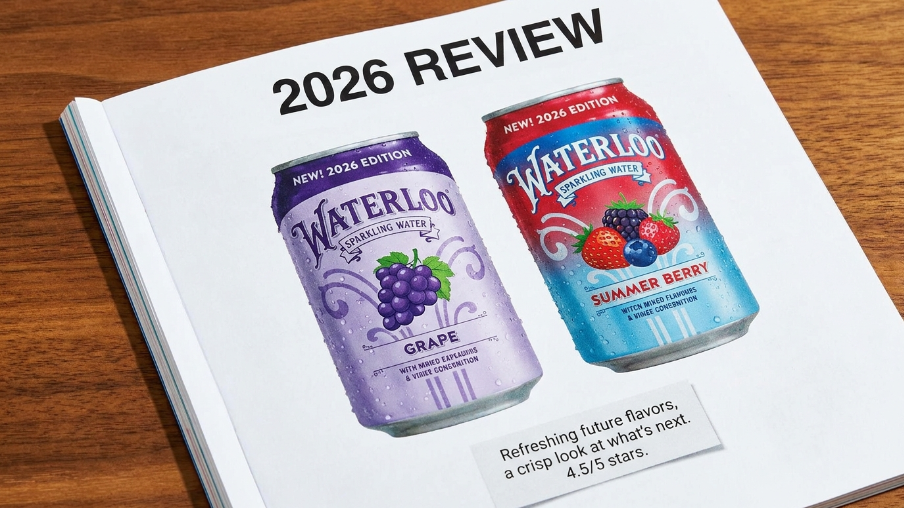
What Makes Waterloo Different — The Independent Brand Story
Waterloo launched in Austin, Texas as a direct challenge to what had become a corporate sparkling water category. By the time Waterloo entered the market, La Croix was owned by National Beverage Corp with national distribution, Bubly was PepsiCo’s answer, AHA was Coca-Cola’s entry, and Topo Chico had been acquired by Coca-Cola. The premium sparkling water aisle had become a battleground for billion-dollar conglomerates.
Waterloo’s positioning was explicitly independent and explicitly about flavor quality. The brand uses Non-GMO Project Verified natural flavors — not just “natural flavors” but flavors that have passed third-party GMO-avoidance verification. They source water locally and distribute regionally where possible (each can sold within approximately 500 miles of its source, per the brand). And they pursued certifications that most sparkling water brands haven’t bothered to get: Whole30 Approved, Certified Gluten-Free, Certified Vegan, Kosher.
For a significant portion of buyers, these certifications aren’t marketing checkboxes — they’re the deciding factor. A Whole30 participant who wants carbonated drinks during a reset, a Kosher household, a vegan who cares about ingredient sourcing — Waterloo clears hurdles that La Croix and Bubly don’t even attempt.
Ingredients and Certifications — What’s Actually Verified
Every Waterloo flavor contains two ingredients: purified carbonated water and Non-GMO Project Verified natural flavors. Zero calories, zero sugar, zero sweeteners, zero sodium — one of the cleaner label profiles of any mainstream sparkling water.
The certifications deserve individual explanation because they’re not all equivalent:
The Butterfly certification requires that all inputs — including the natural flavor extracts — come from non-GMO sources and are verified by a third-party auditor. Waterloo specifies that flavors are derived from vegan sources. Most other sparkling water brands use natural flavors without this verification.
The Whole30 program certifies products that contain no added sugars, sweeteners, alcohol, grains, dairy, or legumes. Waterloo qualifies cleanly — water and plant-derived flavors only. La Croix and Bubly are technically Whole30-compatible but don’t carry official Approval.
Third-party certification confirms no animal products, animal-derived ingredients, or animal testing. Relevant for vegan buyers who want certification rather than assuming. Most sparkling waters are de facto vegan but don’t carry independent verification.
Third-party verification that the product contains no gluten — relevant for celiac and gluten-intolerant consumers who want a certified rather than assumed gluten-free product.
Rabbinical certification confirming compliance with Jewish dietary laws. Relevant for Kosher-observant households and institutions that require certified products rather than unlabeled ones.
BPA Non-Intentional means BPA was not intentionally added to the can lining — the standard for modern aluminum cans. Not unique to Waterloo but worth noting alongside the other certifications.
PFAS Transparency — Honest About What We Know and Don’t
Waterloo was not included in Consumer Reports’ September 2020 PFAS bottled water test — the most widely cited independent dataset for sparkling water PFAS levels. Unlike La Croix (1.16 ppt), Bubly (2.24 ppt), or Topo Chico (9.76 ppt before filtration improvements), there is no publicly available independent third-party ppt measurement for Waterloo.
What we do know:
Waterloo’s official position: Their FAQ states the water undergoes “a robust multi-step filtration process to ensure our locally sourced water is purified and any contaminants are removed.” The brand uses purified (not spring) water, meaning it passes through filtration that would typically capture PFAS compounds, unlike untreated spring sources.
2024 update: A Waterloo representative communicated to consumer health researchers that the company had switched to a “non-chemical alternative” in their production process in 2024 — the specific context was a PFAS-related discussion, suggesting the brand was proactively addressing filtration. The exact nature of this change was not publicly detailed.
The honest limitation: Without published independent third-party PFAS testing, no specific ppt level for Waterloo can be confirmed. For PFAS-conscious buyers who want a number, Waterloo currently can’t provide one in the same way La Croix can point to Consumer Reports’ 1.16 ppt result.
All Waterloo Flavors Ranked — Best to Try First
1. Grape — The Standout That Makes Converts
Waterloo Grape does what no other sparkling water brand has reliably managed: deliver an authentic, genuinely grape-forward flavor without tasting artificial. The grape profile is rich, slightly sweet, and immediately recognizable as the real fruit — not grape candy, not grape juice concentrate, not grape medicine. It’s the single most-cited reason people switch from La Croix to Waterloo, and it’s been the brand’s bestseller since launch. If you haven’t tried Waterloo, start here.
2. Summer Berry — Bold Mixed Berry
A proprietary mixed-berry blend that leans toward blackberry and raspberry. Bold and present without being sweet. Among the best berry sparkling waters on the market alongside Bubly Blackberry. Available widely and consistently, making it a reliable daily option once you’ve tried Grape and want a second regular flavor.
3. Mango — Tropical Done Right
Warm, tropical, and forward — similar profile to Bubly Mango but with slightly stronger carbonation that gives the tropical flavor more backbone. For mango fans choosing between the two, it’s a close call; Waterloo’s version is marginally bolder, Bubly’s slightly smoother.
4. Strawberry — Genuine Fresh Fruit Profile
Fresh, bright strawberry without the medicinal aftertaste that ruins most sparkling water strawberry options. Pairs excellently with the stronger carbonation — the fruit flavor holds up through the bubbles instead of disappearing. Second choice for many Waterloo regulars.
5. Pineapple Coconut — The Unique Entry
No other major sparkling water brand has executed this combination successfully. Waterloo’s Pineapple Coconut captures the tropical combination without veering into sunscreen-scented territory. The coconut is subtle — present but not overwhelming. If you like tropical and want something no one else makes well, this is worth trying.
6. Watermelon — Summer Standard
Bright, melon-forward, refreshing in warm weather. Competitive with Bubly Watermelon — similar profile, slightly stronger carbonation. A reliable warm-weather pick rather than a year-round staple for most drinkers.
7. Cherry Limeade — The Complex Option
A combination flavor that works better than most sparkling water combo attempts. Cherry and lime together create a slightly sweet-tart profile similar to a virgin cocktail. Unique in the Waterloo lineup and in the broader sparkling water category — no close equivalent from La Croix or Bubly.
8. Grapefruit — Strong but Not Topo Chico
Bold grapefruit with some of the bitterness the real fruit has. Better than La Croix Pamplemousse for actual grapefruit flavor, not quite as mineral-complex as Topo Chico or Spindrift’s real-juice version. A solid pick for citrus fans.
9-12. Black Cherry, Lemon, Lime, Orange Cream
The remaining core flavors. Black Cherry is deeper and less sweet than Cherry Limeade. Lemon and Lime are reliable classics — clean citrus without complexity. Orange Cream is the most unusual flavor conceptually (tastes like a sparkling orange creamsicle) and is either exactly what you’d want or surprising in an unwelcome way — worth a single-can trial before buying a pack.
Carbonation Profile — Where Waterloo Sits
Waterloo markets itself on “lively carbonation” — and the claim holds up. Among the major sparkling water brands reviewed on this site, Waterloo’s carbonation profile sits roughly as follows:
| Brand | Carbonation Level | Bubble Persistence |
|---|---|---|
| Topo Chico | Very high (most aggressive) | Very long-lasting |
| Perrier | High | Long-lasting |
| Waterloo | Medium-high | Good |
| La Croix | Medium | Moderate |
| Spindrift | Medium | Moderate |
| Bubly | Light-medium (softest) | Shorter |
Waterloo sits between La Croix and Perrier — more assertive than La Croix’s medium-level carbonation but not as aggressive as Topo Chico. For people who find La Croix’s bubbles too flat but Topo Chico too intense, Waterloo is often the natural landing point.
Waterloo vs La Croix vs Bubly — Where Each Wins
| Factor | Waterloo | La Croix | Bubly |
|---|---|---|---|
| Ownership | Independent (Austin TX) | National Beverage Corp | PepsiCo |
| Non-GMO Certified | ✅ Yes | ❌ No | ❌ No |
| Whole30 Approved | ✅ Yes | ❌ No | ❌ No |
| Sodium | Zero | Near-zero | Near-zero |
| Carbonation | Medium-high | Medium | Light-medium |
| PFAS data | Limited (not in CR test) | 1.16 ppt (2020) | 2.24 ppt (2020) |
| Standout flavors | Grape, Pineapple Coconut | Pamplemousse, Limoncello | Mango, Strawberry |
| Price per 12-pack | $5-7 | $5-9 | $5-8 |
Pricing & Where to Buy
Waterloo is available at Whole Foods, Target, Walmart, HEB, Kroger, Sprouts, and online via Amazon. Pricing:
- 12-pack (12 oz) — $5.00-7.00
- 24-pack — $10-14
- Single can — $1.00-1.50
Waterloo is priced comparably to La Croix and Bubly despite carrying more certifications — the brand has not used its certification stack to justify a premium price point, which works in the buyer’s favor.
Who Should Drink Waterloo
Are doing Whole30 and want certified sparkling water. Need Non-GMO, Vegan, Gluten-Free, or Kosher certified beverages. Find La Croix too bland or Bubly’s carbonation too soft. Love grape — genuinely the best grape sparkling water available.
Want independent PFAS testing data — Waterloo has none publicly available. La Croix and Topo Chico have published independent numbers; Waterloo doesn’t yet.
Need the widest flavor variety — La Croix or Bubly have more options. Want the most assertive carbonation for cocktail use — Topo Chico or Perrier. Rely on independent PFAS data to choose your sparkling water.
Are curious about what La Croix drinkers switch to when they want more flavor. Have been meaning to try Whole30. Want a sparkling water with actual certification depth rather than assumed-clean ingredients.
Frequently Asked Questions
Is Waterloo sparkling water healthier than La Croix?
Both are nutritionally equivalent at their core — zero calories, zero sugar, zero sweeteners. Waterloo’s advantage is certification depth: Non-GMO Project Verified, Whole30 Approved, and certified Vegan, Gluten-Free, and Kosher — certifications La Croix doesn’t carry. For buyers with those specific requirements, Waterloo is clearly better. For PFAS data transparency, La Croix has a published independent test result (1.16 ppt); Waterloo does not have publicly available independent PFAS data.
Does Waterloo sparkling water contain PFAS?
Limited independent data is available. Waterloo was not in Consumer Reports’ 2020 PFAS test. The company confirms multi-step filtration and reports process updates in 2024 related to filtration. Without published independent third-party testing, no specific ppt level can be confirmed.
Is Waterloo Whole30 approved?
Yes. All Waterloo sparkling waters are officially Whole30 Approved — one of the few sparkling water brands with this certification. It contains only purified water and Non-GMO natural flavors, which fully comply with Whole30 requirements.
What is the most popular Waterloo flavor?
Grape is Waterloo’s signature and most distinctive flavor — widely cited as the most authentic grape sparkling water on the market and the flavor most commonly cited when former La Croix drinkers explain why they switched to Waterloo.
Does Waterloo have sugar or sweeteners?
No. Zero calories, zero sugar, zero sweeteners of any kind. Ingredients are purified carbonated water and Non-GMO Project Verified natural flavors only. No sodium either.
Who owns Waterloo sparkling water?
Waterloo is independently owned — not a subsidiary of PepsiCo, Coca-Cola, or National Beverage Corp. It’s based in Austin, Texas. This independence distinguishes it from La Croix (National Beverage Corp), Bubly (PepsiCo), AHA (Coca-Cola), and Topo Chico (Coca-Cola).
Is Waterloo sparkling water Non-GMO?
Yes. All Waterloo products carry Non-GMO Project Verification — including the natural flavor extracts. This is verified by a third-party auditor. Most other sparkling water brands use natural flavors without independent GMO-avoidance certification.
Does Waterloo sparkling water have caffeine?
No. All Waterloo sparkling waters are completely caffeine-free across all flavors. For a full overview see our dedicated Waterloo caffeine guide.
Where is Waterloo sparkling water made?
Austin, Texas. Waterloo uses locally sourced purified water and distributes within approximately 500 miles of its source where possible — a regional production model distinct from national brands bottling across multiple facilities nationwide.
Is Waterloo good for Whole30?
Yes — Waterloo is specifically Whole30 Approved and is one of the most recommended sparkling water brands for Whole30 participants. The brand’s Grape, Summer Berry, and Mango flavors are particularly popular during Whole30 resets as soda replacements.
Waterloo vs La Croix — which is better?
Waterloo wins on certifications (Non-GMO, Whole30, Vegan, GF, Kosher), carbonation strength, and bold flavor execution — especially Grape. La Croix wins on PFAS data transparency (1.16 ppt published vs none for Waterloo) and wider national availability. Both are zero-calorie, zero-sweetener, zero-sodium sparkling waters.
How many flavors does Waterloo have?
Approximately 12-15 core flavors including Grape, Summer Berry, Mango, Strawberry, Watermelon, Pineapple Coconut, Cherry Limeade, Grapefruit, Black Cherry, Lemon, Lime, Orange Cream, and Cran-Raspberry. Limited seasonal releases are added periodically.
Related Reading
- Does Waterloo Sparkling Water Have Caffeine?
- Healthiest Sparkling Water for Daily Drinking — 2026 Ranked
- La Croix and PFAS — What Independent Testing Shows
- Bubly Sparkling Water Review
- Spindrift Sparkling Water Review
- Sparkling Water vs Seltzer vs Club Soda — Differences
- Does Sparkling Water Hydrate You? What Science Says
References & Sources
- Waterloo — Official FAQ & Product Information
- Non-GMO Project — Verification Standards
- Whole30 — Approved Product Directory
- Consumer Reports — Bottled Water PFAS Testing (2020)
The Bottom Line
Waterloo earns its place in the sparkling water conversation by doing two things better than its bigger-brand competitors: delivering genuinely bold, authentic flavors (Grape is the best in the category; Pineapple Coconut is uniquely theirs) and carrying the deepest certification stack of any major sparkling water — Non-GMO, Whole30, Vegan, Gluten-Free, and Kosher. The trade-off is PFAS transparency: without published independent third-party testing data, PFAS-conscious buyers can’t get the same specific ppt number they can from La Croix or Topo Chico. For buyers with dietary certifications as a priority, Waterloo is the clear choice — nothing else in the mainstream market matches its certification depth at a comparable price. For buyers choosing primarily on flavor, Waterloo’s Grape alone is worth a trial case. For buyers who need the most published PFAS data or the widest flavor selection, La Croix still edges ahead on those specific metrics. Buy them both once — the comparison makes the decision obvious.

![Is Lemon Water Good for You? [Benefits, Risks & Tips]](https://completewaterguide.com/wp-content/uploads/2025/09/8-768x416.webp)
![What Is Tonic Water? [Ingredients, Uses & Health Facts]](https://completewaterguide.com/wp-content/uploads/2025/09/3-768x416.webp)