
Terms like “purified,” “filtered,” and “distilled” appear on bottled water labels, but they don’t always mean the same thing. This guide explains what purified water is, how it’s made, and how it compares to other drinking waters.
Purified water is water that has been mechanically filtered or processed to remove chemicals, dissolved solids, and microbes to meet purity standards. Reverse osmosis, distillation, and deionization are common purification methods. It is considered safe for daily drinking in most regions.
Purified Water Definition
Regulatory agencies such as the U.S. FDA define purified water as water that has undergone treatment to reduce contaminants to 10 parts per million (ppm) of dissolved solids or less, depending on the standard used.
In simple terms, it’s water with impurities removed using physical or chemical processes.
How Purified Water Is Made
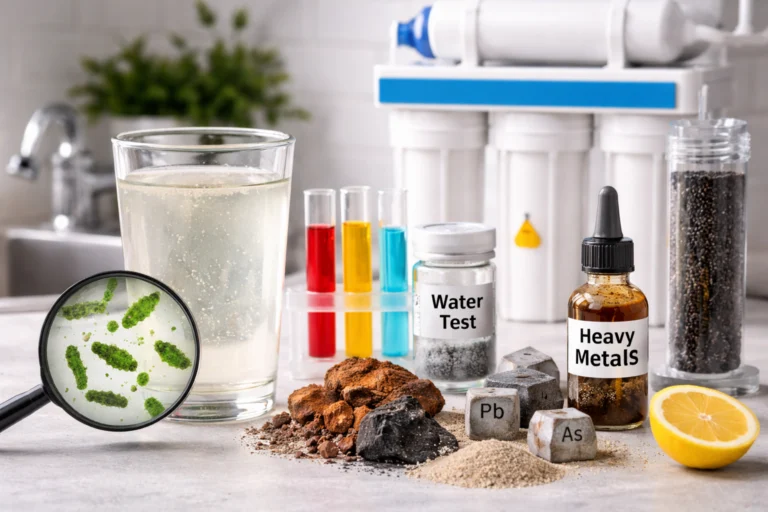
Purified water can come from tap or groundwater sources but must undergo treatment to remove:
- Chemicals (e.g., chlorine, PFAS)
- Dissolved solids (TDS)
- Heavy metals (lead, copper, arsenic)
- Microbes (bacteria, viruses)
Common purification methods include:
- Reverse Osmosis (RO): removes dissolved solids using a membrane
- Distillation: boils and recondenses water, leaving contaminants behind
- Deionization (DI): removes charged minerals and salts
- UV Treatment: neutralizes microbes
- Activated Carbon: reduces chlorine and organic compounds
Is Purified Water the Same as Filtered Water?
Not exactly. Filtered water is typically tap water passed through carbon or sediment filters to improve taste and reduce chlorine. Purified water meets higher purity standards and uses more advanced processes such as RO or distillation.
| Type | Typical Process | Purity Level |
|---|---|---|
| Filtered Water | Carbon / Sediment | Moderate |
| Purified Water | RO / Distillation / DI / UV | High |
Purified vs Distilled vs Spring Water
Different bottled waters use different sources and processes:
| Water Type | Source | Key Feature |
|---|---|---|
| Purified | Tap/Groundwater | Impurities removed |
| Distilled | Tap/Surface | Mineral-free |
| Spring | Natural springs | Contains natural minerals |
Is Purified Water Safe to Drink Daily?
Yes. Most bottled and municipal purified water is considered safe for daily drinking. It contains fewer contaminants than untreated tap water, especially in regions with aging infrastructure.
Common Uses of Purified Water
- Drinking and cooking
- Medical and lab equipment
- CPAP machines
- Infant formula (varies by guidelines)
- Cosmetic and skincare manufacturing
FAQs
What is purified water?
Purified water is water that has been processed to remove impurities such as chemicals, dissolved solids, and microbes.
Is purified water the same as distilled?
Distilled water is a type of purified water, but it has virtually all minerals removed through boiling and condensation.
Is purified water better than spring water?
Purified water has impurities removed, while spring water contains natural minerals. “Better” depends on taste and use case.
Is purified water good for babies?
Purified water is often used with baby formula, but guidelines vary by country and brand labeling.
Does purified water have minerals?
It depends on the purification method. RO and distillation reduce minerals significantly; carbon filtration does not.
Conclusion
Purified water is water that has undergone processes to remove impurities, making it safe and clean for daily drinking and specialized applications. It differs from filtered, distilled, and spring water based on treatment and mineral levels.