
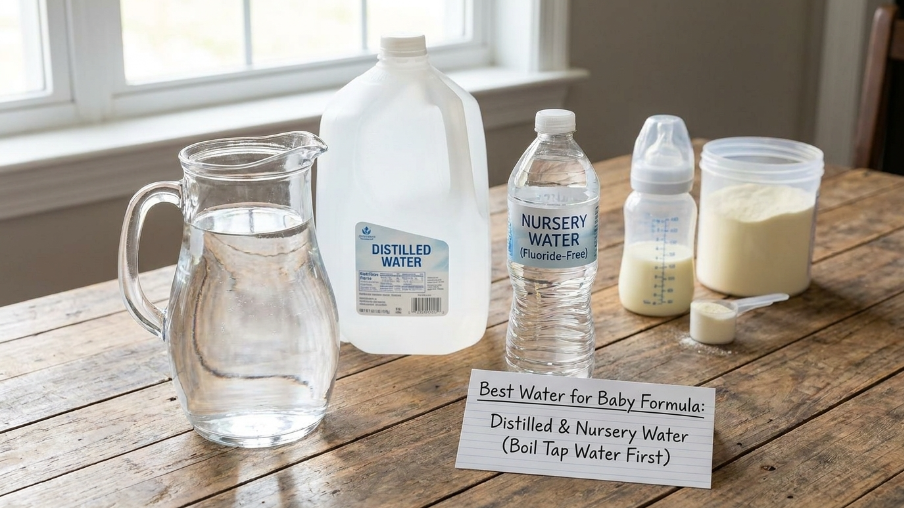
Water Types for Baby Formula — The Complete Breakdown
Not all water is equivalent when it comes to mixing infant formula. Here’s how each option compares on the factors that matter most: fluoride content, contaminant risk, mineral load, and practicality.
| Water Type | Fluoride | Contaminant Risk | Mineral Content | Best Use Case |
|---|---|---|---|---|
| Distilled | None | Very low | None | Default safe choice; reduces fluorosis risk |
| Purified / RO | Low to none | Very low | Minimal | Comparable to distilled; check label specifics |
| Deionized / Demineralized | None | Low (verify bacteria removal) | None | Same category as distilled for formula purposes |
| Tap (fluoridated, tested) | ~0.7 mg/L typical | Low (if municipally regulated) | Variable | Safe; consider alternating with low-fluoride water |
| Well water | Highly variable | Requires testing — bacteria, nitrates | Variable | Only after certified lab testing confirms safety |
| Spring water | Variable, sometimes high | Low | High and variable | Occasional use only; not for daily reliance |
For a deeper technical explanation of how distilled, deionized, and reverse osmosis water are actually produced and differ from each other, see our complete guide to water purification methods.
Fluoride — The Consideration Most Parents Don’t Expect
If you’ve researched baby formula water at all, you’ve likely encountered fluoride as the central issue — and for good reason. It’s the factor that most distinguishes “good for adults” water from “ideal for infant formula” water.
Approximately 74% of the US population receives fluoridated municipal water, with levels typically around 0.7 mg/L — the level recommended by the US Public Health Service since 2015 specifically to help prevent tooth decay in the general population. For most people, this is a clear health benefit.
For infants, the calculation is more nuanced. The American Dental Association has acknowledged that consistently using fluoridated water to mix powdered infant formula may increase the risk of mild dental fluorosis — faint white lines or streaks on permanent teeth that develop later in childhood. The ADA describes this as primarily a cosmetic concern rather than a health risk.
A 2019 study published in the Journal of the American Dental Association linked over 2,000 cases of dental fluorosis annually in the US to high fluoride levels in drinking water, particularly when combined with formula preparation in infants. This is the research basis for the common pediatric recommendation to consider low-fluoride water for formula during a baby’s first year.
When to Boil Water — Age-Based Guidance
Whether you need to boil water before mixing formula depends primarily on your baby’s age and health status, following guidance from the AAP, CDC, and WHO.
Boil water to a rolling boil for 1 minute, then cool to approximately 70°C (158°F) before mixing with formula powder. This step is specifically to kill any bacteria that may be present in the powdered formula itself — not just the water. This guidance comes from WHO recommendations for the most vulnerable infants.
Many pediatricians indicate boiling becomes less critical for healthy infants past the youngest, most vulnerable window — especially when using a verified safe water source (tested tap water or distilled/purified water). Guidance varies by pediatrician and region; confirm your specific approach.
Distilled and purified water typically does not require boiling, as the purification process itself addresses bacterial contamination. Always verify the container has been properly sealed and check that opened containers haven’t been stored for more than about a week.
Boiling does NOT remove fluoride — and can actually concentrate it slightly as water volume reduces through evaporation. If fluoride is your specific concern, boiling is not the solution; switch to distilled, deionized, or RO-purified water instead.
Well Water — The Testing Step That Genuinely Matters
If your home relies on a private well, this section deserves particular attention. Unlike municipal tap water, which undergoes routine regulated testing, private wells are not automatically monitored — the responsibility for verifying safety falls entirely on the homeowner.
Two specific risks make well water testing essential before using it for infant formula:
Bacterial contamination. Wells can harbor bacteria that municipal treatment would normally eliminate. This risk is especially serious for younger infants whose immune systems are still developing.
Nitrate contamination. This is the risk most parents haven’t heard of and genuinely need to know. High nitrate levels in well water — often from agricultural fertilizer runoff seeping into groundwater — have been linked to methemoglobinemia, sometimes called “blue baby syndrome.” This condition affects how an infant’s blood carries oxygen and can be serious. Nitrate risk is specific to infants under 6 months because of how their digestive systems process the compound differently than older children and adults.
The American Academy of Pediatrics notes that a comprehensive well water test panel — checking bacteria, nitrates, and fluoride together — typically costs around $200 through a certified laboratory. For a family preparing multiple bottles daily, this is widely considered one of the most important investments in infant safety a well-water household can make.
Plain Water and Infants — A Separate but Critical Warning
This is a distinct issue from formula preparation water but important enough that every parent researching baby water should know it: babies younger than 6 months should not be given plain water to drink on its own, separate from formula or breast milk.
Giving plain water to young infants can dilute their normal blood sodium levels — a dangerous condition called water intoxication. According to pediatric hospital guidance, too much water dilutes a baby’s sodium levels and can lead to seizures, coma, brain damage, or in severe cases, death. This is unrelated to the water used within formula preparation (which is appropriately diluted and balanced by the formula itself) — it specifically concerns giving a baby water as a standalone drink.
Infants receive all the hydration they need from formula or breast milk during the first six months. Once your baby begins eating solid foods, typically around 6 months, your pediatrician can advise on introducing small, appropriate amounts of plain water.
Does My Home Water Filter Remove Fluoride?
If you’re hoping your existing kitchen filter solves the fluoride question, the answer depends entirely on the filter type:
- Standard carbon pitcher filters (Brita and similar) — generally do NOT remove fluoride. These filters target chlorine taste and some organic compounds, but fluoride passes through unaffected.
- Reverse osmosis systems — DO remove fluoride, typically 85-95% reduction depending on the specific membrane and system.
- Standard refrigerator filters — vary significantly; most do not remove fluoride unless specifically certified to do so.
If you have a home RO system, RO-filtered tap water is a legitimate lower-fluoride option for formula preparation. For a complete comparison of home filtration options and what each type actually removes, see our best water filters guide and our distilled vs deionized vs RO comparison.
Practical Formula Preparation Steps
- Wash your hands thoroughly with soap and water before handling formula or bottles.
- Choose your water source based on your baby’s age and your local water quality (distilled/purified as default; tested tap water as acceptable alternative; well water only after lab testing).
- Boil if your baby’s age requires it (under 2 months, premature, or immunocompromised) — rolling boil for 1 minute, cool to ~70°C before use.
- Check container freshness. If using an opened container of distilled or purified water, verify it’s been stored properly and opened less than a week ago. When in doubt, open a new sealed container.
- Measure water first, then add formula powder in the correct ratio per your formula’s instructions.
- Mix thoroughly and check for undissolved clumps.
- Test temperature on your wrist — it should feel lukewarm, not hot, ideally close to body temperature.
- Use within 2 hours at room temperature, or refrigerate and use within 24 hours. Discard any formula not finished within 1 hour of starting a feeding.
Frequently Asked Questions
What is the safest water for baby formula?
Distilled or purified water (labeled distilled, deionized, demineralized, or reverse osmosis) is generally the safest default because it contains no fluoride and minimal contaminant risk. Properly tested tap water from a regulated municipal supply is also considered safe by the AAP. Confirm your specific situation with your pediatrician.
Do I need to boil water for baby formula?
The AAP and WHO recommend boiling for infants under 2 months, premature babies, and those with weakened immune systems — boil 1 minute, cool to ~70°C before mixing. For healthy older infants using a safe water source, guidance varies; confirm with your pediatrician.
Does boiling water remove fluoride?
No. Boiling does not remove fluoride and can slightly concentrate it as water evaporates. If fluoride is your concern, use distilled, deionized, demineralized, or RO-purified water instead, which removes fluoride during the purification process.
Is distilled water safe for baby formula long term?
Yes. Infant formula is nutritionally complete and provides all minerals a baby needs regardless of using mineral-free distilled water. Your pediatrician may eventually discuss fluoride supplementation around 6 months if you rely entirely on distilled water, depending on your baby’s individual cavity risk.
Can I use spring water for baby formula?
Not routinely recommended for daily use due to variable, often higher mineral content that could add an unnecessary mineral load on top of formula’s already-balanced nutrition. Occasional use (travel, emergencies) is generally acceptable; distilled or purified water is the better daily choice.
Is tap water safe for baby formula?
Generally yes if from a regulated, tested municipal source. The main consideration is fluoride content — consistent use of fluoridated tap water in formula may carry a small mild dental fluorosis risk (cosmetic, not health-related). Many pediatricians suggest alternating fluoridated tap water with low-fluoride water.
Can I use well water for baby formula?
Only after certified laboratory testing for bacteria, nitrates, and fluoride. Well water is not automatically regulated like municipal water. High nitrates specifically are linked to methemoglobinemia (“blue baby syndrome”) in infants. Test before use and discuss results with your pediatrician.
What is dental fluorosis and should I worry about it?
A cosmetic condition (faint white lines/spots on permanent teeth) from excessive fluoride exposure during tooth development. The ADA describes mild fluorosis as cosmetic, not a health risk. Reducing fluoridated water use in formula during infancy can lower this risk — discuss specifics with your pediatrician or pediatric dentist.
Can my baby drink plain water?
Not before 6 months as a standalone drink — this can cause water intoxication, diluting sodium levels dangerously and potentially causing seizures or more serious complications. Infants get all needed hydration from formula or breast milk. Your pediatrician can advise on introducing water after 6 months.
Does a Brita or pitcher filter remove fluoride for baby formula?
No, generally not. Standard carbon pitcher filters target taste and odor, not fluoride. Reverse osmosis systems do remove fluoride (85-95% reduction) and are a viable option if you have a home RO system.
What does Nursery Water mean on a label?
A marketing term for bottled water positioned for infant formula use — not a regulated category guaranteeing specific fluoride content. Some Nursery Water products contain added fluoride; others don’t. Always check the specific label rather than assuming the branding implies fluoride-free.
How much does it cost to use distilled water for baby formula?
Typically $0.80-$1.50 per gallon at most grocery stores — one of the more affordable bottled water options, especially when purchased in bulk. Significantly cheaper than premium or specifically branded “nursery” water products.
Related Reading
- Distilled vs Deionized vs Reverse Osmosis Water — Key Differences
- Best Water Filters That Remove PFAS — 2026 Buying Guide
- Bottled Water Brands & PFAS — Every Major Brand Ranked
- Why Does My Water Taste Funny? 7 Common Causes
- 10 Science-Backed Health Benefits of Drinking Water Daily
References & Sources
- American Academy of Pediatrics — HealthyChildren.org
- CDC — Healthy Water: Drinking Water Guidance
- World Health Organization — Infant Formula Preparation Guidance
- American Dental Association — Fluoride and Infant Formula
- FDA — Infant Formula Safety Guidance
The Bottom Line
Choosing water for baby formula comes down to a small set of well-established principles: distilled, purified, or reverse-osmosis water is the safest default because it eliminates fluoride and contaminant risk; tested municipal tap water is also acceptable per AAP guidance; boiling matters specifically for babies under 2 months, premature infants, or immunocompromised babies — and does NOT address fluoride concerns; well water requires laboratory testing before any use due to bacteria and nitrate risks; and spring water isn’t recommended for daily use due to unpredictable mineral content. None of this should be treated as a substitute for your pediatrician’s specific guidance for your child — local water quality, your baby’s health history, and individual risk factors all matter in ways a general guide can’t fully capture. Use this as a foundation for an informed conversation with your child’s doctor, not as a replacement for one.