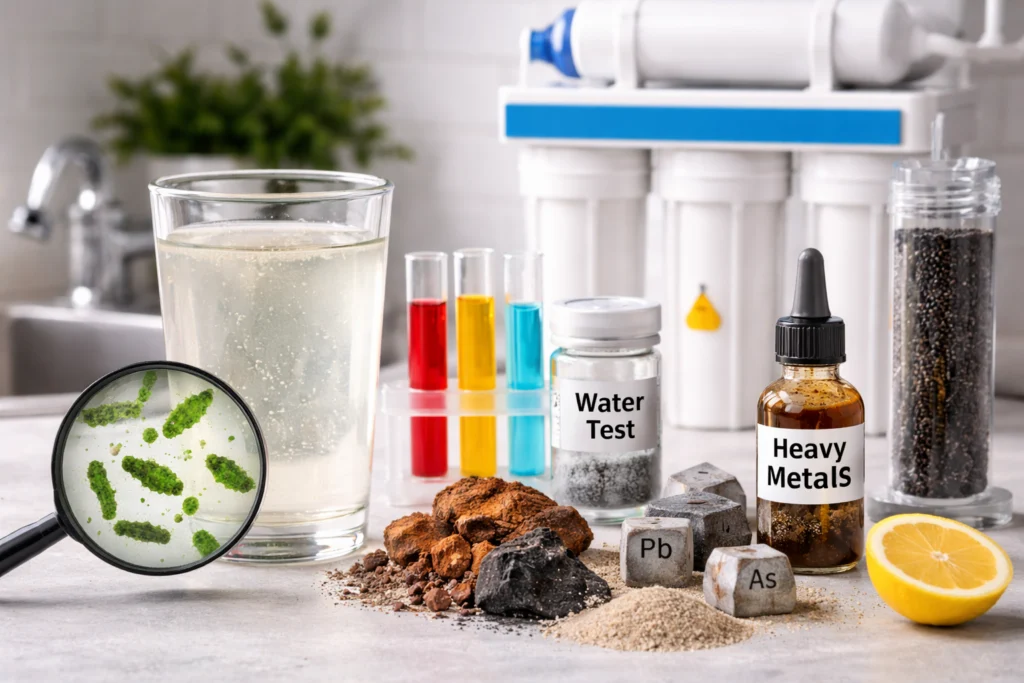
Clean drinking water is essential for good health, but it can contain various contaminants that affect taste, safety, and quality. Understanding common water contaminants and how to remove them helps ensure safe water for your home.
Types of Drinking Water Contaminants
1. Biological Contaminants
These include bacteria, viruses, and parasites that can cause serious health issues if consumed.
2. Chemical Contaminants
Chemicals like chlorine, pesticides, and industrial waste can enter water supplies and affect taste and safety.
3. Heavy Metals
Metals such as lead, arsenic, and mercury are harmful even in small amounts and often come from pipes or groundwater.
4. Physical Contaminants
Sediment, dirt, and rust particles can affect water clarity and quality.
5. Dissolved Solids (TDS)
High levels of dissolved salts and minerals can affect taste and may indicate contamination.
How to Remove Common Contaminants
| Contaminant | Best Removal Method |
|---|---|
| Bacteria & Viruses | UV purification / boiling |
| Chlorine | Activated carbon filter |
| Heavy metals | RO system |
| Sediment | Sediment filter |
| High TDS | Reverse osmosis |
Best Water Filtration Methods
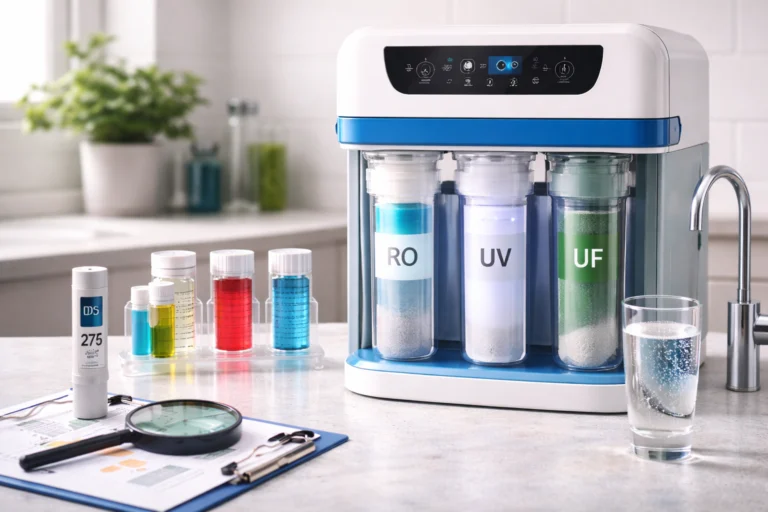
1. Reverse Osmosis (RO)
Removes dissolved salts, heavy metals, and most contaminants effectively.
2. UV Purification
Kills bacteria and viruses without altering water taste.
3. Activated Carbon Filters
Improves taste and removes chlorine and organic compounds.
4. Sediment Filters
Removes dirt, sand, and visible particles.
Natural vs Advanced Solutions
| Method | Effectiveness | Best For | Cost |
|---|---|---|---|
| Boiling | Moderate | Biological contaminants | Low |
| RO / UV / Filters | High | Comprehensive purification | Medium |
Why Water Testing Is Important
Testing your water helps identify specific contaminants and choose the right filtration system for effective treatment.
FAQs
What are the most common water contaminants?
Bacteria, chlorine, heavy metals, and sediments.
Which filter removes all contaminants?
RO combined with UV and carbon filtration is most effective.
Is boiling water enough?
It removes microbes but not chemicals or metals.
How often should I test water?
At least once a year or when issues arise.
Conclusion
Understanding common drinking water contaminants and their removal methods is key to ensuring safe water. Using the right filtration system and regular testing can help maintain water quality and protect your health.