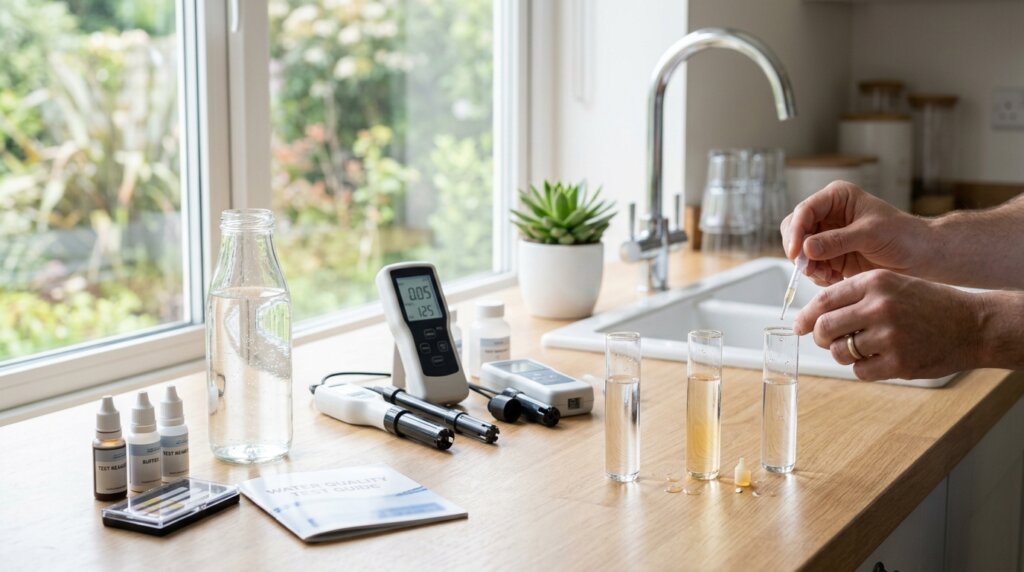
Quick answer: The best water testing kit depends on what you need to know. For a complete picture, a mail-in lab kit (such as Tap Score) tests dozens of contaminants with certified results in 1-2 weeks. For fast, cheap checks of hardness, chlorine, pH, and nitrates, at-home test strips work instantly. For PFAS, lead, or bacteria, you need a certified lab kit — strips can’t detect those. Well owners should always use a comprehensive lab panel.
Choosing the best water testing kit is the only reliable way to know what’s actually in your water — taste and clarity can’t tell you about lead, bacteria, or PFAS. But “water test kit” covers everything from a $15 strip pack to a $300 lab panel. Here’s how to pick the right one.
The two main types
At-home test strips / color kits: Dip a strip, compare colors, get instant results for hardness, chlorine, pH, nitrates, and a few metals. Cheap ($10-$30) and fast, but limited precision and no PFAS, no exact concentrations.
Mail-in lab kits: You collect a sample and mail it to a certified lab. You get precise, quantified results for dozens of contaminants. Slower (1-2 weeks) and pricier ($50-$300+), but far more accurate and the only option for PFAS, lead, and bacteria. The EPA recommends testing private wells with certified labs for a full picture.
Which kit for which situation
- Quick routine check (city water): A strip kit for hardness, chlorine, and pH is fine for general monitoring.
- New home or well water: A comprehensive mail-in lab panel covering bacteria, nitrates, metals, and hardness.
- Specific concern (PFAS, lead, arsenic): A certified single-contaminant or targeted lab kit. See how to test for PFAS.
- Checking a filter works: Test before and after installation with the same lab panel.
What to look for in a kit
- Certified lab (for mail-in) — EPA-accredited results you can trust.
- Clear contaminant list — know exactly what it tests for.
- Readable report — results compared to EPA limits, not just raw numbers.
- Turnaround time and included shipping.
Buying tip: for peace of mind on a well or new home, a comprehensive mail-in lab kit is worth it. For ongoing monitoring, keep a cheap strip pack on hand.
Once you have results, our guides on drinking water contaminants and choosing the right filter help you act on them. You can also learn to test water quality at home step by step.
Frequently asked questions
What is the best home water testing kit?
The best kit depends on your goal. For a broad snapshot, mail-in lab kits (like Tap Score) test dozens of contaminants with certified lab results. For quick at-home checks of basics like hardness, chlorine, pH, and nitrates, test-strip kits are cheap and instant. For PFAS, lead, or bacteria, use a certified lab kit.
Are home water test strips accurate?
Test strips give a useful quick indication for chlorine, pH, hardness, and nitrates, but they’re less precise than lab analysis and cannot detect PFAS or give exact contaminant concentrations.
How much does a water test kit cost?
Basic strip kits cost $10-$30. Mail-in lab kits range from about $50 for a basic panel to $300+ for comprehensive panels including PFAS. Single-contaminant lab tests fall in between.
Which kit should I use for well water?
Well owners should use a comprehensive mail-in lab panel that covers bacteria, nitrates, heavy metals, hardness, and, if relevant, iron, arsenic, and PFAS. Strips alone aren’t enough for well safety.
How often should I test my water?
Test annually for wells, after moving into a new home, when taste or odor changes, and after installing a filter to confirm it works. City-water users can also check the utility’s annual report.
Reviewed by the Complete Water Guide team. This article is for general information and is not a substitute for professional water-quality or medical advice. We may earn a commission from some links on this page.