Is Ice Wet?
Ice itself isn't wet — but ice melts on contact with warmth, creating water that does wet surfaces. So the cube of ice in your glass becomes wet as it slowly melts. The ice is just frozen H₂O — same molecules, different state.
Short answer: technically no — water makes other things wet, but isn't wet itself. Long answer: it depends on how you define "wet." Here's the proper physics, in plain English.

In physics, "wet" describes a state of contact between water and another surface — not a property of water itself.

Adhesion is the attraction between water molecules and a different substance — like water sticking to your skin, a glass, or a leaf. This is what makes things "wet" — it's water adhering to something else.
Cohesion is the attraction between water molecules themselves. This is why water forms droplets and beads up on a non-stick surface. Cohesion creates surface tension, but doesn't make the water "wet" — water molecules sticking to other water molecules is just water being water.
If "wet" means "covered or saturated with a liquid" — then water itself can't be wet, because it is the liquid. A surface is wet only when water is on it. Water makes things wet, but isn't wet itself.
Two reasons people instinctively call water "wet" — neither is technically correct, but both are understandable.
When your skin touches water, you feel "wet." Your brain doesn't distinguish between "water on my skin" and "water itself" — it just registers the sensation. This is why most people instinctively call water wet: that's the feeling we associate with the word.
It's similar to "the sky is blue." Technically the sky isn't a thing that has color; it's molecules scattering light. But "the sky is blue" works as everyday language.
English uses "wet" both as a verb and adjective. We say "the rain is wet" but really we mean "the rain wets things." Over centuries this collapsed in everyday speech to just "water is wet."
Other languages handle this differently — Japanese has separate words for "the wetness of being saturated" vs "the property of liquid." English just doesn't.
Most physicists agree on two key concepts that explain why water acts the way it does.

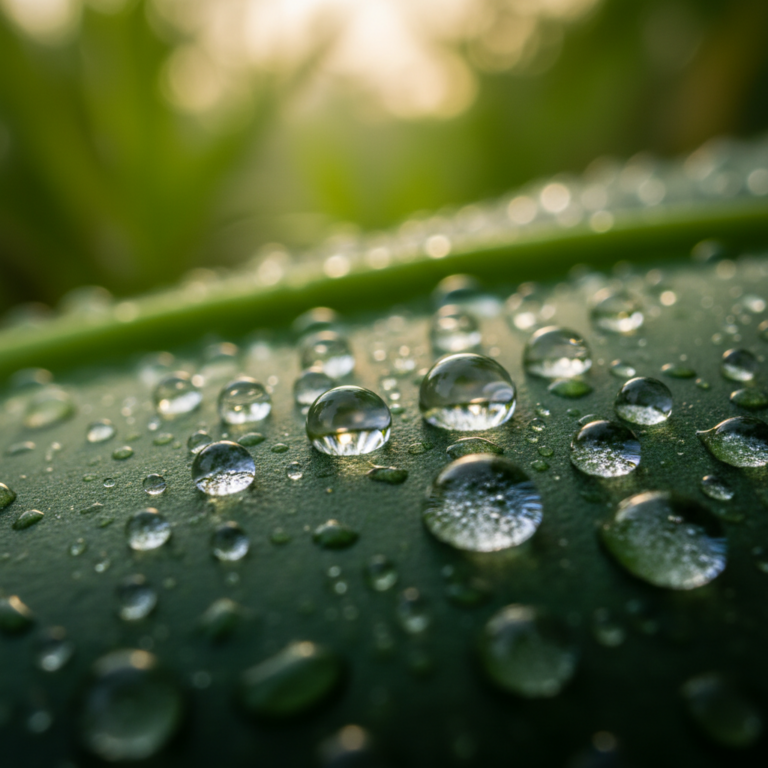
Water molecules at the surface pull inward more strongly than they're pulled outward. This creates a thin "skin" — strong enough to support light objects (water striders walk on it), but easily broken. Surface tension is what makes a single drop of water hold its shape on a leaf or your fingertip.
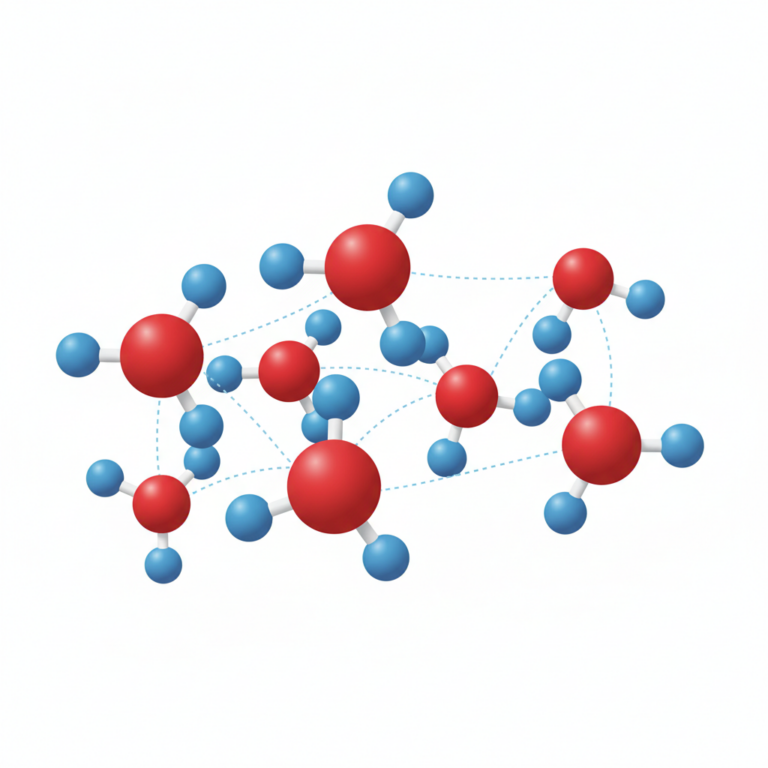
Each water molecule has 2 hydrogen atoms and 1 oxygen atom (H₂O). The hydrogens attract oxygen atoms in nearby water molecules, creating "hydrogen bonds." These weak but plentiful bonds give water its unusual properties:
So when scientists say "water isn't wet," they mean: water is the cause of wetness, not the experience itself. The wetness is the contact between water molecules and a non-water surface — adhesion in action.
If water isn't wet, what about its other states?

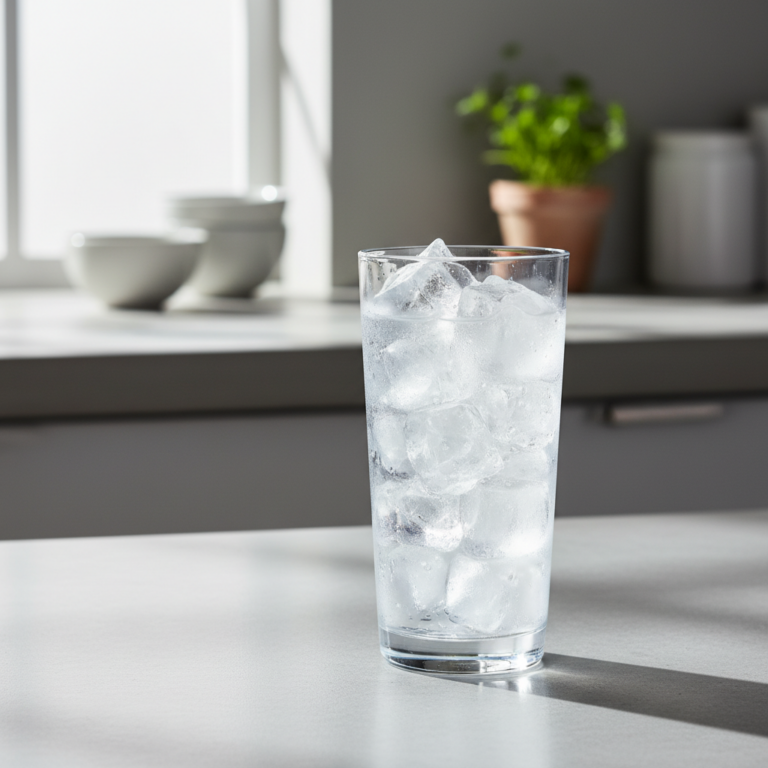
Ice itself isn't wet — but ice melts on contact with warmth, creating water that does wet surfaces. So the cube of ice in your glass becomes wet as it slowly melts. The ice is just frozen H₂O — same molecules, different state.
Pure water vapor (steam) isn't wet either — it's a gas, just water molecules moving freely. But hot steam condenses into water droplets when it touches cooler surfaces, making them wet. So when you see "steam," you're often actually seeing tiny condensed water droplets.

Humidity is gaseous water vapor — not wet. But when humid air touches a cool surface (a glass of cold drink, your skin on a hot day), the vapor condenses to liquid droplets. That's when surfaces become wet, and why high humidity feels "sticky."
"Water makes things wet, but isn't wet itself."
That's the technical answer most physicists agree on. But in everyday language, calling water "wet" is fine — your brain processes the sensation that way, and your friends will know what you mean.
The next time someone asks you the question, you can give them both answers — and probably win the argument either way.
The "wet" debate spawns lots of follow-up questions. Here are the most asked.
By the same logic — no, fire isn't burnt. Fire is the chemical reaction causing burning, but it isn't itself in a "burnt" state. "Burnt" describes something that fire has already affected — like ash or charred wood. Fire is to "burnt" what water is to "wet" — the cause, not the state.
No — water plus water is still just water. The molecules form hydrogen bonds with each other (cohesion), but that's not the same as wetting. Wetting requires water to adhere to something different from itself.
Technically yes — water adheres to their scales. Even though fish live entirely in water, water molecules attach to their skin/scales just like they would on any other surface. So fish are "wet" in the strict scientific sense, even if they never feel "dry."
In normal conditions, no. Air contains water vapor (humidity), and even "dry" surfaces have microscopic moisture. Truly dry requires lab conditions: vacuum chambers, special desiccants, and zero atmospheric exposure. That's why electronics labs use "dry rooms" with controlled humidity below 1%.