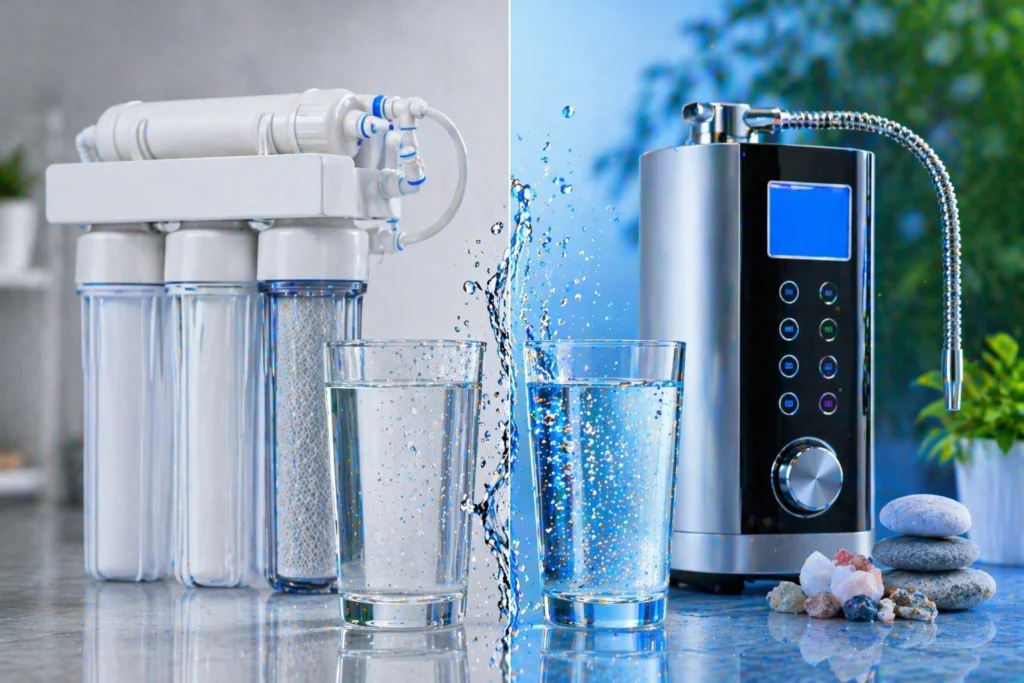
With growing awareness about health and water quality, many people are confused between reverse osmosis (RO) water and alkaline water. Both are popular choices, but they serve different purposes and offer different benefits.
What Is Reverse Osmosis (RO) Water?
Reverse osmosis water is produced by forcing water through a semi-permeable membrane that removes dissolved salts, heavy metals, bacteria, and impurities.
- Removes up to 99% of contaminants
- Reduces TDS levels significantly
- Provides highly purified water
What Is Alkaline Water?
Alkaline water has a higher pH level (typically above 7) and may contain added minerals like calcium and magnesium. It can be naturally alkaline or artificially enhanced.
- Higher pH (7–9+)
- Contains beneficial minerals
- Smoother taste
RO vs Alkaline Water: Key Differences
| Feature | RO Water | Alkaline Water |
|---|---|---|
| Purity | Very high | Moderate |
| pH Level | Neutral to slightly acidic | Alkaline (7–9+) |
| Minerals | Removed (may need remineralization) | Present |
| Taste | Neutral | Smoother |
| Best Use | Contaminated water | Health & taste preference |
Health Comparison
- RO Water: Ensures safety by removing harmful contaminants
- Alkaline Water: May support hydration and provide minerals
- Most health benefits of alkaline water are still debated
Which One Should You Choose?
- Choose RO water if your water source has high TDS or contamination
- Choose alkaline water for better taste and added minerals
- Best option: RO + mineral/alkaline filter combo
FAQs
Is RO water safe for daily use?
Yes, especially with added minerals.
Is alkaline water healthier?
It may offer benefits, but research is still ongoing.
Can I combine RO and alkaline filters?
Yes, many modern purifiers offer this combination.
Which water is best overall?
Depends on your water quality and personal preference.
Conclusion
Both RO and alkaline water have their advantages. RO ensures clean and safe water, while alkaline water focuses on taste and mineral content. Choosing the right option depends on your needs, water source, and health priorities.