If your well water leaves orange or brown stains on sinks, tastes metallic, or turns rusty after sitting in a glass, you’re almost certainly dealing with iron. It’s one of the most common well water problems in the U.S. — and while it isn’t usually a health risk, it wrecks fixtures, laundry, and appliances. This guide explains the signs of iron in well water, the different types, and exactly how to remove it.
Signs of Iron in Well Water
Iron rarely hides. Watch for these tell-tale signs:
- Orange, red, or brown staining on sinks, tubs, toilets, and fixtures
- Metallic taste in drinking water or coffee
- Rusty or cloudy water, either straight from the tap or after sitting
- Yellow or orange stains on laundry, especially whites
- Clogged or low-pressure fixtures from mineral buildup
- Slimy reddish buildup in the toilet tank (a sign of iron bacteria)
The 3 Types of Iron in Well Water
Knowing which type you have is the single most important step, because each needs a different treatment.
1. Ferrous Iron (Dissolved / “Clear-Water” Iron)
Ferrous iron is fully dissolved, so water looks clear straight from the tap but turns orange or brown after sitting in a glass, toilet, or tub for a few hours as it reacts with oxygen. Because it’s invisible at first, a basic sediment filter won’t catch it — it passes straight through.
2. Ferric Iron (Particulate / “Red-Water” Iron)
Ferric iron has already oxidized into visible rust particles, so water looks orange or rusty right from the tap. Because the particles are solid, a sediment filter can capture ferric iron — though heavy levels need a dedicated iron filter.
3. Iron Bacteria
Iron bacteria are living microorganisms that feed on dissolved iron and produce a slimy, reddish-brown biofilm inside pipes and toilet tanks, often with a musty or swampy smell. They aren’t a health hazard themselves, but they clog plumbing and need shock chlorination plus ongoing treatment — a different approach from mineral iron. We cover this in depth in our guide on iron bacteria and orange slime.
Is Iron in Well Water Dangerous?
For most people, iron in well water is not a direct health risk at the levels typically found in residential wells. The EPA classifies iron under its secondary maximum contaminant level of 0.3 mg/L — an aesthetic guideline based on staining, taste, and color, not a health-based standard. Iron is actually an essential nutrient.
That said, many private wells in the Midwest, Appalachia, and the Southeast test between 1 mg/L and 10 mg/L — well above the 0.3 mg/L threshold where staining and metallic taste become obvious. And iron often travels with other well water issues like manganese, hydrogen sulfide (rotten-egg smell), and hardness, so testing for all of them together is wise. The EPA’s private well program outlines recommended testing.
How to Test for Iron in Well Water
You can’t choose the right treatment without a test. Here’s how:
- Certified lab test: The most accurate option. Many county health departments and cooperative extension offices offer free or low-cost well water testing. Order a panel that includes iron, manganese, hydrogen sulfide, pH, hardness, and bacteria.
- Home test kit: Inexpensive iron test strips give a rough range and are good for a quick check.
- The clear-vs-rusty clue: If your water is clear at the tap but turns orange after sitting, you have ferrous iron. If it’s rusty straight away, you have ferric iron.
For a full walkthrough, see our guide on how to test your water quality at home.
How to Remove Iron From Well Water
Match the method to your iron type and level:
Oxidizing Iron Filter (Best for Most Wells)
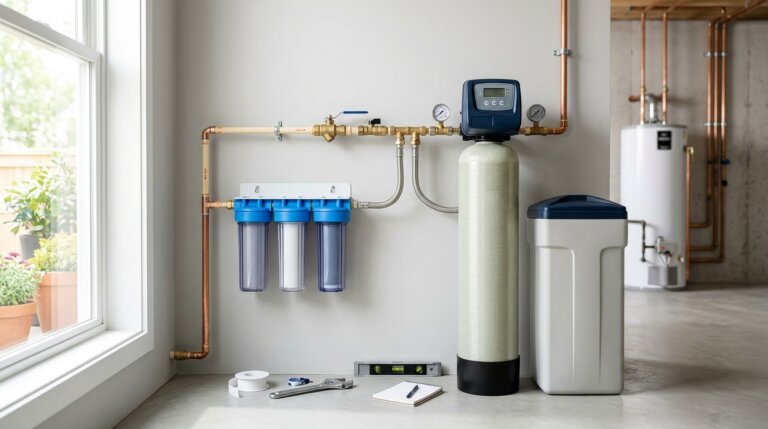
Air-injection and greensand iron filters oxidize dissolved iron into particles, then trap and backwash them away. They handle moderate-to-high iron (up to ~10–15 ppm depending on the system) and are the go-to whole-house solution for serious iron problems. Iron is one stage of a longer sequence, and our guide to choosing a well water filtration system sets out the order that matters — sediment, then oxidation, then softening, then carbon, then UV — with each stage protecting the next. Most use an automatic backwash cycle every few days.
Water Softener (Low Iron Only)
A salt-based water softener can remove small amounts of dissolved (ferrous) iron — typically up to ~1–3 ppm — along with hardness, via ion exchange. It’s a good fit when iron is low and you also have hard water. But it does nothing for iron bacteria or hydrogen sulfide, and high iron can foul the resin, so it shouldn’t be your only defense against heavy iron. See our guide to the best water softeners for models rated for iron.
Sediment Filter (Ferric Iron)
A 5-micron sediment or spin-down filter captures visible rust (ferric) particles. It’s cheap and useful as a pre-filter, but it won’t touch dissolved ferrous iron, which passes straight through.
Chlorination + Filtration (Iron Bacteria & High Iron)
For iron bacteria or very high iron, a chlorine injection system oxidizes the iron and kills bacteria, followed by a filter to remove the particles. Shock chlorination clears existing colonies, and continuous chlorination or UV prevents regrowth.
| Iron Type / Level | Best Solution |
|---|---|
| Low dissolved iron (<3 ppm) + hardness | Water softener |
| Moderate-high iron (3–15 ppm) | Air-injection / greensand iron filter |
| Visible rust particles only | Sediment filter (as pre-filter) |
| Iron bacteria / very high iron | Chlorination + filtration |
Frequently Asked Questions
Is iron in well water harmful to drink?
Iron in well water is generally not harmful at typical residential levels. The EPA regulates it as a secondary (aesthetic) contaminant at 0.3 mg/L based on staining and taste, not health. Iron is an essential nutrient, though very high levels can cause an unpleasant metallic taste.
Why does my well water turn orange after sitting?
Clear water that turns orange after sitting contains ferrous (dissolved) iron. When it’s exposed to air, the iron oxidizes into visible rust particles. This is the classic sign of dissolved iron, which a standard sediment filter cannot remove.
Will a water softener remove iron from well water?
A water softener can remove low levels of dissolved iron (roughly up to 1–3 ppm) along with hardness. For higher iron levels, iron bacteria, or rust particles, you need a dedicated iron filter, because high iron can foul softener resin.
How do I get rid of iron stains from well water?
Remove existing iron stains with a rust-specific cleaner or a paste of cream of tartar and water; avoid chlorine bleach, which can set iron stains. To stop new stains, treat the water at the source with an iron filter or softener.
What is the best iron filter for well water?
For most homes, an air-injection or greensand oxidizing iron filter is the best whole-house solution because it handles moderate-to-high iron and backwashes automatically. The right choice depends on your iron level and whether manganese or sulfur is also present, so test first.
Related Guides
- Why Does My Water Heater Produce Rusty Water?
- Why Well Water Smells Like Rotten Eggs (Sulfur Smell)
- How to Test Your Water Quality at Home
- Best Water Softeners 2026: Top Picks Compared
- Best Water Softener for Well Water: 2026 Buyer’s Guide
- Best Shower Filter for Hard Water — 5 Ranked by Filter Media
- Hard Water vs Soft Water: Differences Explained
The Bottom Line
Iron in well water is a nuisance, not usually a health hazard — but it stains everything and damages plumbing if ignored. The fix starts with a test to identify whether you have ferrous iron, ferric iron, or iron bacteria. From there, an oxidizing iron filter handles most cases, a softener covers low iron with hardness, and chlorination tackles iron bacteria. Test first, match the method, and you’ll have clean, stain-free water for years.