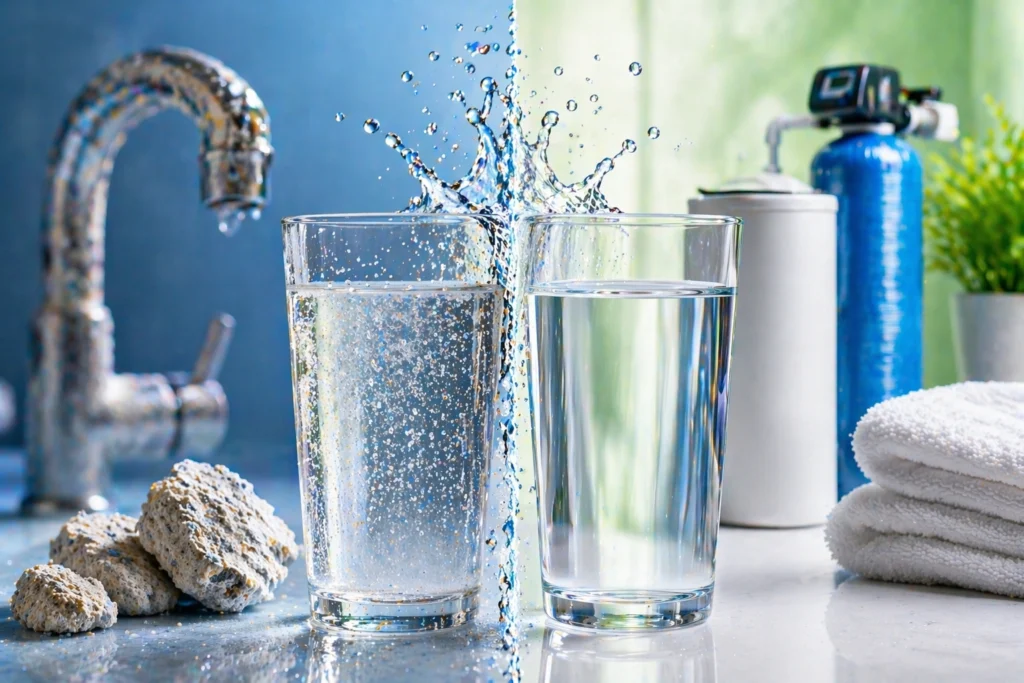
Water quality varies enormously from one U.S. city to the next, and the most common difference homeowners run into is between hard water and soft water. Knowing which one comes out of your tap affects everything from your skin and hair to your appliances, your soap bill, and whether you need to spend money on treatment. This guide breaks down the real differences, how to tell which you have, and which is actually better for each use.
What Is Hard Water?
Hard water contains dissolved minerals — mainly calcium and magnesium, with some bicarbonates and sulfates. It forms when groundwater passes through mineral-rich rock like limestone, chalk, and gypsum, dissolving those minerals as it goes. The more it absorbs, the “harder” it becomes.
Hardness is measured in grains per gallon (gpg) or milligrams per liter (mg/L). Here’s the standard U.S. scale:
| Classification | Grains per Gallon | mg/L (ppm) |
|---|---|---|
| Soft | 0 – 1 | 0 – 17 |
| Slightly hard | 1 – 3.5 | 17 – 60 |
| Moderately hard | 3.5 – 7 | 60 – 120 |
| Hard | 7 – 10.5 | 120 – 180 |
| Very hard | 10.5+ | 180+ |
A large share of U.S. households have moderately hard to very hard water — it’s especially common across the Midwest, Southwest, and states like Arizona, Texas, Utah, and Florida, where groundwater runs through mineral-heavy rock.
What Is Soft Water?
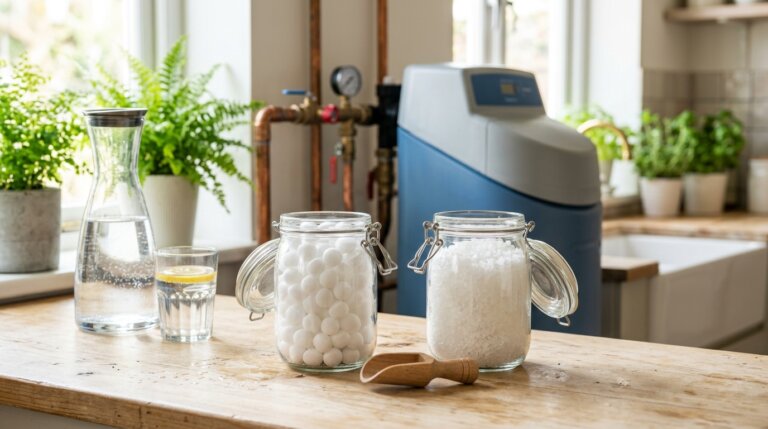
Soft water has very low levels of dissolved calcium and magnesium. It can occur naturally — rainwater and water from areas with hard, non-porous rock like granite tends to be soft — or it can be produced by a water softener that swaps the hardness minerals for sodium or potassium through ion exchange. Soft water lathers easily, leaves no scale, and feels “slippery” on the skin because soap rinses away cleanly instead of binding with minerals.
Hard Water vs Soft Water: Key Differences
| Feature | Hard Water | Soft Water |
|---|---|---|
| Mineral Content | High (calcium, magnesium) | Low |
| Soap Lather | Less foam, soap scum | Rich foam, rinses clean |
| Effect on Skin & Hair | Dryness, dullness | Smoother, softer feel |
| Appliance Impact | Scale buildup, shorter life | Less scale, longer life |
| Taste | Crisp, mineral taste | Flatter, slightly salty |
| Sodium | Naturally low | Slightly higher (if salt-softened) |
How Hard Water Affects Your Home
The downsides of hard water aren’t just cosmetic — they cost real money over time:
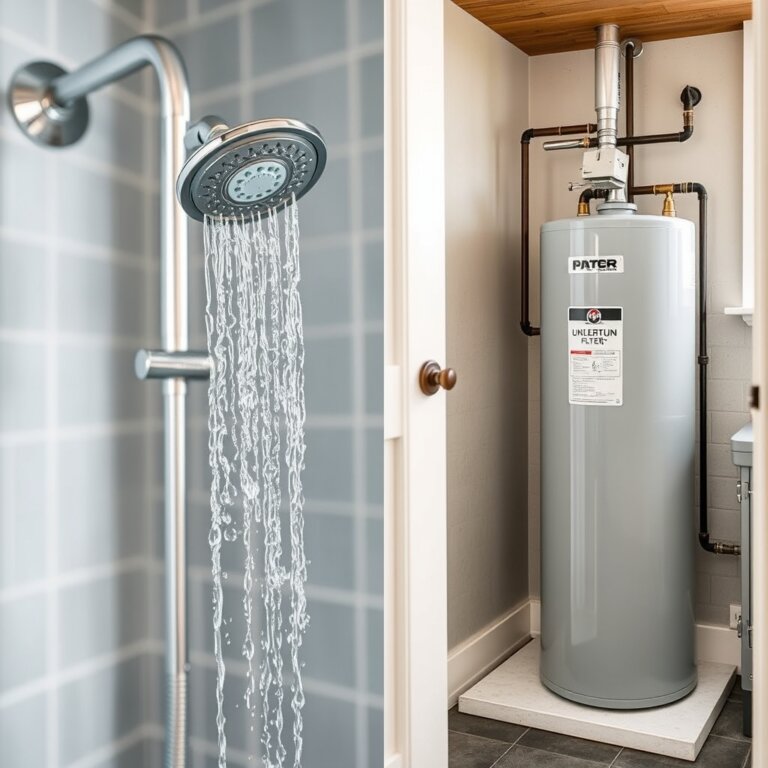
- Appliances wear out faster: scale coats heating elements in water heaters, dishwashers, and washing machines, making them work harder and fail sooner.
- Clogged pipes and fixtures: mineral deposits narrow pipes and block showerheads and faucet aerators over time.
- More soap and detergent: hard water reacts with soap, so you need more of it to clean — driving up costs.
- Skin and hair issues: mineral residue leaves skin dry and hair dull. See hard water effects on skin and hair for the full picture.
- Spots and stains: hard water leaves white residue on dishes and can stain laundry and fixtures.
Advantages & Disadvantages
Hard Water
- ✔ Contains beneficial minerals (calcium, magnesium)
- ✔ Perfectly safe to drink
- ✔ Often tastes crisper than soft water
- ❌ Causes scale buildup in pipes and appliances
- ❌ Reduces soap efficiency and leaves residue
- ❌ Can dry out skin and hair
Soft Water
- ✔ Better for cleaning, laundry, and appliances
- ✔ Improves skin and hair feel
- ✔ Cuts soap and detergent use by up to ~30%
- ❌ Lacks beneficial minerals
- ❌ Slightly higher sodium if salt-softened
- ❌ Costs money to produce (softener + salt)
Which One Is Better?
There’s no single winner — it depends on the use:
- For drinking: hard water is fine and provides minerals; many people prefer its taste.
- For cleaning, laundry & appliances: soft water wins clearly — less scale, less soap, longer appliance life.
- For skin & hair: soft water is gentler.
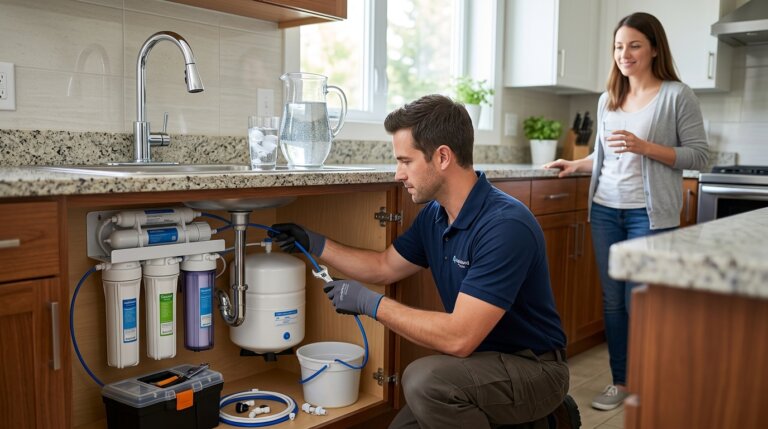
- Best of both: many U.S. homes install a whole-house softener and keep one unsoftened or reverse-osmosis tap for drinking water — soft water everywhere, mineral water in the glass.
If you decide softening makes sense, see our full breakdown of how much a water softener costs and the simpler ways to fix hard water at home.
How to Identify Hard Water at Home
You don’t need a lab to spot hard water. Watch for these signs:
- White, chalky scale on faucets, showerheads, and inside kettles
- Soap and shampoo that won’t lather well
- Dry, tight skin and dull hair after showering
- Spots and film on dishes and glassware
- Stiff, dingy laundry
- Reduced water pressure from scale-clogged fixtures
For an exact number, use an inexpensive test strip or your local water report. Our guides on how to remove hardness from water and choosing the right softener salt cover what to do once you know your hardness level.
FAQs
Is hard water harmful to drink?
No. Hard water is safe to drink and actually contributes calcium and magnesium to your diet. Its problems are with appliances, plumbing, skin, and cleaning — not health.
Can I drink soft water?
Yes, though salt-softened water has slightly more sodium. People on low-sodium diets often use potassium-based softening or keep a separate drinking tap.
How do I soften hard water?
A salt-based ion-exchange water softener is the most effective method. Salt-free conditioners reduce scale for milder hardness. Showerhead filters help in apartments where a whole-house unit isn’t possible.
Which is better overall?
It depends on use — soft water for cleaning, laundry, and appliances; hard (or mineral) water for drinking. Many homes use both.
How can I tell how hard my water is?
Check your annual water quality report, use a hardness test strip, or watch for scale and poor lather. Hardness is measured in grains per gallon — above 7 gpg is considered hard.
Related Guides
- How Much Is a Water Softener? Full Cost Breakdown
- How to Fix Hard Water Problems at Home
- How to Remove Hardness From Drinking Water
- Best Water Softener Salt: Types & How Much to Use
- Hard Water Effects on Skin and Hair
Conclusion
Hard water and soft water each have their place. Hard water is safe and mineral-rich but rough on your home; soft water protects your appliances and is gentler on skin and hair but needs treatment to produce. Once you know which type you have — and how hard it is — you can decide whether a softener is worth it, or whether simpler fixes will do. For most U.S. homes with genuinely hard water, the long-term savings on appliances and soap make softening a smart investment.
{
“@context”: “https://schema.org”,
“@type”: “FAQPage”,
“@id”: “https://completewaterguide.com/hard-water-vs-soft-water/#faq”,
“mainEntity”: [
{
“@type”: “Question”,
“name”: “Is hard water harmful to drink?”,
“acceptedAnswer”: {
“@type”: “Answer”,
“text”: “No. Hard water is safe to drink and actually contributes calcium and magnesium to your diet. Its problems are with appliances, plumbing, skin, and cleaning, not health.”
}
},
{
“@type”: “Question”,
“name”: “Can I drink soft water?”,
“acceptedAnswer”: {
“@type”: “Answer”,
“text”: “Yes, though salt-softened water has slightly more sodium. People on low-sodium diets often use potassium-based softening or keep a separate drinking tap.”
}
},
{
“@type”: “Question”,
“name”: “How do I soften hard water?”,
“acceptedAnswer”: {
“@type”: “Answer”,
“text”: “A salt-based ion-exchange water softener is the most effective method. Salt-free conditioners reduce scale for milder hardness. Showerhead filters help in apartments where a whole-house unit is not possible.”
}
},
{
“@type”: “Question”,
“name”: “Which is better overall, hard or soft water?”,
“acceptedAnswer”: {
“@type”: “Answer”,
“text”: “It depends on use: soft water for cleaning, laundry, and appliances; hard or mineral water for drinking. Many homes use both.”
}
},
{
“@type”: “Question”,
“name”: “How can I tell how hard my water is?”,
“acceptedAnswer”: {
“@type”: “Answer”,
“text”: “Check your annual water quality report, use a hardness test strip, or watch for scale and poor lather. Hardness is measured in grains per gallon; above 7 gpg is considered hard.”
}
}
]
}