Mineral water and electrolyte water sound like they should be the same thing, and the supermarket shelf does little to clear up the confusion.
Both promise hydration and “good-for-you” minerals, but they are made differently, contain different things, and suit different needs. This guide lays out exactly how the two compare so you can pick the right one instead of paying for a label.
The Short Answer
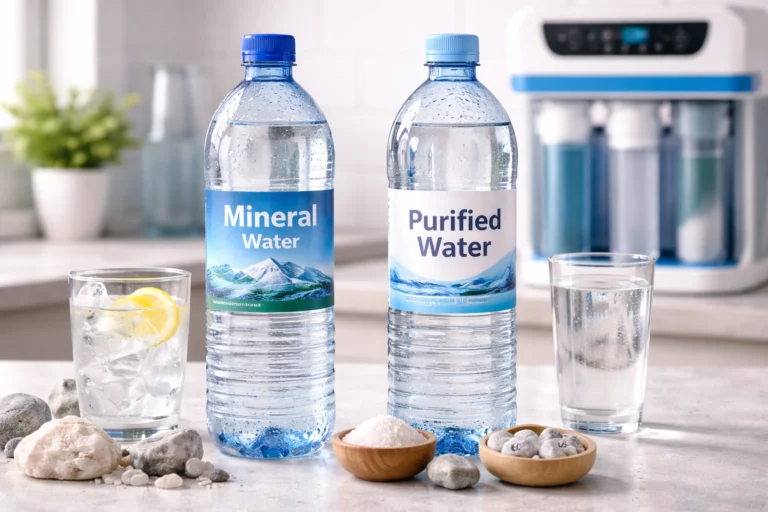
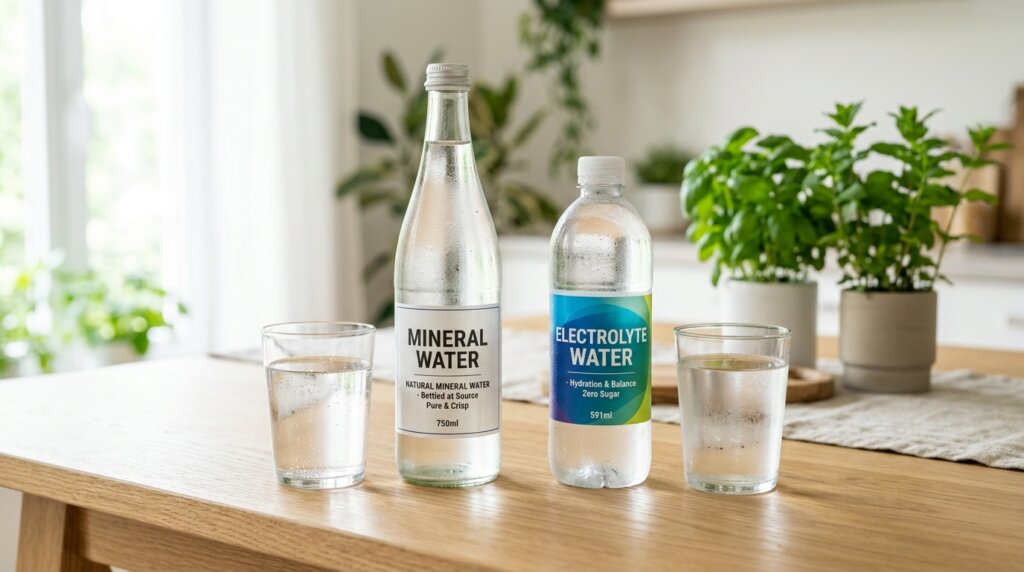
Mineral water comes from a protected underground source and contains naturally occurring dissolved minerals at the concentration nature put there.
Electrolyte water is usually purified water with electrolytes added back in deliberate, controlled amounts. One is defined by where it comes from; the other is defined by what is engineered into it.
What Is Mineral Water?
Natural mineral water is sourced from a specific underground spring or aquifer and must be bottled at the source. By regulation in most regions, nothing can be added to change its composition beyond limited carbonation adjustment.
Its mineral content — calcium, magnesium, sodium, bicarbonate, and trace elements — reflects the rock the water passed through. This is why two mineral waters can taste and test completely differently: a soft Alpine spring versus a hard limestone aquifer produce very different mineral profiles.
The defining feature is authenticity of source. You are drinking what the geology delivered, which means the mineral levels are fixed by nature and printed on the label rather than chosen by a manufacturer.
For a closer look at where mineral water sits among bottled options, see our guide to the best water to drink.
How Mineral Water Is Produced
The production of natural mineral water is deliberately hands-off, and that is the whole point of the category. The water is drawn from a protected underground source, where it has spent years — sometimes decades — filtering slowly through rock and picking up its mineral signature.
By regulation, it must be bottled at or very near the source, and producers are limited in what they can do to it. They may remove unstable elements like iron or sulphur compounds and adjust carbonation, but they cannot add minerals or alter the core composition.
This is why a mineral water’s analysis is essentially a fingerprint of its spring. Two sources a few miles apart can yield very different waters, and the same source stays remarkably consistent year after year because the geology does not change quickly.
What Is Electrolyte Water?
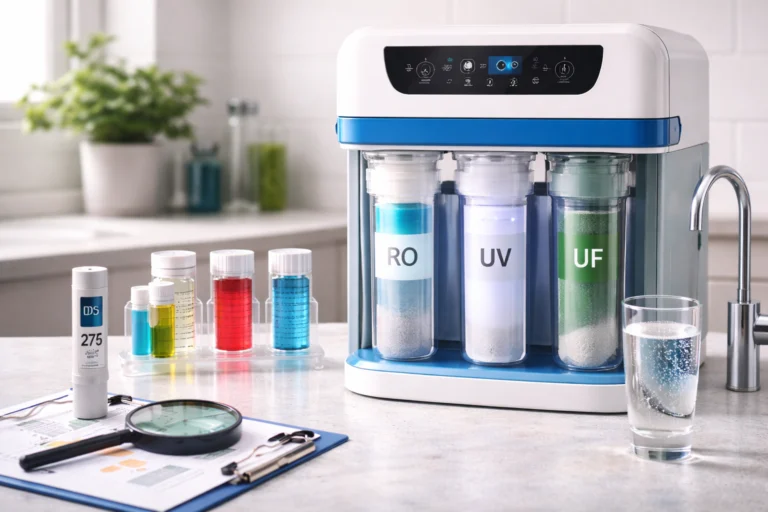
Electrolyte water typically starts as purified water, often produced by reverse osmosis or distillation, which strips out most dissolved solids. Manufacturers then add a measured blend of electrolytes, usually some combination of sodium, potassium, magnesium, and calcium salts.
Because the formula is controlled, the brand can target a specific electrolyte concentration and a consistent taste from bottle to bottle.
This engineered approach is the whole point. Electrolyte water is designed for a job — replenishing the minerals lost through sweat — rather than simply reflecting a natural source.
The trade-off is that some products also include added sweeteners or flavours, so labels are worth reading. Our ranking of the best electrolyte water brands breaks down what is actually in the leading products.
How Electrolyte Water Is Produced
Electrolyte water is engineered rather than sourced. It usually begins with municipal or other water that is purified — commonly by reverse osmosis — to strip out almost all dissolved solids, giving the manufacturer a blank slate.
A precise blend of electrolyte salts is then added back: typically sodium chloride, potassium salts, and sometimes magnesium and calcium compounds. Because the starting water is near-pure, the brand controls exactly how much of each ends up in the bottle.
That control is the category’s strength. A sports-focused electrolyte water can be tuned to mimic the sodium-to-potassium ratio lost in sweat, something a natural spring cannot guarantee. The downside is that purification plus formulation costs money, and some products add sugar or flavour that change the nutritional picture.
Which Electrolytes Are We Actually Talking About?
It helps to be precise about the word “electrolyte,” because both products lean on it heavily in their marketing. Electrolytes are minerals that carry an electric charge when dissolved in water, and your body uses them to manage hydration, nerve signals, and muscle function.
The ones that matter most for hydration are sodium and potassium, which govern fluid balance, plus magnesium and calcium, which support muscle and nerve activity. Both mineral water and electrolyte water can contain all four.
The difference is control. In mineral water, the ratio of these electrolytes is whatever the spring delivered — often heavy on calcium and magnesium, lighter on sodium and potassium.
In electrolyte water, the manufacturer chooses the ratio, which is why sports-oriented products tend to push sodium and potassium higher to match what you lose in sweat.
So when you compare the two, you are really comparing a fixed natural ratio against a deliberately chosen one. Neither is “more electrolyte” by default; it depends entirely on the specific product.
How to Read the Label on Each
The fastest way to cut through the marketing on either bottle is to read the back, not the front. The two categories give you slightly different clues.
On mineral water, look for a mineral analysis panel listing calcium, magnesium, sodium, and bicarbonate in mg/L, plus total dissolved solids (TDS). High TDS with strong calcium and magnesium means a genuinely mineral-rich water.
On electrolyte water, look at the ingredients list. You want to see which electrolyte salts were added, and crucially whether there is added sugar or sweetener. A short list of mineral salts on purified water is the cleanest type.
Reading both labels the same way — minerals first, additives second — lets you compare a mineral water and an electrolyte water on equal footing instead of trusting the category name.
The Cost and Value Angle
Price is worth a mention, because both categories sit at a premium over plain bottled water. Mineral water’s cost reflects its protected source and bottling-at-source requirement, while electrolyte water’s cost reflects the purification plus the added formulation.
For everyday hydration, neither premium is strictly necessary — plain filtered water hydrates perfectly well. The value of each comes down to a specific reason: genuine natural minerals you want in your diet, or a controlled electrolyte dose for heavy sweating.
If you are paying a premium without one of those reasons, you may simply be buying branding. The label’s mineral panel tells you whether the price is buying real minerals or mostly marketing.
Mineral Water vs Electrolyte Water: Side by Side
| Factor | Mineral Water | Electrolyte Water |
|---|---|---|
| Source | Protected natural spring | Usually purified water |
| Minerals | Natural and fixed | Added and controlled |
| Consistency | Varies by source/season | Engineered batch-to-batch |
| Purpose | Everyday mineral source | Active rehydration |
| Additives | Essentially none | May include flavours/sweeteners |
| Taste | Source-specific character | Clean and uniform, or flavoured |
Which One Should You Drink?
The right choice depends on what you want from the bottle.
Choose Mineral Water If…
You want a natural, additive-free source of calcium and magnesium for daily hydration, you enjoy the distinct taste of a particular spring, or you are trying to up your mineral intake without sugary drinks.
Mineral water shines as a long-term everyday habit rather than a workout tool. If hydration for general health is your aim, a mineral-rich still water is a clean pick.
Choose Electrolyte Water If…
You sweat heavily through exercise, heat, or illness and need to replace sodium and potassium quickly and predictably. The controlled formula means you know exactly how much you are getting, which matters during intense rehydration.
Just check for added sugar if you are using it regularly, since some products are closer to a sports drink than to water.
Do Added Electrolytes Actually Improve Hydration?
It is a fair question, because the marketing around electrolyte water often implies it hydrates you “better” than ordinary water. The honest answer is: it depends entirely on the situation.
For everyday hydration when you are not losing much fluid, plain water and mineral water hydrate you perfectly well. Your body absorbs the water it needs, and added electrolytes provide little extra benefit beyond their nutritional value.
The picture changes during heavy sweat loss. When you lose a lot of fluid and sodium quickly, drinking large volumes of plain water can dilute your blood sodium.
Replacing some electrolytes alongside the fluid helps your body hold on to and use the water more effectively. This is the genuine, evidence-based case for electrolyte drinks.
So electrolytes do not magically make water “more hydrating” in normal conditions. They matter most when fluid and mineral losses are large — exactly the scenarios electrolyte water was designed for. For the average day, the difference is minimal, which is why mineral water remains a perfectly good everyday choice.
Real-Life Scenarios
Abstract comparisons only go so far. Here is how the choice plays out in everyday situations.
- Desk job, normal day: plain or mineral water is plenty. There is no heavy sweat loss to replace, so an electrolyte formula adds little beyond cost.
- Long run or gym session in the heat: this is where electrolyte water earns its place, replacing the sodium and potassium lost in sweat faster and more predictably than mineral water.
- Recovering from a stomach bug: fluid and electrolyte loss can be significant, so an electrolyte drink (or oral rehydration solution) is often more appropriate than mineral water alone.
- Trying to raise daily magnesium: a magnesium-rich mineral water, sipped through the day, is the better long-term fit than an occasional electrolyte drink.
- Watching blood pressure: a low-sodium mineral water is usually the safer everyday choice; check both categories’ sodium figures carefully.
Matching the drink to the situation, rather than to the marketing, is what turns this from a shelf gamble into a sensible decision.
Can They Overlap?
Yes. A naturally high-mineral water can act as a gentle electrolyte source, and some “electrolyte waters” are simply mineral waters marketed differently.
The line blurs most when a mineral water happens to be rich in sodium and magnesium. In those cases the category label tells you less than the numbers do.
The reliable way to compare any two bottles is to ignore the marketing terms and read the mineral analysis: that tells you the actual electrolyte content regardless of what the front label calls it.
If you want to understand which minerals actually count as electrolytes, our explainer on electrolyte water goes deeper, and our guide to mineral water and electrolytes breaks down exactly what each mineral contributes.
Storage, Taste, and Practical Differences
Beyond minerals and price, a few practical points separate the two categories in everyday use, and they often decide which one a household actually sticks with.
On taste, mineral water carries the character of its source — some are crisp and neutral, others noticeably “mineral” or slightly salty from higher sodium.
Electrolyte water is usually engineered for a clean, uniform taste, though flavoured versions vary widely. If taste consistency matters to you, the engineered option is more predictable.
On storage, both keep well unopened, but once opened, plain and mineral waters are best consumed within a day or two for taste, and electrolyte waters with no preservatives behave similarly. Neither “goes off” quickly, but flavour and freshness fade with exposure to air.
On sustainability, both are bottled products with the same packaging footprint, so neither has an environmental edge over the other. If reducing plastic matters to you, filtered tap water with an electrolyte tablet or a pinch of mineral-rich salt can replicate much of the benefit at home with far less waste.
Common Buying Mistakes
A few predictable errors lead people to overspend or buy the wrong thing. Avoiding them is easy once you know what to look for.
- Assuming “electrolyte” means healthier. An electrolyte water loaded with sugar can be a worse daily choice than a plain mineral water.
- Paying premium for low-mineral water. Many expensive bottled waters are low in minerals; the price is for branding, not electrolytes.
- Using sports formulas all day. High-sodium electrolyte drinks are designed for heavy sweat loss, not constant sipping at a desk.
- Ignoring sodium on a restricted diet. Both categories can be high in sodium, so the label check matters more than the type.
- Trusting the front label. The category name on the front tells you far less than the analysis or ingredients on the back.
Frequently Asked Questions
Is electrolyte water better than mineral water?
Neither is universally better. Electrolyte water is better for rapid rehydration after heavy sweating because its mineral levels are controlled. Mineral water is better as a natural, additive-free everyday source of calcium and magnesium. The right pick depends on your goal.
Does mineral water contain electrolytes?
Yes, naturally. Calcium, magnesium, sodium, and potassium in mineral water are all electrolytes. The amounts depend on the source, so a high-mineral water provides far more than a low-TDS one.
Is electrolyte water just mineral water with a different name?
Sometimes the profiles overlap, but the production differs. Mineral water’s minerals are natural and fixed by its source, while electrolyte water usually has electrolytes added to purified water in controlled amounts.
Which is better for daily drinking?
For routine hydration, mineral water is often the simpler choice because it has no added sweeteners and provides natural minerals. Electrolyte water is better reserved for situations involving heavy fluid loss.
Can I drink electrolyte water every day?
You can, but check the label for added sugar and sodium. Plain or lightly mineralised electrolyte water is fine daily; sugary sports-style formulas are better kept for heavy-sweat days rather than everyday sipping.
How do I tell them apart on the shelf?
Read the back label. “Natural mineral water” with a printed source and mineral analysis is mineral water. A product listing added minerals or electrolytes on purified water is electrolyte water, regardless of how premium the front label looks.
Is electrolyte water good for a hangover?
Because alcohol is dehydrating and depletes electrolytes, an electrolyte drink can help with rehydration the morning after. Plain water plus a balanced meal also works; the electrolyte version simply replaces lost minerals a little faster.
Do children need electrolyte water?
For everyday play, plain water is usually sufficient for children. Electrolyte drinks may help during illness with fluid loss, but for that purpose an oral rehydration solution is often more appropriate. Check with a doctor for young children.
Related Guides
- Best Electrolyte Water Brands 2026: Ranked by Ingredients & Purpose
- Mineral Water and Electrolytes: What’s Actually In Your Bottle?
- What Is the Best Water to Drink? Ranked Guide
- Mineral Water vs Sparkling Water: What’s the Difference?
- Alkaline Water: Is It Actually Worth the Price?
References & Sources
- U.S. FDA — Bottled Water Regulation and Definitions
- NIH Office of Dietary Supplements — Magnesium Fact Sheet
- World Health Organization — Calcium and Magnesium in Drinking Water
The Bottom Line
Mineral water is defined by its natural source and fixed mineral content, while electrolyte water is defined by electrolytes deliberately added to purified water. For everyday hydration with natural minerals, mineral water is the cleaner everyday option.
For fast, measured rehydration after heavy sweating, electrolyte water does the job it was engineered for. When in doubt, skip the marketing language and compare the mineral analysis on the back of each bottle — that single panel settles the question better than any front-label claim.