
Gerolsteiner Review 2026: Minerals, PFAS & Why It Tastes So Strong
By David Anderson · Water Systems & Treatment Editor · Reviewed by Emily Carter, Hydration & Nutrition Editor · Updated
We read the published lab data on bottled and sparkling water brands and cross-references every health claim against independent lab data before publishing.
Gerolsteiner is the German mineral water that tastes noticeably stronger than most — and there’s a reason. It’s one of the most mineral-dense bottled waters you can buy, delivering meaningful calcium and magnesium in every glass. This review covers the mineral numbers, what’s known (and unknown) about its PFAS, the bold taste, and who it’s actually for.
Mineral Profile: Why It’s So Strong
Gerolsteiner’s defining feature is its mineral density. Where a light spring water sits around 100–300 mg/L TDS, Gerolsteiner is many times that — one of the richest mainstream mineral waters available. That mineral load is what you taste, and it’s also what makes it a genuine nutritional contributor rather than just hydration.
| Attribute | Gerolsteiner | Notes |
|---|---|---|
| Type | Natural sparkling mineral water | Sourced in Gerolstein, Germany |
| TDS | Very high (~2,500 mg/L) | Among the most mineral-dense |
| Calcium | Very high | Meaningful daily contribution |
| Magnesium | Very high | One of its main selling points |
| Bicarbonate | High | Gives a smooth, rounded feel |
| PFAS data | None published | Unverified — not in Consumer Reports testing |
| Calories / sugar | Zero | Plain mineral water |
Its magnesium and calcium levels are high enough that some people drink it specifically as a mineral supplement. See how it stacks up in our best mineral water ranking.
Gerolsteiner Price: What a Case Actually Costs
Gerolsteiner is imported from Germany in glass, and the price reflects both. A 24-pack of 16.9 oz glass bottles runs about $50.99, which works out to roughly $2.12 a bottle. The 25.3 oz bottles are sold in 15-packs and as singles, and pricing on those moves around more.
That is expensive next to a domestic seltzer, and there is no way around it: you are paying for glass, for shipping mineral water across an ocean, and for a mineral content no American bottler matches. Whether that is worth it depends entirely on why you are buying it. If you want a clean, fizzy, zero-calorie drink, a domestic seltzer does that job for a fraction of the price. If you are buying Gerolsteiner for the 348 mg of calcium and 108 mg of magnesium per litre, there is no cheaper way to get it from a bottle, and the glass means no can lining and no microplastic shedding.
Buying by the case is the only sensible way to purchase it. Single bottles at a grocery store or restaurant cost far more per litre, and the 24-pack is the standard bulk format.
Gerolsteiner and PFAS: What’s Known
To be straight: Gerolsteiner has no widely published independent PFAS lab result — it wasn’t part of Consumer Reports’ bottled water testing, so we can’t give it a number the way we can for Spindrift (0.19 ppt) or San Pellegrino (0.31 ppt).
What we can say: Gerolsteiner is a deep-source natural mineral water from a protected German aquifer, and German mineral waters are held to strict national standards. That’s a reasonable indicator, but it is not a PFAS test result. Untested means unverified — not automatically clean.
Bottom line: if you want a verified low-PFAS number, pick a tested brand. If you want a mineral-rich water and value the calcium and magnesium, Gerolsteiner is a strong choice — just treat the PFAS question as unverified. Compare tested options in our safest bottled water ranking.
What It Tastes Like
Gerolsteiner tastes unmistakably mineral — firm, slightly savory, almost “hard” on the palate compared to a light water. The carbonation is medium and rounded rather than sharp, and the bicarbonate gives it a smooth, full mouthfeel. Next to San Pellegrino it reads as heavier and more assertive; next to Voss it’s night and day. This is a water with real character: some people find it deeply satisfying with a meal, others find it too strong to drink casually. It genuinely shines alongside rich food — it cuts through and cleanses the palate. Well chilled it’s at its best; warm, the minerality can feel a bit much.
If you’ve only had light waters, Gerolsteiner is a noticeable step up in intensity — try a single bottle before committing to a case.
Is Gerolsteiner Good for You?
For a zero-calorie beverage, Gerolsteiner has a genuine nutritional edge: its calcium and magnesium are high enough to make a real contribution to daily intake, which is unusual for water. Magnesium in particular is something many people fall short on. The considerations are its sodium — higher than very light waters, worth noting on a strict low-sodium diet — and, as with any mineral water, the strong taste that not everyone enjoys.
What’s good
- Exceptional calcium & magnesium
- Zero calories and sugar
- Genuine nutritional contribution
- Excellent with rich food
Worth knowing
- No published PFAS test data (unverified)
- Higher sodium than light waters
- Strong taste — not a casual sipper for all
- Imported, so pricier and heavier
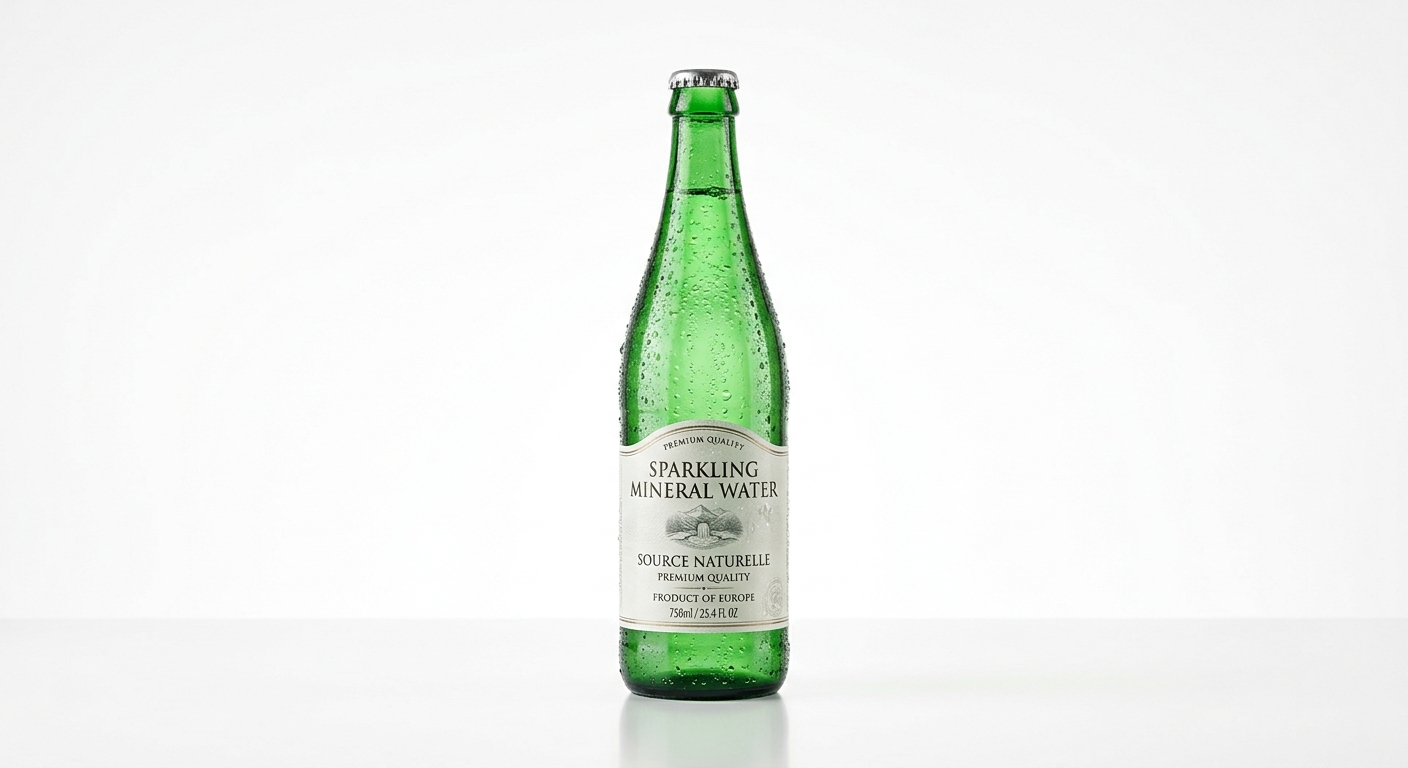 glass bottle” loading=”lazy” style=”max-width:100%;height:auto;border-radius:10px;max-height:260px;object-fit:cover” />
Gerolsteiner Sparkling Mineral Water
Exceptionally high calcium and magnesium German mineral water — bold, food-friendly character. A favorite for sipping with meals and a genuine mineral contribution.
As an Amazon Associate we earn from qualifying purchases.
Frequently Asked Questions
Does Gerolsteiner have PFAS?
There’s no widely published independent PFAS test for Gerolsteiner — it wasn’t part of Consumer Reports’ bottled water testing. As a deep-source German mineral water held to strict national standards it’s a reasonable pick, but untested means unverified, not proven clean.
Why does Gerolsteiner taste so strong?
Its very high mineral content — especially calcium, magnesium and bicarbonate — gives it a firm, slightly savory taste. The high TDS is exactly what makes it feel “stronger” than light spring or purified waters.
Is Gerolsteiner good for magnesium?
Yes — it’s one of the more magnesium-rich bottled waters, and some people drink it specifically for that. It also delivers meaningful calcium. Both make a real contribution to daily mineral intake.
Does Gerolsteiner have a lot of sodium?
It has more sodium than very light waters, though it’s primarily known for calcium and magnesium. For most people it’s fine, but those on a strict low-sodium diet should factor it in.
Gerolsteiner vs San Pellegrino: which is better?
Gerolsteiner is more mineral-dense with higher magnesium and a stronger, firmer taste. San Pellegrino is lighter, has finer carbonation, and has a published low PFAS result (0.31 ppt). Choose Gerolsteiner for maximum minerals, San Pellegrino for a smoother, tested option.
Sources: Consumer Reports bottled water PFAS testing (2020, Gerolsteiner not included); EPA PFAS drinking water rule (April 2024). Last updated July 2026.
Affiliate disclosure: as an Amazon Associate we earn from qualifying purchases; commissions never affect our assessments.