
The PFAS Record
Mountain Valley was not included in Consumer Reports’ 2020 analysis of 47 bottled waters across 30 PFAS compounds — the dataset most brand rankings cite.
Separate independent testing does list Mountain Valley among bottled waters with no detectable PFAS, in company with Evian, Arrowhead, Boxed Water, Saratoga and Hallstein. On this specific measure, it performs well.
The source explains why. Mountain Valley’s own Water Quality Report describes:
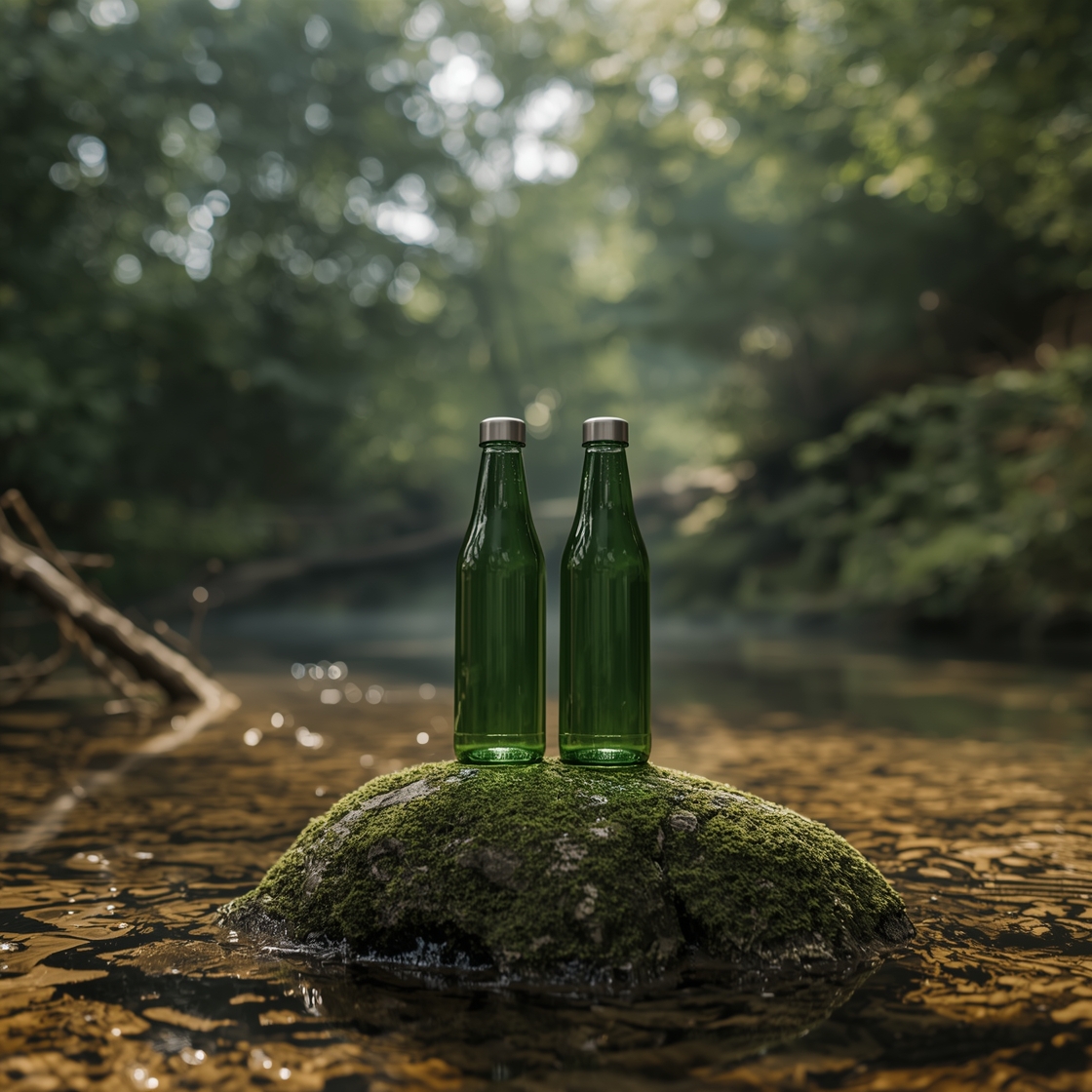
- Same spring since 1871 in the Ouachita Mountains, Arkansas — one continuous source for over 150 years.
- 2,000 acres of protected forest surrounding the spring, which is the kind of buffer that keeps agricultural and industrial runoff out.
- Roughly 3,500 years of natural filtration through granite-based aquifers before the water reaches the spring.
- Sealed bottling system with no human contact from source to bottle.
- Ultra-filtration, micron filtration, UV treatment and ozonation for sterilisation.
- Calcium at 67 mg/L naturally occurring, with no additives.
A 3,500-year residence time matters more than it might sound. PFAS entered widespread industrial use in the mid-20th century. Water that entered the aquifer millennia ago and has been filtering through granite since predates the contamination entirely — provided nothing has reached it since.
The Class Action
This is where the picture gets complicated, and any honest guide has to include it.
On 11 August 2025, plaintiff Jeffrey Nadel filed a class action complaint against Primo Water Corporation, Primo Water North America and Mountain Valley Spring in the US District Court for the Southern District of Florida. The 47-page complaint alleges violations of state and federal consumer protection laws.
What the complaint alleges was found
Independent laboratory testing in July 2025, per the complaint:
| Substance | Alleged level | EPA MCL Goal | Within FDA limit? |
|---|---|---|---|
| Arsenic | 0.16 µg/L | Zero | Yes |
| Uranium | 0.21 µg/L | Zero | Yes |
| Bromoform | 0.15 µg/L | Zero | Yes |
| Cadmium | 0.08 µg/L | CA PHG: 0.04 µg/L | Yes |
The complaint’s argument rests on a specific distinction. Arsenic, uranium and bromoform have EPA Maximum Contaminant Level Goals of zero — non-enforceable public health targets meaning no level is considered risk-free. Cadmium was allegedly detected at twice California’s stricter Public Health Goal of 0.04 µg/L.
All four tested below the FDA’s enforceable limits for bottled water. That is the crux: the case is about whether marketing a product as “purely sourced,” “free of pollutants” and “exceptionally healthful” is deceptive when trace amounts of substances with zero-goal targets are present, at prices four to eight times standard bottled water.
The additional allegation
The complaint further contends Mountain Valley may have known about the findings and concealed them, pointing to a supply shortage the company announced around the same time independent testing results were circulating on social media. The complaint characterises the timing as suspicious. This is an allegation, not an established fact.
How to Read These Numbers
Three things are worth separating clearly, because coverage of this case often blurs them.
1. “EPA goal of zero” is not the same as “unsafe.” Maximum Contaminant Level Goals are aspirational public health targets, deliberately set at zero for known carcinogens regardless of whether that level is achievable. The enforceable standards — EPA’s MCLs and the FDA’s bottled water limits — are set higher, accounting for feasibility. Arsenic at 0.16 µg/L sits far below the FDA’s bottled water limit of 10 µg/L.
2. Naturally occurring is not the same as added. Arsenic and uranium occur naturally in granite geology. The complaint itself cites mining operations potentially disturbing geological formations containing arsenic and uranium as a possible pathway. This is a source-geology question, not an additive question.
3. Bromoform is a disinfection byproduct. Unlike the others, bromoform typically forms when disinfectants react with organic matter — which is relevant given Mountain Valley’s ozonation step. The complaint uses its presence to question the “no processing” framing.
None of this makes the marketing question go away. If a brand charges four to eight times the market price on the strength of being “free of pollutants,” what that phrase means is a fair thing to litigate. But the water testing below every enforceable limit and the marketing being arguably overstated are both true.
So Should You Drink It?
Strong. Listed with no detectable PFAS, and a 3,500-year-old aquifer under 2,000 acres of protected forest is genuine structural protection.
Excellent. Glass bottles remove the microplastics question that affects Fiji, Evian, Smartwater and every plastic-bottled brand.
Unresolved. Levels alleged are below FDA limits but above zero-goal targets. Litigation ongoing, allegations unproven.
Four to eight times standard bottled water. That premium is exactly what the lawsuit is about.
Alternatives With Published Data
If you want a brand with a verified PFAS figure or no pending litigation. As an Amazon Associate we earn from qualifying purchases; it never affects our rankings.
S.Pellegrino (Glass)
A published PFAS figure and a low one, in glass. The strongest combination of verification and packaging available.
Mountain Valley Spring (Glass)
Same Arkansas spring since 1871, 2,000 acres of protected forest, glass bottles, no detectable PFAS. Note the pending class action over marketing claims.
Essentia Ionized Water
0.2 ppt PFAS with three-stage RO purification to under 10 ppm TDS, and a published water quality report. Plastic bottles.
Under-Sink RO System
NSF/ANSI 58 certified systems remove 94-99% of PFAS plus arsenic, uranium and heavy metals — at roughly $0.05 per litre with no marketing claims involved.
Frequently Asked Questions
Does Mountain Valley Spring Water have PFAS?
Independent testing lists Mountain Valley among bottled waters with no detectable PFAS, alongside Evian, Arrowhead, Boxed Water and Saratoga. It was not included in Consumer Reports’ 2020 analysis. The 3,500-year aquifer residence time and 2,000 acres of protected forest around the spring provide genuine structural protection, since PFAS only entered widespread industrial use in the mid-20th century.
What is the Mountain Valley Spring Water lawsuit about?
A class action filed 11 August 2025 in the US District Court for the Southern District of Florida (Nadel v. Primo Water Corporation) alleges that July 2025 independent laboratory testing detected arsenic, uranium, bromoform and cadmium. The case argues that marketing the water as “purely sourced,” “free of pollutants” and “exceptionally healthful” at four to eight times standard bottled water prices is deceptive given those findings. The allegations have not been proven and the class has not been certified.
Is Mountain Valley Spring Water safe to drink?
The levels alleged in the complaint — arsenic 0.16 µg/L, uranium 0.21 µg/L, bromoform 0.15 µg/L, cadmium 0.08 µg/L — all tested below the FDA’s enforceable limits for bottled water. Arsenic at 0.16 µg/L sits far below the FDA’s 10 µg/L limit. The lawsuit is about marketing claims rather than a safety violation.
What does “EPA goal of zero” actually mean?
Maximum Contaminant Level Goals are non-enforceable public health targets, set at zero for known carcinogens regardless of whether that level is technically achievable. The enforceable standards — EPA MCLs and FDA bottled water limits — are set higher to account for feasibility. A substance can be above a zero goal and well below every enforceable limit at once.
Why would arsenic and uranium be in spring water?
Both occur naturally in granite geology, which is exactly what Mountain Valley’s water filters through. The complaint itself cites mining operations potentially disturbing formations containing arsenic and uranium as a possible pathway. This is a question about source geology rather than about anything being added.
Who owns Mountain Valley Spring Water?
Primo Water Corporation, which also operates the Primo water refill and exchange business. Primo Water Corporation and Primo Water North America are named defendants alongside Mountain Valley Spring in the class action.
Is glass better than plastic for bottled water?
Yes, on microplastics specifically. Glass adds nothing to the water and does not shed particles, which removes the concern driving lawsuits against Fiji, Evian and four other plastic-bottled brands. Mountain Valley’s glass bottles are a genuine advantage on that measure.
Should I stop buying Mountain Valley?
That depends on what you are paying for. If you want glass packaging and a protected single source with no detectable PFAS, those things are real. If you were paying a four-to-eight-times premium specifically for “free of pollutants,” the lawsuit argues that phrase was doing more work than the testing supports. The allegations remain unproven.
Related Reading
- Bottled Water Brands & PFAS — Every Major Brand Ranked
- Does Fiji Water Have PFAS?
- Does Evian Have PFAS? Testing & Lawsuits
- Does Essentia Water Have PFAS? Tested at 0.2 ppt
- Does Smartwater Have PFAS?
- Primo Water Cost — Refill vs Exchange vs Delivery
- Best Water Filters That Actually Remove PFAS
References & Sources
- Nadel v. Primo Water Corporation et al — class action complaint, US District Court for the Southern District of Florida, filed 11 August 2025
- Mountain Valley Spring Water — published Water Quality Report (source, filtration process, mineral content)
- Independent bottled water PFAS testing — brands with no detectable PFAS
- Consumer Reports — bottled water PFAS testing (2020), 47 products, 30 compounds
- EPA — Maximum Contaminant Level Goals; PFAS National Primary Drinking Water Regulation (April 2024)
- FDA — bottled water quality standards and April 2025 survey of 197 products
The Bottom Line
Mountain Valley is the hardest brand in this category to summarise in one line, because the honest answer has two halves. The source is exceptional and the PFAS record is clean — one spring since 1871, 2,000 acres of protected forest, 3,500 years of granite filtration, glass bottles, and no detectable PFAS in independent testing. The marketing is also the subject of an active federal class action alleging that July 2025 testing found arsenic, uranium, bromoform and cadmium, all below FDA limits but above zero-goal targets, while the brand charged four to eight times market price for water described as “free of pollutants.” Those allegations are unproven and the case is ongoing. If glass packaging and a protected source are what you want, Mountain Valley delivers them. If the phrase “free of pollutants” is what you were buying, that is precisely what a court is now being asked to evaluate.