What the PFAS Data Actually Shows
Two separate testing programmes are relevant here, and they answer different questions.
Consumer Reports (2020) — Fiji was not tested
The dataset behind nearly every published bottled water PFAS ranking is Consumer Reports’ 2020 analysis of 47 products across 30 PFAS compounds. Fiji was not among them. Neither were Smartwater, Essentia, Mountain Valley, or Icelandic Glacial.
This is why you will not find a credible ppt figure for Fiji anywhere. Any article quoting one is either citing something that does not exist or extrapolating from the category without saying so.
FDA sampling — below the limit of quantification
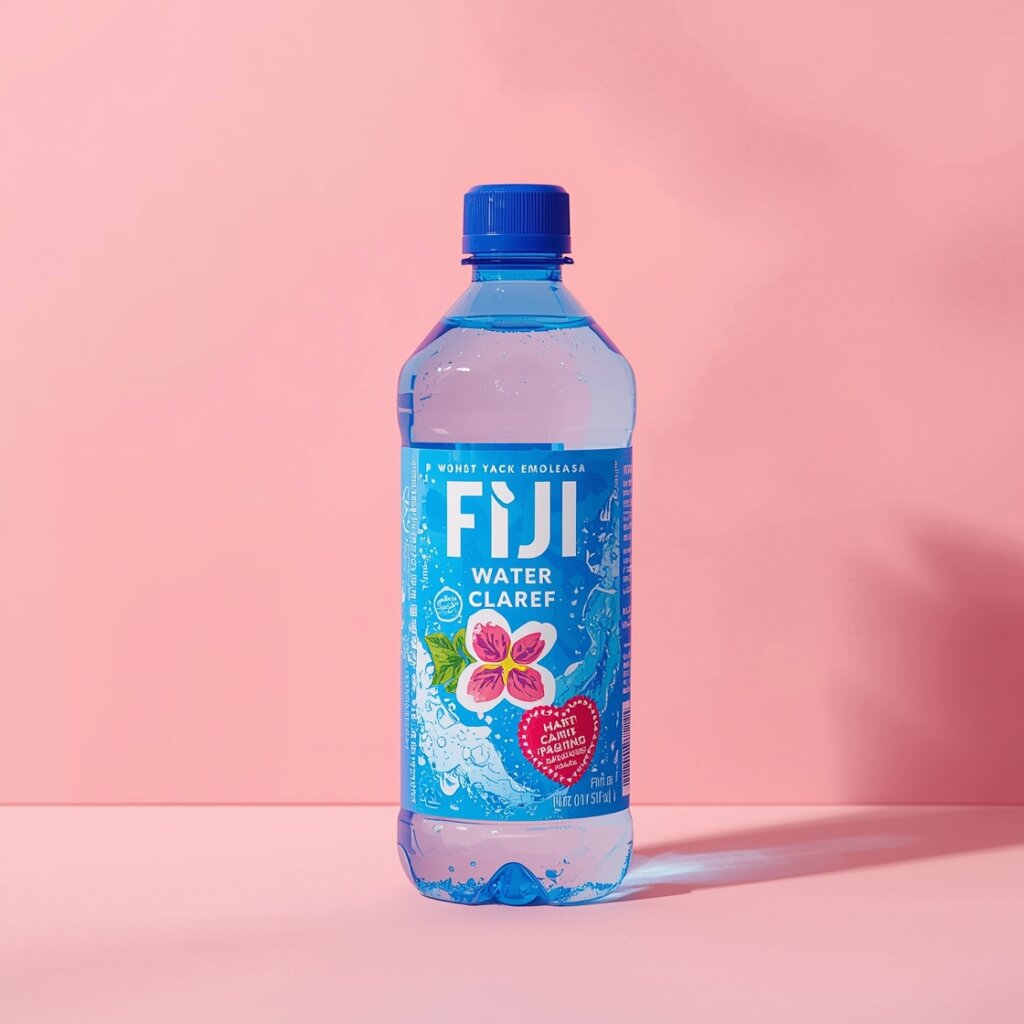
The FDA has run its own bottled water sampling, and its published analytical results include a non-carbonated sample with the source location listed as Fiji Island. For that sample, both PFOA and PFOS came back below LLOQ — the lower limit of quantification, meaning no measurable amount was present.
Two caveats worth stating plainly:
- “Below LLOQ” is not the same as zero. It means below the threshold at which the method can reliably measure a number. That is a genuinely good result, but it is not proof of complete absence.
- The FDA sample tested two compounds (PFOA and PFOS), while Consumer Reports measured 30. A narrower panel finds less by definition.
Even so, this is more data than exists for most untested brands, and it points in a reassuring direction. For context, the FDA’s April 2025 survey of 197 bottled water products found zero samples exceeding EPA limits across the category.
The Real Controversy: Microplastics and BPA
This is where Fiji’s testing record gets genuinely complicated, and it has nothing to do with PFAS.
On 31 January 2025, the Plastic Pollution Coalition filed a complaint in the District of Columbia Superior Court against The Wonderful Company and FIJI Water, alleging violations of the District’s Consumer Protection Procedures Act. The core allegation: an independent laboratory evaluation found both microplastics and bisphenol-A (BPA) in Fiji “natural” bottled water products.
The complaint’s argument is about marketing rather than safety limits. Fiji promotes the water as “natural artesian water,” “protected from external elements,” and “untouched.” The lawsuit contends those claims are misleading if the finished product contains plastic-derived contaminants — which, notably, would most plausibly enter during bottling rather than at the source.
The complaint also challenges Fiji’s recycling messaging, including its “100% Recycled Plastic” packaging claim, on the basis that most plastic collected for recycling is not actually recycled. The Coalition filed a structurally identical complaint against Evian six months earlier — see our Evian breakdown.
The 2024 Recall
Separately, in 2024 Fiji issued a voluntary recall of 500ml (24-pack) Natural Artesian Water bottles sold on Amazon, after manganese and bacteria were detected. Natural Waters of Viti Limited reclaimed the large majority of affected bottles.
Context matters here. Recalls are a sign that quality control detected a problem, which is the system working rather than failing. The specific bacteria types and manganese levels were not publicly disclosed, and the FDA’s classification alongside the rapid recall suggested a low risk profile. It was one production run, not a pattern.
So Is Fiji Safe to Drink?
Breaking it into the three separate questions people are actually asking:
The available FDA data shows PFOA and PFOS below the limit of quantification. No Consumer Reports figure exists. On this measure, the evidence is reassuring but limited to two compounds.
An independent lab evaluation cited in active litigation reported both. This is the substantive open question, and it stems from the plastic bottle rather than the source.
Fiji meets FDA bottled water standards and its source is genuinely well-protected. If plastic packaging concerns you, glass-bottled brands sidestep the issue entirely.
If You Want Glass or Published Data
Fiji is sold exclusively in plastic. If the microplastics question matters to you, or you want a brand with a published PFAS figure, these are the alternatives. As an Amazon Associate we earn from qualifying purchases; it never affects our rankings.
S.Pellegrino (Glass)
The only bottled water with both a published PFAS figure and a low one. Glass packaging removes the microplastic question entirely.
Essentia Ionized Water
0.2 ppt PFAS from three-stage RO purification, with a published water quality report. Still plastic, but the purity figure is verified.
Fiji Natural Artesian Water
Confined artesian aquifer, distinctive silica content and soft mouthfeel, FDA sampling showed PFOA and PFOS below quantification limits.
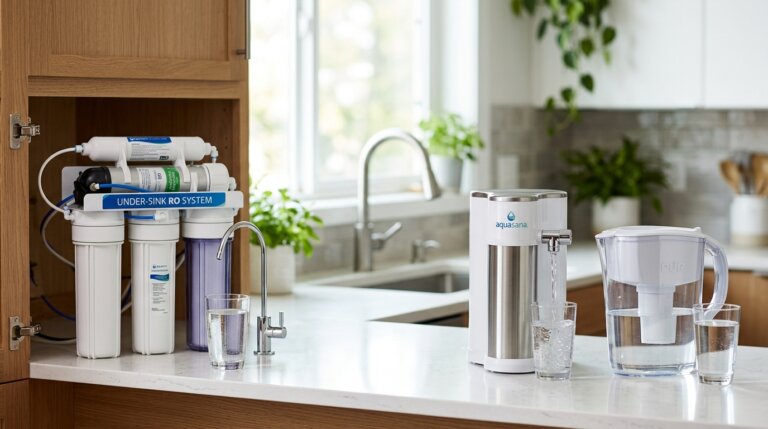
Under-Sink RO System
An NSF/ANSI 58 certified system removes 94-99% of PFAS at roughly $0.05 per litre, with no plastic bottle in the chain at all.
Frequently Asked Questions
Does Fiji water have PFAS?
FDA bottled water sampling included a Fiji-Island-sourced sample in which both PFOA and PFOS came back below the limit of quantification, meaning no measurable amount was detected. Fiji was not included in Consumer Reports’ 2020 analysis of 30 PFAS compounds, so no comprehensive independent figure exists.
Is Fiji water safe to drink?
It meets FDA bottled water standards and its artesian source is well-protected from surface contamination. The open question is not PFAS but microplastics and BPA, which an independent lab evaluation cited in a January 2025 lawsuit reported finding in Fiji products.
What is the Fiji water lawsuit about?
On 31 January 2025, the Plastic Pollution Coalition filed a complaint in DC Superior Court alleging false and deceptive marketing. The core claim is that independent lab testing found microplastics and BPA in Fiji products, contradicting marketing describing the water as “untouched” and “protected from external elements.” The complaint also challenges Fiji’s recycled-plastic claims.
Does Fiji water contain microplastics?
An independent laboratory evaluation cited in the 2025 complaint reported microplastics and bisphenol-A in Fiji products. This is an allegation being tested in court rather than an established regulatory finding. Microplastics in bottled water are a category-wide issue tied to plastic packaging rather than to any single brand’s source.
Why was Fiji water recalled in 2024?
Fiji voluntarily recalled 500ml 24-pack bottles sold on Amazon after manganese and bacteria were detected in one production run. The company reclaimed the large majority of affected bottles. Specific levels and bacteria types were not publicly disclosed, and the rapid recall alongside the FDA’s classification suggested a low risk profile.
Is artesian water better than spring water for PFAS?
Structurally, yes. A confined artesian aquifer sits under pressure beneath a protective layer, sealed from surface contact until bottling. Open spring sources are more exposed to surface-derived contamination like PFAS runoff. This is one reason artesian and purified waters tend to test lower than spring waters.
Which bottled water has published PFAS data?
Only the brands included in Consumer Reports’ 2020 analysis, plus a few tested separately. San Pellegrino tested at 0.31 ppt, Essentia at 0.2 ppt, Perrier at 1.10 ppt, Poland Spring at 1.66 ppt, and Topo Chico highest at 9.76 ppt before filtration upgrades. Fiji, Evian, Smartwater and Mountain Valley have no comprehensive figure.
Should I switch from Fiji to something else?
That depends on which concern you weight. On PFAS specifically, the available FDA data is reassuring. If plastic packaging and microplastics concern you, glass-bottled options like San Pellegrino remove that variable — though note that Mountain Valley, another glass option, faces its own class action over purity marketing. If you want a verifiable result rather than any brand’s claim, filtering your own water is the only route that delivers it.
Related Reading
- Bottled Water Brands & PFAS — Every Major Brand Ranked
- Does Evian Have PFAS? Testing & Lawsuits
- Does Essentia Water Have PFAS? Tested at 0.2 ppt
- Mountain Valley: PFAS Data & the 2025 Class Action
- Safest Bottled Water Brands — Ranked by Published Data
- Is It Safe to Drink from Plastic Bottles Daily?
- Best Water Filters That Actually Remove PFAS
References & Sources
- FDA — analytical results for PFAS in carbonated and non-carbonated bottled water sampling; April 2025 survey of 197 products
- Consumer Reports — bottled water PFAS testing (2020), 47 products, 30 compounds
- Plastic Pollution Coalition — complaint filed 31 January 2025, DC Superior Court
- EPA — PFAS National Primary Drinking Water Regulation (April 2024)
The Bottom Line
On the specific question of PFAS, Fiji comes out better than the absence of a Consumer Reports figure might suggest — FDA sampling found PFOA and PFOS below the limit of quantification, and the confined artesian source is structurally well-protected against the surface runoff that drives PFAS contamination. The genuine open question is different and more awkward for the brand: microplastics and BPA, reported by an independent lab and now the subject of a consumer protection lawsuit, entering not from the aquifer but from the plastic bottle. If PFAS is your concern, Fiji is a reasonable choice. If plastic packaging is, glass-bottled brands remove the variable entirely — and filtering your own water removes both.