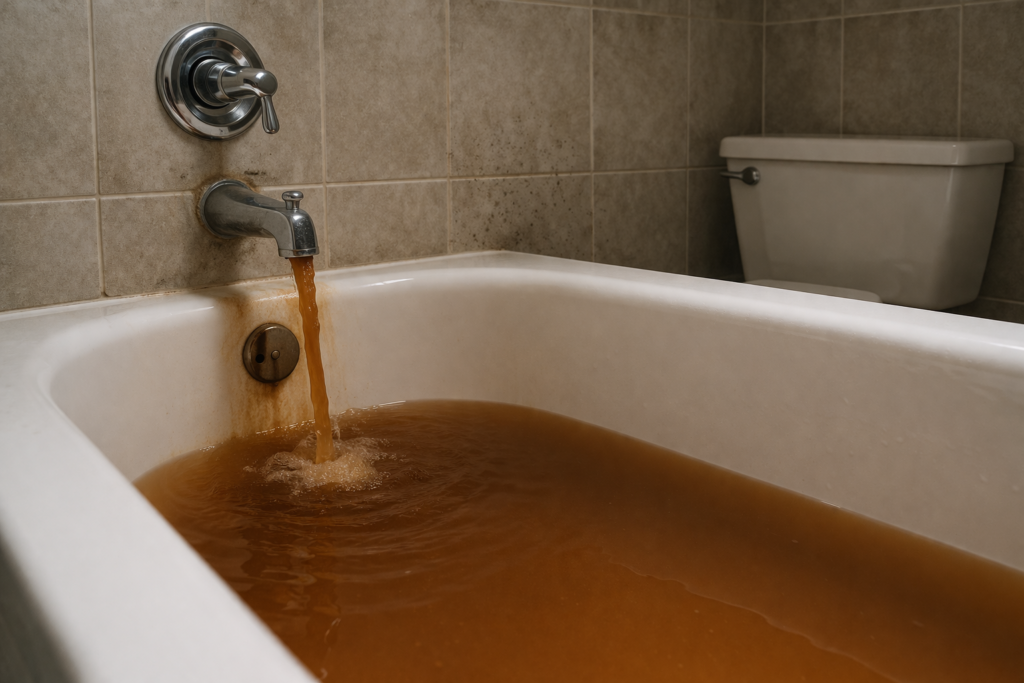
Brown, rusty, or reddish water — especially from the hot tap — is alarming, but the color itself tells you a lot about the cause. Is it your water heater, your pipes, or your water supply? This guide gives you a fast way to pinpoint the source, explains what’s happening inside the tank, and lays out the fixes plus honest 2026 costs so you can decide between a simple flush and a full replacement.
Find the Source in 2 Minutes
Before anything else, run this quick test: turn on the cold water at a tap and check the color, then run the hot water separately and check that. The pattern tells you where the rust is coming from.
| What You See | Likely Source | Fix |
|---|---|---|
| Rusty in hot only | Water heater tank or anode rod | Flush + replace anode rod |
| Rusty in hot and cold | Corroded iron pipes | Replace affected pipes |
| Reddish tint at every tap | High iron in the water supply | Install an iron filter |
| Clears after running a minute | Settled sediment or a mains disturbance | Monitor; flush if recurring |
If it’s hot water only, your heater is the source and this guide is exactly what you need. If it’s both, the problem is upstream — in your pipes or supply — and you’ll want to look at plumbing or an iron treatment instead.
Why Your Water Heater Produces Rusty Water
1. A Corroding Tank
As a heater ages, the protective glass lining inside the steel tank cracks and wears, letting the steel rust. Rust flakes then color your hot water. This is the most serious cause because a tank rusting from the inside is on its way to leaking.
2. A Worn-Out Anode Rod
The sacrificial anode rod is designed to corrode instead of your tank. Once it’s used up, corrosion shifts to the tank itself and rust appears. Replacing a spent anode rod is a cheap way to protect the tank — and it often clears the rust.
3. Sediment Buildup
Minerals and rust particles settle at the bottom of the tank and stir into the water, giving it a dirty, rusty look. Flushing removes this — see how to flush a water heater.
4. Rusty Pipes or High Iron
If the rust shows in cold water too, old galvanized iron pipes or naturally high iron in your supply are the more likely culprits — not the heater. Iron in well water is a common source of reddish staining.
How to Fix Rusty Hot Water
- Flush the tank to clear rust and sediment — often the first and cheapest fix.
- Replace the anode rod if it’s mostly consumed; a $20–$40 rod can add years to the tank and stop rust.
- Install an iron filter if high iron in the supply is the cause.
- Replace corroded pipes if old galvanized plumbing is shedding rust into both hot and cold.
- Replace the unit if the tank itself is rusting through — no repair can fix a corroded tank.
Is Rusty Water Safe to Use?
Rusty water is generally not an acute health hazard — the iron and rust are aesthetic problems that stain laundry and fixtures and give water a metallic taste. According to the EPA, iron is a “secondary” contaminant regulated for taste and appearance rather than direct health risk. That said, persistent rusty water signals corrosion or plumbing decay you should resolve, and if you’re ever unsure about your water quality, testing is the safe move.
Rusty hot water won’t fix itself.
Corrosion, a failing anode rod, or an aging tank often need a pro. Get connected with a licensed water heater specialist near you — available across the U.S. for flushing, anode rod and part replacement, and full inspections.
Connects you with an independent local service provider. Standard call rates may apply.
Repair or Replace? 2026 Costs
| Fix | Typical 2026 Cost |
|---|---|
| Tank flush (professional) | $100–$200 |
| Anode rod replacement | $150–$300 |
| Whole-house iron filter | $800–$2,500 installed |
| Full water heater replacement | $1,200–$3,500 |
If your heater is over 8–12 years old and the tank is the source, replacement is usually the smarter choice — rust from the tank body means it’s near the end of its life. Compare your options in our tank vs. tankless guide.
Frequently Asked Questions
Why is only my hot water rusty?
Rust in hot water only points to the water heater — usually a corroding tank, a spent anode rod, or sediment. Cold water stays clear because it hasn’t passed through the tank. Flush the tank and check the anode rod first.
Can I fix rusty water myself?
You can flush the tank and, if you’re handy, replace the anode rod. But if the tank itself is rusting through, or if you’re unsure of the source, a professional can diagnose it and advise on repair vs. replacement.
Is rusty water dangerous to drink?
It’s generally an aesthetic issue rather than a health emergency — iron is regulated by the EPA for taste and appearance. Still, don’t drink visibly rusty water routinely, and test your water if the problem persists.
How often should I flush my water heater?
At least once a year to prevent sediment and rust buildup — more often in hard water or high-iron areas.
When should I replace my water heater?
If rust is coming from the tank body itself, or the unit is over 8–12 years old and the corrosion is severe, replacement is the right call — a rusting tank will eventually leak.
Related Guides
- Water Heater Problems: Complete Troubleshooting Guide
- How to Flush a Water Heater
- Iron in Well Water: Signs & How to Remove It
- Is a Leaking Water Heater Dangerous?
- Why Your Water Heater Is Not Heating
The Bottom Line
Rusty water usually comes down to one question: is it hot-only (your heater) or hot-and-cold (your pipes or supply)? Once you know that, the fix follows — a flush and anode rod for the tank, an iron filter for the supply, or new pipes for old plumbing. A rusting tank body, though, is telling you it’s near the end. When you want it diagnosed properly, call 877-750-4078 to reach a local water heater specialist.