The PFAS Number
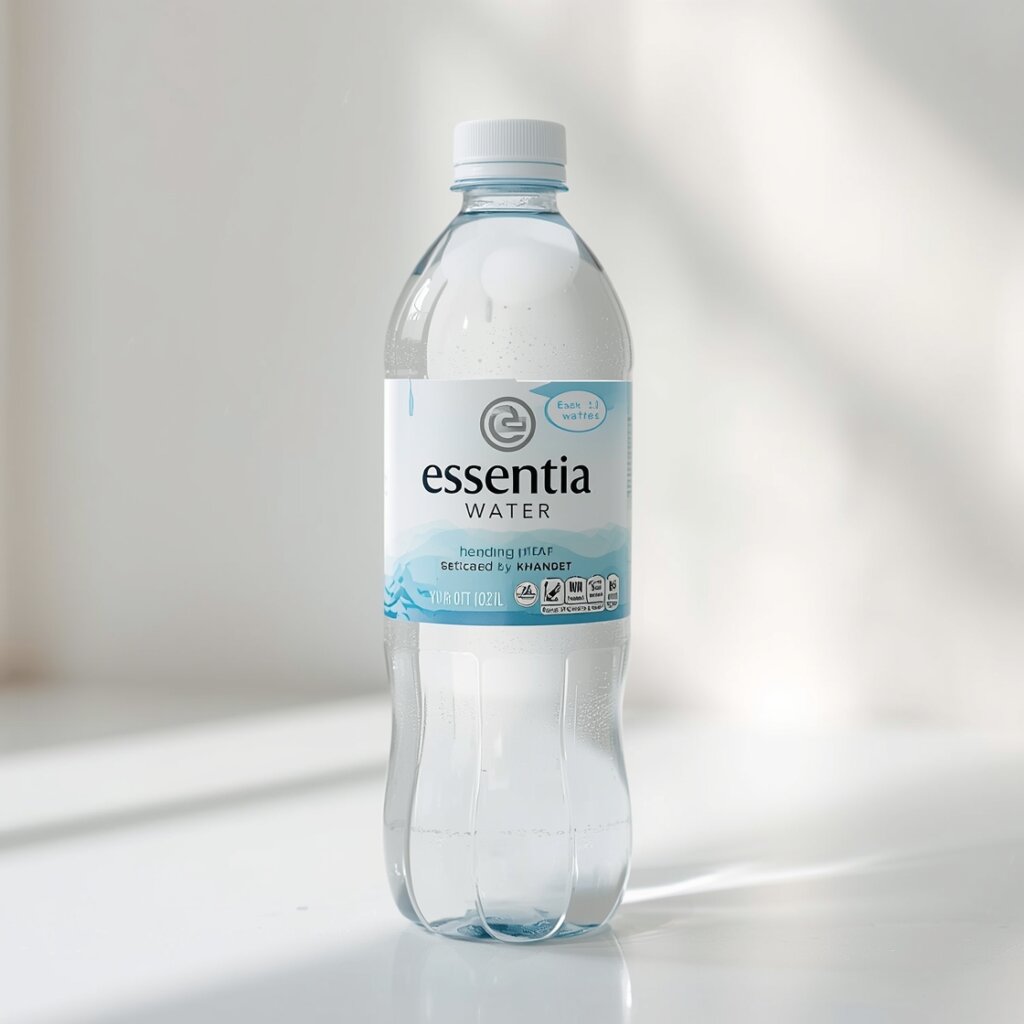
Essentia was not included in Consumer Reports’ 2020 analysis of 47 bottled waters. But unlike Smartwater, Fiji or Mountain Valley, independent contaminant testing has produced a figure for it:
| Measure | Essentia | Threshold | Status |
|---|---|---|---|
| Total PFAS | 0.2 ppt | EPA limit: 4 ppt | 20x below |
| Total PFAS | 0.2 ppt | EWG guideline: 0.1 ppt | Slightly above |
| TDS (post-RO) | <10 ppm | — | Near-pure |
| pH | 9.5+ | Neutral: 7.0 | Alkaline |
For context, that 0.2 ppt figure would place Essentia alongside the cleanest tested brands. Spindrift measured 0.19 ppt and San Pellegrino 0.31 ppt in the Consumer Reports study. Essentia sits between them.
The independent testing did flag other trace contaminants against health-guideline thresholds, though all measured within legal limits. This is normal for any water product — legal limits and precautionary health guidelines are different standards, and almost every bottled water sits between them on something.
Why the Number Makes Sense
Essentia publishes its own Water Quality Report, which is more disclosure than most brands provide. The process it describes explains the PFAS result directly:
- Micron filtration — removes visual and sub-visual suspended particles from the municipal source water.
- Activated carbon filtration — removes organic chemicals, chlorine and chlorine byproducts, pesticides and herbicides, and improves taste and odor.
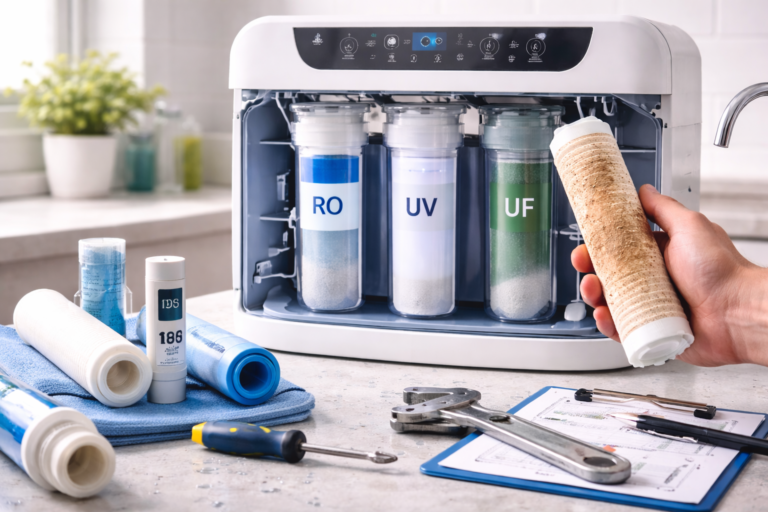
- Reverse osmosis — the stage that matters most here. According to the company’s report, this removes over 99% of dissolved salts, organics, metals, heavy metals such as lead and arsenic, asbestos, many radionuclides, cysts, bacteria and viruses. At this point the water sits below 10 ppm TDS.
- Electrolyte infusion — potassium, magnesium, calcium and sodium added back in trace amounts, for taste.
- Ionization — removes bitter-tasting acidic ions, producing pH 9.5 or higher.
Independent testing of NSF/ANSI 58 certified RO systems consistently shows 94-99% PFAS reduction. Essentia’s 0.2 ppt result is exactly what you would predict from an RO-based process starting with municipal water.
The Alkaline Claim, Honestly
Essentia’s central marketing proposition is pH 9.5 or higher, maintained until opened. That claim is accurate — the ionization step genuinely produces it, and independent measurement has recorded Essentia even higher, at pH 10.2.
Whether that pH does anything for you is a different question, and the physiology is not favourable:
- Stomach acid sits at roughly pH 1.5 to 3.5. Any water you drink, at pH 9.5 or 10.2, is neutralised almost immediately on arrival. It does not reach your bloodstream in an alkaline state.
- Blood pH is held between about 7.35 and 7.45 by your kidneys and respiratory system. That regulation is tight, automatic, and not adjustable by beverage.
There is also a specific point about the antioxidant angle. Ionized water is sometimes marketed on ORP — oxidation reduction potential, essentially a measure of antioxidant capacity. Independent testing found bottled Essentia at an ORP of roughly +205, statistically indistinguishable from ordinary tap water in the same test. A positive ORP means oxidising rather than antioxidant. Freshly ionized water from a countertop ionizer holds a negative ORP; bottled ionized water does not retain it. The property degrades between bottling and drinking.
What You Are Actually Buying
0.2 ppt PFAS, TDS under 10 ppm, three-stage purification with RO. On contaminants, Essentia performs.
A published water quality report describing the process in detail. Most brands do not offer this.
pH 9.5 is real; the health benefit is not established. The antioxidant angle does not survive bottling.
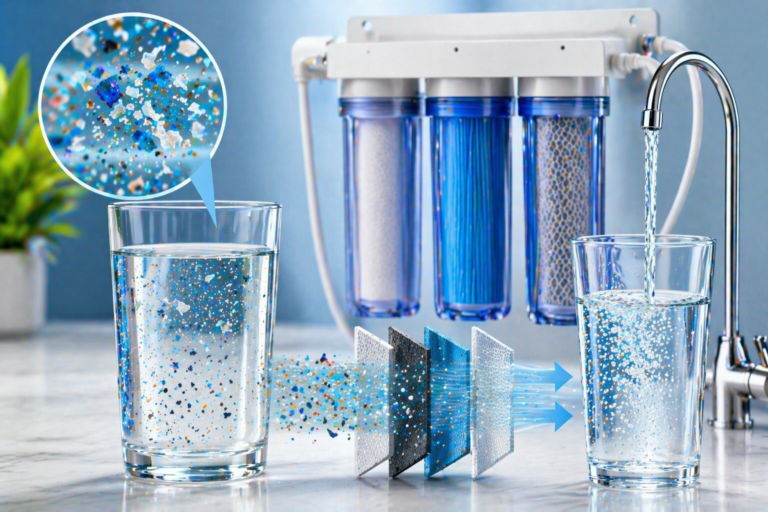
Microplastics enter after purification, from the bottle. RO does not address this. BPA and phthalate-free, but still plastic.
Note on Minerals
Because Essentia strips TDS below 10 ppm and then adds electrolytes back in trace amounts, its mineral content is minimal. The listed additions — sodium bicarbonate, dipotassium phosphate, magnesium sulfate, calcium chloride — are there for taste, not nutrition.
To put that in perspective against actual mineral waters: Gerolsteiner carries 2,488 mg/L TDS with 348mg calcium and 108mg magnesium per litre. San Pellegrino is 1,109 mg/L. Essentia is under 10 ppm before additions. These are different products serving different purposes — see our mineral water ranking if minerals are what you want.
Comparable Options
Whether you want a published figure, glass packaging, or the same purification at home. As an Amazon Associate we earn from qualifying purchases; it never affects our rankings.
Essentia Ionized Alkaline Water
Three-stage purification to under 10 ppm TDS, 0.2 ppt PFAS, pH 9.5+, BPA and phthalate-free bottles. A genuinely clean purified water.
Spindrift Sparkling Water
The lowest PFAS reading of any sparkling water in the Consumer Reports analysis, made with real squeezed fruit. Essentially level with Essentia.
S.Pellegrino (Glass)
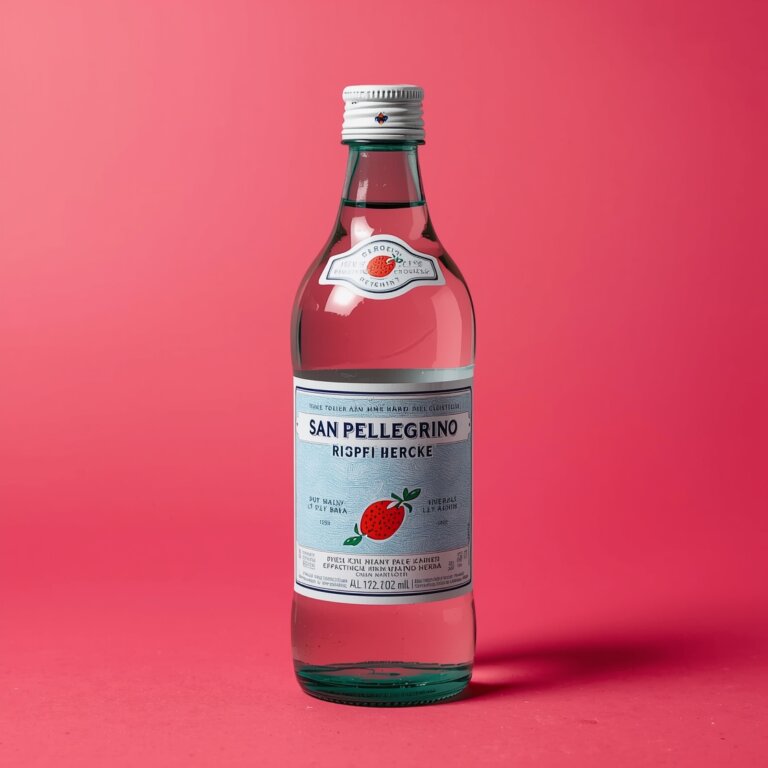
0.31 ppt tested, in glass. If microplastics are the concern that RO cannot solve, this removes the variable entirely.
Under-Sink RO System
NSF/ANSI 58 certified systems achieve 94-99% PFAS reduction — the same reverse osmosis Essentia uses, at roughly $0.05 per litre and no bottle.
Frequently Asked Questions
Does Essentia water have PFAS?
Independent testing puts Essentia at 0.2 ppt total PFAS — twenty times below the EPA’s 4 ppt enforceable limit, though slightly above the Environmental Working Group’s stricter 0.1 ppt precautionary guideline. That places it alongside the cleanest tested brands, between Spindrift at 0.19 ppt and San Pellegrino at 0.31 ppt.
How is Essentia purified?
Three stages, per the company’s published water quality report: micron filtration for suspended particles, activated carbon for organic chemicals and chlorine, then reverse osmosis, which removes over 99% of dissolved salts, metals, heavy metals, asbestos, radionuclides, cysts, bacteria and viruses. TDS drops below 10 ppm before electrolytes are added back for taste.
Does alkaline water actually do anything?
For healthy people, there is little robust evidence that it improves hydration or health. Stomach acid sits at roughly pH 1.5 to 3.5 and neutralises alkaline water almost immediately, and blood pH is held between about 7.35 and 7.45 by the kidneys and lungs regardless of what you drink. Essentia’s pH 9.5 claim is accurate; the health benefit is not established.
Is Essentia’s antioxidant claim real?
Independent measurement found bottled Essentia at an ORP of roughly +205, statistically similar to ordinary tap water in the same test. A positive ORP indicates oxidising rather than antioxidant properties. Freshly ionized water from a countertop ionizer holds a negative ORP; bottled ionized water does not appear to retain it between bottling and drinking.
Does Essentia contain minerals?
Very few. Reverse osmosis strips TDS below 10 ppm, and the electrolytes added back — sodium bicarbonate, dipotassium phosphate, magnesium sulfate, calcium chloride — are in trace amounts for taste rather than nutrition. Gerolsteiner, by comparison, carries 2,488 mg/L TDS.
Is Essentia better than Smartwater?
On verifiable data, yes — Essentia has an actual published PFAS figure of 0.2 ppt, while Smartwater has none and relies on process inference from vapor distillation. Both are heavily purified municipal water in plastic bottles, and both are likely very low in PFAS. Essentia simply proves it.
Does Essentia contain microplastics?
No brand-specific data has been published. Essentia is sold in plastic, and microplastics enter from packaging after purification, so reverse osmosis does not address them. The bottles are BPA and phthalate-free, which addresses a different concern. In April 2026 the EPA added microplastics to its Contaminant Candidate List for the first time.
Is Essentia worth the premium price?
For purity, it delivers — 0.2 ppt PFAS and sub-10 ppm TDS are genuinely good numbers, and the published water quality report is more transparency than most brands offer. For the alkaline health benefits the marketing emphasises, the evidence does not support the premium. A home RO system produces comparably purified water at roughly $0.05 per litre.
Related Reading
- Bottled Water Brands & PFAS — Every Major Brand Ranked
- Does Smartwater Have PFAS? Vapor Distillation Explained
- Does Fiji Water Have PFAS?
- Does Evian Have PFAS? Testing & Lawsuits
- Best Water for Hydration — Electrolyte vs Mineral vs Alkaline
- Mineral vs Purified Water
- Best Reverse Osmosis Systems for Home
References & Sources
- Essentia Water — Water Quality Report 2024, published three-stage purification process and TDS specification
- Independent contaminant testing — total PFAS 0.2 ppt, pH and ORP measurements
- Consumer Reports — bottled water PFAS testing (2020), 47 products, 30 compounds
- EPA — PFAS National Primary Drinking Water Regulation (April 2024); Contaminant Candidate List addition of microplastics (April 2026)
- Environmental Working Group — 0.1 ppt precautionary guideline
- NSF/ANSI 58 — reverse osmosis certification standard; 94-99% PFAS reduction in certified systems
The Bottom Line
Essentia is the unusual case of a brand whose substantiated claims are better than its marketing claims. The purity is real and measurable: 0.2 ppt PFAS puts it level with the cleanest tested waters, TDS under 10 ppm after three-stage RO purification, and a published water quality report that spells out the process. That is genuinely good, and more transparent than most competitors. The alkaline story is where it thins out — pH 9.5 is accurate but stomach acid neutralises it on arrival, and independent ORP measurement suggests the antioxidant property does not survive bottling at all. Buy Essentia for the purification, not the pH. And if you are paying a premium for RO-treated water, a home system delivers the same process for roughly $0.05 per litre.