Most water problems announce themselves before they become expensive. A metallic taste, a cloudy glass, a faint chlorine smell, a faucet that sputters — each one points to something specific happening between the source and your tap.
This guide is a diagnostic index. Find the symptom you are actually experiencing, and it will tell you the likely causes and take you to the full fix.
Quick Answer
Most household water complaints trace back to one of five categories: taste (metallic, salty, bitter), smell (chlorine, rotten egg, musty), appearance (cloudy, discolored, particles), pressure and flow (sputtering, air, low pressure), or mineral content (hardness, scale, TDS).
Taste and smell issues are usually harmless but fixable. Discoloration and pressure changes can signal plumbing problems. Persistent hardness damages appliances over time. Sudden, unexplained changes in any of these are worth investigating rather than ignoring.
Start Here: Is Your Water Actually Safe?
Before troubleshooting a specific symptom, it is worth knowing whether you have a safety issue or a nuisance issue. Most are nuisance issues — unpleasant but harmless. Some are not.
- Signs your drinking water may be unsafe — what to check at home before you call anyone
- Is tap water safe to drink in the USA? — how US municipal water is regulated and where the gaps are
- Is tap water safe to drink? What you need to know — the general safety picture
- Best water testing kits (2026) — if you want an actual number rather than a guess
Taste Problems
Taste is the most common complaint and usually the least alarming. Water picks up flavor from minerals, pipes, disinfectants, and its own age in the plumbing.
- Why does my water taste metallic? — typically iron, copper, zinc, or manganese leaching from pipes
- Why does water taste salty? — often chloride, sulfates, or a water softener that has failed to regenerate correctly
- How to fix bad taste in drinking water — the practical fixes, ranked by cost
Smell Problems
Your nose is a better instrument than you think. Distinct smells map to distinct causes.
- Why does tap water smell like chlorine? — usually normal municipal disinfection, and easy to remove
- How to remove bad smell from drinking water — including the rotten-egg sulfur smell, which often points to the water heater rather than the supply
Appearance Problems
Cloudy water is alarming and usually harmless. Colored water usually is not.
- Why is my drinking water cloudy or milky? — most often dissolved air, which clears from the bottom up in a glass. If it clears, you are fine.
- Iron bacteria and orange slime — how to identify and treat it
- Manganese in water — black or brown staining, and why it matters
Pressure and Flow Problems
- Why is there air coming out of my faucet? — sputtering, spitting, and what causes it
- Why does water leave scale in kettles and pipes? — the mineral buildup that quietly restricts flow over years
Hard Water and Mineral Content
Hardness is not a safety problem, but it is an expensive one. Scale shortens appliance life, reduces heating efficiency, and makes soap useless.
- Hard water treatment options: cost and installation guide — every method compared, from $30 shower filters to whole-house softeners
- What is TDS in drinking water? — the number everyone quotes and few understand
- Ideal TDS level for safe drinking water — what range you actually want
- Why is my water making my skin dry? — the hardness-and-skin connection
Contamination Concerns
If your concern is not taste or smell but what you cannot detect at all, these are the guides that matter.
- PFAS in tap water by state — where contamination is worst
- How to test your water for PFAS at home
- Does boiling water remove PFAS? — no, and it makes it worse
- Best water filters that actually remove PFAS
Choosing a Fix
Once you know what the problem is, the question becomes what to install.
- How to choose the right water purifier for your home
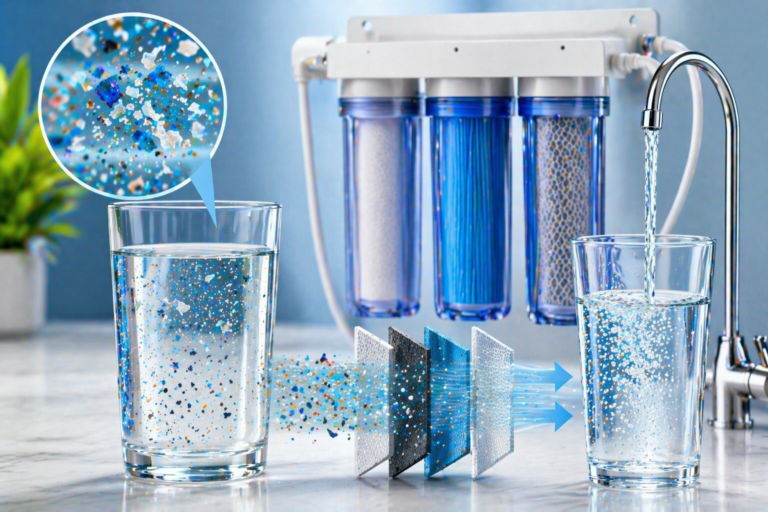
- RO vs UV vs UF water purifiers — which technology solves which problem
- Is RO water good or bad for health? — the mineral-stripping debate, honestly
- Whole-house vs under-sink filter — which do you actually need
- Best water filter pitchers — the cheapest entry point
- Best under-sink water filters for PFAS
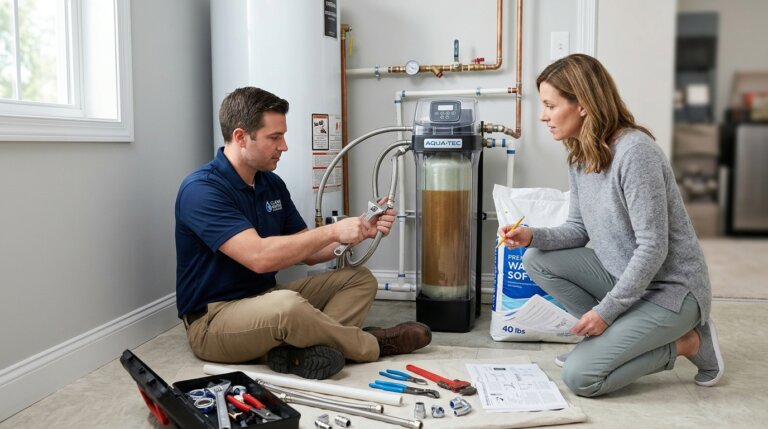
- Reverse osmosis installation: DIY vs professional cost
Water Heater Issues
A surprising number of “water problems” are actually water heater problems — particularly smells, temperature complaints, and discoloration that only appears on the hot side.
- Water heater problems: complete troubleshooting guide
- Is a leaking water heater dangerous?
- Water heater repair vs replace
- How long should a water heater take to heat up?
A Simple Diagnostic Rule
Before you spend money, run this check:
- Is it hot water only? The problem is almost certainly your water heater, not your supply.
- Is it one faucet only? The problem is that fixture or the pipe feeding it, not your water.
- Is it every tap, all the time? Now you are looking at your supply — municipal or well.
- Did it start suddenly? Sudden changes warrant more attention than gradual ones. A slow decline in pressure over years is scale. A sudden drop is something else.
That single sequence eliminates most of the wrong diagnoses people make.
Checking for a recall? See our bottled water recall tracker for what is currently pulled from shelves, straight from the FDA enforcement database.
Frequently Asked Questions
Why does my water suddenly taste different?
Sudden taste changes usually come from one of three sources: a change in your municipal supply (seasonal source switching or disinfection adjustments), corrosion in your home’s pipes, or a water heater issue if only the hot water is affected. If it affects every tap including cold, contact your water utility — they may already know.
Is cloudy water dangerous?
Usually not. The most common cause is dissolved air, which is harmless. Fill a glass and let it sit — if it clears from the bottom upward within a couple of minutes, it was air. If it stays cloudy or has visible particles, that warrants investigation.
Why does my water smell like rotten eggs?
Hydrogen sulfide. If the smell is only on the hot side, the culprit is usually the water heater‘s anode rod reacting with sulfate-reducing bacteria in the tank — a repairable problem. If it affects cold water too, the source is your supply, most often a well.
Should I test my water or just buy a filter?
Test first. Buying a filter without knowing what you are filtering is how people end up with a system that does not address their actual problem. A basic test kit costs a fraction of a filtration system and tells you which technology you need.
Can I fix hard water without a softener?
Partially. Salt-free conditioners reduce scale buildup without removing minerals, and shower filters help with skin and hair. But a salt-based ion-exchange softener is the only method that actually removes hardness minerals from your water.