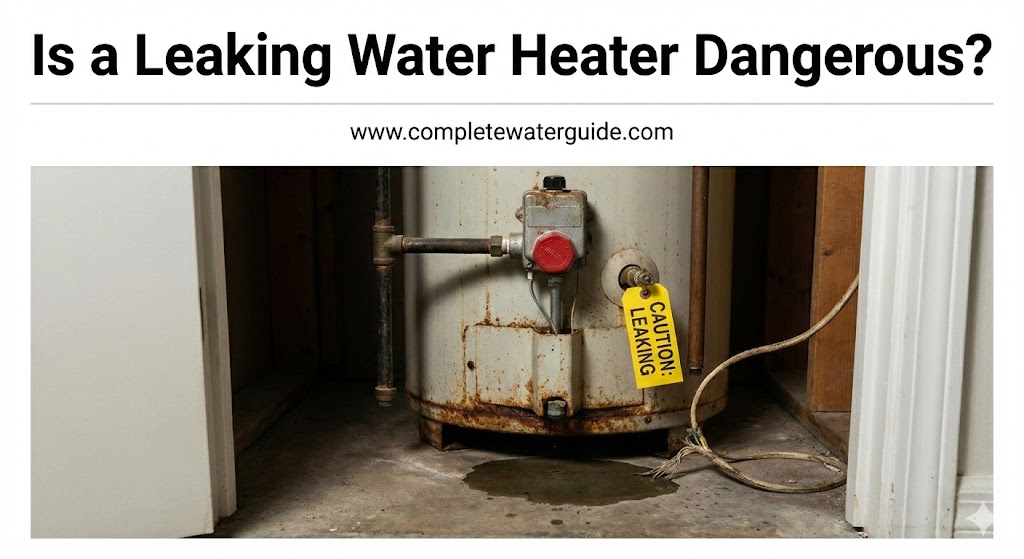
Finding a puddle around your water heater is stressful, but is it an emergency? While a slow drip can look harmless, a leaking water heater is one of the few household failures that can turn dangerous fast — from a tank rupture to electrocution to a flooded basement. This guide gives you an answer-first breakdown of the real risks, a location-by-location way to diagnose where your leak is coming from, the exact emergency steps to take right now, and honest 2026 repair-vs-replace costs so you know what you’re walking into.
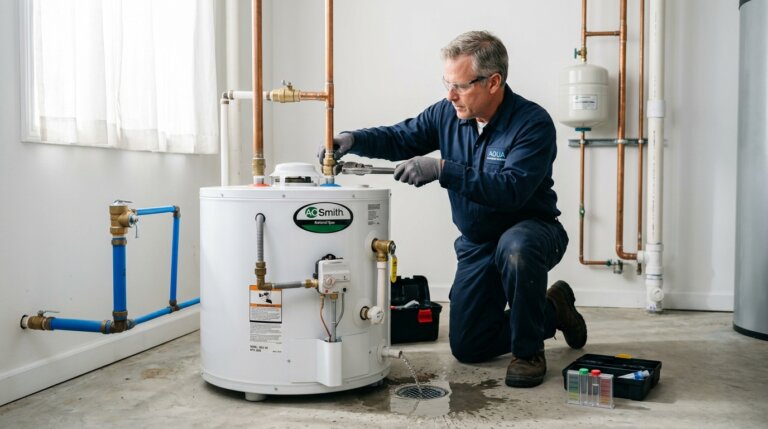
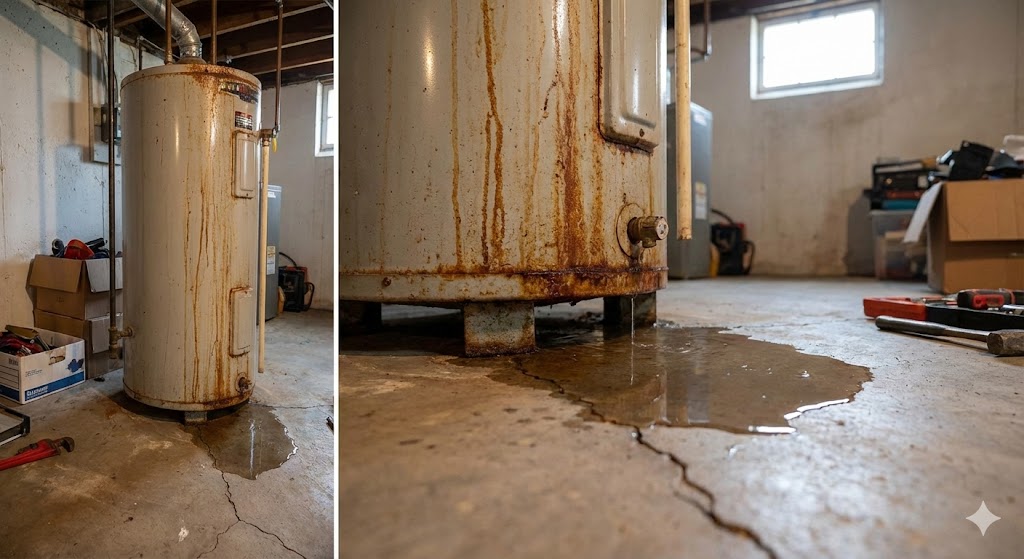 Water heater leaking from the bottom onto a concrete floor” />
The 3 Critical Risks of a Leaking Water Heater
Not every leak is a five-alarm emergency, but every leak deserves immediate attention because of what it can lead to. Here are the three dangers that matter most.
1. Explosion from a Faulty T&P Valve
The Temperature & Pressure (T&P) relief valve is your heater’s single most important safety device. When internal pressure or temperature climbs too high, the valve opens to release it. If that valve is leaking, corroded, or stuck — or if someone has capped it to “stop the drip” — pressure can build with nowhere to go. In rare but well-documented cases, an over-pressurized tank can rupture violently. The U.S. Consumer Product Safety Commission has long flagged water-heater pressure failures as a genuine hazard, which is why you should never plug or cap a leaking T&P valve.
2. Electrocution (Electric Heaters)
Water conducts electricity. On an electric water heater, water leaking from the top fittings or pooling around the base near the junction box and heating-element connections creates a serious shock hazard. If you see water on or around an electric unit, do not touch the puddle or the heater — go straight to your breaker panel and cut power to the circuit first.
3. Scalding and Structural & Mold Damage
Hot water escaping under pressure can cause serious burns — water at 140°F can scald in seconds. Beyond the immediate danger, a slow leak quietly destroys drywall and subfloors and can trigger mold growth within 24–48 hours, creating long-term respiratory risks. According to the CDC, damp materials should be dried within 48 hours to prevent mold from taking hold.
Diagnose Your Leak by Location
Where the water is coming from tells you almost everything about how urgent the problem is and whether it’s repairable. Use this table to identify your situation.
| Leak Location | Likely Cause | Danger Level | What To Do |
|---|---|---|---|
| T&P valve / side pipe | Excess pressure or a failed valve | Critical | Shut off power/fuel now. Call a pro. Never cap it. |
| Bottom of the tank | Internal tank corrosion / crack | High | Tank failure is imminent. Plan to replace the unit. |
| Top connections / nipples | Loose fitting or corroded inlet/outlet | Medium | Often repairable. Watch for water near wiring. |
| Drain valve (spigot) | Loose valve or a worn washer | Low | Tighten or replace the valve; usually a cheap fix. |
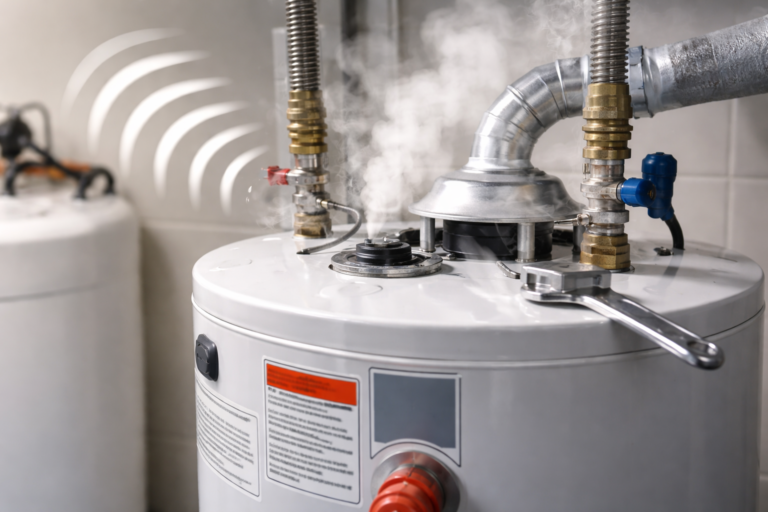
If you see or hear steam hissing from anywhere on the unit, treat it as a critical emergency, keep clear, and call a professional immediately.
Emergency Steps: What to Do Right Now
If you’ve confirmed a leak, follow this exact sequence to make the unit safe before help arrives.
- Turn off the heat source. Electric: flip the double-pole breaker labeled “Water Heater” in your panel. Gas: turn the thermostat dial to “Off,” then close the gas supply valve on the pipe feeding the unit.
- Shut off the water. Find the cold-water inlet valve (a handle or wheel on the pipe entering the top of the tank) and turn it clockwise until it stops. This stops the tank from refilling. If you can’t find it, shut off your home’s main water valve.
- Relieve pressure and drain (if safe). Attach a garden hose to the bottom drain valve and route it to a floor drain or outside. Opening a nearby hot tap helps it drain. This removes scalding water and pressure — skip this step if you can’t do it safely.
- Contain the water. Use towels, a wet-vac, or a drain pan to protect flooring and stop water from reaching outlets or wiring.
- Call a licensed professional. Leaks usually require part replacement or a full unit swap. Don’t try to weld, epoxy, or patch a steel tank — it won’t hold and it’s dangerous.
Leaking right now? Talk to a water heater pro.
A leak can flood or fail fast. Get connected with a licensed water heater specialist near you — available across the U.S. for emergency repairs, replacements, and diagnostics.
Connects you with an independent local service provider. Standard call rates may apply.
Repair or Replace? Honest 2026 Costs
The single biggest question with a leak is whether you’re looking at a cheap fix or a full replacement. The rule of thumb: if the leak is from a valve, fitting, or connection, it’s usually repairable. If it’s from the tank body itself, the unit is done. A steel tank that has rusted through cannot be safely repaired.
| Problem | Fix | Typical 2026 Cost (parts + labor) |
|---|---|---|
| Leaking drain valve | Replace valve | $150–$250 |
| Faulty T&P valve | Replace valve | $150–$350 |
| Loose inlet/outlet fitting | Reseal / replace nipple | $150–$300 |
| Tank body leaking (rusted through) | Replace whole unit | $1,200–$3,500 |
| Upgrade to tankless | Replace + reconfigure | $3,000–$6,000 |
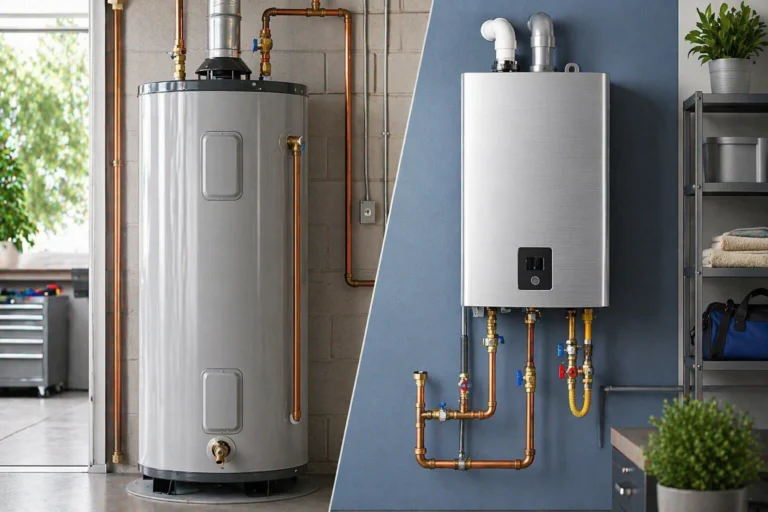
If your heater is more than 8–12 years old and the tank is leaking, replacement is almost always the smarter money — a repair on an old tank just delays the inevitable. Not sure how the two tank styles compare on price and lifespan? See our breakdown of tank vs. tankless water heaters.
Why Water Heaters Start Leaking
Understanding the root cause helps you prevent the next leak. The most common culprits are:
- Internal corrosion. Once the sacrificial anode rod is used up, the steel tank itself starts to rust from the inside out — the leading cause of end-of-life tank leaks.
- Sediment buildup. Minerals settle at the bottom of the tank, trap heat against the steel, and accelerate corrosion. This is worse in hard water areas. Flushing the tank helps.
- Excess pressure. Thermal expansion or high household water pressure stresses the tank and forces the T&P valve to weep.
- Loose or corroded connections. Inlet/outlet fittings and the drain valve loosen or corrode over years of heating and cooling cycles.
How to Prevent Future Leaks
- Flush the tank once a year to clear sediment and slow corrosion.
- Check the anode rod every 2–3 years and replace it when it’s mostly consumed — a $30 rod can add years to the tank.
- Test the T&P valve annually by lifting the lever briefly; it should release water and reseat cleanly.
- Install a drain pan with a leak sensor so a future leak is caught early instead of flooding.
- Keep household pressure below 80 psi; add an expansion tank if you have a closed system.
Frequently Asked Questions
Is a leaking water heater an emergency?
It can be. A leak from the T&P valve or the tank body is urgent because of explosion, flooding, and electrocution risk — shut off power and water and call a pro. A slow drip from the drain valve is lower risk but should still be fixed promptly, since small leaks become large ones.
Can a water heater leak cause a fire?
Indirectly, yes. Water reaching electrical wiring can cause short circuits and sparks. On a gas unit, a leak that extinguishes the pilot while gas keeps flowing can allow gas to accumulate. Both are reasons to cut power or gas the moment you spot a leak.
Is a small drip dangerous?
A small drip isn’t an immediate explosion risk, but it’s a warning sign. Once steel begins rusting through, a minor drip can become a major flood overnight. Diagnose the source and fix it — don’t ignore it.
Can I use my water heater while it’s leaking?
No. Running a leaking heater keeps pressure and heat inside a compromised tank, raising the risk of rupture, scalding, and water damage. Shut it down until it’s inspected.
How much does it cost to fix a leaking water heater?
A valve, fitting, or drain-valve leak typically runs $150–$350 with a plumber. If the tank itself is leaking it can’t be repaired and must be replaced, generally $1,200–$3,500 installed depending on size, fuel type, and local labor.
How long do water heaters last?
A conventional tank heater lasts about 8–12 years; tankless units can last 15–20 years with maintenance. A tank leak on a unit near or past that age is a strong signal to replace rather than repair.
Related Guides
- Water Heater Problems: Complete Troubleshooting Guide
- Why Your Water Heater Is Not Heating Properly
- Why Is My Water Heater Making Noise?
- Why Does My Water Heater Produce Rusty Water?
- How to Flush a Water Heater
The Bottom Line
A leaking water heater is one of those problems that’s easy to underestimate and expensive to ignore. The safe move is always the same: identify where the water is coming from, shut off power and water, and get a professional eye on it before deciding to repair or replace. A valve or fitting leak is often a quick, affordable fix — but a leaking tank on an aging unit is telling you it’s time for a new heater. When in doubt, call 877-750-4078 to reach a licensed local water heater specialist.