Few home problems ruin a morning faster than a water heater that won’t heat. Whether you’re getting no hot water at all, water that’s only lukewarm, or heat that runs out far too fast, the cause is usually one of a handful of well-understood failures. This guide walks through every common reason — for both electric and gas units — with the fixes you can safely try yourself, the ones best left to a pro, and honest 2026 repair costs.
Match Your Symptom to the Cause
The way your hot water is failing is the fastest clue to what’s wrong. Find your symptom in the table below before you start troubleshooting.
| Symptom | Most Likely Cause | First Thing to Check |
|---|---|---|
| No hot water at all | Tripped breaker, out pilot, or dead element | Power / gas supply |
| Water only lukewarm | One failed element or bad thermostat | Thermostat setting |
| Hot water runs out fast | Sediment buildup or broken dip tube | Tank flush |
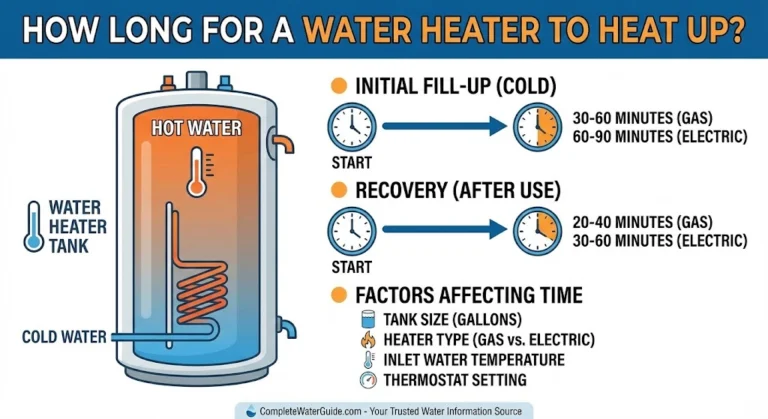
| Takes forever to reheat | Sediment or undersized unit | Tank age & size |
The 6 Common Causes (Electric & Gas)
1. Tripped Breaker or Power Issue (Electric)
The most common — and easiest — cause. A tripped breaker, blown fuse, or tripped high-temperature reset button on the unit cuts power to the elements. Check your panel first before assuming anything worse.
2. Pilot Light or Gas Supply Problem (Gas)
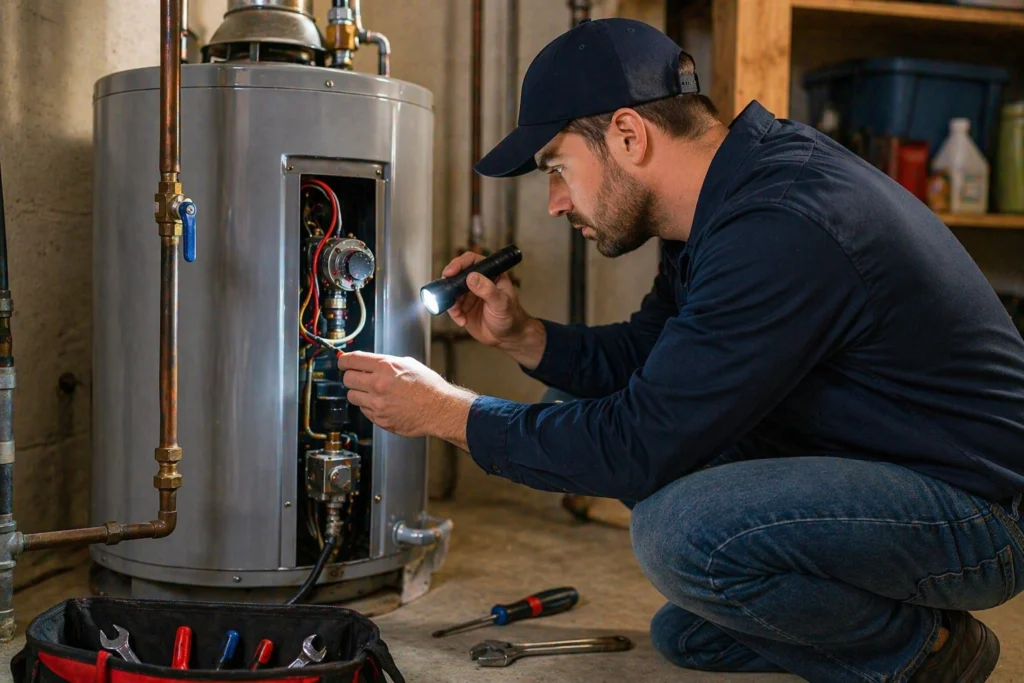
On a gas heater, a pilot light that’s gone out, a faulty thermocouple, or a closed gas valve stops heating entirely. Many units have re-light instructions printed on the side. If the pilot won’t stay lit, the thermocouple usually needs replacing.
3. Faulty Heating Element (Electric)
Most electric heaters have two elements. If the lower element fails you get lukewarm water; if the upper fails you may get little or none. Elements burn out over time, especially in hard water areas where scale coats them.
4. Thermostat Problems
A miscalibrated or failed thermostat won’t call for heat at the right time, leaving water cold or inconsistent. Confirm it’s set to a safe 120–125°F before replacing it.
5. Sediment Buildup
Minerals settle at the bottom of the tank and insulate the water from the burner or lower element, so heating slows and hot water runs out quickly. You may also hear popping or rumbling. Flushing usually restores performance — see our guide on how to flush a water heater.
6. Broken Dip Tube
The dip tube directs incoming cold water to the bottom of the tank to be heated. If it cracks or breaks, cold water mixes at the top and dilutes your hot water — a classic “hot water runs out fast” symptom on older units.
Step-by-Step: What to Check First
- Check the power or gas. Reset a tripped breaker; press the red high-limit reset button on an electric unit; re-light the pilot on a gas unit per the label instructions.
- Confirm the thermostat setting. It should be 120–125°F. Bumping it too low is a surprisingly common “no hot water” cause.
- Flush the tank if water is lukewarm, slow to heat, or noisy. This clears sediment and often restores full performance.
- Test or replace a failed element (electric) with a multimeter — only if you’re comfortable working with power shut off at the breaker.
- Inspect connections and valves for leaks or corrosion that could point to a bigger problem.
When Should You Call a Professional?
Basic checks — resetting a breaker, re-lighting a pilot, flushing the tank, adjusting the thermostat — are safe to do yourself. But anything involving electrical wiring, gas components, element replacement, or a suspected tank failure should go to a licensed technician. Gas work in particular carries real safety risk and is worth doing right.
No hot water? Get a pro on the line.
Electrical and gas repairs aren’t DIY jobs. Get connected with a licensed water heater specialist near you — available across the U.S. for element and thermostat replacement, pilot and gas issues, and diagnostics.
Connects you with an independent local service provider. Standard call rates may apply.
2026 Repair Costs
| Repair | Typical 2026 Cost (parts + labor) |
|---|---|
| Thermostat replacement | $150–$300 |
| Heating element replacement | $200–$350 |
| Thermocouple / pilot repair (gas) | $150–$300 |
| Tank flush (professional) | $100–$200 |
| Full unit replacement | $1,200–$3,500 |
If your unit is over 8–12 years old and needs a major repair, weigh it against replacement — and consider whether a tankless upgrade makes sense for your household.
Prevent It From Happening Again
- Flush the tank every 6–12 months to keep sediment from insulating the elements or burner.
- Keep the thermostat at 120–125°F for efficiency and scald safety.
- Replace the anode rod every few years to slow internal corrosion.
- Schedule an annual inspection to catch failing elements or gas components early.
Frequently Asked Questions
Why is my water heater not producing any hot water?
For electric units, the usual cause is a tripped breaker, a tripped high-limit reset, or a failed upper heating element. For gas units, it’s typically an out pilot light or a gas-supply problem. Check power or gas first, then the thermostat.
Why is my water only lukewarm?
Lukewarm water on an electric heater usually means the lower heating element or its thermostat has failed. On any unit, heavy sediment can also reduce heating efficiency. Test the element and flush the tank.
Why does my hot water run out so fast?
Rapid loss of hot water is commonly caused by sediment reducing the tank’s usable capacity, or a broken dip tube letting cold water mix in at the top. Flushing helps sediment; a broken dip tube needs replacement.
Is it safe to fix a water heater myself?
Resetting breakers, re-lighting pilots, flushing the tank, and adjusting the thermostat are generally safe. Element replacement, wiring, and gas repairs should be handled by a professional because of shock, gas, and scald risks.
How long does a water heater last?
A conventional tank heater lasts about 8–12 years; tankless units 15–20 years with maintenance. If an aging unit needs a costly repair, replacement is often the better value.
Related Guides
- Water Heater Problems: Complete Troubleshooting Guide
- Is a Leaking Water Heater Dangerous?
- Why Is My Water Heater Making Noise?
- How to Flush a Water Heater
- Tank vs Tankless Water Heater
The Bottom Line
A water heater that won’t heat is usually fixable, and often with something as simple as a breaker reset, a re-lit pilot, or a tank flush. Match your symptom to the cause, try the safe checks first, and escalate anything involving elements, wiring, or gas to a licensed pro. If you’d rather have it handled fast, call 877-750-4078 to reach a local water heater specialist.