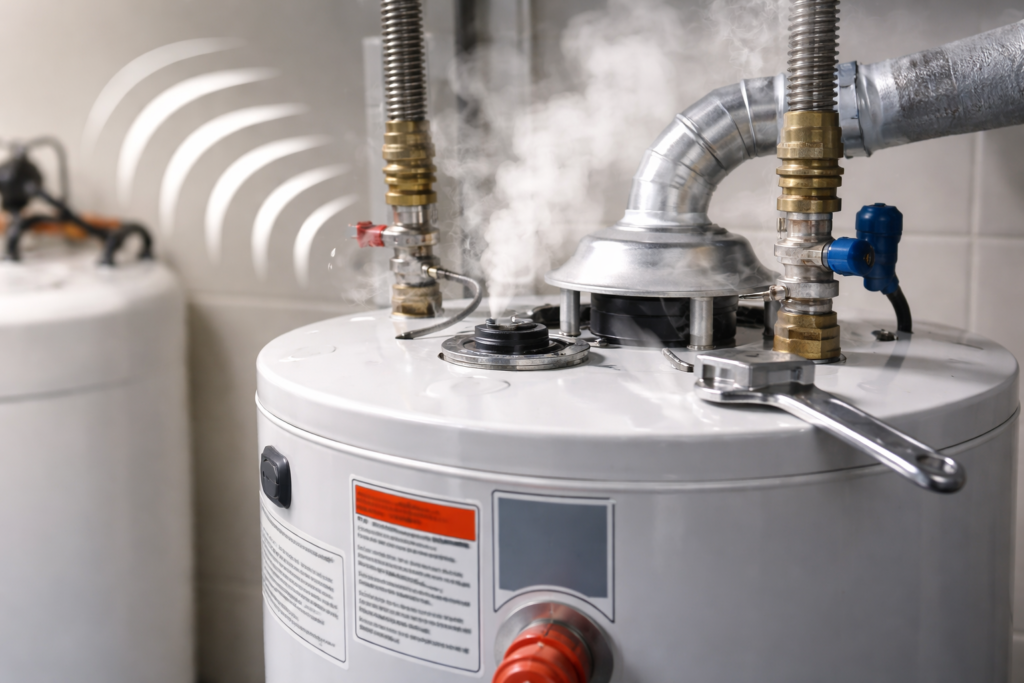
Popping, rumbling, banging, ticking, or a high-pitched whine coming from your water heater? Each sound points to a different cause — and while most are harmless nuisances, a few are worth acting on quickly. This guide decodes every common water heater noise, tells you exactly what’s making it, how to fix it, and when the sound is a warning you shouldn’t ignore.
Identify the Sound You’re Hearing
Start by matching your noise to the table below — the type of sound is the single best clue to the cause.
| Sound | Most Likely Cause | Urgency |
|---|---|---|
| Popping / rumbling | Sediment buildup at tank bottom | Low – flush it |
| Banging / knocking | Water hammer or pressure change | Medium |
| Hissing / whistling | Valve issue, leak, or high pressure | Check soon |
| Ticking | Metal parts expanding/contracting | Low – normal |
| Screeching / high-pitched | Restricted flow or a partly closed valve | Medium |
Why Sediment Is Usually the Culprit
The most common water heater noise — that popping or rumbling sound — comes from sediment. Over time, minerals in your water (calcium and magnesium, especially in hard water homes) settle at the bottom of the tank. As the burner or lower element heats the tank, water trapped under that sediment layer boils and bubbles up through it, creating the popping sound — a bit like a kettle.
This isn’t just noisy. That insulating sediment layer forces the heater to work harder, which raises energy bills and shortens the tank’s life by trapping heat against the steel. Clearing it usually fixes both the noise and the efficiency loss.
How to Fix Each Noise
- Popping / rumbling: Flush the tank to remove sediment. See our step-by-step guide on how to flush a water heater. In hard water areas, consider a water softener to slow future buildup.
- Banging / knocking: Often water hammer in the pipes. A water-hammer arrestor or a pressure-reducing valve usually solves it.
- Hissing / whistling: Check the T&P valve and inlet/outlet connections for leaks or excess pressure. This one is worth inspecting promptly.
- Ticking: Usually normal thermal expansion of pipes and fittings, or the heat-trap nipples. Rarely needs action.
- Screeching: Typically a valve that’s not fully open restricting flow. Make sure inlet valves are fully open.
Is a Noisy Water Heater Dangerous?
Most water heater noises — especially popping from sediment and ticking from expansion — are harmless nuisances. But some sounds deserve attention: persistent banging can indicate pressure problems, and hissing can point to a leak or a failing T&P valve. If a noise is new, loud, and paired with reduced hot water or any sign of leaking, it’s worth having a professional inspect it before it becomes a bigger repair.
Persistent noise? Have a pro inspect it.
Loud banging or hissing can signal pressure or valve problems. Get connected with a licensed water heater specialist near you — available across the U.S. for tank flushing, valve repair, and full diagnostics.
Connects you with an independent local service provider. Standard call rates may apply.
Prevent the Noise From Returning
- Flush the tank every 6–12 months — the single most effective step against sediment noise.
- Install a water softener if you have hard water, to slow mineral buildup at the source.
- Keep household pressure below 80 psi and add a pressure-reducing valve if needed.
- Check the anode rod every few years; a spent rod speeds up corrosion and scale.
- Schedule annual maintenance to catch valve or pressure issues early.
Frequently Asked Questions
Why is my water heater making popping sounds?
Popping is almost always sediment at the bottom of the tank. Water boils beneath the mineral layer and bubbles up through it. Flushing the tank clears the sediment and usually stops the noise.
Can I fix water heater noise myself?
Yes for the common cause — flushing the tank to remove sediment is a straightforward DIY job. Persistent banging, hissing, or valve issues are better checked by a professional.
Is it safe to ignore water heater noise?
Occasional ticking or mild popping is fine, but don’t ignore new, loud, or persistent banging or hissing — these can signal pressure or valve problems that get worse and more expensive over time.
Does a noisy water heater use more energy?
Yes. Sediment insulates the water from the heat source, forcing the unit to run longer to reach temperature. Clearing it can lower energy use and extend the tank’s life.
How often should I flush my water heater?
At least once a year — more often in hard water areas. Regular flushing is the best defense against sediment noise and efficiency loss.
Related Guides
- Water Heater Problems: Complete Troubleshooting Guide
- How to Flush a Water Heater
- Is a Leaking Water Heater Dangerous?
- Why Your Water Heater Is Not Heating
- Why Does My Water Heater Produce Rusty Water?
The Bottom Line
A noisy water heater is usually your tank telling you it needs a flush — sediment is behind most popping and rumbling, and clearing it fixes the sound and improves efficiency. Match your noise to the cause, flush regularly, and keep an eye (and ear) out for banging or hissing that could mean a pressure or valve problem. For persistent noise, call 877-750-4078 to reach a local water heater pro.