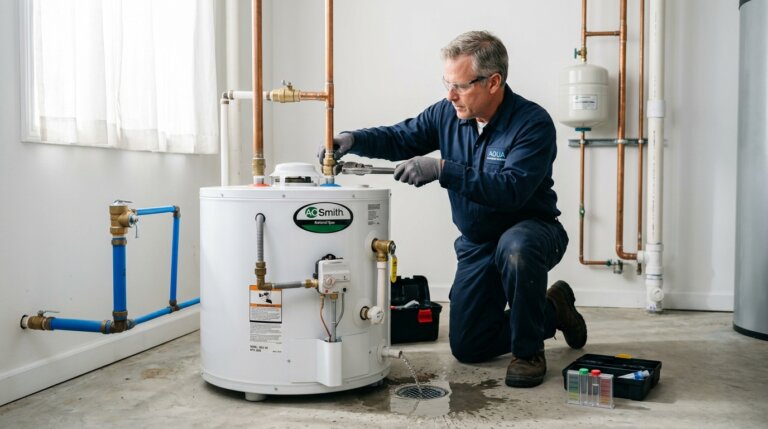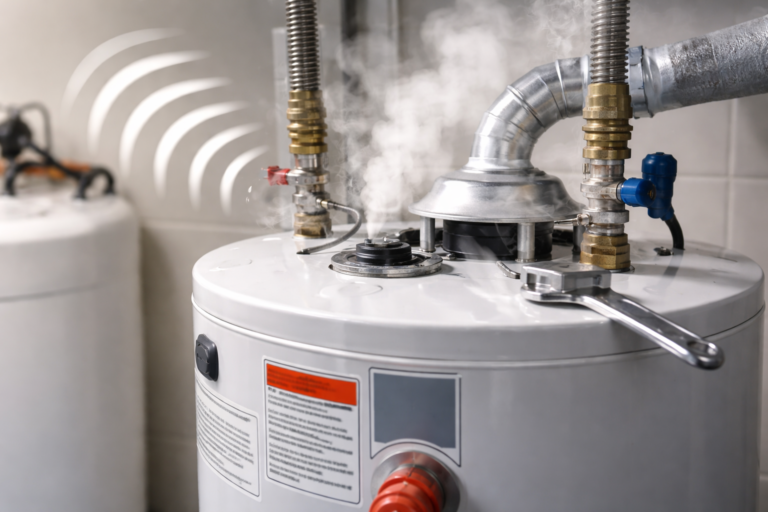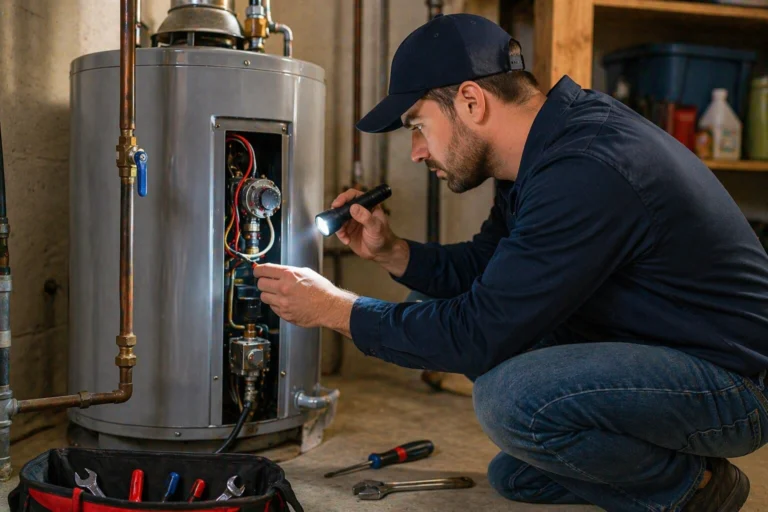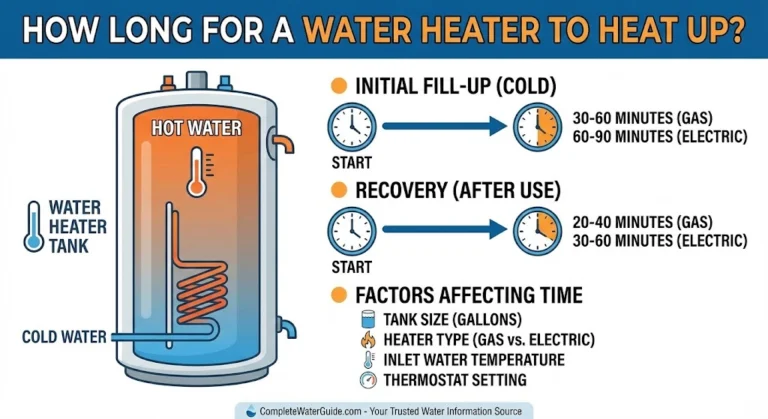
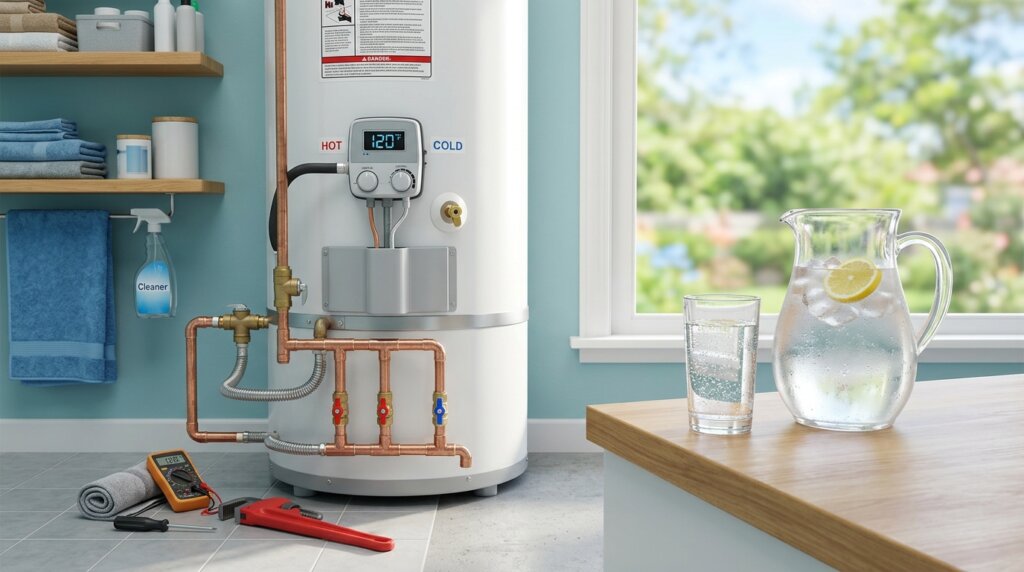
When a water heater acts up, the symptom — no hot water, a strange noise, a puddle on the floor, rusty or smelly water — is your fastest route to the cause. This is your complete troubleshooting hub: a symptom-by-symptom map of every common water heater problem, what’s causing it, whether it’s a safe DIY fix or a job for a pro, and a link to the full step-by-step guide for each one. Start with the symptom table, then jump to your issue.
The Symptom Map (Start Here)
Find your symptom in the left column. The table gives you the likely cause and links you straight to the detailed fix guide.
| Symptom | Most Likely Cause | Full Guide |
|---|---|---|
| No hot water / lukewarm | Breaker, element, thermostat, pilot, sediment | Not heating guide |
| Popping, banging, rumbling | Sediment or pressure | Noise guide |
| Water or puddle around the unit | Valve, fitting, or tank corrosion | Leaking guide |
| Rusty or brown hot water | Anode rod, sediment, or tank corrosion | Rusty water guide |
| Rotten-egg / sulfur smell | Reactive anode rod or well water gas | Sulfur smell guide |
No Hot Water or Lukewarm Water
The most common complaint. On an electric heater, start with the breaker and the high-limit reset button, then suspect a failed heating element or thermostat — a dead lower element typically gives you lukewarm water, while an upper element failure can leave you with almost none. On a gas heater, check the pilot light and gas supply first; a pilot that won’t stay lit usually means a bad thermocouple. Heavy sediment can also slow heating on any unit.
Read the full walkthrough with a symptom table and 2026 repair costs: Why Your Water Heater Is Not Heating Properly.
Strange Noises (Popping, Banging, Hissing)
Sound is a clue. Popping and rumbling almost always mean sediment at the bottom of the tank — harmless but worth flushing, since it hurts efficiency. Banging often points to water hammer or pressure. Hissing can indicate a valve issue or leak and deserves a closer look. Ticking is usually normal metal expansion.
Full sound-by-sound breakdown: Why Is My Water Heater Making Noise?
Leaking Water Heater
A leak is the one symptom you should never wait on. Where the water comes from tells you how urgent it is: a leak from the T&P valve can mean dangerous pressure, a leak from the tank bottom usually means the unit is failing and needs replacing, while a drain-valve drip is often a cheap fix. Shut off power (or gas) and the cold-water inlet, then get it inspected.
Emergency steps, a leak-location table, and repair-vs-replace costs: Is a Leaking Water Heater Dangerous?
Water heater trouble? Talk to a pro now.
Leaks, gas problems, and no-hot-water emergencies are best handled fast. Get connected with a licensed water heater specialist near you — available across the U.S. for repairs, replacements, and diagnostics.
Connects you with an independent local service provider. Standard call rates may apply.
Rusty or Brown Water
Run the hot and cold taps separately. If rust shows in hot water only, the source is your heater — usually a spent anode rod, sediment, or a corroding tank. If it’s in both, the culprit is more likely your pipes or a high-iron supply. A flush and a fresh anode rod fix many cases; a rusting tank body means replacement.
Full source-finder and fixes: Why Does My Water Heater Produce Rusty Water?
Rotten-Egg / Sulfur Smell
That rotten-egg odor is hydrogen sulfide gas. If only the hot water smells, the magnesium anode rod in your heater is reacting with sulfates — swapping it for an aluminum/zinc rod usually fixes it. If both hot and cold smell, the gas is in your well water and needs whole-house treatment like aeration or an oxidizing filter.
Full diagnosis and treatment options: Why Well Water Smells Like Rotten Eggs.
DIY vs. Call a Pro
Knowing which jobs are safe to tackle yourself — and which aren’t — saves both money and risk.
| Safe to DIY | Call a Professional |
|---|---|
| Resetting a tripped breaker | Any active leak or tank corrosion |
| Re-lighting a pilot light | Gas line or thermocouple work |
| Flushing the tank | Electrical wiring / element replacement (if unsure) |
| Adjusting the thermostat (120–125°F) | Whole-house filter or treatment installs |
| Checking / replacing the anode rod | Full unit replacement |
Maintenance That Prevents Most Problems
The majority of the problems above trace back to two things: sediment and a spent anode rod. A little routine care prevents most of them.
- Flush the tank once a year (twice in hard water) — see how to flush a water heater.
- Check the anode rod every 2–3 years and replace it when mostly consumed — the cheapest way to extend tank life.
- Test the T&P valve annually by lifting the lever; it should release and reseat cleanly.
- Keep the thermostat at 120–125°F for efficiency and scald safety.
- Consider a water softener if you have hard water, to slow sediment and scale.
Frequently Asked Questions
What are the most common water heater problems?
The most common are no or lukewarm hot water (power, element, thermostat, or pilot issues), noise from sediment, leaks from valves or a corroding tank, rusty water from a spent anode rod, and a rotten-egg smell from a reactive anode rod. Most trace back to sediment buildup or a worn anode rod.
How do I know if my water heater needs replacing?
Replace it if the tank body itself is leaking or rusting through, or if the unit is over 8–12 years old and needs a major repair. Valve, element, thermostat, and anode-rod issues are usually repairable and don’t require a new unit.
How long should a water heater last?
A conventional tank heater lasts about 8–12 years; tankless units 15–20 years with maintenance. Regular flushing and anode-rod replacement can push a tank toward the top of that range.
Which water heater problems are dangerous?
Leaks (explosion, flooding, electrocution risk) and gas issues are the most serious and warrant shutting the unit down and calling a pro. Noise and mild discoloration are usually nuisances, but persistent hissing or banging should be checked.
Can I fix water heater problems myself?
Many, yes — resetting breakers, re-lighting pilots, flushing the tank, adjusting the thermostat, and replacing the anode rod are DIY-friendly. Leaks, gas work, wiring, and tank corrosion should go to a licensed professional.
The Bottom Line
Almost every water heater problem starts with a recognizable symptom — and once you know the symptom, you know the likely cause and whether it’s a DIY job or one for a pro. Use the symptom map above to jump to your issue, keep up with annual flushing and anode-rod checks to prevent most problems in the first place, and don’t wait on leaks or gas issues. When you’d rather have a professional handle it, call 877-750-4078 to reach a licensed local water heater specialist.