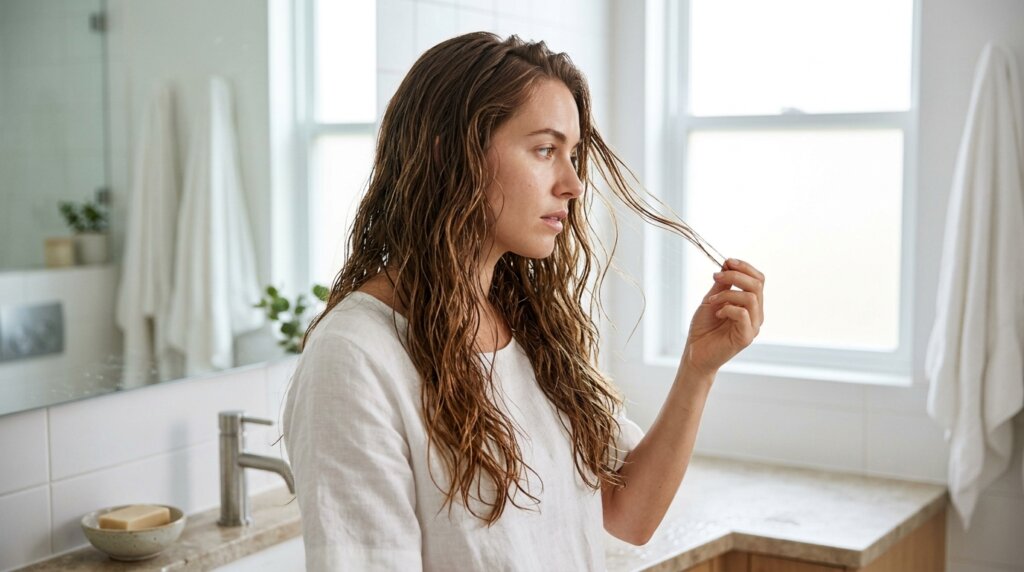
If your hair feels dry, dull, tangled, or thinner than it used to, and you have hard water at home, you have probably wondered whether the two are connected.
“Hard water hair loss” is a hugely searched concern, and the honest answer is more nuanced than most beauty blogs admit. Hard water can absolutely affect how your hair looks and feels, but whether it actually causes hair to fall out is a separate question. Here is what the evidence supports.
Does Hard Water Cause Hair Loss?
Let us address the headline first. There is limited scientific evidence that hard water directly causes permanent hair loss in the way conditions like genetic balding do.
What the research and dermatological consensus support is that hard water damages the hair shaft and scalp environment, which can lead to breakage, brittleness, and the appearance of thinning. That is an important distinction: hard water is more likely to weaken and break existing hair than to stop new hair growing from the root.
So if you are shedding strands that snap mid-length, hard water is a plausible culprit. If you are losing hair from the root in a defined pattern, the cause is more likely genetic, hormonal, or medical, and worth discussing with a doctor or dermatologist.
How Hard Water Affects Your Hair
Hard water’s effects come down to its mineral content — the same dissolved calcium and magnesium responsible for limescale on your taps. On hair, these minerals cause several problems:
- Mineral buildup on the hair shaft. Calcium and magnesium deposit on the hair’s surface, leaving a film that makes strands feel rough, dull, and harder to manage.
- Reduced lather and product residue. Hard water reacts with shampoo, so it lathers poorly and leaves a residue, meaning hair never feels fully clean.
- Dryness and brittleness. The mineral coating disrupts moisture, leaving hair dry, frizzy, and more prone to snapping.
- Scalp irritation. For some people, mineral buildup and residue can leave the scalp itchy or flaky, which is uncomfortable and can worsen the feeling of poor hair health.
The cumulative result is hair that breaks more easily and looks thinner, even though the follicles themselves may be perfectly healthy. To understand why your water behaves this way, see our guide on hard water vs soft water.
Signs Hard Water Is Affecting Your Hair
Hard water hair damage tends to show a recognisable pattern:
- Hair feels straw-like or rough even after washing
- Shampoo does not lather well and hair feels filmy or coated
- Increased frizz, tangling, and dullness
- More breakage, with short broken strands rather than full-length shedding
- Colour-treated hair fading or shifting tone faster
If these sound familiar and you also notice limescale on your fixtures or cloudy glassware, your water hardness is the common thread tying them together.
How to Protect Your Hair From Hard Water
The good news is that hard water hair damage is largely reversible and preventable. You do not necessarily need a full home system to see improvement.
Quick Fixes
- Clarifying shampoo used periodically removes mineral buildup, though overuse can dry hair further.
- A diluted vinegar or citric acid rinse helps dissolve mineral residue and restore shine. Use occasionally, not daily.
- A chelating shampoo is specifically formulated to bind and remove the metals and minerals hard water deposits.
- Deep conditioning counteracts the dryness and helps reduce breakage.
The More Permanent Solutions
If quick fixes are not enough, treating the water itself addresses the root of the problem rather than managing the symptoms.
- A showerhead filter reduces the minerals reaching your hair and skin and is a low-cost first step many people start with.
- A whole-home water softener removes calcium and magnesium from all your water, addressing hair, skin, and household limescale at once.
Our comparison of the best water softeners covers the whole-home options, and our guide on how to fix hard water problems at home lays out the full range of fixes from cheapest to most thorough.
When to See a Professional
Treating your water will improve hair condition, but it will not fix hair loss driven by something internal. If you are unsure whether you are seeing breakage or true loss, a dermatologist can tell the difference and check for underlying causes.
There is no harm in improving your water in the meantime — softer, less mineral-laden water benefits hair condition regardless. But it should not replace a proper medical assessment if the shedding pattern worries you.
Hard Water and Hair: Myths vs Reality
Because “hard water hair loss” is such a popular search, a lot of overstated claims circulate. It helps to separate what the evidence supports from what gets exaggerated.
- Myth: “Hard water makes you go bald.” Reality: hard water damages and breaks the hair shaft, mimicking thinning, but there is no strong evidence it causes follicle-level balding.
- Myth: “A softener will regrow lost hair.” Reality: softening improves hair condition and reduces breakage, but it cannot regrow hair lost to genetic or medical causes.
- Myth: “If your hair is shedding, it must be the water.” Reality: everyday shedding of around 50–100 hairs a day is normal. Hard water is only one possible factor among many.
- Myth: “Bottled or distilled water rinses fix everything.” Reality: an occasional rinse helps a little, but consistent results come from chelating treatments or treating the water supply itself.
Keeping these straight saves money and disappointment. Treat hard water for the real benefit — better hair condition and less breakage — rather than as a cure for loss it does not cause.
Frequently Asked Questions
Can hard water really cause hair loss?
Hard water is more likely to cause hair breakage and thinning in appearance than true loss from the root. The minerals coat and weaken the hair shaft, leading to brittleness and snapping. Genuine hair loss from the follicle usually has genetic, hormonal, or medical causes.
Will my hair recover after switching from hard water?
Often yes. Once mineral buildup is removed and hair is no longer being coated and dried out, condition typically improves — hair feels softer, breaks less, and looks healthier. Existing damage grows out over time.
Does a shower filter help with hard water hair problems?
A showerhead filter can reduce some of the minerals reaching your hair and is an affordable starting point. For complete removal of calcium and magnesium, a whole-home water softener is more thorough.
What is the best shampoo for hard water?
Chelating and clarifying shampoos are designed to remove the mineral buildup hard water leaves behind. Use them periodically rather than daily, and follow with a good conditioner to offset any drying effect.
How can I tell if it’s breakage or real hair loss?
Breakage shows up as short, snapped strands of varying length and rough, dry hair, often with hard water present. True loss from the root tends to show as a widening part, bald patches, or whole strands with the bulb attached. A dermatologist can confirm the difference.
Does hard water affect coloured or treated hair more?
Yes. Mineral buildup can make colour fade or shift tone faster and leave chemically treated hair feeling rougher. Chelating treatments and softened water both help colour-treated hair stay vibrant and feel smoother for longer.
Related Guides
- Hard Water vs Soft Water: What’s the Difference?
- How to Fix Hard Water Problems at Home
- Best Water Softeners 2026: Top Picks Compared
- Best Water Softener for Well Water: 2026 Buyer’s Guide
- Best Shower Filter for Hard Water — 5 Ranked by Filter Media
References & Sources
- American Academy of Dermatology — Hair Loss vs Hair Shedding
- U.S. Geological Survey — Hardness of Water
The Bottom Line
Hard water can leave your hair dry, brittle, dull, and prone to breakage, which often reads as thinning — but it is not a proven cause of hair loss from the root. The mineral buildup is the real problem, and it is reversible: clarifying or chelating treatments, a shower filter, or a whole-home softener all reduce the damage.
If you are losing hair from the follicle in a defined pattern, see a dermatologist, because that points to a cause hard water cannot explain. Improving your water helps your hair feel and look better either way — just do not rely on it to fix true, internally driven hair loss.