
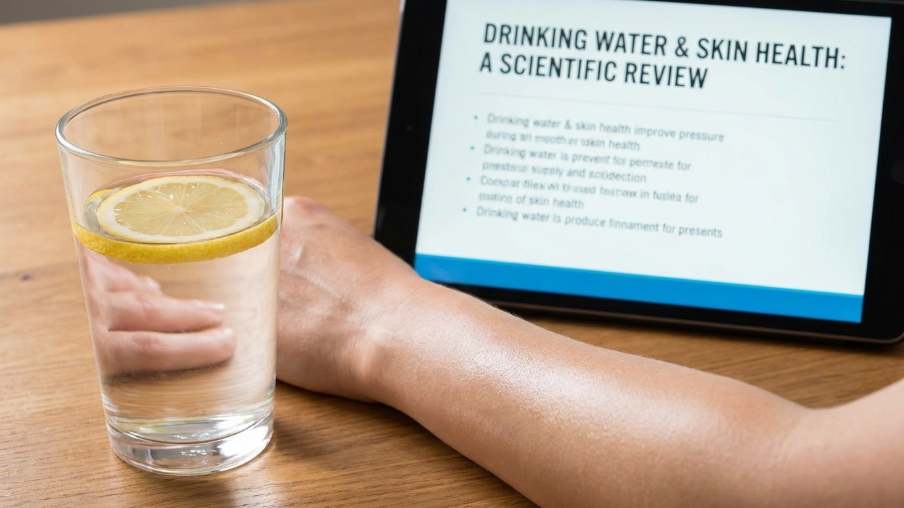
The Myth and the Truth — Why Dermatologists Disagree on Framing
Search “does water help skin” and you’ll find two confident, opposite-sounding answers. Some sources call it a complete myth. Others cite studies showing real improvement. Both are working from the same research — they’re just emphasizing different parts of it.
Dermatologist Maria Robinson, MD, told GoodRx directly: “It’s a myth that the water you drink goes straight to your skin.” This is mechanistically accurate — water you drink is absorbed in your small intestine, contributes to blood volume, and is distributed to cells and organs throughout your body. There’s no direct pipeline from your glass of water to your cheeks.
But Alok Vij, MD, a dermatologist at Cleveland Clinic, offers the complementary half of the picture: “If you are dehydrated, the outermost layer won’t contain enough water and skin won’t spring back if you push on it. If you rehydrate, your skin bounces back.” This describes a real, observable phenomenon — it’s just describing systemic hydration’s effect on skin, not a direct water-to-face pathway.
Both statements are true simultaneously. Water doesn’t go directly to your skin in any special pathway — and proper hydration does measurably affect how your skin looks and behaves, primarily by correcting a deficit if one exists.
What the Research Actually Shows
Several controlled studies have specifically measured the relationship between water intake and skin parameters:
A study published in Clinical, Cosmetic and Investigational Dermatology found that participants who increased their daily water intake by approximately 68 ounces showed significant improvements in skin hydration after 4 weeks.
Research by Palma and colleagues, cited across multiple subsequent papers, demonstrated that additional daily intake of 2 liters of water improved skin hydration specifically in those who did not usually drink enough water — a crucial qualifier that gets lost in most popular coverage of this research.
A 2024 study published in PMC examining skin barrier function in healthy female participants found that the combination of adequate water intake and moisturizer use produced the best outcomes for skin barrier measurements — neither factor alone performed as well as the combination.
A systematic review covering atopic dermatitis and water intake noted that “an additional intake of water may increase stratum corneum hydration, especially in individuals with lower prior water consumption” — again pointing to baseline hydration status as the determining factor, not water intake in absolute terms.
What Water Cannot Do for Your Skin
Being fair to the research means being equally clear about its limits. Drinking water — even plenty of it — will not:
- Reverse wrinkles. Wrinkles result from collagen and elastin breakdown through aging and photoaging (sun damage) — structural changes that water intake doesn’t address. Well-hydrated skin may temporarily look slightly more plump, masking fine dehydration lines briefly, but this isn’t a reduction in actual wrinkle depth.
- Fix sun damage. UV-induced skin damage requires entirely different interventions — sunscreen prevention, retinoids, and other dermatologist-recommended treatments.
- Cure genetic skin conditions. Conditions with a genetic basis (certain forms of eczema, rosacea predisposition) aren’t resolved by hydration status.
- Eliminate acne. While dehydration may worsen breakouts through an indirect mechanism (see below), water intake is far from the primary lever for acne management — hormones, genetics, and skincare routine matter substantially more.
- Replace topical skincare. No amount of water intake substitutes for moisturizers, sunscreen, or barrier-repair ingredients applied directly to skin.
The Acne Connection — An Indirect Mechanism
Dehydration doesn’t directly cause acne, but it may worsen existing breakouts through a specific, explainable mechanism: when skin lacks adequate moisture, it can compensate by overproducing oil (sebum). This excess oil production can contribute to clogged pores, which is one factor in acne formation.
Proper hydration also supports general immune function, which plays some supporting role in the body’s ability to manage acne-causing bacteria — though this is a minor factor compared to topical treatment, hormonal factors, and genetics.
The practical takeaway: if you’re under-hydrated and prone to breakouts, improving your water intake might help marginally. It is not, however, an acne treatment on its own, and people expecting water intake alone to clear significant acne will likely be disappointed.
Does the Type of Water Matter? Mineral vs Tap
An emerging area of research asks whether water composition — not just quantity — affects skin differently. The evidence here is genuinely preliminary but worth understanding.
A randomized double-blind controlled clinical trial examined cutaneous lipidomics (skin lipid biology) in people drinking two different types of bicarbonate-calcic mineral water — one medium-mineral, one oligo-mineral (lower mineral content). The study found that the type of mineral water consumed may influence skin biology and the cutaneous barrier, suggesting that future dermatological research should account for water composition as a variable, not just total volume.
Earlier research by Mac-Mary and colleagues found that long-term intake of mineral water improved clinical signs of dryness and roughness compared to baseline. However, other researchers (Williams and colleagues) found no significant difference in skin surface morphology between long-term drinking of mineral versus tap water — a direct contradiction that highlights how unsettled this specific question remains.
What Actually Works — Combining Water Intake with Skincare
The most consistent finding across dermatological research is that water intake works best as part of a broader approach, not as a standalone intervention:
If you’re not currently drinking adequate water (roughly 2-2.5 liters daily for most adults, adjusted for activity and climate), addressing this baseline deficit is where the documented skin hydration benefit actually comes from.
Dermatologists consistently recommend humectants (hyaluronic acid) and occlusives (ceramides, petrolatum) as the primary tools for treating dry skin — these work directly on the skin barrier in ways internal hydration alone cannot replicate.
Shorter, cooler showers preserve the skin’s natural oils better than long, hot showers, which strip the skin barrier regardless of how hydrated you are internally.
Particularly in winter or dry climates, a humidifier addresses transepidermal water loss (TEWL) by reducing the environmental gradient pulling moisture out of your skin — a complementary mechanism to internal hydration.
Strong cleansers and scrubs damage the skin barrier directly. No amount of water intake compensates for using products that actively strip your skin’s protective lipid layer.
High sugar intake is linked to glycation — a process where sugar molecules bind to collagen and elastin, reducing skin elasticity over time. This is a separate mechanism from hydration but relevant to overall skin health goals.
For electrolyte-enhanced hydration options that may support overall fluid balance more effectively than plain water during exercise or heat exposure, see our best electrolyte water brands guide.
Frequently Asked Questions
Does drinking more water actually improve your skin?
Yes, but primarily if you’re currently under-hydrated. Studies show increasing water intake improves skin hydration and elasticity specifically in people who previously consumed low fluid amounts. If already well-hydrated, additional water shows minimal extra benefit. Water won’t reverse wrinkles, sun damage, or genetic skin conditions.
Does drinking water go directly to your skin?
No. Most water you drink is absorbed in your small intestine, contributing to blood volume and distributing to cells and organs throughout your body — not traveling directly to your skin. Skin hydration is influenced by overall body hydration status indirectly.
How much water do I need to drink for better skin?
Research showing skin benefits generally used 2-2.25 liters (68-76 oz) daily, aligning with standard hydration guidelines. One study found improvements after a 68 oz increase over baseline for 4 weeks. The key factor is correcting under-hydration, not maximizing intake beyond your body’s needs.
Can drinking water cure dry skin?
It can help if dryness is partly caused by insufficient fluid intake, but isn’t a complete solution alone. Dermatologists recommend pairing water intake with moisturizers, humidifiers, shorter cooler showers, and avoiding harsh soaps for meaningful improvement.
Does dehydration cause acne?
Not directly, but it may worsen existing breakouts. Dehydrated skin can overproduce oil to compensate, potentially contributing to clogged pores. Hydration is one minor factor among many in acne — hormones, genetics, and skincare routine matter substantially more.
Is mineral water better for skin than tap water?
Evidence is limited and mixed. Some studies found mineral water may influence skin barrier biology differently than other water types; other research found no significant difference in skin surface measures between mineral and tap water. Too preliminary to recommend switching specifically for skin benefits.
Will drinking water reduce wrinkles?
No meaningful evidence supports this. Wrinkles result from collagen/elastin breakdown via aging and sun damage, not addressed by water intake. Hydrated skin may temporarily appear more plump, masking fine lines briefly, but this isn’t a reduction in structural wrinkles.
What is transepidermal water loss (TEWL) and why does it matter?
TEWL measures water evaporation through skin’s outer layer into the environment. Higher TEWL indicates compromised skin barrier function, linked to dryness and irritation. Researchers use TEWL alongside hydration measurements to assess how interventions affect skin barrier health in clinical studies.
Does caffeine or sugary drinks affect skin hydration differently than water?
Yes. Caffeine has mild diuretic effects that may slightly increase fluid loss; high sugar intake is linked to glycation, which makes skin less elastic over time. Plain water, herbal tea, or unsweetened electrolyte water are better choices for skin-focused hydration goals than soda or sugary drinks.
How long does it take to see skin improvements from drinking more water?
Studies showing measurable improvements typically measured results after 2-4 weeks of consistently increased intake — specifically in people correcting prior under-hydration. If already adequately hydrated, you may not notice further changes since there’s no deficit to correct.
Does drinking water help with skin elasticity?
Some evidence suggests modest improvement, particularly in previously under-hydrated people. Improved elasticity and smoothness has been observed over several weeks of increased intake, related to overall tissue hydration rather than dramatic structural change — works best alongside topical skincare.
What’s the most evidence-backed way to improve skin hydration?
A combined approach: adequate water intake (especially if under-hydrated), topical moisturizers with humectants and occlusives, a humidifier in dry environments, shorter cooler showers, and avoiding harsh soaps. Water intake alone, without topical care, is rarely sufficient for established dry or dehydrated skin.
Related Reading
- 10 Science-Backed Health Benefits of Drinking Water Daily
- Best Electrolyte Water Brands — Ranked by Minerals
- Topo Chico Review — Natural Mineral Water
- Perrier vs San Pellegrino — Mineral Water Comparison
- Is Sparkling Water Bad for You? 7 Myths Examined
- Alkaline Water: Is It Actually Worth the Price?
References & Sources
- GoodRx Health — Does Drinking Water Help Your Skin? (Dr. Maria Robinson)
- WebMD — Does Drinking Water Really Help Your Skin? (Cleveland Clinic, Dr. Alok Vij)
- PMC — Effect of Daily Water Intake and Moisturizer on Skin Barrier Function
- PMC — Cutaneous Lipidomics in Consumers Drinking Different Mineral Waters (RCT)
- NCBI — Atopic Dermatitis and Water: Optimum Water Intake for Skin
The Bottom Line
The honest answer to “does drinking water improve your skin” is neither “yes, dramatically” nor “no, it’s a complete myth” — it’s “yes, modestly, mainly if you’re currently under-hydrated, and only as one piece of a broader approach.” Water does not travel directly to your face from your stomach, as some skincare marketing implies, but proper systemic hydration does measurably affect skin hydration, elasticity, and barrier function — particularly correcting a baseline deficit if one exists. If you’re not currently drinking adequate water, fixing that is the single most evidence-backed step you can take from a hydration standpoint. If you’re already well-hydrated, the marginal skin benefit from drinking even more water is limited — your effort is better spent on topical moisturizers, sun protection, and skin barrier care, which address mechanisms that internal hydration simply can’t reach. Drink water because it’s good for your overall health. Don’t expect it alone to replace your skincare routine.