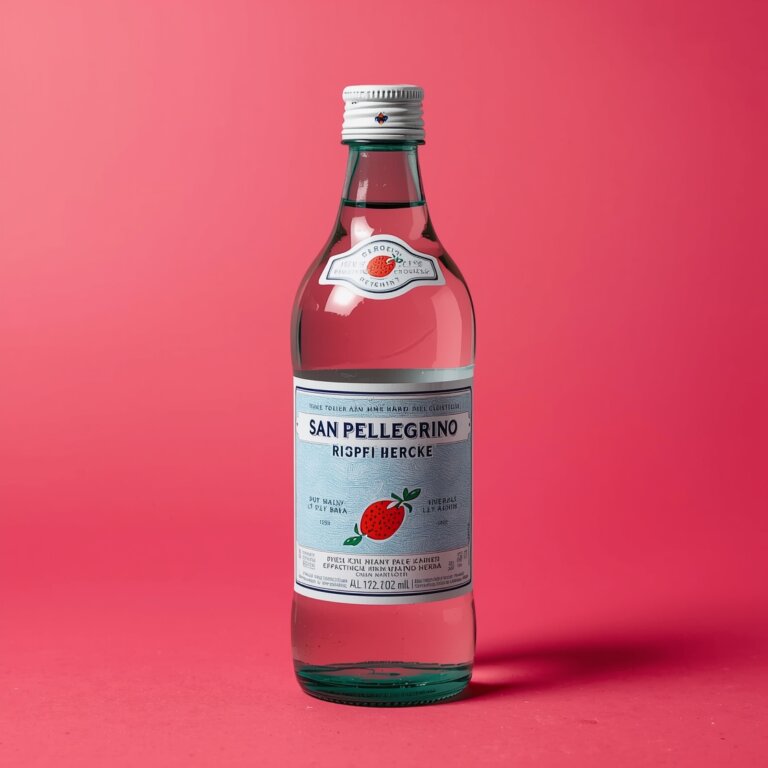
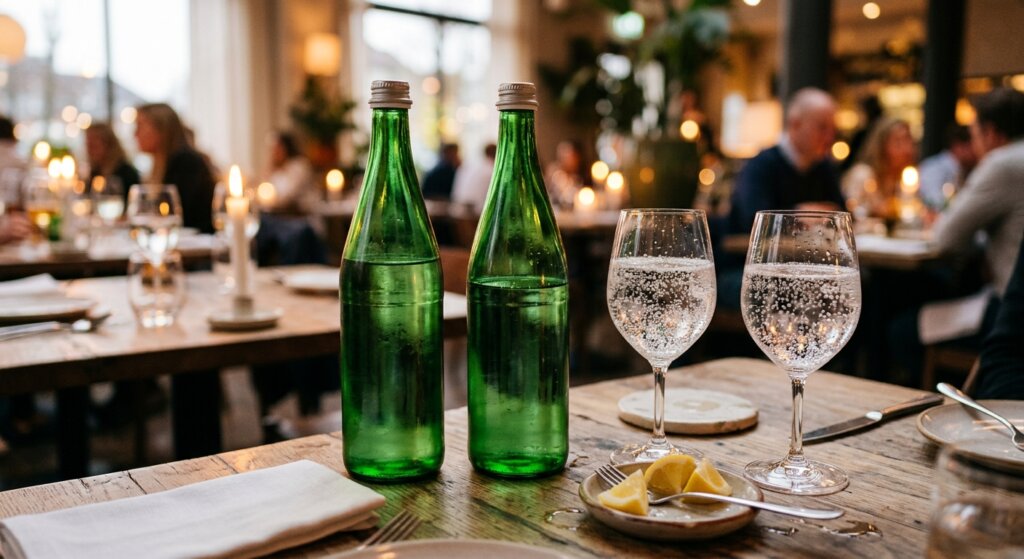
Perrier and San Pellegrino are the two names that built the sparkling mineral water category — one French, one Italian, both green-bottle icons on restaurant tables worldwide.
But they are not the same drink. They differ in bubble size, mineral content, taste, and the situations each one suits best. This guide breaks down exactly how they compare so you can pick the right bottle.
The Origins: France vs Italy
Perrier comes from the Vergèze spring in southern France, where naturally carbonated water meets the surface. The source has been bottled commercially since the late 1800s and became a global symbol of French sparkling water.
San Pellegrino originates in the town of San Pellegrino Terme in Lombardy, northern Italy. Its water rises from deep thermal springs, picking up a distinctive mineral profile on the way up, and it has been prized in Italy for centuries.
Both are now owned by the same parent company, but they remain deliberately distinct products — different springs, different mineral signatures, and different carbonation styles. That difference is the whole point of this comparison.
Bubbles & Carbonation
This is the most immediately noticeable difference. Perrier is known for an intense, sharp effervescence — small, tight bubbles that give a lively, almost prickly sensation on the tongue.
San Pellegrino’s carbonation is gentler and finer. The bubbles are softer and less aggressive, creating a smoother, more rounded mouthfeel that many people find easier to drink in larger quantities alongside a meal.
Both source their carbonation differently too: Perrier’s spring is naturally carbonated (the carbon dioxide is captured and re-added for consistency), while San Pellegrino’s carbonation is added to its still mineral water.
Mineral Content Compared
The mineral profiles are where these waters truly diverge. San Pellegrino carries a notably higher total mineral content, which is what gives it that fuller, slightly savory character.
| Approx. per litre | Perrier | San Pellegrino |
|---|---|---|
| Total dissolved minerals | Lower (~475 mg) | Higher (~1,100 mg) |
| Calcium | Moderate | Higher |
| Magnesium | Lower | Higher |
| Bicarbonate | Moderate | Higher |
| Sodium | Low (~9 mg) | Higher (~34 mg) |
Figures are approximate and vary by batch and region. The key takeaway is directional: San Pellegrino is the more mineral-rich water, Perrier the lighter, cleaner-tasting one. For more on what these minerals actually do, see our guide to mineral water and electrolytes.
Taste & Mouthfeel
Perrier tastes crisp and clean, with a bright, almost neutral profile behind its sharp bubbles. There is a faint mineral note, but the dominant impression is refreshing fizz. It is the water you reach for when you want something bracing.
San Pellegrino tastes rounder and more complex. The higher mineral load gives it a subtle savory, almost salty depth that lingers pleasantly. It feels more substantial in the mouth, which is exactly why it works so well with food.
Neither is flavored in the classic sense — these are plain mineral waters, not essence waters like LaCroix. Their “flavor” comes entirely from minerals and carbonation, which is what makes them feel more grown-up than a fruit seltzer.
Are They Healthy?
Both are calorie-free, sugar-free, and additive-free natural mineral waters, so both are a healthy choice compared to soda or juice. Neither has a meaningful health advantage over the other for most people.
San Pellegrino’s higher calcium and magnesium content means it contributes marginally more of those minerals, which some people value. But the amounts are modest compared to food sources, so it is not a reason to choose one over the other on health grounds alone.
The usual sparkling-water caveats apply to both: mild acidity from carbonation and possible bloating for sensitive stomachs. Our guide to the healthiest sparkling water for daily drinking covers these trade-offs in depth.
Which Pairs Better With Food?
San Pellegrino is the classic dinner-table water for a reason. Its softer bubbles and mineral depth complement food rather than competing with it, cleansing the palate between bites without the sharp bite of stronger carbonation.
Perrier’s aggressive fizz makes it better as a standalone refresher or a mixer. It cuts through richness dramatically, which some people love with fried or fatty foods, but its intensity can overwhelm delicate dishes.
As a mixer, Perrier’s sharp bubbles hold up well in mocktails and spritzers, while San Pellegrino’s subtlety tends to get lost. For a long, food-friendly pour, San Pellegrino wins; for a punchy mixer, Perrier does.
The Sodium Question
Both waters contain naturally occurring sodium, but San Pellegrino has noticeably more. For the vast majority of people this is trivial — a few tens of milligrams per glass against a daily intake measured in thousands.
If you are on a strict sodium-restricted diet for medical reasons, Perrier’s lower sodium makes it the safer default, though you should always check current label figures and follow your doctor’s guidance.
Price, Bottles & Value
Both sit in the premium tier of bottled water, priced well above generic sparkling water but in line with each other. Actual pricing varies more by retailer, format, and region than by brand.
Both come in iconic glass bottles as well as cans and plastic. The glass versions preserve carbonation best and feel the most premium; cans are more practical for chilling and portability.
For value, neither is an everyday-hydration bargain — if you want cheap daily fizz, a plain seltzer or home carbonation is far more economical. Perrier and San Pellegrino are treats and table waters, and priced accordingly.
How to Serve Each at Its Best
Both waters reward a little care in how you serve them, and each shines under slightly different conditions.
Perrier is at its best ice-cold and freshly opened, when its sharp bubbles are most alive. A wedge of lemon or lime plays perfectly into its crisp profile, and it holds carbonation well over ice, making it a reliable base for a quick mocktail or spritzer.
San Pellegrino shows best lightly chilled rather than ice-cold, and poured into a glass rather than swigged from the bottle — the wider surface lets its softer bubbles and mineral character come through. It needs no garnish; the point is to let the water itself complement your food.
For both, glass bottles preserve fizz better than plastic, and pouring gently down the side of a tilted glass keeps more carbonation in the drink.
The Bottle & Environmental Angle
Both brands ship long distances — Perrier from France, San Pellegrino from Italy — which carries a real transport footprint compared with local or home-carbonated options. This is worth factoring in if sustainability matters to you.
Glass bottles are recyclable and preserve taste best, but they are heavier to transport and to carry home. Cans are lighter and highly recyclable; plastic is the most convenient but the least environmentally friendly choice of the three.
If you drink sparkling water daily and want to cut both cost and footprint, a home carbonation system with tap water is the greener everyday option — saving these premium imports for occasions where their character genuinely matters.
Which Should You Buy?
There is no universal winner — it depends entirely on the occasion. Both are excellent examples of natural sparkling mineral water; they simply do different jobs.
- Choose Perrier if: you want a sharp, bracing fizz, prefer a lighter mineral taste, drink it chilled on its own or as a mixer, or watch your sodium closely.
- Choose San Pellegrino if: you want a softer sparkle, enjoy a rounder mineral flavor, drink it with meals, or want a classic food-pairing water.
The honest recommendation: keep both if you can. Perrier for the afternoon refresher and the mixer role, San Pellegrino for dinner. They are complementary rather than competing.
Frequently Asked Questions
Is Perrier or San Pellegrino healthier?
Neither has a meaningful health advantage. Both are calorie-free, sugar-free natural mineral waters. San Pellegrino has more calcium and magnesium, while Perrier has less sodium, but for most people these differences are too small to make one clearly healthier than the other.
What is the main difference between Perrier and San Pellegrino?
Perrier has sharp, intense bubbles and a lighter mineral taste; San Pellegrino has softer, finer bubbles and a higher mineral content that gives it a rounder, more savory flavor. Perrier suits standalone drinking and mixing, San Pellegrino suits food pairing.
Which has more minerals?
San Pellegrino has a significantly higher total mineral content — roughly double Perrier’s — including more calcium, magnesium, and bicarbonate. This is what gives San Pellegrino its fuller, slightly savory taste compared to Perrier’s crisp, clean profile.
Which is better with food?
San Pellegrino is the better food-pairing water. Its softer bubbles and mineral depth complement meals without overwhelming them, which is why it is a staple on restaurant tables. Perrier’s sharp fizz is better as a refresher or mixer.
Do they contain sodium?
Both contain naturally occurring sodium, but San Pellegrino has noticeably more than Perrier. For most people the amounts are trivial, but if you follow a sodium-restricted diet, Perrier’s lower level makes it the safer default. Always check the current label.
Are they naturally carbonated?
Perrier comes from a naturally carbonated spring, though the carbonation is captured and re-added for consistency. San Pellegrino’s mineral water is naturally still at the source and carbonated during bottling. Both end up as sparkling mineral waters.
Do Perrier and San Pellegrino hydrate you?
Yes. Both hydrate essentially as well as still water and count toward daily fluid intake. The carbonation and minerals do not reduce their hydrating value for healthy people.
Are they owned by the same company?
Yes, both brands sit under the same parent company today, but they remain distinct products from different springs in different countries, with different mineral profiles and carbonation styles. The rivalry is more of a friendly in-house contrast than true competition.
Related Guides
- Mineral Water and Electrolytes Explained
- The Healthiest Sparkling Water for Daily Drinking
- Topo Chico Sparkling Water Review
- Top Zero-Calorie Sparkling Waters Ranked
References & Sources
- Perrier — Official Product Information
- San Pellegrino — Official Product Information
- NIH — Calcium Fact Sheet
The Bottom Line
Perrier and San Pellegrino are both superb sparkling mineral waters that happen to do different jobs. Perrier is the sharp, crisp, lighter-mineral refresher and mixer; San Pellegrino is the soft-bubbled, mineral-rich table water built for food.
Neither is healthier in any meaningful way — both are calorie-free natural mineral waters. Pick by occasion: Perrier to drink on its own, San Pellegrino with dinner. If your budget allows, there is a genuine case for keeping both on hand.