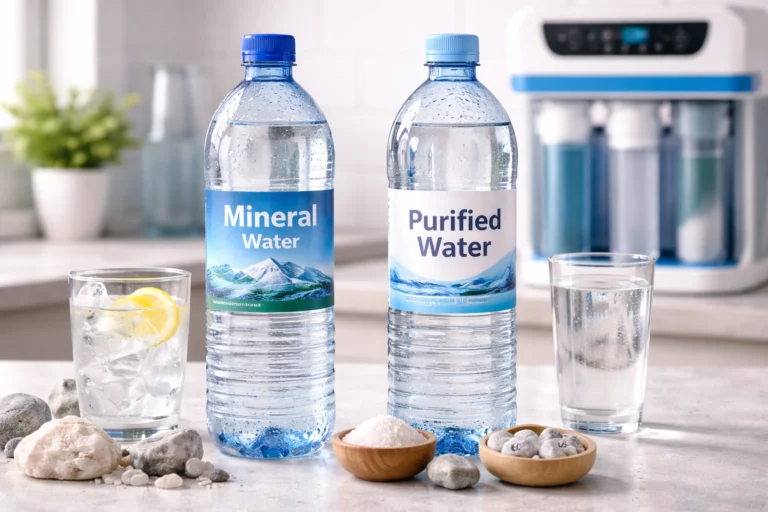

Reach for a bottle of mineral water and you are getting more than hydration. Natural mineral water carries dissolved minerals like calcium, magnesium, sodium, and potassium, and several of these double as electrolytes your body uses to run nerves, muscles, and fluid balance.
But not every mineral in the bottle is an electrolyte, and the amounts vary enormously between brands. This guide breaks down exactly what mineral water contributes to your electrolyte intake, how much it really delivers, how to read a label, and when it actually matters.
What Electrolytes Are, and Which Minerals Count
Electrolytes are minerals that carry an electric charge when dissolved in water. Your body relies on them to regulate hydration, balance blood pH, move nutrients into and out of cells, and trigger muscle contractions — including your heartbeat.
The main electrolytes are sodium, potassium, calcium, magnesium, chloride, phosphate, and bicarbonate.
Mineral water naturally contains several of these. The catch is that “mineral content” on a label is a broad term.
Calcium and magnesium are both minerals and electrolytes, so they pull double duty. Other dissolved solids, like silica or trace iron, are minerals but not functional electrolytes.
So when a brand advertises a high mineral content, only part of that figure is contributing to your electrolyte intake — the rest is simply dissolved rock that affects taste more than physiology.
The Electrolytes You’ll Find in Mineral Water
- Calcium — supports bone health, muscle function, and nerve signalling. Hard mineral waters can supply a substantial share of daily needs.
- Magnesium — involved in over 300 enzyme reactions, muscle relaxation, and energy production. It is widely under-consumed in modern diets, which makes a magnesium-rich water genuinely useful.
- Sodium — the primary driver of fluid balance. Levels swing enormously between a soft Alpine still water and a high-sodium sparkling source.
- Potassium — works against sodium to regulate blood pressure and heart rhythm, though it is usually present only in small amounts in water.
- Bicarbonate — helps buffer acidity and is common in naturally sparkling mineral waters, contributing to their distinctive taste.
How Much Electrolyte Mineral Water Really Provides
This is where expectations and reality diverge. The mineral concentration of natural mineral water is measured as total dissolved solids (TDS), expressed in milligrams per litre.
Low-mineral waters sit under 250 mg/L, while high-mineral waters can exceed 1,500 mg/L. A high-calcium European mineral water might deliver 300 to 500 mg of calcium per litre — a substantial fraction of the roughly 1,000 mg adults need daily.
A magnesium-rich source can provide 50 to 100 mg per litre, against a daily target in the region of 300 to 400 mg.
By contrast, most mass-market bottled waters are low in minerals by design, prioritising a clean, neutral taste. If your goal is electrolyte replenishment, the brand and source matter far more than the simple fact that it says “mineral water” on the label.
| Water Type | Typical TDS | Electrolyte Contribution |
|---|---|---|
| Low-mineral bottled water | Under 250 mg/L | Minimal — mainly hydration |
| Medium-mineral water | 250–1,000 mg/L | Moderate calcium & magnesium |
| High-mineral water | 1,000–1,500+ mg/L | Significant calcium, magnesium, sometimes sodium |
| Naturally sparkling mineral water | Varies widely | Often high bicarbonate & sodium |
The practical takeaway: two bottles both labelled “natural mineral water” can differ tenfold in electrolyte content. Always read the analysis rather than trusting the category name.
A Worked Example: What a Litre Actually Gives You
It helps to put numbers to this. Suppose you drink one litre of a high-mineral water that lists 450 mg of calcium and 90 mg of magnesium per litre.
Against adult reference intakes of roughly 1,000 mg of calcium and 350 mg of magnesium per day, that single litre supplies close to 45% of your calcium target and around a quarter of your magnesium target — before you have eaten anything.
Now compare that with a popular low-mineral bottled water listing 10 mg of calcium and 2 mg of magnesium per litre: the same volume contributes barely 1% of either.
Identical category name, wildly different nutritional reality. This is exactly why the label, not the marketing, decides what you are drinking.
The lesson is not that everyone should chase the highest-mineral water on the shelf. It is that if electrolytes are part of your reason for buying mineral water, you should pick a brand whose analysis backs up the intention.
A litre of genuinely mineral-rich water is doing meaningful nutritional work; a litre of near-distilled “premium” water is doing almost none.
How to Read a Mineral Water Label
If there is one skill that turns this whole topic from guesswork into certainty, it is reading the mineral analysis panel on the back of the bottle. Most people never look at it, yet it answers every question the front label dodges.
Here is what to look for, in order of usefulness for electrolytes.
- Total dissolved solids (TDS) or “dry residue”. This is the headline number for overall mineral content. Higher generally means more electrolytes, though you still need the breakdown to know which ones.
- Calcium (Ca). One of the two electrolytes water supplies in meaningful amounts. Anything above roughly 150 mg/L is a notable contribution.
- Magnesium (Mg). The other big one, and the mineral most people fall short on. A water listing 50 mg/L or more is genuinely useful here.
- Sodium (Na). Worth checking in both directions — high if you want post-sweat replacement, low if you are watching sodium for blood pressure.
- Bicarbonate (HCO₃). Common in sparkling sources; affects taste and acid buffering more than daily nutrition.
A quick way to judge any bottle: glance at the TDS, then at calcium and magnesium. Those three numbers tell you in seconds whether the water is a real electrolyte source or essentially flavoured purity.
Mineral Water vs Dedicated Electrolyte Drinks
Mineral water and purpose-built electrolyte drinks serve different jobs. Sports and electrolyte beverages are formulated with controlled, often higher sodium and potassium levels designed for rapid rehydration after heavy sweating.
Mineral water delivers electrolytes more gently and without added sugar, making it a steady everyday contributor rather than an intense post-workout fix.
For most people maintaining normal activity, mineral water is a clean way to top up calcium and magnesium throughout the day. For endurance athletes losing large volumes of fluid and sodium, a dedicated formula with a known electrolyte concentration may be more appropriate, because it lets you match intake to loss precisely.
| Factor | Mineral Water | Electrolyte Drink |
|---|---|---|
| Main use | Everyday mineral top-up | Rapid post-sweat rehydration |
| Sodium/potassium | Variable, often low | High and controlled |
| Added sugar | None | Sometimes significant |
| Calcium/magnesium | Natural, can be high | Often minimal |
If you want to compare options, our roundup of the best electrolyte water brands ranks products by ingredients and purpose, and our guide to the best water to drink puts mineral water in context against every other type.
Sparkling Mineral Water and Electrolytes
Sparkling mineral water deserves its own note, because carbonation often confuses the electrolyte question. The bubbles themselves — dissolved carbon dioxide — add nothing to your electrolyte intake.
What matters is whether the underlying source water is mineral-rich. Some famous naturally sparkling waters are also high in bicarbonate, calcium, and sodium, which makes them notable electrolyte contributors, while other carbonated waters are simply low-mineral water with CO₂ added at the plant.
So “sparkling” tells you about the fizz, not the minerals. A naturally carbonated mineral water from a calcium-and-bicarbonate-rich spring can be an excellent everyday electrolyte source; a flavoured seltzer built on purified water is essentially fizzy hydration with little mineral value.
Once again, the analysis on the back settles the question. If you enjoy the fizz and want the minerals too, look specifically for a naturally sparkling mineral water with a substantial mineral profile rather than a carbonated purified product.
The Hard Water Connection
There is a neat irony worth understanding: the calcium and magnesium that make mineral water a useful electrolyte source are the very same minerals that make tap water “hard” and leave limescale on your kettle.
Water hardness is essentially a measure of dissolved calcium and magnesium — the same electrolytes discussed above. So a region with very hard tap water is, in mineral terms, already delivering some of what people seek from mineral water, while an area with very soft water contributes almost none.
This is why people in soft-water areas sometimes notice a bigger difference when they switch to a mineral-rich bottled water: their baseline mineral intake from tap water was low to begin with. Understanding your own water’s hardness gives useful context for how much a mineral water is really adding.
It also explains why the household nuisance of hard water and the nutritional appeal of mineral water are two sides of the same chemistry. If you want the full picture, our explainer on hard water vs soft water covers both sides in detail.
Common Myths, Cleared Up
- “All mineral water is electrolyte water.” False. Many mineral waters are low in dissolved minerals; only the mineral-rich ones meaningfully boost electrolytes.
- “More minerals always means better.” Not necessarily. Very high sodium can be a downside for some people, and taste preferences vary. Match the profile to your needs rather than maximising every number.
- “Mineral water hydrates better than tap water.” Hydration is driven mainly by the water itself; the minerals add nutritional value, not dramatically better hydration for everyday use.
- “You can’t absorb minerals from water.” False. Calcium and magnesium from water are absorbed well, often comparably to those from food.
- “Expensive means mineral-rich.” Not at all. Plenty of premium-priced waters are very low in minerals; price reflects branding and packaging as much as content.
Does Your Body Absorb Minerals From Water?
Yes. Research indicates that calcium and magnesium from water are absorbed at least as well as those from food, partly because they arrive already dissolved in ionic form — the state your gut absorbs them in.
This makes mineral water a genuinely useful supplementary source, especially for people who struggle to hit magnesium targets through diet alone.
It is not a replacement for a balanced diet — food still supplies the overwhelming majority of your mineral intake — but it is a legitimate contributor that quietly adds up over a day of drinking.
For someone slightly short on magnesium, switching to a magnesium-rich mineral water is a low-effort way to close part of that gap.
Who Benefits Most From Mineral Water Electrolytes
Several groups stand to gain from deliberately choosing a mineral-rich water rather than a neutral, low-TDS one:
- People with low dietary magnesium or calcium intake, who can use water to chip away at the shortfall
- Those living in areas with very soft tap water that contributes almost no minerals
- Active individuals wanting a sugar-free hydration option that still provides some electrolytes
- Anyone cutting back on sugary sports drinks but still wanting gentle electrolyte support
- Older adults, who often under-consume both calcium and magnesium and absorb them slightly less efficiently
If you fall into one of these groups, the choice of water stops being trivial and becomes a small but genuine part of your daily nutrition.
Your Daily Electrolyte Needs at a Glance
To judge whether a water’s numbers are meaningful, it helps to know the targets you are measuring them against. These are general adult reference points; individual needs vary with age, activity, and health.
| Electrolyte | Rough Daily Target (Adult) | What Water Can Contribute |
|---|---|---|
| Calcium | ~1,000 mg | Up to several hundred mg/L in hard waters |
| Magnesium | ~300–400 mg | 50–100+ mg/L in magnesium-rich waters |
| Sodium | Varies; many limit intake | Low to high depending on source |
| Potassium | ~3,500–4,700 mg | Usually small from water |
Read against these targets, a high-mineral water makes a real dent in calcium and magnesium, a modest contribution to sodium, and only a token amount of potassium. That pattern is worth remembering when a label boasts about its electrolytes.
What to Watch Out For
Mineral water is not automatically the right choice for everyone, and a few cautions are worth keeping in mind.
Remember too that “natural” does not guarantee high mineral content — many natural spring waters are quite low in dissolved solids, so a premium price does not always buy more electrolytes. The label, not the marketing, is the deciding factor.
And while mineral water is a helpful contributor, it is not a treatment for a genuine deficiency. If you suspect you are low on a particular mineral, that is a conversation for a doctor and a proper diet review, not something to fix with bottled water alone.
How to Choose the Right Mineral Water for You
Pulling all of this together, picking a mineral water comes down to matching the analysis to your own goal. Here is a simple way to decide.
- For everyday calcium and magnesium: choose a medium-to-high TDS water with calcium above ~150 mg/L and magnesium above ~50 mg/L.
- For low-sodium diets: pick a still water that explicitly lists low sodium, and avoid high-sodium sparkling sources.
- For taste with some benefit: a naturally sparkling mineral water with a real mineral profile gives you fizz plus genuine electrolytes.
- For pure hydration only: a low-TDS water is fine — just do not pay a premium expecting electrolyte benefits it does not provide.
In every case, the back-label analysis is your decision tool. Once you are comfortable reading it, you will never again be misled by a front label’s marketing.
Frequently Asked Questions
Is mineral water a good source of electrolytes?
It can be, depending entirely on the source. High-mineral waters provide meaningful calcium and magnesium, while low-TDS brands offer very little. Check the mineral analysis printed on the label rather than assuming all mineral water is electrolyte-rich.
Can mineral water replace an electrolyte drink after exercise?
For light to moderate activity, mineral water can help replenish minerals without added sugar. After heavy, prolonged sweating, a formulated electrolyte drink with controlled sodium and potassium may rehydrate you more effectively because you can match intake to loss.
Does sparkling mineral water have the same electrolytes as still?
The carbonation itself does not change the electrolyte content — what matters is the source water. Some naturally sparkling waters are also high in bicarbonate and sodium, so the mineral profile can differ from still versions even of the same brand.
How much mineral water should I drink for electrolytes?
There is no fixed amount. Mineral water should complement, not replace, a balanced diet and your overall fluid intake. Use the label’s mineral figures to estimate how much a given brand contributes toward your daily calcium and magnesium targets.
Which minerals in water are actually electrolytes?
Calcium, magnesium, sodium, potassium, and bicarbonate are the electrolytes you will commonly find in mineral water. Other dissolved solids like silica or trace iron are minerals but do not function as electrolytes, so they do not count toward your electrolyte intake.
Is high-mineral water safe to drink every day?
For most healthy adults, yes — and it can be beneficial for calcium and magnesium intake. People on sodium-restricted diets or with kidney conditions should check the label and consult a doctor first, since high-mineral waters can carry significant sodium.
Does mineral water help with muscle cramps?
Cramps have many causes, and low magnesium or sodium is only one of them. A magnesium-rich mineral water may help if a mild shortfall is contributing, but persistent cramps are worth discussing with a doctor rather than treating with water alone.
Is mineral water better than tap water for electrolytes?
It depends on your tap water. In hard-water areas, tap water already supplies meaningful calcium and magnesium. In soft-water areas it supplies very little, so a mineral-rich bottled water makes a bigger difference. Comparing the numbers is the only reliable way to know.
Related Guides
- Best Electrolyte Water Brands 2026: Ranked by Ingredients & Purpose
- What Is the Best Water to Drink? Ranked Guide
- Mineral Water vs Sparkling Water: What’s the Difference?
- Which Sparkling Water Is Healthiest for Daily Drinking?
- Hard Water vs Soft Water: What’s the Difference?
References & Sources
- NIH Office of Dietary Supplements — Magnesium Fact Sheet
- NIH Office of Dietary Supplements — Calcium Fact Sheet
- World Health Organization — Calcium and Magnesium in Drinking Water
The Bottom Line
Mineral water can be a real, absorbable source of electrolytes, but only some of its minerals qualify — and the amounts depend heavily on the source. Calcium and magnesium are the standout contributions, while sodium and potassium vary from negligible to significant.
Treat the bottle’s mineral analysis as the genuine spec sheet: that is what tells you whether you are drinking a meaningful electrolyte source or simply clean, neutral water. For everyday calcium and magnesium support, a high-mineral water is a quiet, sugar-free win — just match the brand to your needs and check the sodium if that matters to you.