 mineral water for hydration” width=”1200″ height=”800″ loading=”lazy” decoding=”async” style=”width:100%;height:auto;border-radius:12px;” />
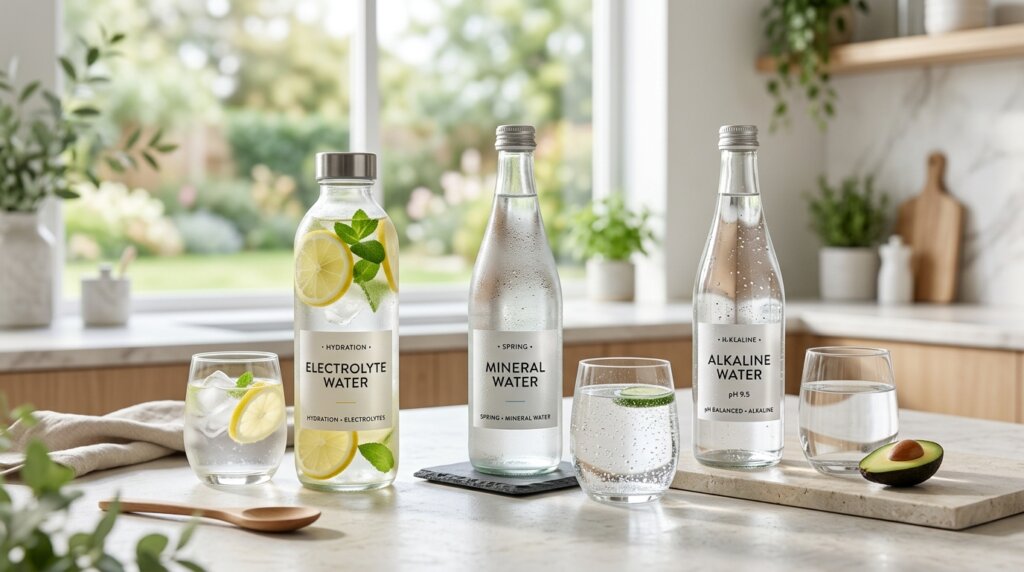
Electrolyte vs Mineral vs Alkaline: Side-by-Side
| Type | What It Is | Best For | Evidence |
|---|---|---|---|
| Electrolyte | Water plus sodium, potassium, magnesium | Workouts over an hour, heat, illness | Strong — for replacing losses |
| Mineral | Naturally dissolved minerals from source (188–2,488 mg/L TDS) | Everyday drinking, small mineral contribution | Modest but real |
| Alkaline | Higher pH, typically 8–9.5, often ionised | Taste preference | Little to none for healthy people |
| Plain filtered | Tap water through a certified filter | Most people, most of the time | Hydrates identically to the above |
Electrolyte Water: When It Actually Helps
Electrolyte water adds sodium, potassium and magnesium — the minerals you lose in sweat. The case for it is genuinely strong, but narrow: it helps when you are replacing losses, not as a daily default.
When electrolytes make a real difference:
- Exercise beyond roughly 60 minutes, particularly in heat. Sweat carries roughly 500–1,000mg of sodium per litre depending on the individual, and heavy sweaters lose considerably more.
- Illness with vomiting or diarrhoea, where fluid and electrolyte loss is rapid. This is the scenario oral rehydration solutions were designed for.
- Hot climates or physical outdoor work, where cumulative sweat loss across a day adds up even without formal exercise.
- After heavy alcohol consumption, which increases urine output and associated electrolyte loss.
When they do not: a sedentary day at a desk. If you have not lost electrolytes, adding them does nothing beyond what plain water achieves. Our guide to electrolyte water brands compares what each product actually contains — the sodium content varies enormously, from token amounts to 1,000mg per serving.
Mineral Water: The Everyday Baseline
Mineral water carries naturally dissolved calcium, magnesium and bicarbonates from its source. The contribution is modest but genuine, and the range between brands is far wider than most people realise:
| Brand | TDS | Calcium | Magnesium |
|---|---|---|---|
| Gerolsteiner | 2,488 mg/L | 348 mg/L | 108 mg/L |
| San Pellegrino | 1,109 mg/L | 166 mg/L | 49 mg/L |
| Perrier | 456 mg/L | 150 mg/L | 3.9 mg/L |
| Acqua Panna | 188 mg/L | Light | Light |
One litre of Gerolsteiner supplies roughly 35% of daily calcium and 27% of daily magnesium at zero calories — genuinely meaningful, and magnesium in particular is a nutrient many adults fall short on. But note the spread: Perrier delivers less than a tenth of Gerolsteiner’s magnesium. “Mineral water” as a category tells you very little; the label does. Our mineral water ranking breaks down every major brand.
Calcium from mineral water is absorbed comparably to calcium from dairy, so this is not a token benefit. It is simply a small one — food remains the dominant source by a wide margin.
Alkaline Water: Where the Claim Breaks Down
Alkaline water is sold on the premise that a higher pH neutralises acidity in the body. The physiology does not support this, for a specific reason worth understanding.
Your stomach maintains a pH of roughly 1.5 to 3.5 — strongly acidic by design, because that acidity is what breaks down protein and kills pathogens. Any water you drink, at pH 8 or pH 9.5, is neutralised almost immediately on arrival. It never reaches your bloodstream in an alkaline state.
Beyond that, blood pH is held within an extremely narrow range of about 7.35 to 7.45 by your kidneys and respiratory system. This regulation is tight and automatic. A meaningful deviation is a medical emergency, not something a beverage adjusts.
Is alkaline water harmful? For healthy people, no. Is it better for hydration than plain water? There is little robust evidence that it is. If you prefer the taste — and some people genuinely do, since higher-pH waters often have a smoother mouthfeel — that is a perfectly good reason to buy it. The pH number is not.
Does Carbonation Affect Hydration?
No. This comes up constantly and the answer is settled: sparkling water hydrates as effectively as still water. Carbonation affects mouthfeel and how quickly you drink, not absorption.
The one practical caveat is that carbonation can cause bloating in some people, particularly those with IBS, which may mean you drink less of it. If that applies to you, still water is the more practical choice — not because it hydrates better, but because you will consume more. See our guide to the healthiest sparkling water for daily drinking.
Which Should You Drink?
Filtered tap or mineral water. Nothing added is necessary, and nothing added will help.
Add electrolytes. Sweat carries roughly 500-1,000mg sodium per litre, and that is what needs replacing.
Electrolytes genuinely matter here. This is the scenario oral rehydration solutions were built for.
Save the money. Stomach acid at pH 1.5-3.5 neutralises alkaline water before it reaches your bloodstream.
If You Want Electrolytes: Our Picks
As an Amazon Associate we earn from qualifying purchases — it never affects our picks.
LMNT Electrolyte Drink Mix
1,000mg sodium per packet with zero sugar — matched to what heavy sweaters actually lose. The go-to for endurance athletes and low-carb diets.
Liquid I.V. Hydration Multiplier
Single-serve packets with electrolytes plus glucose, which speeds absorption through the same mechanism oral rehydration solutions use.
Nuun Sport Tablets
Around 300mg sodium per tablet at roughly $0.70 a serving. Lightweight, TSA-friendly, and the best value for regular exercisers.
Gerolsteiner Sparkling
348mg calcium and 108mg magnesium per litre — about 35% of daily calcium in one litre, with no additives and zero calories.
Frequently Asked Questions
What is the best water for hydration?
For everyday hydration, plain filtered or mineral water is all most people need. Electrolyte water is genuinely better after heavy sweating, exercise beyond roughly an hour, or illness with fluid loss. Alkaline water offers little proven hydration benefit for healthy people.
Is electrolyte water better than regular water?
Only when you have actually lost electrolytes — intense exercise, hot climates, or illness with vomiting or diarrhoea. Sweat carries roughly 500 to 1,000mg of sodium per litre, and that is what needs replacing. For normal daily activity, regular water hydrates just as effectively.
Does alkaline water actually do anything?
For healthy people, there is little robust evidence that it improves hydration or health. Stomach acid sits at roughly pH 1.5 to 3.5 and neutralises alkaline water almost immediately, and blood pH is held between about 7.35 and 7.45 by the kidneys and lungs regardless of what you drink.
Is mineral water good for you?
Yes, modestly. One litre of a high-mineral water like Gerolsteiner supplies roughly 35% of daily calcium and 27% of daily magnesium. But the range between brands is wide — Perrier has 3.9mg magnesium per litre against Gerolsteiner’s 108mg — so check the label rather than the category.
Does sparkling water hydrate as well as still water?
Yes. Carbonation affects mouthfeel and drinking speed, not absorption. The only practical consideration is that carbonation causes bloating in some people, which may reduce how much they drink.
How much water should I actually drink per day?
Individual needs vary with body size, activity, climate and diet, and a meaningful share of daily fluid comes from food. Thirst is a reasonable guide for most healthy adults. See our full guide on daily water intake for the detail.
Can you drink too much electrolyte water?
Excess sodium intake is worth watching if you are not losing it through sweat, particularly on a physician-directed low-sodium diet or with hypertension. A 1,000mg sodium packet is appropriate after a long run and unnecessary on a desk day.
What about coconut water for hydration?
Coconut water contains potassium and some sodium, making it a reasonable natural electrolyte option. Its sodium content is generally lower than purpose-made electrolyte mixes, so it suits moderate rather than heavy sweat loss.
Related Reading
- Best Electrolyte Water Brands — what each product actually contains
- Best Mineral Water to Drink — TDS and Minerals Compared
- Healthiest Sparkling Water for Daily Drinking
- Mineral vs Purified Water
- How Much Water Should You Drink Per Day?
- Best Water Filter Pitchers
References & Sources
- Gerolsteiner, San Pellegrino, Perrier and Acqua Panna — official source mineral analyses
- FDA — sodium in your diet, 2,300mg daily guidance
- CDC — water and healthier drinks
The Bottom Line
Don’t overthink hydration. For most days, filtered tap or mineral water is all you need, and carbonated hydrates exactly as well as still. Reach for electrolytes when you have genuinely lost them — exercise beyond an hour, heat, or illness — and match the sodium content to the loss rather than buying the biggest number. Treat alkaline water as a taste preference rather than a health upgrade; stomach acid at pH 1.5–3.5 neutralises it long before it does anything systemic. Match the water to the moment and skip the marketing premium.
![Is Lemon Water Good for You? [Benefits, Risks & Tips]](https://completewaterguide.com/wp-content/uploads/2025/09/8-768x416.webp)