Finding the best water filter for your home in 2026 comes down to one thing: knowing what is actually in your water, then matching it to a filter that removes it. With lead pipes still in service across much of the U.S., PFAS “forever chemicals” showing up in tap and bottled water alike, and chlorine taste that puts people off drinking enough, the right filter is one of the cheapest health upgrades you can make. This guide ranks the filter types and the brands people actually buy, so you can choose with confidence.
How We Ranked These Water Filters
A filter is only “best” if it removes the contaminant you have. We weighted four things: independently verifiable NSF/ANSI certifications (the gold standard in the U.S.), the range of contaminants removed, cost over the first year (unit price plus replacement filters), and ease of installation and upkeep. Before buying anything, check your local water with a home test kit or read your utility’s annual Consumer Confidence Report — it tells you exactly what you are filtering against. If your water tastes off, our guide on why your water tastes funny helps you identify the likely culprit.
Best Water Filters for Home in 2026
1. Reverse Osmosis (RO) Systems — Best Overall
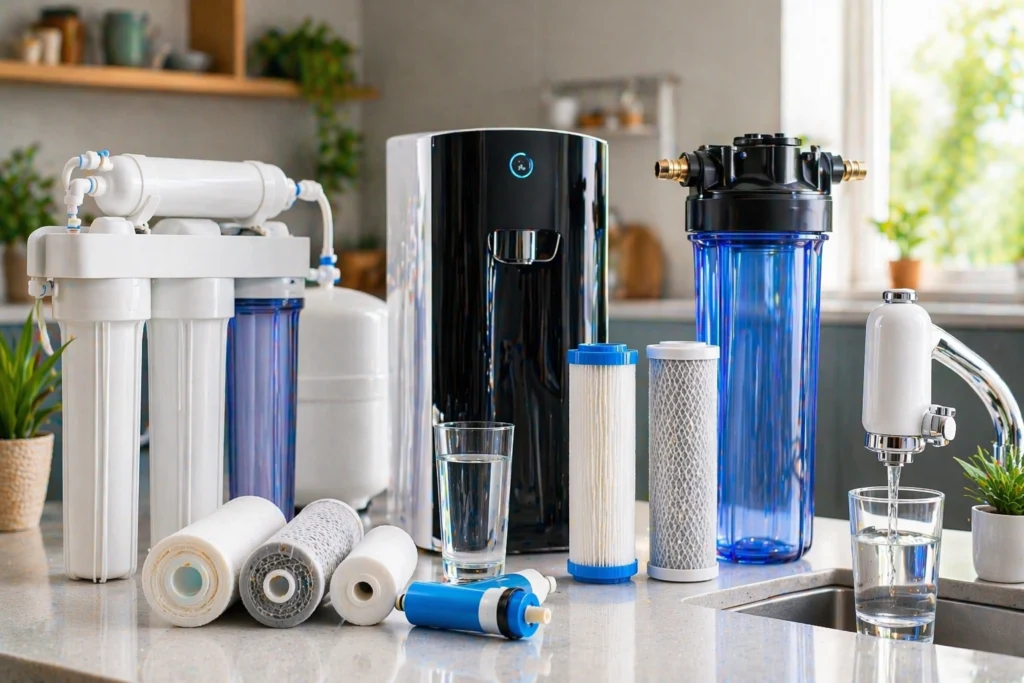
Reverse osmosis pushes water through a semi-permeable membrane that blocks particles down to the molecular level. It is the most thorough home filtration you can buy, removing lead, PFAS, arsenic, fluoride, nitrates, and dissolved solids that other filters leave behind. Popular certified systems include APEC ROES-50, Waterdrop G3 tankless, and Aquasana OptimH2O. The trade-offs: RO wastes some water during filtration and strips beneficial minerals, which is why many systems add a remineralization stage. Expect $200–$600 up front plus periodic membrane and filter changes. For a deeper breakdown, see our full guide to the best reverse osmosis systems for home.
2. Filter Pitchers — Best Budget Pick
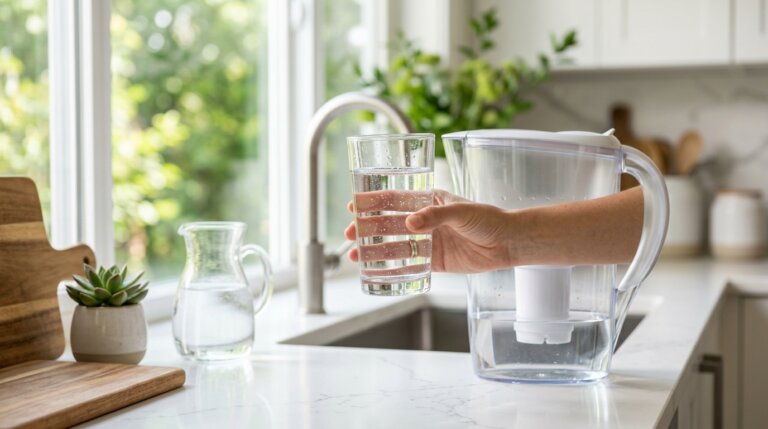
If you rent, travel, or just want clean-tasting water without installation, a pitcher is the easiest entry point. ZeroWater uses a five-stage filter that brings total dissolved solids close to zero and is certified to reduce lead and chromium. Clearly Filtered and Epic Pure go further on PFAS and a long list of contaminants, while Brita and PUR are cheaper and focus mainly on chlorine, taste, and some metals. The catch with pitchers is filter life — they clog faster than plumbed systems. We compare the leaders head-to-head in our best water filter pitchers guide.
3. Under-Sink Filters — Best for Kitchens
Under-sink filters mount out of sight and deliver filtered water through a dedicated faucet or your existing tap. They offer far higher capacity than pitchers and longer filter life, without the counter clutter of a large RO unit. Carbon-block under-sink filters from Aquasana and Frizzlife are popular for removing chlorine, VOCs, and lead while keeping good flow. They are a strong middle ground for households that want serious filtration but do not need full reverse osmosis.
4. Whole-House (Point-of-Entry) Systems — Best Full Coverage
A whole-house system treats water where it enters your home, so every faucet, shower, and appliance gets filtered water. This protects plumbing from scale and sediment and removes chlorine before it reaches your skin and hair. Aquasana Rhino and SpringWell are well-known options. Whole-house units are the biggest investment ($800–$2,500+ installed) and usually target sediment, chlorine, and scale rather than dissolved contaminants — many homeowners pair them with an under-sink RO unit for drinking water.
5. Gravity Filters — Best Off-Grid & Emergency
Gravity systems like Berkey and ProOne need no electricity or plumbing — you pour water in the top and it drips through filter elements into a lower chamber. They are the go-to for emergencies, camping, and homes with unreliable utilities, and the elements last a long time before replacement. They are slower than plumbed systems and take up counter space, but for resilience and portability nothing beats them.
6. Faucet-Mount Filters — Best Quick Install
Faucet-mount filters screw straight onto your tap in minutes and let you switch between filtered and unfiltered water. PUR and Brita faucet systems are certified to reduce lead, chlorine, and certain other contaminants at a low price. They are a sensible upgrade over a basic pitcher for renters, though filters need frequent changing and they do not fit every faucet style.
Our Top Picks by Category
As an Amazon Associate we earn from qualifying purchases. It never changes what we recommend.
APEC ROES-50 Reverse Osmosis
5-stage under-sink RO, NSF-certified components. Removes lead, PFAS, arsenic, fluoride and dissolved solids. Roughly $200 up front, filters about $50/year.
ZeroWater 10-Cup Pitcher
5-stage filter that brings TDS close to zero, NSF 53 certified for lead and chromium. Includes a TDS meter so you know exactly when to change the filter. Around $35.
Clearly Filtered Pitcher
Tested against 365+ contaminants including PFOA and PFOS. The pitcher to choose if forever chemicals are your specific concern and RO is not an option.
Aquasana AQ-5200 Under-Sink
Carbon-block system certified to NSF 42, 53 and 401. Removes chlorine, lead and VOCs while keeping beneficial minerals and full flow. Filters last 6 months.
Water Filter Comparison Table
| Filter Type | Best For | Removes | Typical Cost |
|---|---|---|---|
| Reverse Osmosis | Complete filtration | Lead, PFAS, arsenic, TDS | $200–$600 |
| Filter Pitcher | Budget / renters | Chlorine, lead, some PFAS | $20–$90 |
| Under-Sink | Kitchens | Chlorine, VOCs, lead | $100–$400 |
| Whole-House | Full home | Sediment, chlorine, scale | $800–$2,500+ |
| Gravity | Off-grid / emergency | Bacteria, chlorine, metals | $250–$400 |
| Faucet-Mount | Quick install | Lead, chlorine | $20–$60 |
How to Choose the Right Water Filter
Work through these five steps before you buy:
- Test your water first. A $20 home test kit or your utility’s Consumer Confidence Report tells you whether you are fighting lead, chlorine, hardness, or PFAS. You can also learn to test your water quality at home with simple DIY methods.
- Match the filter to the contaminant. Lead and PFAS → RO or a certified pitcher like Clearly Filtered. Bad taste and odor → carbon under-sink or faucet filter. Hard-water scale → whole-house system.
- Check the NSF/ANSI certification. NSF 53 covers lead and health contaminants, NSF 58 covers RO performance, and NSF 401 covers emerging contaminants. The certification should name your specific contaminant.
- Add up the first-year cost. A cheap pitcher with expensive, fast-clogging filters can cost more over a year than a mid-range under-sink unit.
- Match capacity to your household. A family of five will outpace a small pitcher fast — size the system to your daily use.
Worried specifically about forever chemicals? Our dedicated guide covers the best water filters that actually remove PFAS, and our bottled water PFAS rankings show why filtering at home often beats buying bottled.
Pros & Cons of Home Water Filters
Advantages
- Safe, contaminant-reduced drinking water at a fraction of bottled-water cost
- Better taste and odor, so you actually drink enough
- Less plastic waste than buying bottled water
- Protection for plumbing and appliances (whole-house and RO)
Disadvantages
- Upfront cost, especially for RO and whole-house systems
- Ongoing filter replacements every 2–12 months
- RO wastes some water and removes beneficial minerals unless remineralized
- Wrong filter for your water = wasted money
Frequently Asked Questions
Which water filter is best for most homes?
For complete filtration, an under-sink reverse osmosis system is the best all-rounder because it removes lead, PFAS, arsenic, and dissolved solids. If budget or installation is a concern, a certified pitcher like ZeroWater or Clearly Filtered is the best entry point.
Is reverse osmosis better than a carbon filter?
They do different jobs. RO removes dissolved solids like lead, arsenic, and PFAS, while carbon filters mainly improve taste and remove chlorine and some chemicals. Many of the best systems combine both — a carbon pre-filter followed by an RO membrane.
Do water filters remove PFAS “forever chemicals”?
Some do. Reverse osmosis and certain certified carbon-block filters (such as Clearly Filtered and Epic Pure) are proven to reduce PFAS. Standard Brita and PUR pitchers are not designed for high PFAS removal, so check the NSF/ANSI 53 or P473 certification.
How often should I replace my water filter?
It depends on the type: pitcher filters every 1–2 months, faucet-mount filters every 2–3 months, under-sink carbon filters every 6–12 months, and RO membranes every 2–3 years. Replacing on schedule is critical — an exhausted filter can release trapped contaminants back into your water.
What does NSF certification mean on a water filter?
NSF/ANSI certification means an independent lab verified the filter’s contaminant-removal claims. NSF 42 covers taste and chlorine, NSF 53 covers health contaminants like lead, NSF 58 covers reverse osmosis, and NSF 401 covers emerging contaminants. Always match the certification to the contaminant you want gone.
Are expensive water filters worth it?
Not always. The “best” filter is the one certified to remove your specific contaminant. A $40 certified pitcher that removes your lead problem beats a $500 system that targets contaminants you do not have. Test your water first, then buy.
Do I need a whole-house filter or just a drinking-water filter?
If your main concern is drinking water quality, an under-sink or pitcher filter is enough. Choose a whole-house system if you have hard water damaging appliances, heavy chlorine affecting skin and hair, or sediment throughout your plumbing.
Can I install a water filter myself?
Pitchers, faucet-mount, and most under-sink filters are DIY-friendly with basic tools. Reverse osmosis units are moderately involved but doable for a confident DIYer. Whole-house systems usually need a plumber because they tie into your main water line.
The Bottom Line
The best water filter for your home in 2026 is the one matched to what is actually in your water. Verify any claim against the NSF certification listing, check your local supply in the EPA Consumer Confidence Report, and see the EPA PFAS regulation for current limits. Test first, check the NSF certification, then choose: reverse osmosis for complete protection, a certified pitcher for budget simplicity, or a whole-house system for total coverage. Get that match right and you will have safer, better-tasting water for years — at a fraction of the cost of bottled.