
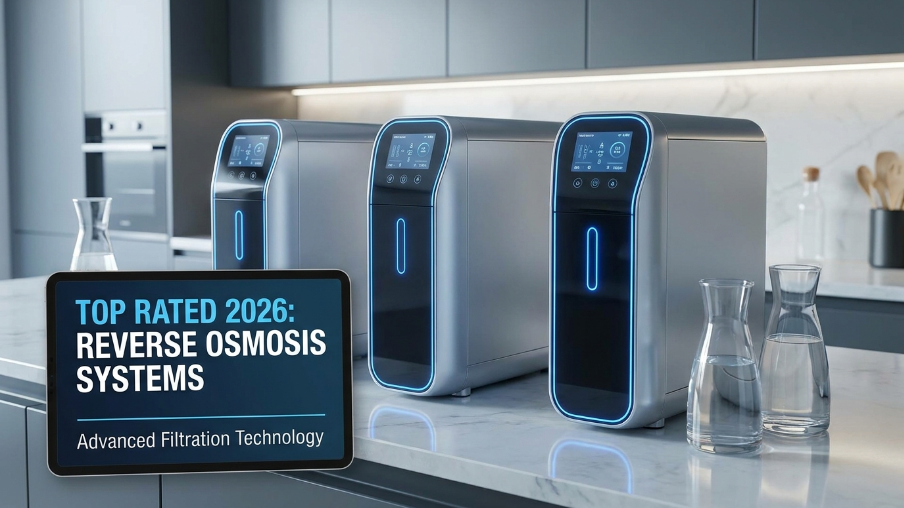
How Reverse Osmosis Actually Works
Reverse osmosis pushes water under pressure through a semipermeable membrane with pores so small that water molecules pass through while the vast majority of dissolved solids, salts, and contaminants are rejected and flushed to a drain. This is fundamentally different from pitcher or faucet filters, which rely primarily on activated carbon to improve taste and reduce chlorine — carbon filters don’t remove dissolved solids the way an RO membrane does.
For a deeper technical breakdown of how RO compares to distillation and deionization, see our complete water purification methods guide.
Most residential RO systems use multiple filtration stages beyond just the membrane itself — typically a sediment pre-filter, one or two carbon pre-filters (to protect the membrane from chlorine damage), the RO membrane, and often a post-filter or remineralization cartridge. Systems with 5-8 stages are common; well water systems sometimes need additional stages for iron or sediment.
Three System Types — Which Fits Your Home
Stores purified water in a reservoir tank, providing instant access even during heavy use. Requires more under-sink space. Typically less expensive upfront and doesn’t require electricity. Best for: budget-conscious buyers with adequate cabinet space.
Filters water on-demand with no storage reservoir — smaller footprint, often better efficiency ratios (1:1 to 3:1), continuous flow without waiting for a tank to refill. Usually requires a nearby electrical outlet for the pump. Best for: tight cabinet space, larger households, anyone wanting maximum flow rate.
Sits on the counter, connects to a standard faucet, requires zero plumbing modification. Ideal for renters or anyone who can’t drill into countertops or cabinets. Smaller built-in reservoir means more frequent refilling for heavy users. Best for: renters, apartments, anyone wanting a no-installation option.
The Efficiency Ratio — The Spec Most Buyers Miss
This is the single most underappreciated spec when shopping for an RO system. The efficiency ratio describes how many gallons of wastewater (called “concentrate” or “brine”) are produced for every gallon of purified water delivered.
Older, budget RO systems typically run 3:1 or 4:1 — meaning 3 to 4 gallons go down the drain for every 1 gallon of clean drinking water. Modern high-efficiency tankless systems have improved this dramatically, with several current models achieving 1:1 ratios — just 1 gallon wasted per gallon purified.
| Efficiency Ratio | Gallons Wasted per 1 Gallon Purified | Typical System Type |
|---|---|---|
| 1:1 | 1 gallon | Modern tankless (Cloud RO and similar) |
| 2:1 | 2 gallons | Newer-generation tankless systems |
| 3:1 | 3 gallons | Common tankless mid-range (Waterdrop G3P800) |
| 4:1 | 4 gallons | Older or budget countertop/tank-based systems |
Over a year of daily use, the difference between a 1:1 and 4:1 system can add up to thousands of gallons of wasted water — directly affecting your water bill and environmental footprint. When comparing systems at similar price points, prioritize the lower efficiency ratio number.
GPD Sizing — How Much Capacity Do You Actually Need
Gallons Per Day (GPD) describes how much purified water a system can produce in 24 hours. Overbuying capacity is the most common — and most expensive — mistake in RO shopping.
Sufficient for drinking and cooking water only in a household of 2-4 people. This covers the vast majority of residential point-of-use needs without overspending.
Recommended if you also fill an ice maker, water pet bowls, or do significant home cooking from the RO tap. A reasonable mid-range choice for active households.
Tankless systems in this range deliver water on-demand with minimal wait, ideal for larger families or anyone who wants zero delay regardless of how much is drawn at once.
Designed for large families, small businesses, or restaurants with continuous high-volume demand. Significant overkill for typical residential drinking/cooking use — don’t pay the premium unless you genuinely need this throughput.
Best RO Systems 2026 — Quick Comparison
Here’s the fast side-by-side. Full reviews of each follow below. Prices are approximate and update on Amazon.
| System | Type | Best For | Efficiency | Approx. Price | |
|---|---|---|---|---|---|
| AquaTru Carafe | Countertop | Best overall / renters | 4:1 | $350-450 | Check price |
| Waterdrop G3P800 | Tankless | Larger households | 3:1 | $600-900 | Check price |
| Express Water RO5DX | Tank-based | Budget buyers | 3:1 | $150-250 | Check price |
| iSpring RCC7AK | Tank-based | First-time / DIY installers | 3:1-4:1 | $200-300 | Check price |
Disclosure: As an Amazon Associate we earn from qualifying purchases. Buying through links on this page may earn us a small commission at no extra cost to you — it never affects our rankings.
7 Best Reverse Osmosis Systems 2026 — Ranked by Category
1. AquaTru Carafe — Best Overall (Countertop)
Type: Countertop, no installation required
Certification: IAPMO certified to NSF/ANSI 42, 53, 58, and 401 for 83 contaminants
Efficiency: 4:1
Approx. price: $350-450
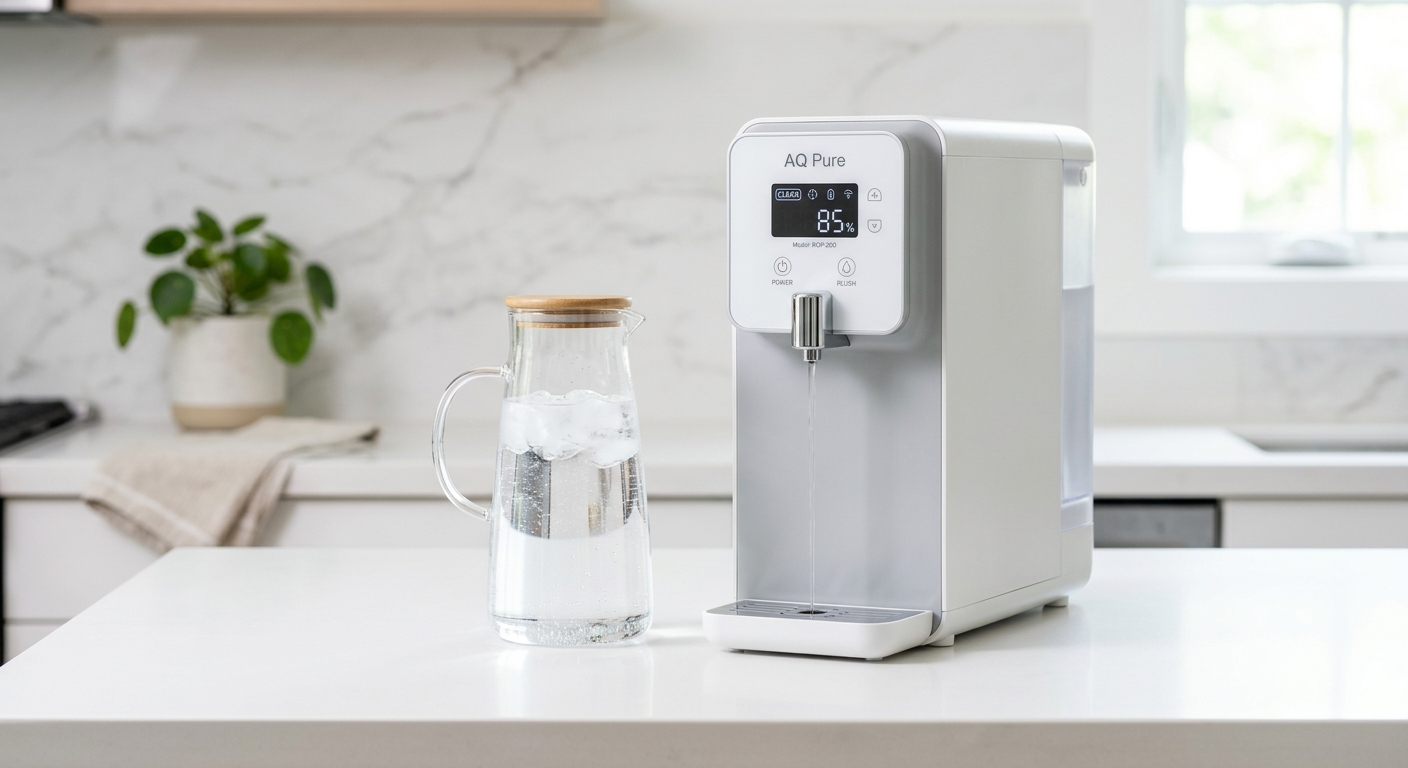
In independent lab testing, the AquaTru Carafe was the only system to eliminate 100% of contaminants with health effects in tested water — the broadest certification stack of any countertop unit reviewed. Zero installation required: it sits on the counter and connects to standard tap water. The trade-off is the 4:1 efficiency ratio, higher than the best tankless options, and a smaller reservoir requiring more frequent refilling for heavy households.
 water purifier with glass carafe” class=”wp-image-10400″ style=”width:220px;max-width:100%;height:auto;border-radius:10px;flex:0 0 auto;”/>
AquaTru Carafe (Alkaline Glass)
No installation, NSF-certified for 84 contaminants including PFAS, lead & fluoride. Glass carafe, adds alkaline minerals back. The top-scoring RO system in independent testing.
2. Cloud RO — Best Under-Sink with Remineralization
Type: Tankless under-sink
Certification: NSF/ANSI 58
Efficiency: 1:1 (best-in-class)
Approx. price: $500-700
Independent Tap Score lab testing confirmed this system reduced TDS from 187 to 66 ppm with built-in remineralization — meaning it doesn’t strip all minerals like a typical RO system, instead adding select minerals back automatically without a separate add-on cartridge. The 1:1 efficiency ratio is among the best available, and app-based monitoring tracks filter life, TDS, and tank volume in real time. No wall outlet required. Best suited for buyers prioritizing taste and minimal water waste over the absolute lowest price.
3. Waterdrop G3P800 — Best Tankless
Type: Tankless under-sink
Certification: NSF/ANSI 42, 53, 58
Efficiency: 3:1
Approx. price: $600-900
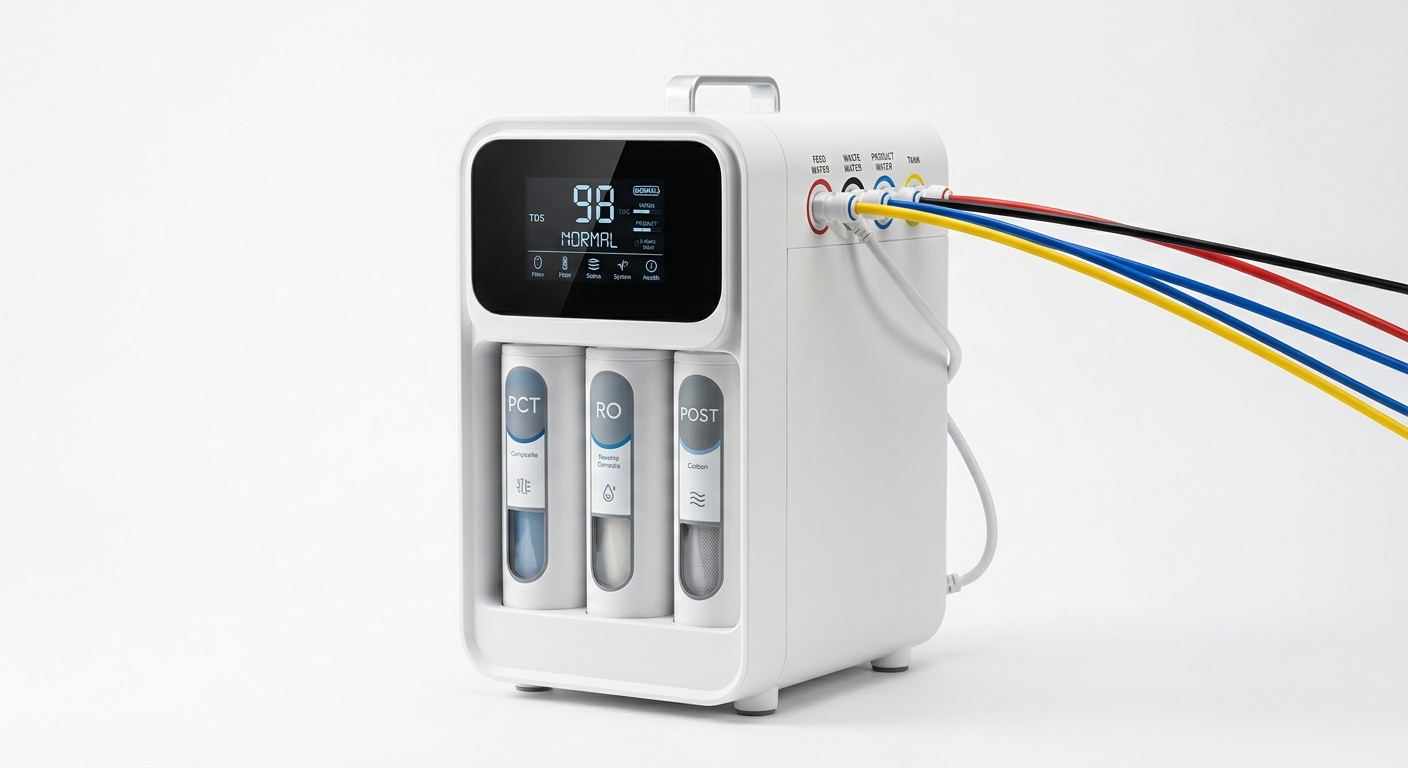
An 800 GPD flow rate makes this the choice for larger households or anyone wanting maximum throughput with zero wait time. Independent Tap Score testing after 3+ years of continuous use confirmed THMs, PFAS, and microplastics were all reduced to non-detectable levels — meaningful longevity data, not just out-of-box performance. Optional UV sterilization add-on available. Requires a dedicated electrical outlet under the sink.
 reverse osmosis system 800 GPD under sink” class=”wp-image-10402″ style=”width:220px;max-width:100%;height:auto;border-radius:10px;flex:0 0 auto;”/>
Waterdrop G3P800 Tankless RO
800 GPD on-demand flow, NSF 42/53/58 certified, 3:1 efficiency. Tankless design saves 70% under-sink space. Best for larger households wanting zero wait time.
4. Express Water RO5DX — Best Budget
Type: Tank-based under-sink
Certification: NSF/ANSI 58
Efficiency: 3:1 (typical for tank-based)
Approx. price: $150-250
A genuinely budget-friendly 5-stage system that’s still properly NSF/ANSI 58 certified — an important distinction from cheaper unbranded systems that skip certification entirely. The tank-based design means slower refill after heavy use compared to tankless options, and the published performance data primarily verifies TDS reduction rather than a comprehensive contaminant panel. A solid entry point for buyers prioritizing low upfront cost.
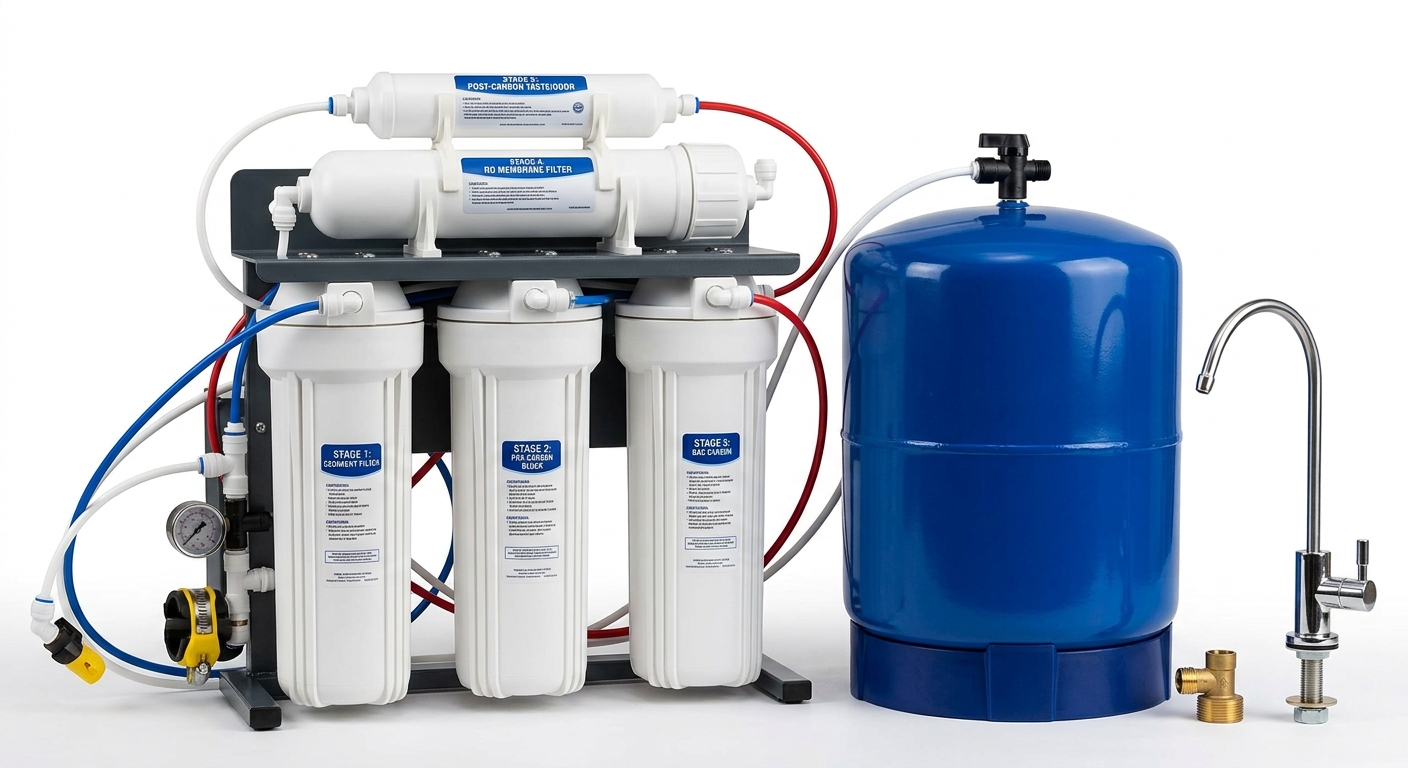
Express Water RO5DX 5-Stage
Genuinely budget-friendly yet NSF/ANSI 58 & 372 certified — a real distinction from cheap uncertified systems. 50 GPD, includes faucet & tank. Best low-cost entry point.
5. iSpring RCC7 — Best Beginner-Friendly Install
Type: Tank-based under-sink
Certification: NSF/ANSI 58 components
Efficiency: 3:1-4:1 (typical)
Approx. price: $200-300
Widely recommended for first-time RO buyers due to straightforward DIY installation with standard household tools — no specialized plumbing experience needed. The 6-stage filtration is reliable for typical municipal water. Best suited for households new to home filtration who want a reasonably priced, well-documented installation process.
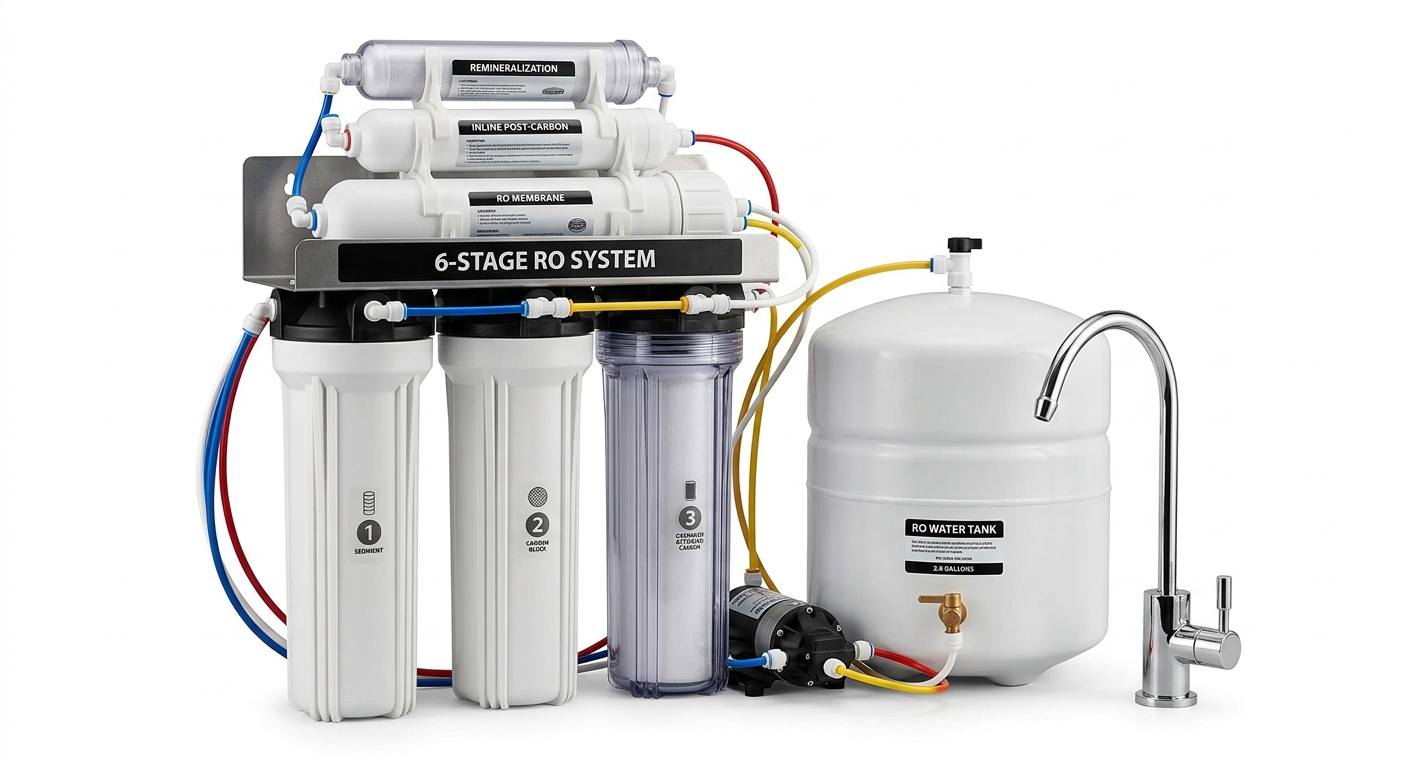
iSpring RCC7AK 6-Stage Alkaline RO
NSF/ANSI 58 certified, 75 GPD, with pH+ remineralization. Straightforward DIY install with standard tools — the go-to for first-time RO buyers. No electricity needed.
6. NU Aqua Tankless 600 — Best Mid-Range
Type: Tankless under-sink
Certification: Manufacturer-stated; verify current NSF status before purchase
Efficiency: 2:1
Approx. price: $400-550
A 600 GPD tankless system with a smart faucet, remineralization filter, and an integrated pump that maintains strong flow without tank-refill delays. The 2:1 efficiency ratio beats typical tank-based budget systems while staying below the price of premium tankless options like the G3P800. A 120-day home trial offered by some retailers reduces purchase risk for first-time RO buyers.
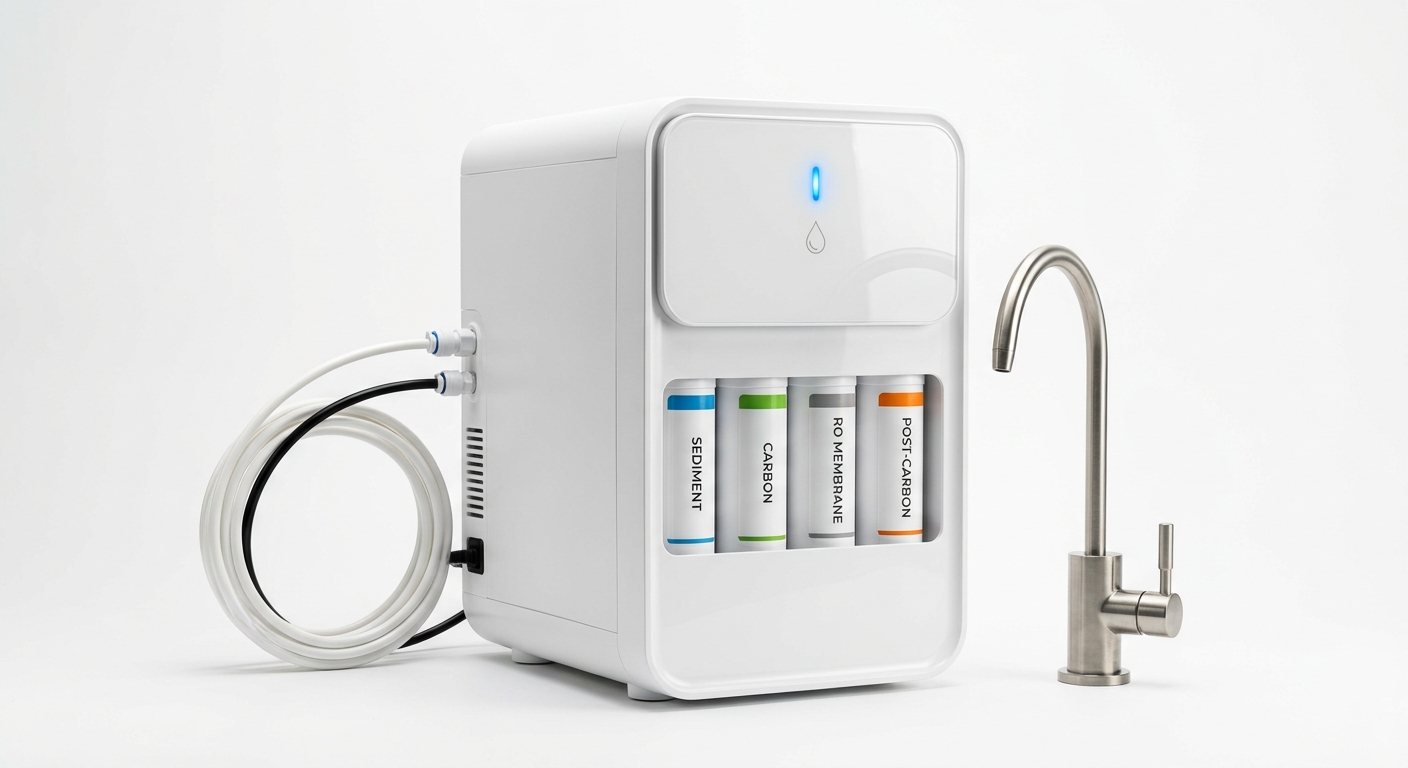
NU Aqua Tankless 600 GPD
600 GPD tankless with smart faucet, alkaline remineralization, and 2:1 efficiency — better than budget tank systems while staying below premium tankless prices. Reduces PFAS, lead & fluoride.
7. SimPure T1-400UV — Best with UV Sterilization
Type: Tankless under-sink
Certification: Verify current NSF status; check manufacturer performance sheet
Efficiency: 1.5:1
Approx. price: $500-650
Adds UV sterilization to the standard 8-stage RO filtration — relevant specifically for households concerned about microbiological contamination (relevant for some well water situations). Near-zero TDS performance in manufacturer testing. The added UV stage means reliance on electricity is non-negotiable, and installation complexity is higher than simpler tankless models. Best suited for buyers with documented bacterial concerns in their water supply who want both RO filtration and UV disinfection in one unit.
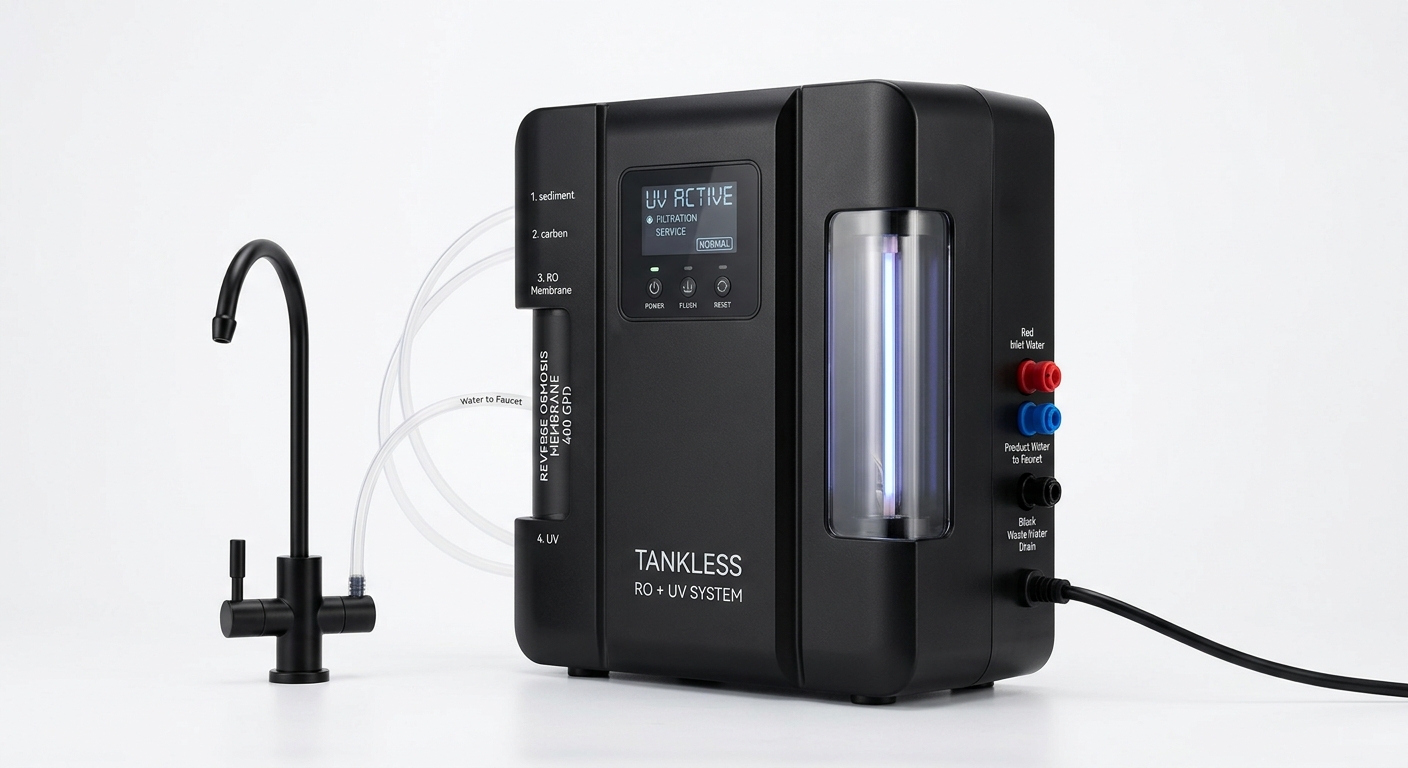
SimPure T1-400UV Tankless RO
NSF/ANSI 58 certified, 400 GPD, 8-stage with built-in UV — ideal for well water or anyone concerned about bacteria. Near-zero TDS, 1.5:1 efficiency, tankless space-saving design.
RO Systems for Well Water — What’s Different
Well water often requires additional consideration beyond standard municipal-water RO setups. Test your well water first — through a certified lab, not home test strips — to identify specific contaminants like iron, manganese, bacteria, or nitrates. Standard RO membranes can be damaged or clogged faster by high sediment or iron content common in some well sources.
Look for systems explicitly rated for well water use, or add appropriate pre-filtration stages (iron filters, sediment filters) ahead of the RO membrane based on your specific test results. For households relying on well water for infant formula preparation specifically, see our baby formula water safety guide, which covers the nitrate and bacteria testing requirements in detail.
Installation Costs — The Honest Numbers
| Cost Component | DIY | Professional Install |
|---|---|---|
| Basic countertop system | $0 (no install needed) | N/A |
| Basic under-sink, tank-based | $0 (standard tools) | $150-300 |
| Tankless under-sink | $0-50 (may need outlet access) | $200-500 |
| Annual filter replacement | $100-200/year (self-replace) | $150-300/year (service call) |
Most modern RO systems are explicitly designed for DIY installation with standard household tools, requiring access to a cold water line and a drain connection. Professional installation makes sense primarily if your plumbing setup is unusual, you’re not comfortable with basic plumbing work, or local code requires licensed installation for permit purposes.
Frequently Asked Questions
What is the best reverse osmosis system for a home in 2026?
It depends on your space, budget, and household size. For most households, a tankless under-sink system like the Waterdrop G3P800 offers the best balance of flow rate, efficiency, and compact footprint. Renters should consider a countertop system like the AquaTru Carafe, which requires no installation. Always verify NSF/ANSI 58 certification regardless of type.
What is the efficiency ratio in a reverse osmosis system?
It describes gallons of wastewater produced per gallon of purified water. Older systems run 3:1 or 4:1; modern high-efficiency tankless systems achieve 1:1. Lower ratios mean less water waste and lower water bills.
Do I need a tank-based or tankless RO system?
Tank-based systems are more affordable and don’t require electricity but take up more space and refill slowly after heavy use. Tankless systems offer continuous flow, smaller footprint, and better efficiency, but typically need an electrical outlet for the pump.
How many gallons per day (GPD) do I need from an RO system?
50-75 GPD covers drinking and cooking for most 2-4 person households. Larger households or those filling ice makers/pet bowls may want 90+ GPD. Tankless systems rated 400-1,200 GPD suit large families wanting zero wait time.
Does reverse osmosis remove all the good minerals from water?
Yes, RO removes virtually all dissolved minerals along with contaminants. Many modern systems include a remineralization stage to add back calcium and magnesium for better taste. The mineral loss is not nutritionally significant since food provides far more dietary minerals than water.
How much does it cost to install a reverse osmosis system?
$150-300 for basic models up to $500-1,000+ for premium tankless systems. Most are DIY-friendly; professional installation adds $150-500. Annual filter costs run $100-200.
What NSF certification should I look for in an RO system?
NSF/ANSI 58 specifically certifies RO performance for TDS and dissolved solids reduction. Some systems also carry NSF 42 (taste/odor), 53 (health contaminants including PFAS), or 401 (emerging contaminants). Be skeptical of high removal claims without specific certification numbers.
Can a reverse osmosis system work with well water?
Yes, but well water often needs additional pre-filtration for sediment, iron, or bacteria before the RO membrane. Test your well water first through a certified lab and choose a system with appropriate pre-filtration stages.
Is a countertop RO system as good as under-sink?
Yes, filtration performance can be comparable — some countertop models eliminate 100% of tested health-effect contaminants in independent testing. The main trade-offs are smaller reservoir capacity and counter space rather than filtration quality.
How often do I need to replace RO filters?
Pre-filters every 6-12 months, RO membrane every 2-5 years, post-filters/remineralization cartridges every 6-12 months. Most modern systems include filter life tracking via indicators or apps.
Does reverse osmosis remove PFAS?
Yes. NSF/ANSI 58-certified RO systems achieve 94-99% PFAS reduction. See our complete PFAS filter buying guide for certified options across all filter categories.
Should I get RO water for my whole house or just drinking water?
Point-of-use RO at the kitchen sink is sufficient and far more cost-effective for most households. Whole-house RO is significantly more expensive and typically only justified for severe documented contamination affecting bathing water or specific medical needs.
Related Reading
- Best Water Filters That Remove PFAS — 2026 Buying Guide
- Distilled vs Deionized vs Reverse Osmosis Water
- Best Water for Baby Formula — Pediatrician Guidance
- Bottled Water Brands & PFAS — Every Major Brand Ranked
- Best Water Filter Pitchers 2026
References & Sources
- NSF International — Certified Water Filter Database
- EPA — Drinking Water Treatment Technologies
- Water Quality Association — Gold Seal Certification Program
The Bottom Line
Choosing a reverse osmosis system comes down to matching three factors to your actual situation: system type (tankless for space-savings and efficiency, tank-based for budget, countertop for no-installation flexibility), GPD capacity (50-75 GPD for most households; don’t overpay for capacity you won’t use), and efficiency ratio (prioritize 1:1 to 2:1 over older 3:1-4:1 designs when budget allows). The AquaTru Carafe remains the best overall pick for its certification breadth and zero-installation convenience. The Waterdrop G3P800 is the strongest tankless option for larger households. The Cloud RO wins for anyone prioritizing taste through built-in remineralization with minimal water waste. Whatever you choose, verify NSF/ANSI 58 certification directly — manufacturer marketing claims without certification numbers should be treated as unverified. A properly certified RO system, regardless of which specific model you choose, will outperform any pitcher or faucet filter for comprehensive contaminant removal including PFAS, fluoride, and dissolved solids.