Types of Whole-House Filters
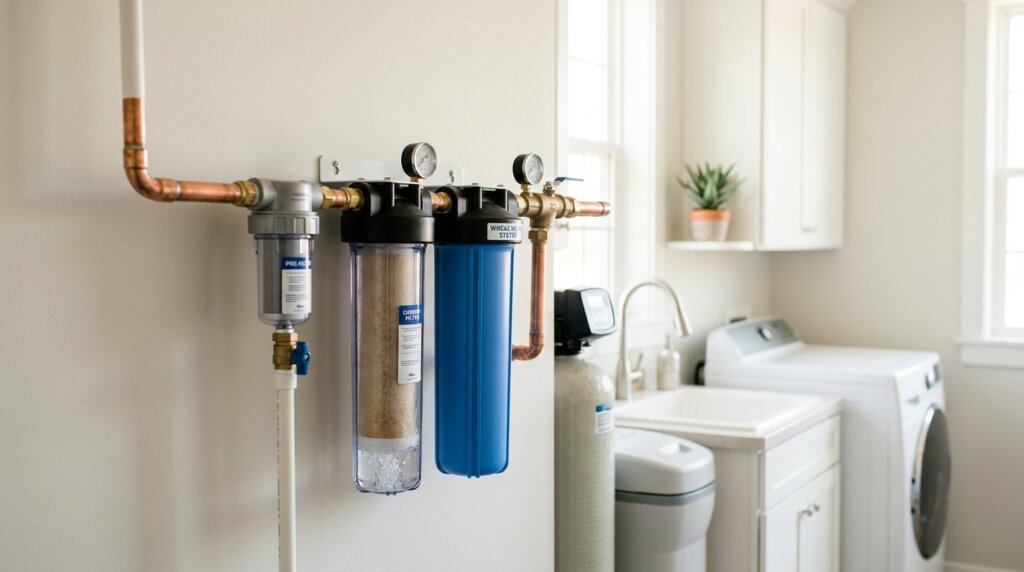
- Sediment filters ($50–$300): Remove dirt, sand, and rust. Essential first stage for well water. What the micron rating actually means: NSF/ANSI 42 defines six nominal particulate classes from 0.5–1 µm up to 50–80 µm, and the word “absolute” appears among none of them.
- Activated carbon (POE) ($400–$1,200): Remove chlorine, chloramine, taste, odor, and many chemicals. The most common whole-house filter. Those two are separate certified claims, not one: under NSF/ANSI 42, chlorine is a 2.0 mg/L challenge needing only 50% reduction while chloramine is 3.0 mg/L needing 80% — and chloramine is what a growing number of US utilities actually use.
- Combo systems ($800–$2,000): Sediment + carbon + sometimes KDF or a water softener in one unit.
- Reverse osmosis (whole-house) ($1,500–$4,000+): Rare and expensive at whole-house scale; usually overkill unless water is severely contaminated.
Whole-House Filter Cost Breakdown
| System Type | Unit Cost | Installed Cost | Filter Life |
|---|---|---|---|
| Sediment pre-filter | $50–$300 | $150–$500 | 3–6 months |
| Carbon (POE) | $400–$1,200 | $700–$1,800 | 5–10 years (tank) |
| Combo (sediment+carbon) | $800–$2,000 | $1,200–$3,000 | Varies by stage |
| Salt-free conditioner add-on | $300–$800 | $500–$1,200 | 6 years |
Installed cost depends on plumbing complexity and region. DIY installation can save $300–$800.
Our Top Whole-House Picks (2026)
As an Amazon Associate we earn from qualifying purchases — it never affects our picks.
SpringWell CF Whole House
4-stage carbon + KDF, removes chlorine, chloramine, PFAS, pesticides. 1,000,000-gallon capacity, lifetime warranty.
Aquasana Rhino EQ-1000
1,000,000-gallon / 10-year carbon system. NSF certified, reduces 97% of chlorine. Popular mid-range choice.
Express Water 3-Stage
Sediment + carbon + KDF, with pressure gauges and easy-swap cartridges. Great for well water with iron and sediment.
How to Choose (3-Step Method)
- Test your water. City water usually needs carbon for chlorine. Well water needs sediment + often iron/sulfur treatment.
- Match flow rate to your home. A family of 4 needs 15+ GPM so showers don’t lose pressure.
- Check capacity & maintenance. Tank-based carbon lasts 5–10 years; cartridge systems are cheaper upfront but need swaps every 3–6 months.
Frequently Asked Questions
How much does a whole-house water filter cost?
Whole-house filters cost $500 to $2,000 for the unit, or $800 to $3,000 installed. Carbon systems for city water are cheapest; combo systems with softening cost the most.
Do I need a whole-house filter or just a pitcher?
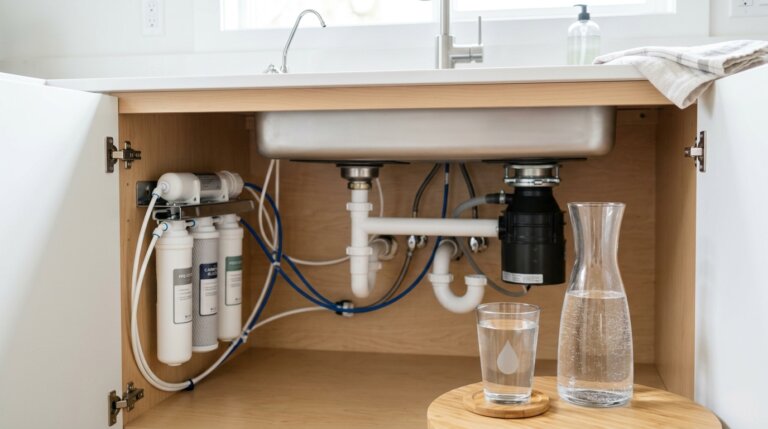
A pitcher only cleans drinking water. Choose a whole-house filter if you want chlorine-free showers, protection for appliances, or you have well water. For drinking water alone, a pitcher or under-sink RO is cheaper.
Do whole-house filters remove PFAS?
Some do. Carbon-based whole-house systems with catalytic carbon or specialized media can reduce PFAS, but for guaranteed PFAS removal an under-sink reverse osmosis system at the drinking tap is more reliable.
How long do whole-house filters last?
Tank-based carbon systems last 5–10 years. Cartridge-based systems need filter swaps every 3–6 months. Sediment pre-filters are changed most often.
The Bottom Line
For most city homes, a whole-house carbon system ($500–$1,200) handles chlorine, taste, and odor at every tap. Well-water homes should add a sediment pre-filter and treat iron or sulfur separately. Test your water first, match flow rate to your household, and you’ll get clean water everywhere without overpaying. For guaranteed PFAS removal at the drinking tap, pair any whole-house system with an under-sink RO unit.