Hard water is one of the most common water-quality problems in U.S. homes. It carries high levels of dissolved calcium and magnesium that cause scaling, waste soap, dry out skin, and slowly damage appliances. The good news is that hardness can be removed — and which method you choose depends on whether you want to treat just your drinking water or your whole house. This guide explains every effective method, how well each works, and what it costs.
Water hardness is removed using ion-exchange water softeners (whole-house), reverse osmosis (drinking water), washing soda or lime softening, and boiling (temporary, small batches). A salt-based softener is the most effective whole-house method; reverse osmosis is best for drinking and cooking water.
What Makes Water “Hard”?
Hard water contains dissolved minerals — primarily calcium and magnesium — picked up as groundwater flows through limestone and chalk. Hardness is measured in grains per gallon (gpg); anything above 7 gpg is considered hard, and much of the U.S. (especially the Midwest and Southwest) falls in the hard to very hard range. For the full picture, see our guide on hard water vs soft water.
Signs You Need to Remove Hardness
- White, chalky residue on taps, kettles, and dishes
- Soap and shampoo that won’t lather
- Dry skin and dull hair after washing
- Scale clogging pipes and reducing water pressure
- Appliances (water heater, dishwasher) failing early
Why You Should Remove Hardness
Hard water damages appliances, raises energy costs (scale on a water-heater element forces it to work harder), and reduces cleaning efficiency. Removing hardness extends appliance life, cuts soap and detergent use, and improves how your skin, hair, dishes, and laundry come out. The savings on appliances and soap often offset the cost of treatment over time.
Best Methods to Remove Hardness
1. Ion-Exchange Water Softener (Best Whole-House Method)
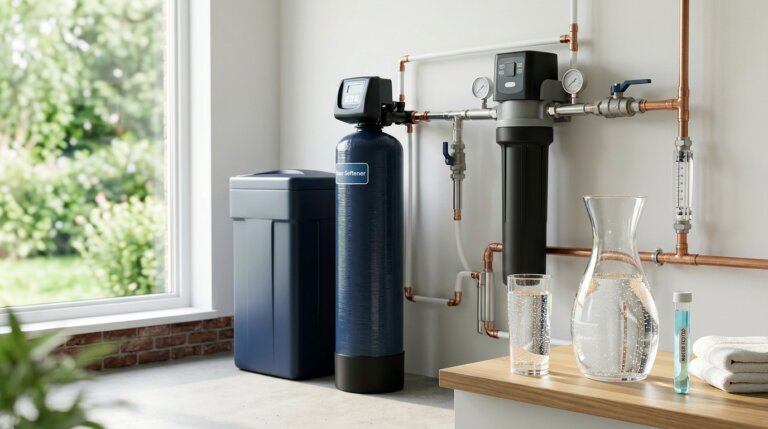
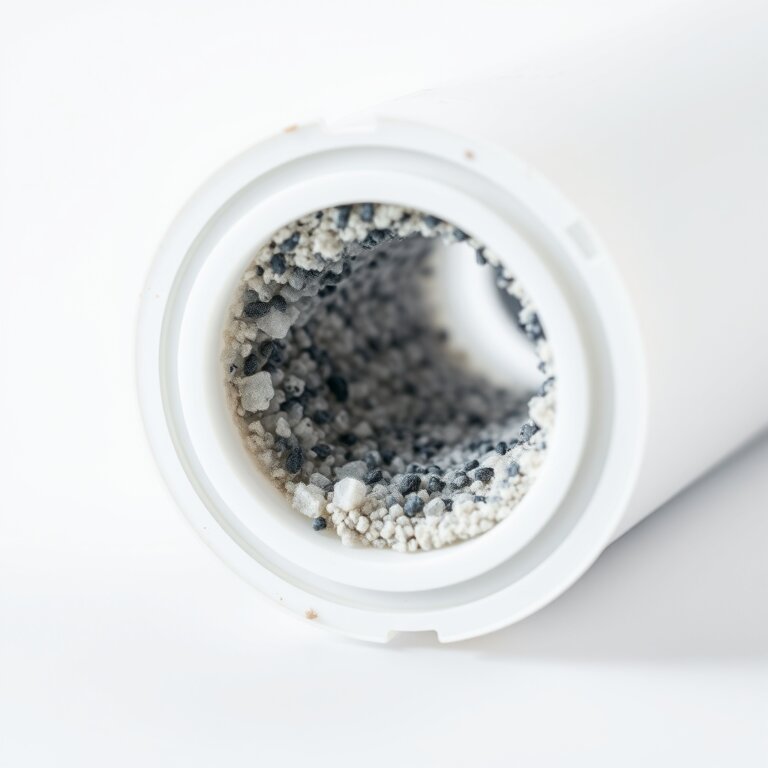
A salt-based softener passes water through resin beads that swap calcium and magnesium for sodium, removing hardness completely from every tap in the house. It’s the most effective long-term solution for genuinely hard water. Cost is $600–$2,500 installed — see our full guide on how much a water softener costs, and the right salt to use.
2. Reverse Osmosis (Best for Drinking Water)
Reverse osmosis pushes water through a fine semipermeable membrane that removes dissolved minerals along with most other contaminants, dramatically reducing hardness. It’s point-of-use — usually installed under the kitchen sink — so it’s ideal for drinking and cooking water rather than the whole house. Many homes pair a whole-house softener with an RO drinking tap. Compare units in our best water filters guide.
3. Washing Soda & Lime Softening
Adding washing soda (sodium carbonate) precipitates out calcium and magnesium, softening water for laundry and cleaning. Lime softening is the large-scale version used by municipal treatment plants. These are useful for cleaning applications but aren’t practical for everyday drinking water at home.
4. Boiling (Temporary, Small Batches)
Boiling removes temporary hardness (from bicarbonates) by causing the minerals to precipitate out as scale, which you then filter or pour off. It does nothing for permanent hardness (from sulfates and chlorides), and it’s only practical for small amounts. Useful in a pinch, not a real solution.
5. Salt-Free Conditioners (Scale Control)
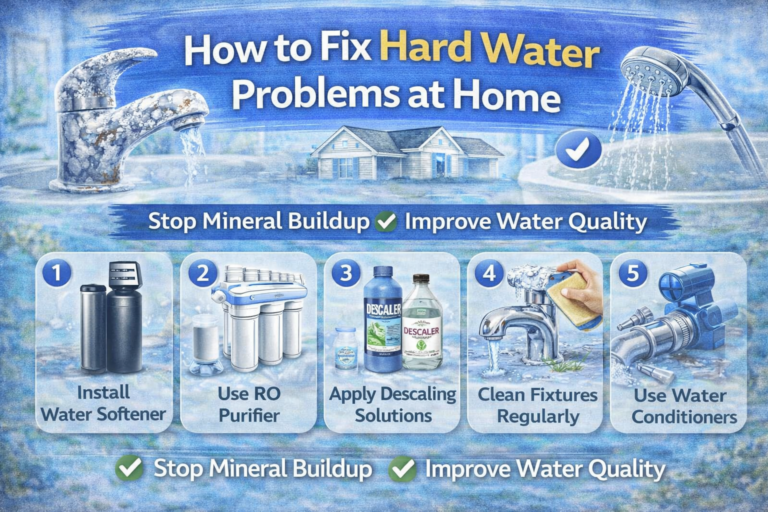
These don’t remove hardness but crystallize the minerals so they don’t form scale. Good for mild hardness and low-maintenance setups. For a full rundown of options, see how to fix hard water problems at home.
Method Comparison
| Method | Effectiveness | Best Use | Cost |
|---|---|---|---|
| Ion-exchange softener | Very high | Whole house | $600–$2,500 |
| Reverse osmosis | High | Drinking & cooking | $150–$600 |
| Salt-free conditioner | Moderate | Mild hardness, scale control | $800–$3,000 |
| Boiling | Low | Temporary, small batches | Free |
Tips for Managing Hard Water
- Test your water first so you size any system correctly
- Pair a whole-house softener with an RO drinking tap for the best of both
- Descale fixtures and appliances regularly with vinegar
- Use rinse aid in the dishwasher to stop spotting
- Replace filters and refill salt on schedule for consistent results
FAQs
What is the best way to remove hardness from drinking water?
Reverse osmosis is best for drinking and cooking water; a salt-based softener is best for the whole house. Many homes use both — a softener for the house and an RO tap for drinking.
Does boiling remove water hardness?
Boiling removes only temporary hardness (from bicarbonates) and is practical only for small amounts. It does nothing for permanent hardness.
Can a water filter remove hardness?
Standard carbon filters don’t remove hardness. You need ion exchange (a softener) or reverse osmosis to reduce the calcium and magnesium that cause it.
Is it safe to drink softened water?
Yes, though salt-softened water has slightly more sodium. People on low-sodium diets can use potassium-based softening or an RO drinking tap.
Related Guides
- How Much Is a Water Softener? Full Cost Breakdown
- Hard Water vs Soft Water: Differences & Which Is Better
- How to Fix Hard Water Problems at Home
- Best Water Softener Salt: Types & How Much to Use
Conclusion
Removing hardness improves your water quality and protects your home. For whole-house treatment, an ion-exchange softener is the gold standard; for drinking water, reverse osmosis is hard to beat. Test your water, match the method to your needs and budget, and you’ll see the difference in your appliances, your skin, and your monthly soap bill.
{
“@context”: “https://schema.org”,
“@type”: “FAQPage”,
“@id”: “https://completewaterguide.com/how-to-remove-hardness-from-drinking-water/#faq”,
“mainEntity”: [
{
“@type”: “Question”,
“name”: “What is the best way to remove hardness from drinking water?”,
“acceptedAnswer”: {
“@type”: “Answer”,
“text”: “Reverse osmosis is best for drinking and cooking water; a salt-based softener is best for the whole house. Many homes use both, a softener for the house and an RO tap for drinking.”
}
},
{
“@type”: “Question”,
“name”: “Does boiling remove water hardness?”,
“acceptedAnswer”: {
“@type”: “Answer”,
“text”: “Boiling removes only temporary hardness from bicarbonates and is practical only for small amounts. It does nothing for permanent hardness.”
}
},
{
“@type”: “Question”,
“name”: “Can a water filter remove hardness?”,
“acceptedAnswer”: {
“@type”: “Answer”,
“text”: “Standard carbon filters do not remove hardness. You need ion exchange (a softener) or reverse osmosis to reduce the calcium and magnesium that cause it.”
}
},
{
“@type”: “Question”,
“name”: “Is it safe to drink softened water?”,
“acceptedAnswer”: {
“@type”: “Answer”,
“text”: “Yes, though salt-softened water has slightly more sodium. People on low-sodium diets can use potassium-based softening or an RO drinking tap.”
}
}
]
}