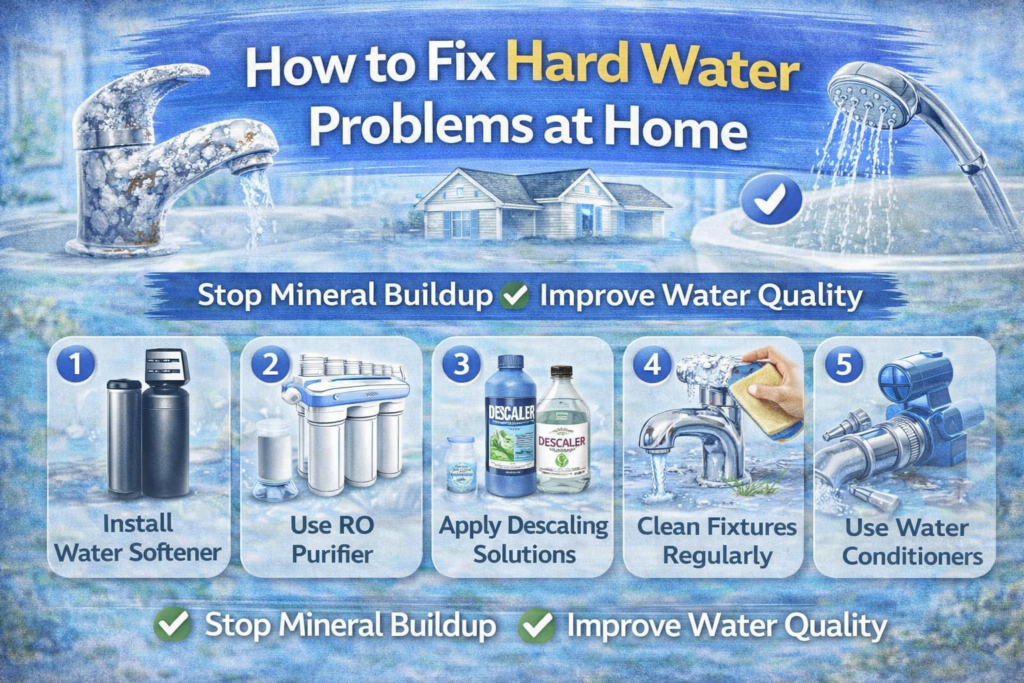
Hard water is one of the most common household water problems in the U.S., and it shows up everywhere — white residue on faucets, dry skin after showers, dull hair, stiff laundry, and scale that slowly wears out your appliances. The good news: every one of these problems is fixable, and you don’t always need an expensive system to do it. This guide walks through every way to fix hard water at home, from quick DIY tricks to permanent whole-house solutions, with realistic costs for each.
You can fix hard water with a salt-based water softener (the permanent fix), a salt-free conditioner, an RO system for drinking water, showerhead and faucet filters, or descaling with vinegar. A whole-house softener is the only method that truly removes the calcium and magnesium causing the problem — the others reduce symptoms or treat water at one point of use.
What Causes Hard Water?
Hard water contains high levels of dissolved calcium and magnesium, picked up as groundwater flows through limestone and chalk. These minerals leave chalky deposits on surfaces, react with soap to form scum, and build up as scale inside pipes and appliances. The harder your water (measured in grains per gallon), the worse these effects. To understand the underlying difference, see our guide on hard water vs soft water.
Signs of Hard Water in Your Home
- White, chalky residue on faucets, showerheads, and dishes
- Soap and shampoo that won’t lather well
- Dry, itchy skin and dull, tangly hair
- Stiff, scratchy laundry that fades quickly
- Spots and film on glassware
- Limescale in the kettle and inside the water heater, the same calcium deposit hardened by repeated heating
- Clogged pipes, reduced water pressure, and appliances failing early
If skin and hair are your main concern, our guide on hard water effects on skin and hair covers targeted fixes.
Best Ways to Fix Hard Water Problems
1. Install a Salt-Based Water Softener (The Permanent Fix)
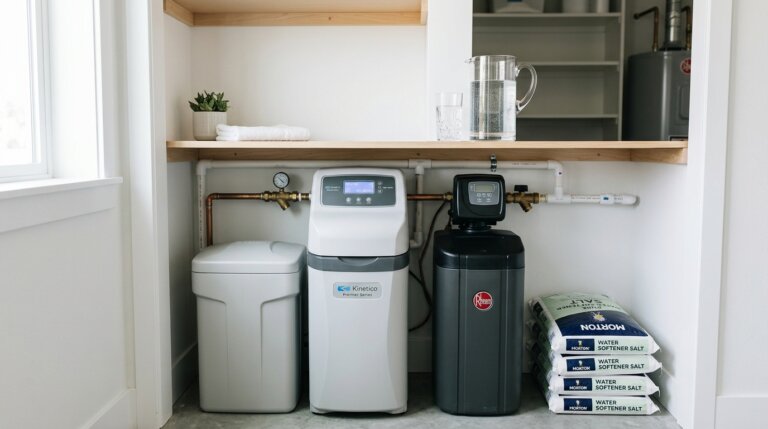
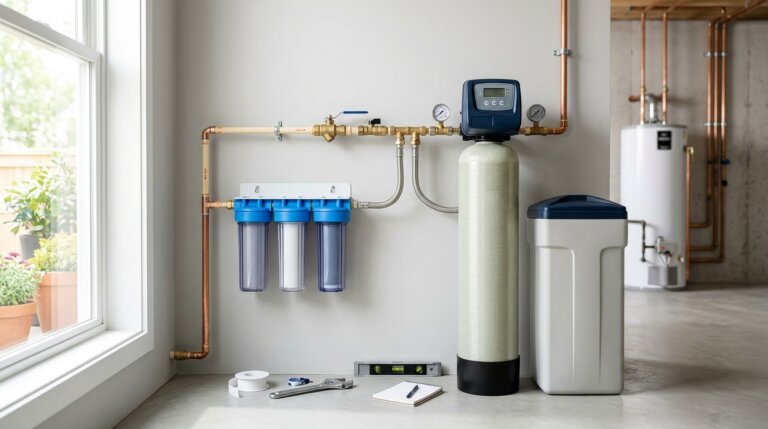
A salt-based ion-exchange softener is the only solution that truly removes hardness. It swaps calcium and magnesium for sodium, giving you soft water at every tap, shower, and appliance in the house. It’s the most effective and most popular option for genuinely hard water (above 7 gpg). Expect to pay $600–$2,500 installed — our full breakdown of how much a water softener costs covers sizing and brands. You’ll also need salt refills; see our water softener salt guide for the right type and amount.
2. Use a Salt-Free Water Conditioner
Salt-free conditioners don’t remove minerals — they crystallize them so they don’t stick to surfaces. They add no sodium, waste no water, and need almost no maintenance, which makes them attractive for mild hardness or sodium-restricted homes. The trade-off: on very hard water they’re noticeably less effective than salt-based systems. Cost: $800–$3,000.
3. Add a Reverse Osmosis System for Drinking Water
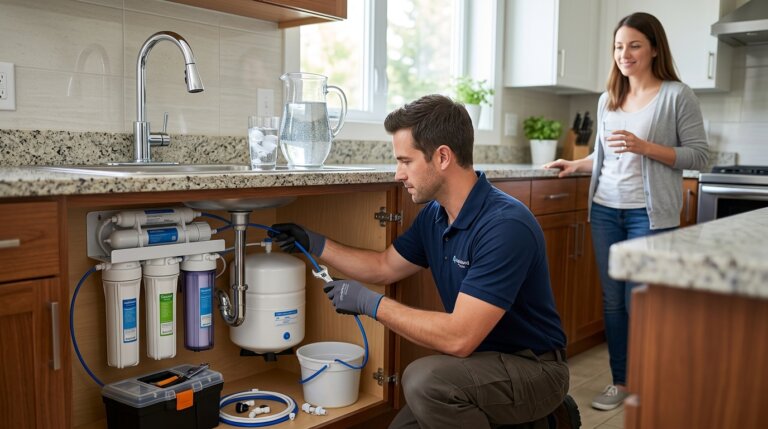
RO systems force water through a fine membrane that removes dissolved minerals, giving you clean, low-mineral drinking water. RO is point-of-use (usually under the kitchen sink), so it fixes drinking and cooking water but not your whole house. Many homeowners pair a whole-house softener with an RO drinking tap for the best of both. Compare options in our guide to the best water filters for home.
4. Install Showerhead and Faucet Filters
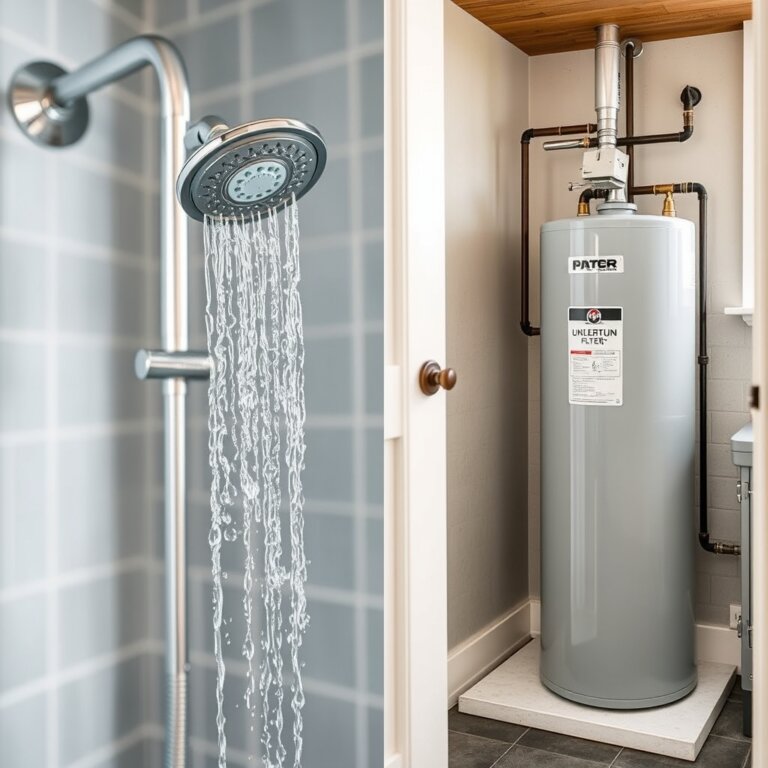
If you rent or can’t install a whole-house system, point-of-use filters are the practical fix. Shower filters reduce the minerals and chlorine that dry out skin and hair, and faucet aerators with built-in filters help in the kitchen. They’re cheap ($20–$80) and renter-friendly, though they only treat water at that one fixture and need regular cartridge changes.
5. Descale With Vinegar and Commercial Removers
For existing buildup, white vinegar is a cheap, effective descaler. Soak showerheads and faucet aerators in vinegar overnight, run vinegar through your coffee maker and kettle, and wipe fixtures with a vinegar solution. Commercial descalers (like CLR) work faster on heavy buildup. This treats the symptoms rather than the cause — see the limescale note above for prevention tips.
6. Adjust Your Cleaning and Laundry Routine
Small changes help while you decide on a bigger fix: use more detergent or a hard-water laundry booster, add a rinse aid in the dishwasher to stop spotting, switch to liquid soap (it handles hard water better than bar soap), and wipe down shower walls after use to prevent scale.
Which Hard Water Fix Is Right for You?
| Solution | Cost | Best For |
|---|---|---|
| Salt-based softener | $600–$2,500 | Whole-house, very hard water, permanent fix |
| Salt-free conditioner | $800–$3,000 | Mild hardness, low maintenance, no sodium |
| RO system | $150–$600 | Drinking & cooking water only |
| Shower/faucet filters | $20–$80 | Renters, skin & hair, single fixtures |
| Vinegar / descalers | $5–$20 | Removing existing buildup |
Benefits of Fixing Hard Water
- Appliances (water heater, dishwasher, washer) last years longer
- Up to ~30% less soap, shampoo, and detergent needed
- Softer skin and shinier, more manageable hair
- No more scale removal or spotty dishes
- Better water pressure as pipes stay scale-free
FAQs
How do I know if I have hard water?
Look for white scale on faucets, poor soap lather, dry skin, and spots on dishes. For an exact number, check your water report or use a hardness test strip — above 7 grains per gallon is considered hard.
Is hard water harmful?
No — it’s safe to drink and even adds minerals. The problems are with plumbing, appliances, skin, and cleaning, not your health.
What is the best long-term solution for hard water?
A salt-based whole-house water softener is the most effective permanent fix because it actually removes the hardness minerals rather than masking the symptoms.
Can RO remove hardness?
Yes — reverse osmosis removes the dissolved minerals that cause hardness, but only at the point of use (usually the kitchen tap), not throughout the house.
How can I fix hard water without a softener?
Use showerhead and faucet filters, an RO system for drinking water, descale with vinegar, and adjust your cleaning routine. These reduce symptoms even though they don’t remove hardness whole-house.
Related Guides
- How Much Is a Water Softener? Full Cost Breakdown
- Hard Water vs Soft Water: Differences & Which Is Better
- How to Remove Hardness From Drinking Water
- Best Water Softener Salt: Types & How Much to Use
- Hard Water Effects on Skin and Hair
Conclusion
Hard water problems are common but completely fixable. For a permanent, whole-house solution, a salt-based softener is the gold standard. If you rent or have milder hardness, point-of-use filters, an RO drinking system, and regular descaling go a long way. Match the fix to your situation and budget, and you’ll protect your appliances, improve your skin and hair, and cut your cleaning effort for years to come.