Want to know what is in your water first? Use our free Water Quality Checker Tool before deciding whether a filter is worth it.
How Do Shower Filters Work?
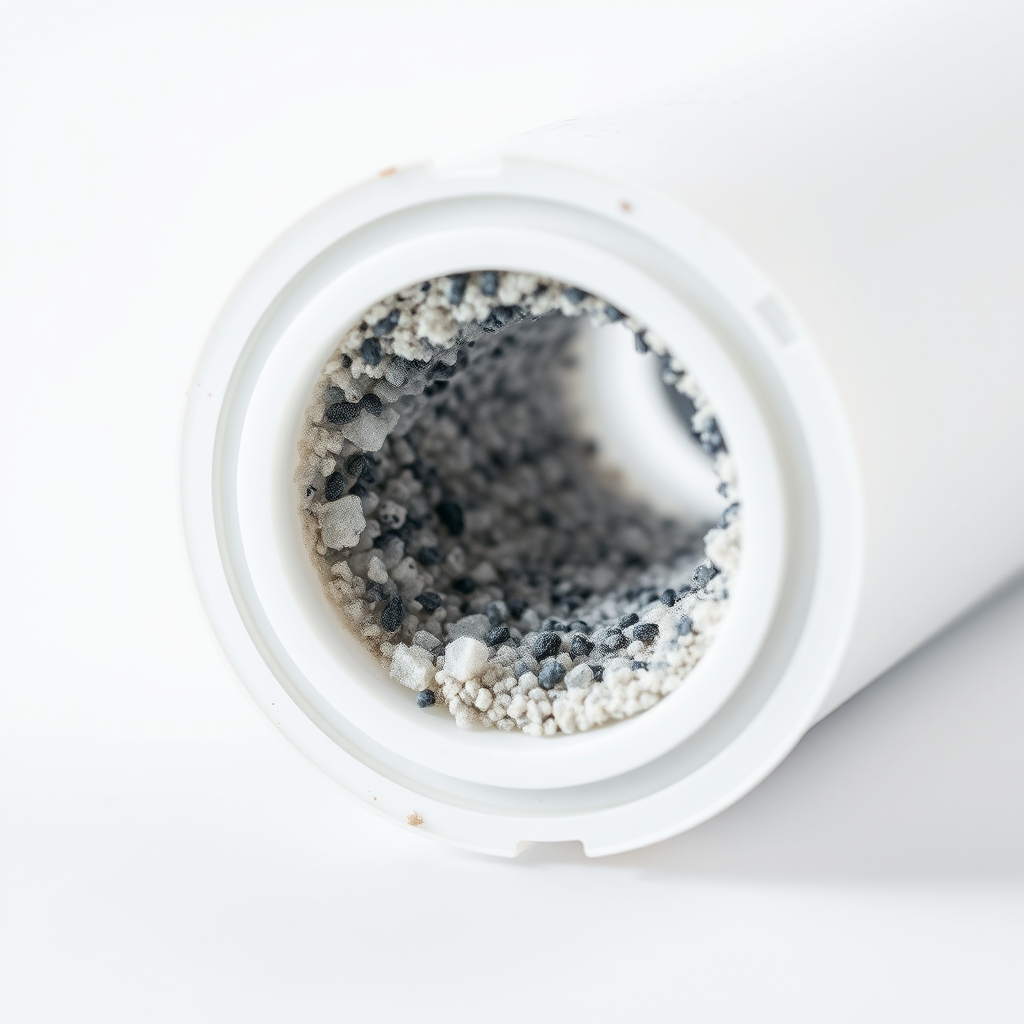
A shower filter works by passing water through a cartridge of reactive media — typically KDF-55, calcium sulfite and activated carbon — that chemically converts or adsorbs contaminants before the water reaches your skin. It is a chemical process, not a mechanical strainer, which is why the media inside determines everything about performance.
KDF-55 is a zinc and copper alloy, roughly 55% copper and 45% zinc, that works by redox reaction: it converts free chlorine into harmless chloride ions. Calcium sulfite works by chemical reduction and handles both chlorine and chloramine. Activated carbon works by adsorption, physically trapping molecules in its pore structure. Each behaves differently at shower temperatures, which typically run 38–42°C.
| Media | Mechanism | Works in Hot Water? |
|---|---|---|
| KDF-55 | Redox — 55% copper / 45% zinc alloy converts free chlorine to chloride | A+ Yes |
| Calcium sulfite | Chemical reduction of chlorine and chloramine | A Yes |
| Activated carbon | Adsorption onto porous surface | C Weakens as temp rises |
| Vitamin C (ascorbic acid) | Neutralises chlorine on contact | B Yes, but depletes fast |
| Ceramic / “energy” beads | No established mechanism | D Not applicable |
Do Shower Filters Work for Hard Water?
No, and this is the most common misunderstanding in the category.
Products marketed as “shower head water softeners” typically point to ceramic or “energy” beads as the softening element. These have no ion-exchange capacity. One manufacturer in the category, weAQUA, states it directly in its own Amazon listing: “Marketing gimmicks like energy and ceramic balls are just clay with no real function.”
If limescale on your shower door and fixtures is the problem you are trying to solve, a filter will not touch it. Water above 7 grains per gallon is classed as hard and above 10 as very hard — and at those levels only a properly sized water softener changes the outcome.
Do Shower Filters Work for Hair?
Usually yes — but for a different reason than people expect.
The straw-like texture people notice after showering is mostly a chlorine effect, not a hardness effect. US municipal systems typically maintain a chlorine residual of 0.2 to 4.0 mg/L throughout the distribution system, and that chlorine binds to hair keratin and strips the natural oils keeping the cuticle smooth. Since chlorine is precisely what KDF-55 and calcium sulfite remove, a filter addresses the actual mechanism.
Hard water contributes differently: calcium and magnesium react with shampoo surfactants to form an insoluble residue that is hard to rinse, leaving hair feeling coated. A shower filter does nothing about that. So a filter helps with one of the two causes and not the other, which is why results vary between people depending on which problem dominates in their water.
Our guide to hard water and hair damage covers the mechanics in more detail.
Do Shower Filters Work for Hair Loss?
Here the honest answer is less satisfying: there is no good evidence that a shower filter prevents or reverses hair loss.
Hard water and chlorine can make hair drier, more brittle and more prone to breakage. Breakage is not the same as hair loss. The common causes of actual hair loss — androgenetic alopecia, which affects roughly 50% of men by age 50, plus telogen effluvium, thyroid conditions and iron deficiency — are unaffected by what comes out of your shower head.
Do Shower Filters Work for Eczema?
Plausible mechanism, weak evidence, and no shower filter is a medical device.
The reasoning behind the claim is sound as far as it goes: chlorine disrupts the skin’s lipid barrier, and in eczema that barrier is already compromised. Atopic dermatitis affects roughly 10% of people at some point in their lives, and removing one irritant is a reasonable step. Many people with eczema do report improvement after installing a filter.
What does not exist is clinical trial evidence that shower filtration treats eczema. Manufacturers make this claim frequently and confidently, and it is not backed by the kind of study that would justify that confidence. Treat a filter as a reasonable thing to try alongside dermatological treatment, not as a replacement for it.
The Certification Problem Nobody Mentions
This is the part of the category most reviews skip entirely.
That does not make the claims false. KDF-55 genuinely removes chlorine, and that is well-established chemistry documented since the 1980s. It does mean you have no independent verification of any specific product’s performance, and no way to compare two products’ claims on equal terms.
The practical workaround is to judge by media composition rather than by percentage claims, because the media list is a verifiable specification while the percentage is a marketing number.
Are Shower Filters Worth It?
It depends entirely on which problem you have. At $20 to $80 for the unit and $30 to $40 a year in cartridges, the maths is favourable if you are solving the right problem. Here is the honest breakdown:
Worth It If
- You can smell chlorine in your shower
- Your skin feels tight and itchy after showering
- Your hair feels stripped rather than coated
- You are on chlorinated municipal water
- You want a $20–80 fix with no plumbing
Not Worth It If
- Limescale on glass and fixtures is your problem
- You are hoping to treat hair loss
- You expect softened water
- You are on a private well with no chlorination
- You will not replace the cartridge every 4–6 months
How Long Do Shower Filters Work?
Between 4 and 6 months for most cartridges, or roughly 10,000 gallons, whichever comes first. In water above 10 grains per gallon, sediment clogs the media faster and cuts that shorter.
The failure mode matters more than the timeline. KDF and carbon media do not simply stop working when saturated — they can release accumulated contaminants back into the water. Running a cartridge months past its life is worse than having no filter at all.
- Pressure drop is the most reliable real-world signal that a cartridge is spent
- Returning chlorine smell means the media is exhausted
- Budget $30–40 a year in replacement cartridges, roughly $15–20 each twice yearly
- Hand-tighten only — most housings crack if you use tools
Frequently Asked Questions
Do shower filters actually work?
Yes, for specific contaminants. Shower filters reduce chlorine, chloramine, heavy metals and sediment through KDF-55, calcium sulfite and activated carbon media — that is established chemistry. They do not remove hardness minerals, and they have no independent certification because no NSF standard exists for shower filtration.
Do shower filters work for hard water?
No. Hardness is dissolved calcium and magnesium, and removing those requires ion exchange with a resin bed and brine tank — which is what a water softener is, at $500 to $2,000 installed. No inline cartridge can do it. A filter can still improve how your skin and hair feel by removing chlorine, but it will not change your grains per gallon or stop limescale.
Do shower filters work for hair loss?
No. Chlorine and hard water can increase hair breakage by drying the cuticle, but breakage is not hair loss. The actual causes — androgenetic alopecia, telogen effluvium, thyroid issues, iron deficiency — are unaffected by shower water. Losing 50 to 100 hairs daily is normal; more than that warrants medical investigation, not a filter.
Do shower filters work for eczema?
The mechanism is plausible — chlorine disrupts the skin’s lipid barrier, which eczema already compromises — and many people report improvement. However, no clinical trial evidence supports shower filtration as an eczema treatment, and no shower filter is a medical device. It is reasonable to try alongside dermatological care, not instead of it.
Do shower filters work with hot water?
It depends on the media. KDF-55 and calcium sulfite keep working at shower temperatures of 38–42°C, but activated carbon loses effectiveness as water gets hotter because adsorption weakens with heat. A filter that relies mainly on carbon will underperform in a hot shower even if its lab numbers, usually measured at 20°C, look good.
Are shower filters NSF certified?
No — there is no NSF/ANSI standard for shower filtration. Drinking water filters can be certified to NSF 42, 53 or 58, all audited by an accredited body. Shower filters have no equivalent, so every removal percentage you see comes from manufacturer-commissioned testing. Judge products by media composition, which is verifiable, rather than by percentage claims, which are not.
How long do shower filters last?
Typically 4 to 6 months or around 10,000 gallons, shorter in water above 10 grains per gallon where sediment clogs the media. Watch for a pressure drop or the return of chlorine smell. Do not run a cartridge past its life: saturated KDF and carbon can release accumulated contaminants back into the water, which is worse than no filter.
Are shower filters worth it?
Worth it if you can smell chlorine or your skin feels tight and dry after showering — those are chlorine problems a $20–80 filter genuinely solves, at $30–40 a year running cost. Not worth it if limescale on glass is your issue, if you are hoping to treat hair loss, or if you are on an unchlorinated private well. Our shower filter comparison covers which models use the right media.
Do cheap shower filters work?
Often as well as expensive ones. Price in this category tracks the housing and shower head design more than the filtration media. A $30 filter containing KDF-55 and calcium sulfite will outperform an $80 one that relies on carbon and ceramic beads. Read the media list, not the price tag.
Do shower filters remove fluoride?
Not meaningfully. Fluoride removal requires activated alumina, bone char or reverse osmosis — none of which appear in shower cartridges. Some products list fluoride among what they remove, but the media inside do not support that claim. Fluoride is also poorly absorbed through skin, so shower exposure matters far less than drinking water exposure at the typical 0.7 mg/L municipal level.
Do shower filters reduce water pressure?
Slightly, and increasingly as the cartridge clogs. An inline filter adds a restriction point between the shower arm and the head. If you already have low pressure, an integrated filtered shower head is designed around the flow path and is a better choice than adding an inline unit to an existing head.
How do I know if I need a shower filter or a softener?
Use the feel test. Skin that is tight and dry after showering points to chlorine, so a filter helps. Skin that feels filmy with soap that will not rinse points to hardness, so only a softener helps. Scale on glass and fixtures always means hardness. Our 7 signs you need a water softener guide covers the symptoms in detail.
Hard Water & Filtration Deep Dives
We have published dedicated guides on the questions that come up most often from this page:
- Best Shower Filter for Hard Water — five models ranked by filtration media rather than marketing claims
- Hard Water and Hair Loss — what the evidence actually shows about hair damage
- Why Is My Water Making My Skin Dry? — separating chlorine effects from hardness effects
- 7 Signs You Need a Water Softener — when filtration is not the answer
- Hard Water vs Soft Water — the underlying chemistry explained
- Best Water Filters for Home — drinking water options, where certification does exist
References & Sources
- NSF — Water Treatment Device Certification Standards
- CDC — Water Disinfection with Chlorine and Chloramine
- USGS Water Science School — Hardness of Water
- EPA — Drinking Water Regulations
- American Academy of Dermatology — Eczema Resource Center
The Bottom Line
Shower filters work, but not for the reason they are usually sold. They genuinely reduce chlorine, chloramine and heavy metals through established redox chemistry, and for most people on municipal water carrying a 0.2 to 4.0 mg/L chlorine residual, that is what causes the tight, itchy skin and stripped hair they blame on hard water. What they do not do is soften water — no inline cartridge can perform ion exchange, ceramic beads do nothing, and limescale on your shower door will be exactly where you left it. On hair loss the claims go further than the evidence, and on eczema the mechanism is plausible but untested in trials. The category also has no NSF standard at all, so treat every percentage claim as the manufacturer’s own number and judge products by their media list instead. If your skin feels dry after a shower, a $30 filter with KDF-55 is a genuinely good purchase. If your glass is covered in scale, save your money for a softener.