
Quick answer: The main signs you need a water softener are white scale on faucets, spotty dishes and glassware, soap that won’t lather, dry skin and hair, stiff laundry, low water pressure, and appliances failing early. These all point to hard water — high calcium and magnesium. Confirm with a hardness test: above 7 grains per gallon is hard. Hard water isn’t a health hazard, but a softener stops the scale and appliance wear.
Hard water doesn’t announce itself — it shows up in small, annoying ways that add up over time until your appliances fail early and your skin feels perpetually dry. If you recognize several of the signs below, a water softener could save you real money and hassle. Here’s what to look for, how to confirm it, and what it’s quietly costing you.
The 7 tell-tale signs
1. White, chalky scale on fixtures
Crusty white deposits on faucets, showerheads, kettles, and around drains are the classic giveaway. That’s limescale — calcium and magnesium left behind as water evaporates. If you’re constantly scrubbing it off, your water is hard.
2. Spotty dishes and cloudy glassware
Glasses that come out of the dishwasher with white spots or a permanent cloudy film, even with plenty of detergent, are a hard-water hallmark. The minerals dry onto the glass.
3. Soap and shampoo won’t lather
Hard water reacts with soap to form “soap scum” instead of a rich lather, so you use more soap, shampoo, and detergent to get the same result — and still see residue.
4. Dry, itchy skin and dull hair
That tight, filmy feeling after a shower comes from soap scum and mineral residue clinging to your skin and hair. Many people with hard water find their skin drier and their hair duller than it should be.
5. Stiff, dingy laundry
Clothes that come out stiff, scratchy, or greyed-out — and colors that fade fast — are a laundry symptom of hard water, because minerals get trapped in the fabric.
6. Dropping water pressure
Scale builds up inside pipes and fixtures over years, narrowing them and slowly reducing your water pressure. If flow has gradually weakened, hard-water scale may be the culprit.
7. Appliances failing early
This is the expensive one. Scale coats the heating elements and internals of water heaters, dishwashers, and washing machines, making them work harder and wear out years before they should.
Confirm it with a test
The signs point to hard water, but a test confirms it and tells you how hard. Water hardness is measured in grains per gallon (gpg):
| Hardness (gpg) | Classification |
|---|---|
| 0–3.5 | Soft |
| 3.5–7 | Moderately hard |
| 7–10.5 | Hard |
| 10.5+ | Very hard |
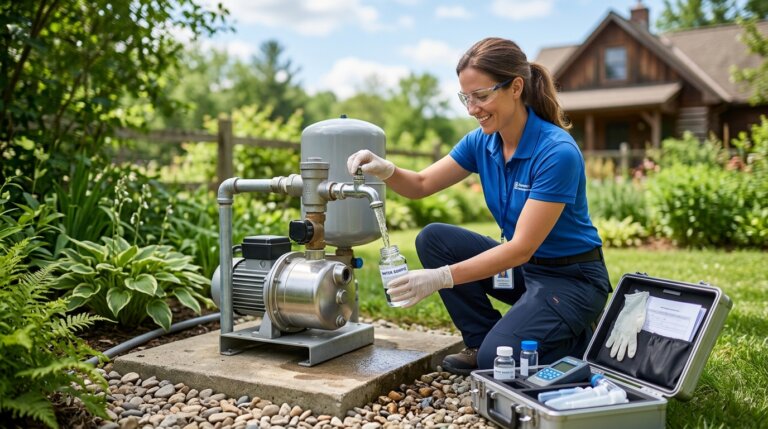
Three easy ways to test: buy a hardness test strip (a few dollars, instant), check your utility’s annual water-quality report (free), or send a sample to a lab if you’re on a private well and want the full picture. Anything above 7 gpg means a softener is worth serious consideration; above 10.5 gpg, it’s clearly justified. According to the USGS, much of the U.S. has moderately hard to very hard water, so this affects a large share of households.
Is hard water actually harmful?
Not to your health — the calcium and magnesium in hard water are dietary minerals, and it’s completely safe to drink. The problems are entirely practical: scale buildup, higher energy bills from scaled-up water heaters, spotty dishes, extra soap use, and skin/hair dryness. A softener fixes the household headaches; it’s not solving a health risk.
What hard water quietly costs you
The reason a softener often pays for itself: hard water is expensive in ways you don’t see on a single bill. Scaled-up water heaters use more energy to heat the same water. Appliances (water heater, dishwasher, washing machine) fail years early, meaning earlier replacement costs. You buy more soap, shampoo, and detergent. And plumbing repairs from scale build up over time. Add it up over a decade and hard water can cost far more than a softener and its salt.
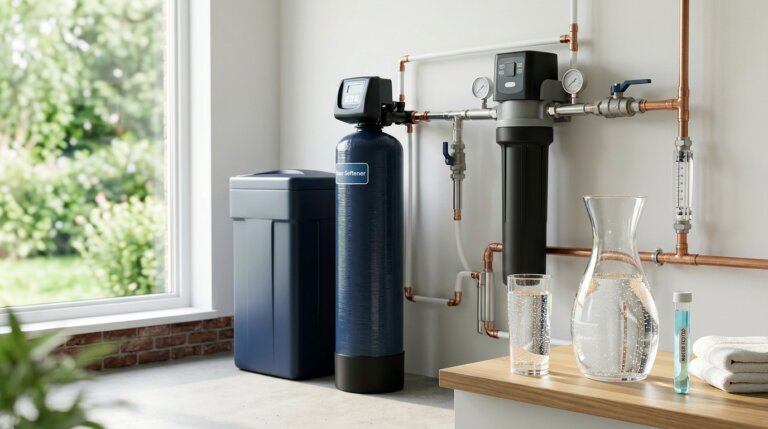
If you have several hard-water signs and your test confirms 7+ gpg, a salt-based softener is the proven fix. Size it to your household and hardness for the best efficiency.
Softener or filter — or both?
People often confuse these. They solve different problems:
- A water softener removes hardness minerals — it stops scale, spotty dishes, and dry skin.
- A water filter removes contaminants — chlorine, PFAS, lead, sediment, taste and odor.
They’re different tools for different jobs, and many homes with both hard water and contaminant concerns use both — often a softener plus a carbon or RO filter for drinking water.
The bottom line
If you’re seeing several of the seven signs — scale, spotty dishes, poor lather, dry skin, stiff laundry, dropping pressure, or early appliance failure — test your hardness. At 7 gpg or above, a salt-based softener is the proven fix, and given what hard water quietly costs in energy, appliances, and soap, it often pays for itself over time.
Compare systems in our best water softeners guide, check softener costs, see options for city water, and pick the right softener salt.
Frequently asked questions
What are the signs you need a water softener?
Common signs of hard water include white scale on faucets and showerheads, spotty dishes and glassware, soap that won’t lather, dry skin and hair after showering, stiff or dingy laundry, dropping water pressure, and water-using appliances (water heater, dishwasher) failing early. If you see several of these, test your hardness.
How do I know if my water is hard?
Test with a hardness strip or check your utility’s water report. Water above about 7 grains per gallon (gpg) is hard; above 10.5 gpg is very hard. Visible scale, spotty dishes, and poor lathering are everyday clues that confirm a lab or strip test.
Is hard water bad for you?
Hard water is not a health hazard to drink; the calcium and magnesium are actually dietary minerals. The problems are practical: scale buildup, appliance wear, spotty dishes, higher energy bills, and skin/hair dryness. A softener solves those household issues.
Can hard water damage appliances?
Yes. Scale from hard water builds up inside water heaters, dishwashers, and pipes, reducing efficiency and shortening lifespan — often by years. Softening the water helps appliances last longer and run more efficiently, which is a big part of why a softener can pay for itself.
Do I need a softener or a filter?
They solve different problems. A softener removes hardness minerals (scale, spotty dishes). A filter removes contaminants like chlorine, PFAS, or sediment. Many homes with hard water and contaminant concerns use both.
Does hard water cause hair loss?
Hard water doesn’t directly cause hair loss, but the mineral and soap-scum residue can leave hair dry, dull, and harder to manage. A softener or a shower filter can improve how your hair and skin feel in hard-water homes.
Reviewed by the Complete Water Guide team. This article is for general information and is not a substitute for professional water-quality or medical advice. We may earn a commission from some links on this page.