
Quick answer: The best water softener for well water is a high-capacity, salt-based ion-exchange system rated for your specific hardness and iron levels — typically 48,000 to 64,000 grains for a family home. Well water often carries iron, manganese, and sediment, so look for a softener with a fine-mesh resin or a paired iron filter to protect the unit and prevent staining.
Disclosure: As an Amazon Associate we earn from qualifying purchases. If you buy through links on this page, we may earn a small commission at no extra cost to you. This never changes which products we recommend.
Why well water needs a different softener than city water
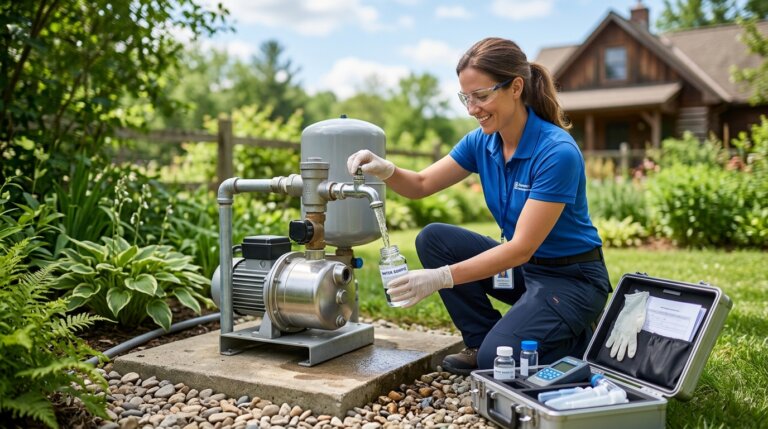
If your home runs on a private well, your water is untreated at the source. Unlike municipal supplies, well water has no utility removing hardness minerals, iron, or sediment before it reaches your tap. That changes what you should look for in a water softener for well water.
Three problems show up again and again with well water:
- High hardness — dissolved calcium and magnesium that leave scale on fixtures, cloud glassware, and shorten the life of water heaters and appliances.
- Iron and manganese — responsible for orange, red, or brown staining on sinks, tubs, and laundry. If manganese is a problem in your supply, see our guide on manganese in water and how to remove it. Standard softeners can be fouled by iron unless they’re built for it.
- Sediment and turbidity — sand and fine particles that clog valves and wear out resin beds faster.
A softener chosen for city water will often struggle on a well. The right well-water unit is sized for higher mineral loads and, in many cases, paired with an iron or sediment pre-filter.
How to size a water softener for well water
Sizing is the single most important decision, and it comes down to two numbers: your water hardness and your household’s daily water use.
Step 1 — Test your water
Before buying anything, test your well water for hardness (measured in grains per gallon, or GPG) and iron (measured in parts per million, or ppm). A home test kit or a lab test will give you both. Iron above roughly 0.3 ppm usually calls for extra iron-handling capacity or a dedicated filter. The U.S. Geological Survey classifies water above 10.5 GPG as very hard, which describes many private wells (USGS Water Science School).
Step 2 — Calculate your grain requirement
Use this simple formula to find the daily grain load your softener must handle:
People in home × 80 gallons/day × hardness in GPG = daily grains removed
For example, a family of four with 20 GPG hardness needs: 4 × 80 × 20 = 6,400 grains per day. Multiply by 7 for weekly capacity and match it to a softener’s grain rating so it regenerates roughly once a week rather than daily.
Types of water softeners for well water
Salt-based (ion-exchange) softeners
These are the gold standard for genuinely hard well water. They swap calcium and magnesium for sodium using a resin bed, then regenerate with salt brine. For most wells with real hardness and some iron, a salt-based water softener for well water is the most effective choice. If your well runs especially orange, our dedicated guide to the best water softener for well water with iron goes deeper on iron-specific units.
Salt-free conditioners
Salt-free systems don’t remove hardness minerals — they condition them so they scale less. They’re low-maintenance and waste no water, but on high-hardness or iron-heavy well water they underperform compared to salt-based units. Best suited to moderately hard wells where the goal is scale reduction, not full softening.
Air-injection and iron-specific systems
Where iron is the dominant problem, an air-injection oxidizing filter or a softener with fine-mesh resin handles it far better than a standard unit. Many well owners run an iron filter ahead of the softener so the resin bed stays clean. For whole-home filtration options that pair well with a softener, compare our picks for the best whole house water filters.
Best water softeners for well water: quick comparison
| Product | Best for | Grains | Iron handling |
|---|---|---|---|
| AFWFilters Iron Pro 2 | Well water with iron (overall) | 48k–64k | Up to ~6 ppm |
| Fleck 5600SXT 48K | Most homes / reliability | 48k | Trace–low (10% resin) |
| Aquasure Harmony 64K | Best value / large homes | 48k–64k | Moderate (fine mesh) |
| SpringWell SS1 | Premium / smart control | Sized to home | Moderate |
| Air-injection iron filter | Heavy iron (>3 ppm) | N/A (filter) | High (primary) |
Top Pick — Best Overall for Well Water With Iron
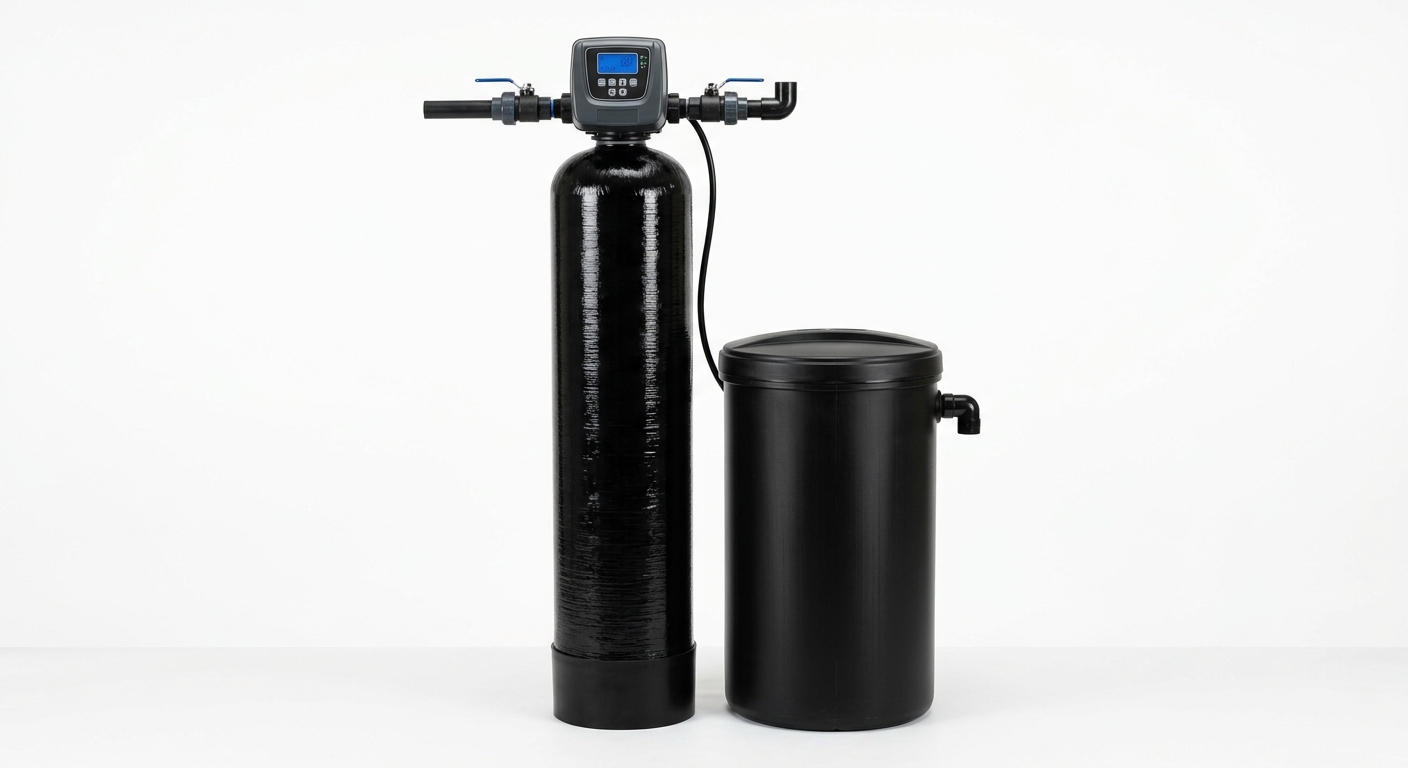
AFWFilters Iron Pro 2 (Fleck 5600SXT, 48,000 Grain)
A combination softener and iron filter built specifically for private wells.
 whole house water softener and iron filter with black resin tank, Fleck 5600SXT digital valve, and round brine tank” class=”wp-image-10348″/>
Its fine-mesh resin removes ferrous (clear-water) iron up to about 6 ppm alongside hardness up to 75 GPG, so it handles the two biggest well-water problems in a single tank. The proven Fleck 5600SXT digital metered valve regenerates on demand to save salt and water, and parts stay widely available for years.
- Grain capacity: 48,000 (also sold in 32k and 64k)
- Iron removal: up to ~6 ppm ferrous, fine-mesh resin
- Valve: Fleck 5600SXT digital, demand-metered
- Flow rate: up to ~16 GPM — fits homes up to 5–6 bathrooms
- Best for: hard well water with a real iron/staining problem
Best for Most Homes — Proven Reliability
Fleck 5600SXT 48,000 Grain Softener
The most widely installed residential softener valve for a reason.
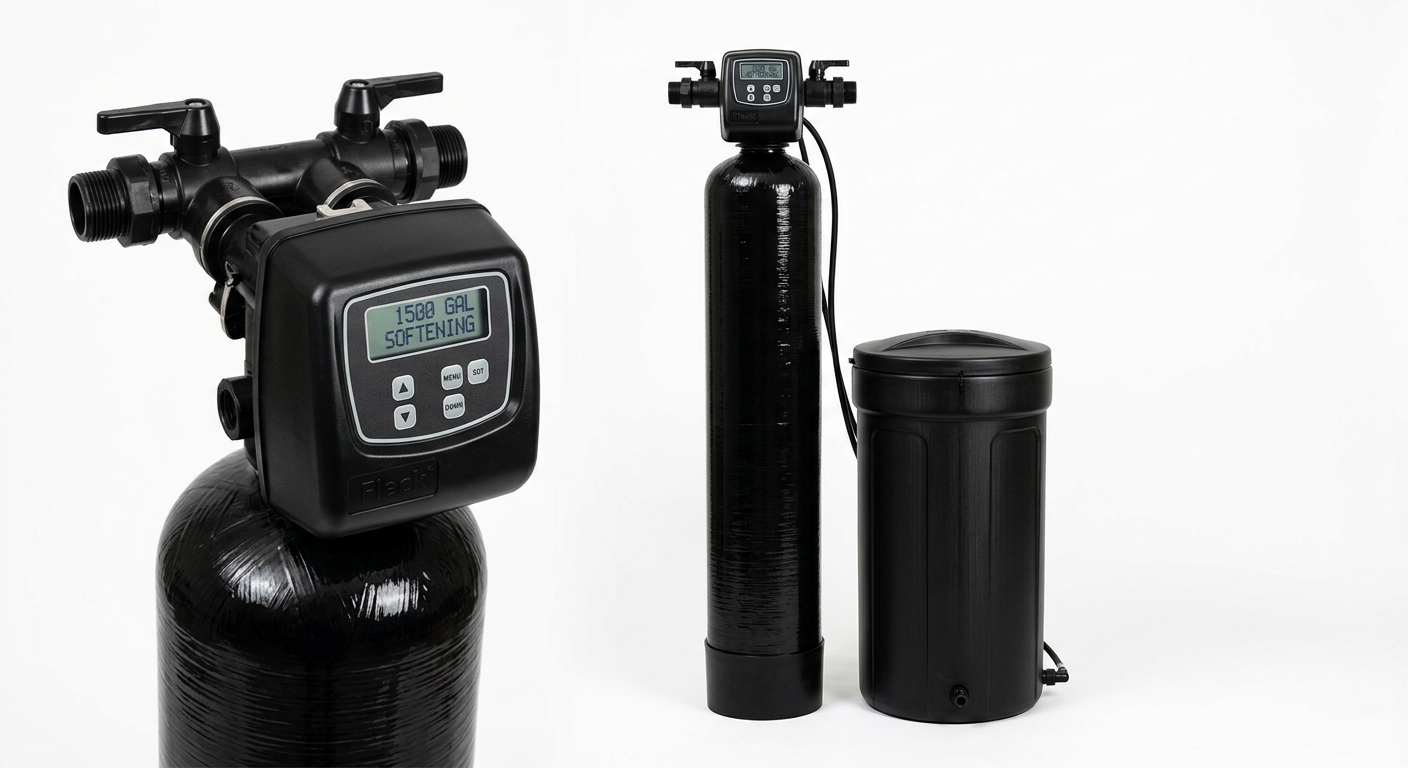
The 5600SXT has been the industry standard for over 20 years, with parts available everywhere and a digital demand-metered head that only regenerates when the resin is actually exhausted. On wells with trace or low iron, choose the 10% cross-link resin option for better resistance to iron fouling.
- Grain capacity: 48,000 (32k for 1–2 baths, 64k for larger homes)
- Iron handling: trace to low — upgrade to 10% resin for iron water
- Valve: Fleck 5600SXT digital demand metering + battery backup
- Best for: average Midwest-style wells, 3–4 bathroom homes
Best Value — Budget-Friendly Performance
Aquasure Harmony Series (48K / 64K, Fine-Mesh Option)
A popular best-seller that delivers professional-grade softening at a lower price.
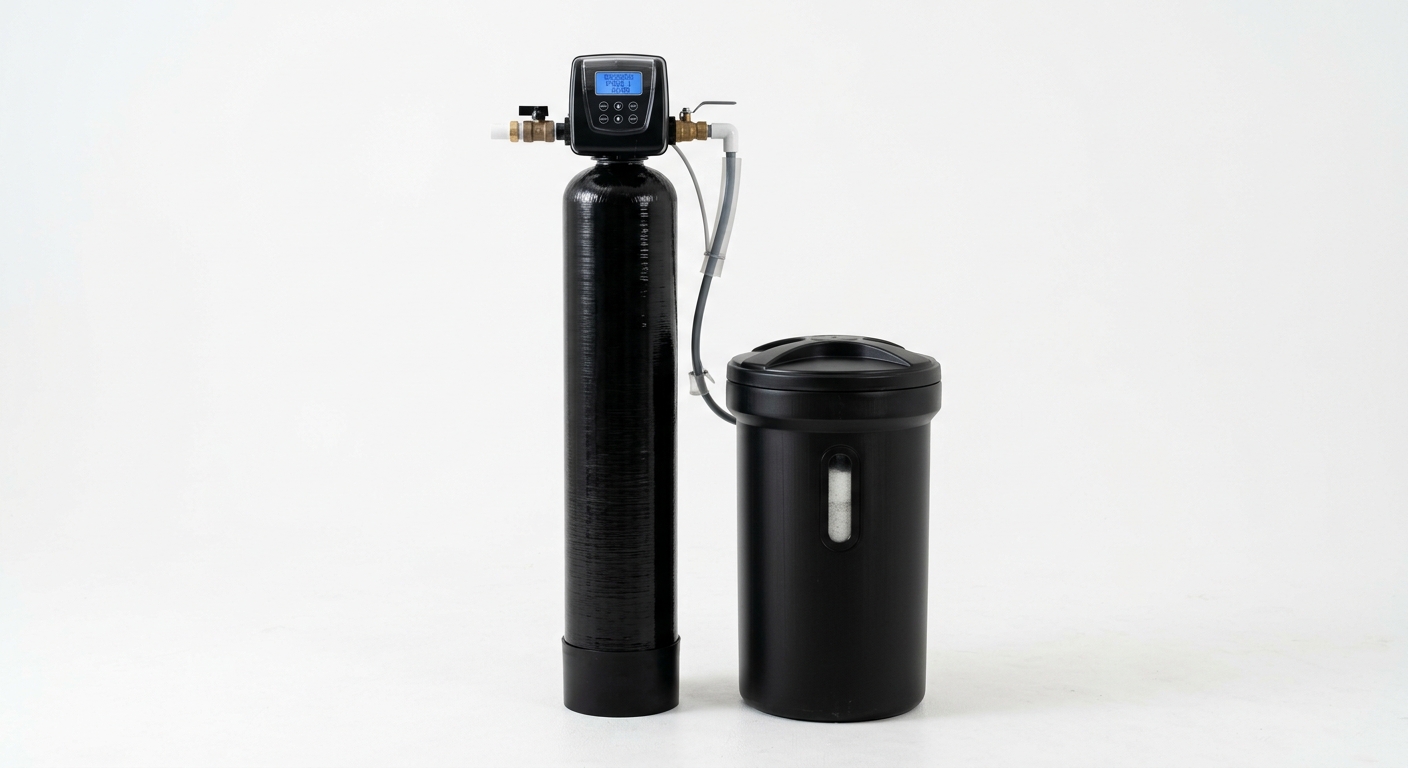
Available in standard and fine-mesh resin versions — the fine-mesh model (for moderate iron) costs only a little more and is the one to pick for well water. Metered regeneration cuts salt use versus timer-based units, and the digital display keeps setup simple.
- Grain capacity: 32k / 48k / 64k
- Iron handling: moderate with fine-mesh (AS-HS48FM) resin
- Control: digital metered head, auto backwash
- Best for: 3–4 bathroom homes wanting strong value
What to look for when buying
- Grain capacity matched to your hardness — bigger isn’t automatically better; you want a unit that regenerates about weekly.
- Fine-mesh resin or iron rating — essential if your test shows iron above 0.3 ppm.
- Metered regeneration — demand-based valves regenerate by usage, saving salt and water versus timer-only units. The US Department of Energy’s own best-practice guidance puts it bluntly: softeners with timers should be avoided. See what NSF 44 actually certifies a softener to do — counting the register gives 256 listings for hardness reduction and exactly one for arsenic.
- NSF/ANSI certification — confirms performance claims are independently verified. You can check certified products in the NSF certified products database.
- Flow rate — make sure it matches your home’s peak demand so pressure doesn’t drop when multiple fixtures run.
Premium Pick — Smart Control & Warranty
SpringWell SS1 Salt-Based Softener
A high-performance system with a strong flow rate and Bluetooth head
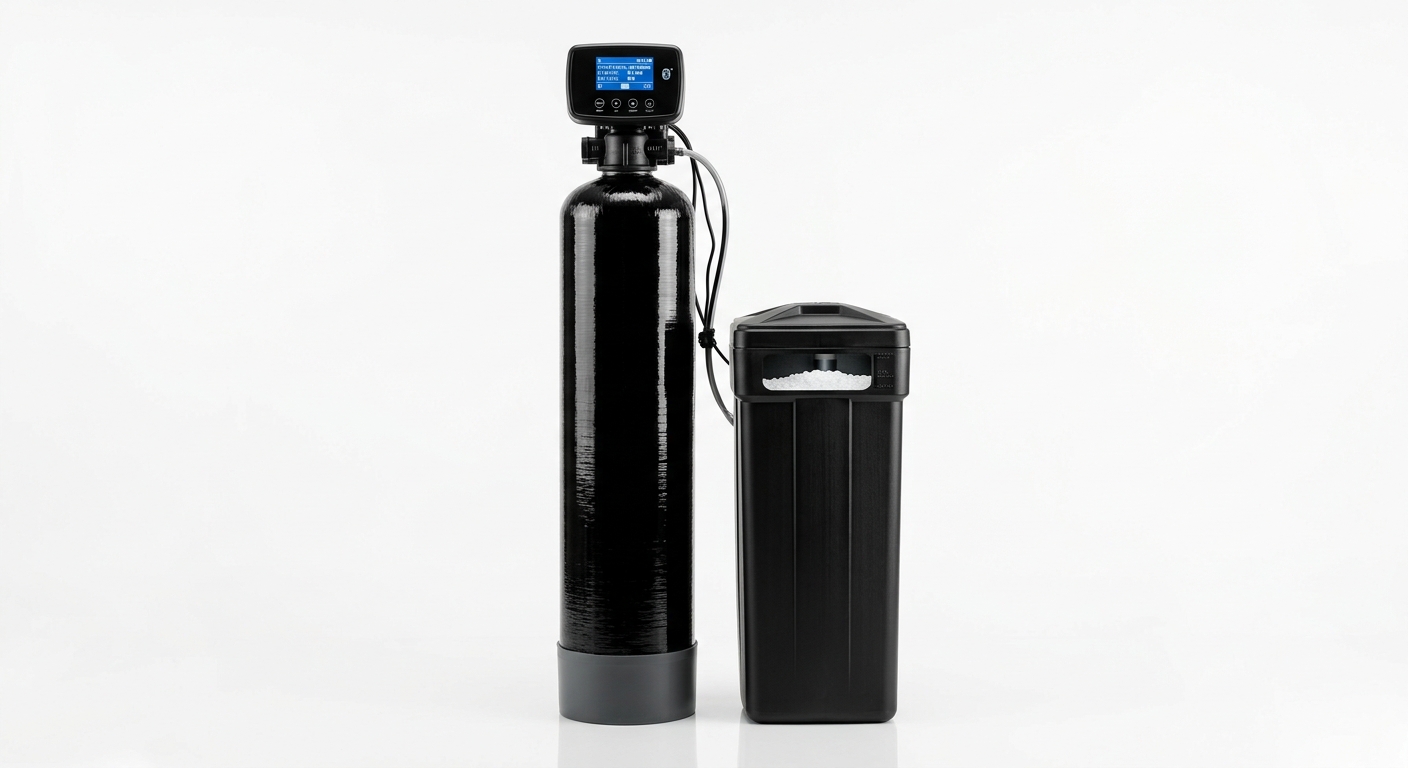
that lets you control and monitor regeneration from your phone. It softens reliably and handles moderate iron; for serious iron or sulfur, SpringWell sells it as a combo with their well-water filter. Backed by a long warranty that appeals to buyers who want a set-and-forget premium unit.
- Control: Bluetooth app monitoring + metered regeneration
- Iron handling: moderate (pair with filter combo for heavy iron)
- Flow rate: high — good for larger, high-demand homes
- Best for: buyers wanting premium build + smart features
Best for Heavy Iron — Dedicated Iron Filter
Air-Injection Oxidizing Iron Filter (for wells above ~3 ppm iron)
When your water runs orange straight from the tap, or iron climbs above roughly 3 ppm, no standalone softener is the right tool
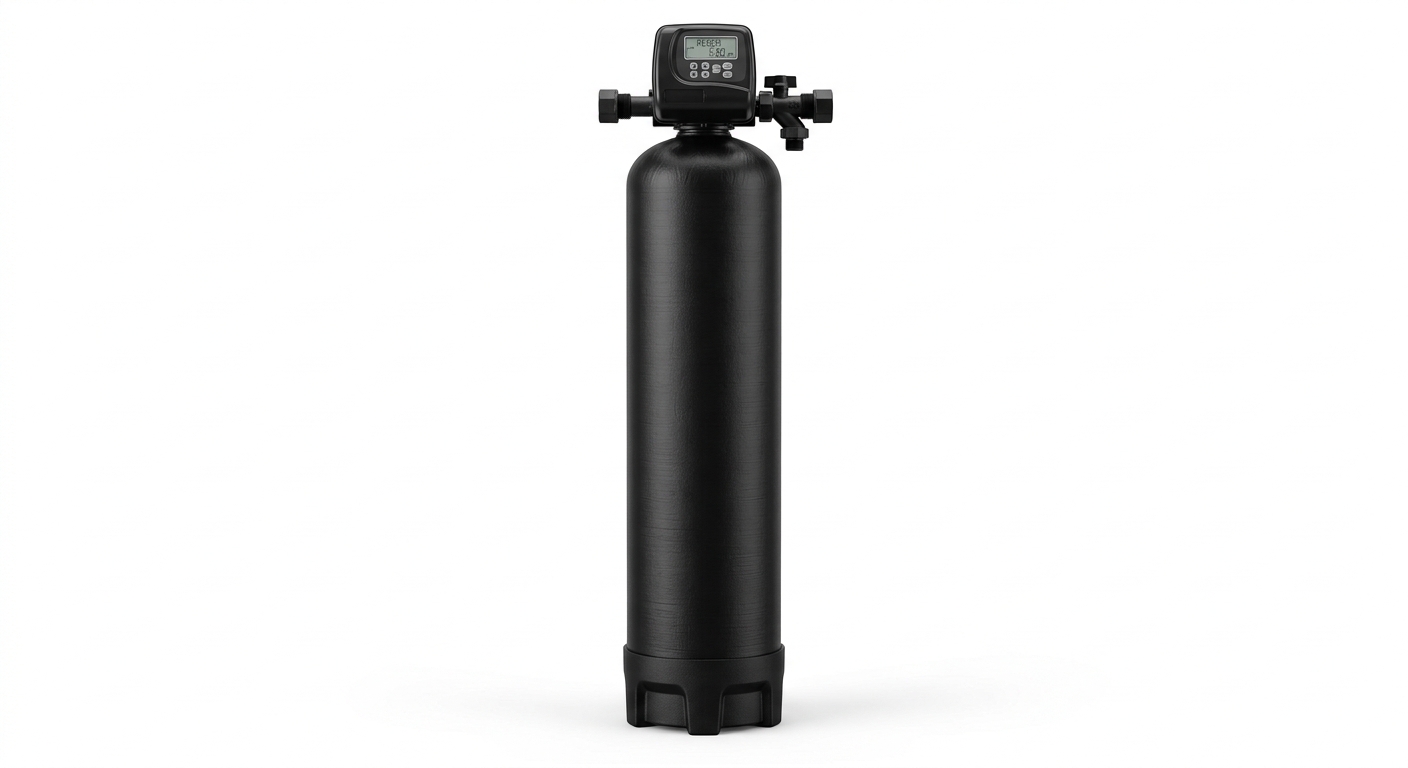
— you need a dedicated iron filter installed ahead of the softener. Air-injection oxidation (AIO) systems oxidize dissolved iron, manganese, and sulfur into particles that are then backwashed away, protecting the softener resin behind it and eliminating rust stains and rotten-egg odor.
- Removes: ferric & ferrous iron, manganese, hydrogen sulfide (odor)
- Method: air-injection oxidation + backwash (no chemicals)
- Placement: installed before the softener as pre-treatment
- Best for: wells above ~3 ppm iron or any red-water iron / sulfur smell
Installation and maintenance tips
Install the softener at the point where water enters the home, after any well pressure tank and ahead of the water heater. If you run a separate iron or sediment filter, place it before the softener. Keep the brine tank topped up with the salt type your unit recommends, and check for salt bridging every few weeks. Well systems benefit from an annual sanitization of the resin bed, especially if iron or bacteria are present. Once your water is soft, our guide on removing hard water stains helps you clear any buildup left behind.
Frequently asked questions
Do I need a special water softener for well water?
Not always, but often yes. If your well water contains iron above about 0.3 ppm, a standard softener can foul quickly. A unit with fine-mesh resin, or a softener paired with an iron filter, is strongly recommended for most wells.
What size water softener do I need for well water?
Multiply the number of people in your home by 80 gallons per day, then by your water hardness in grains per gallon, to get your daily grain load. For most families that lands between 48,000 and 64,000 grains so the unit regenerates about once a week.
Will a water softener remove iron from well water?
A salt-based softener with fine-mesh resin removes small amounts of dissolved iron. For iron above roughly 1 ppm, or any red-water iron, pair the softener with a dedicated iron filter for reliable results.
Is a salt-free system good for well water?
Salt-free conditioners work best on moderately hard well water without iron. They reduce scale but don’t actually remove hardness minerals, so on very hard or iron-heavy wells a salt-based softener performs noticeably better.
Bottom line
For most homes on a private well, a properly sized salt-based softener with iron-handling resin — like the AFWFilters Iron Pro 2 — is the most reliable path to soft, stain-free water. If your well runs orange or above 3 ppm iron, add a dedicated air-injection iron filter ahead of it. Test your water first, size for weekly regeneration, and prioritize iron capacity.