Manganese is one of those contaminants most people never think about until their water turns a strange brownish-black, stains the laundry, or develops an odd metallic taste.
It is a naturally occurring element that ends up in many water supplies, especially private wells. Small amounts are an essential nutrient, but too much in drinking water raises real health and aesthetic concerns. This guide explains where manganese comes from, why it matters, and how to remove it.
What Is Manganese and Why Is It in My Water?
Manganese is a metal that occurs naturally in rocks, soil, and groundwater. As water moves through manganese-bearing rock, the metal dissolves into it, which is why it is especially common in well water and groundwater sources.
It often appears alongside iron, since the two share similar geology and behaviour in water. If your water also has iron problems, our guide on iron in well water is a useful companion read.
Manganese is also an essential trace nutrient your body needs in small amounts, obtained mainly through food. The concern is not its presence as such, but elevated concentrations in the water you drink and cook with every day.
Signs of Manganese in Your Water
Manganese tends to announce itself through aesthetic problems before anything else. Watch for:
- Brownish-black or purple staining on sinks, tubs, toilets, laundry, and dishwashers
- A bitter, metallic taste in drinking water
- Black or dark specks in the water or settling in containers
- Dark slime or buildup inside pipes, fixtures, and appliances
- Discoloured beverages, with tea and coffee taking on an odd colour or taste
These signs often appear at manganese levels well below those that cause health concerns, which is actually helpful — the staining acts as an early warning that prompts testing.
Health Concerns of Manganese in Drinking Water
At the levels found in most treated public water, manganese is not a health concern — utilities manage it partly because of the staining and taste complaints it causes. The picture is different for private wells, which are not regulated and can carry much higher concentrations.
The U.S. EPA has set a health-based advisory level for manganese, plus a separate, lower secondary standard aimed at the staining and taste problems.
Because of the potential neurological concerns at high chronic exposure, anyone relying on a private well should test for manganese, especially in households with infants.
Public Water vs Private Wells
The single biggest factor in your manganese risk is whether you are on public water or a private well. Public utilities monitor and treat their supply, so manganese is usually kept low — driven as much by customer complaints about staining and taste as by health rules.
Private wells are a different story. They are not subject to the same regulation, and the homeowner is responsible for testing and treatment. Because well water draws directly from manganese-bearing groundwater, concentrations can be far higher and can change over time as the water table shifts.
This is why the same contaminant can be a non-issue for one household and a real concern for a neighbour on a well. If you are on a private well, the responsibility — and the testing — falls to you.
How to Test for Manganese
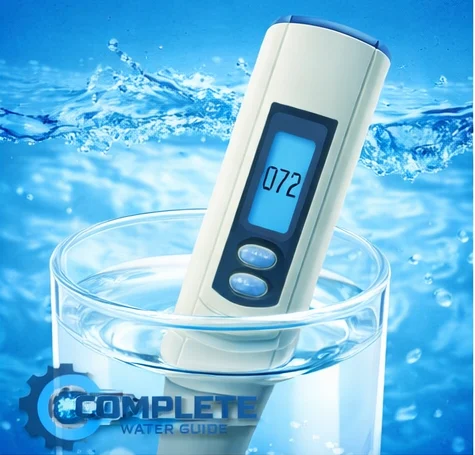
You cannot reliably judge manganese levels by eye — staining tells you it is present but not how much. A certified laboratory test of your water is the only way to get an accurate concentration.
Private well owners should test periodically as part of general water-quality monitoring, and immediately if staining, taste changes, or discolouration appear. Knowing the exact level determines which treatment you need, since low and high concentrations call for different approaches.
How to Remove Manganese From Water
The right removal method depends on the concentration and the form the manganese takes (dissolved versus oxidised). Common approaches include:
- Oxidation and filtration. Manganese is oxidised (by air, chlorine, or another oxidant) so it forms solid particles, which are then trapped by a filter. This is a common whole-house approach for moderate to high levels.
- Water softeners (ion exchange). A softener can remove low levels of dissolved manganese along with the calcium and magnesium that cause hardness. Our comparison of the best water softeners covers suitable units.
- Reverse osmosis. An RO system at the point of use removes manganese effectively for drinking and cooking water. See our guide to the best reverse osmosis systems.
- Greensand or catalytic media filters. Specialised filter media designed to oxidise and capture both iron and manganese, often used in whole-house systems.
For high or persistent manganese, a whole-house treatment system sized to your water test is usually the most reliable solution, while point-of-use RO is a strong choice for ensuring safe drinking water specifically. If your water also tastes or smells off for other reasons, our guide on why water tastes funny covers the wider picture.
Frequently Asked Questions
Is manganese in drinking water dangerous?
At the low levels typical of treated public water, manganese is not considered a health risk. Concern arises with high chronic exposure, particularly from untreated private wells and especially for infants and young children, whose developing nervous systems may be more sensitive. Testing is the only way to know your level.
What does manganese in water look like?
Manganese commonly causes brownish-black or purple staining on fixtures and laundry, a bitter metallic taste, dark specks in the water, and slimy buildup in pipes. These aesthetic signs often appear before levels reach health concern thresholds.
Does a water softener remove manganese?
A water softener can remove low levels of dissolved manganese through ion exchange, along with hardness minerals. For higher concentrations or oxidised manganese, an oxidation-filtration system or specialised media is usually more effective.
Is it safe to make baby formula with water containing manganese?
If your water exceeds the health-based advisory level for manganese, it should not be used to prepare infant formula until treated, because infants may be more sensitive to high exposure. Test private well water and use a treated or alternative source if levels are elevated.
Why does manganese often appear with iron?
Manganese and iron share similar geology and dissolve into groundwater under comparable conditions, so they frequently occur together in well water. Many treatment systems, such as greensand filters, are designed to remove both at once.
Can I remove manganese stains that are already there?
Existing manganese stains can often be removed with acidic cleaners, but they will keep returning until the water is treated. Addressing the source with a removal system is the only way to stop new staining for good.
Related Guides
- Iron in Well Water: Signs & How to Remove It
- Best Reverse Osmosis Systems for Home 2026
- Best Water Softeners 2026: Top Picks Compared
- Best Water Softener for Well Water: 2026 Buyer’s Guide
- Best Shower Filter for Hard Water — 5 Ranked by Filter Media
- Why Does My Water Taste Funny? 8 Causes & Fixes
References & Sources
- U.S. EPA — Drinking Water Regulations and Contaminants
- U.S. EPA — Private Drinking Water Wells
- World Health Organization — Manganese in Drinking Water
The Bottom Line
Manganese is a naturally occurring metal that frequently shows up in well water, usually announcing itself through dark staining and a metallic taste before it reaches health-relevant levels. It is an essential nutrient in small amounts, but high chronic exposure — especially for infants — is a genuine concern, so private well owners should test.
Once you know your level, oxidation-filtration, softening, reverse osmosis, or specialised media can bring manganese under control and clear up the staining for good. The staining is the warning sign; the lab test is the answer; the right filter is the fix.