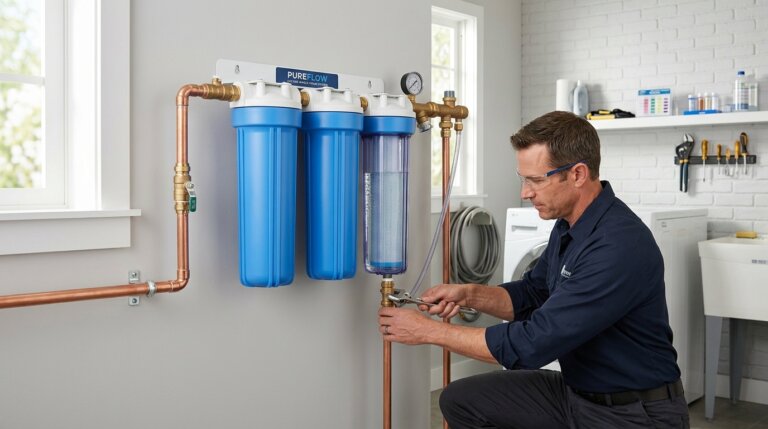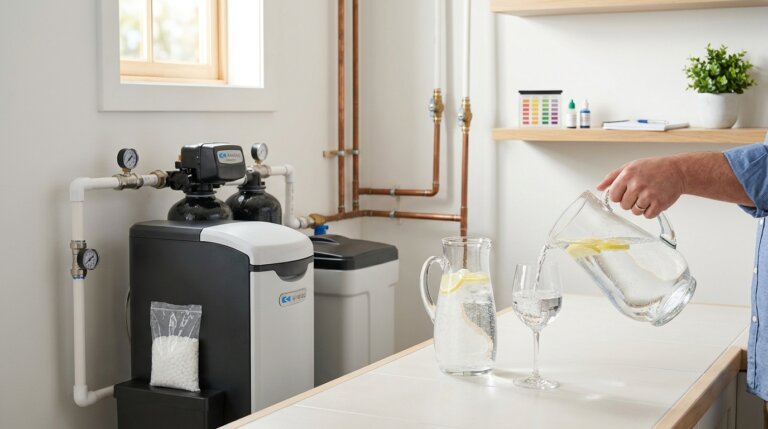
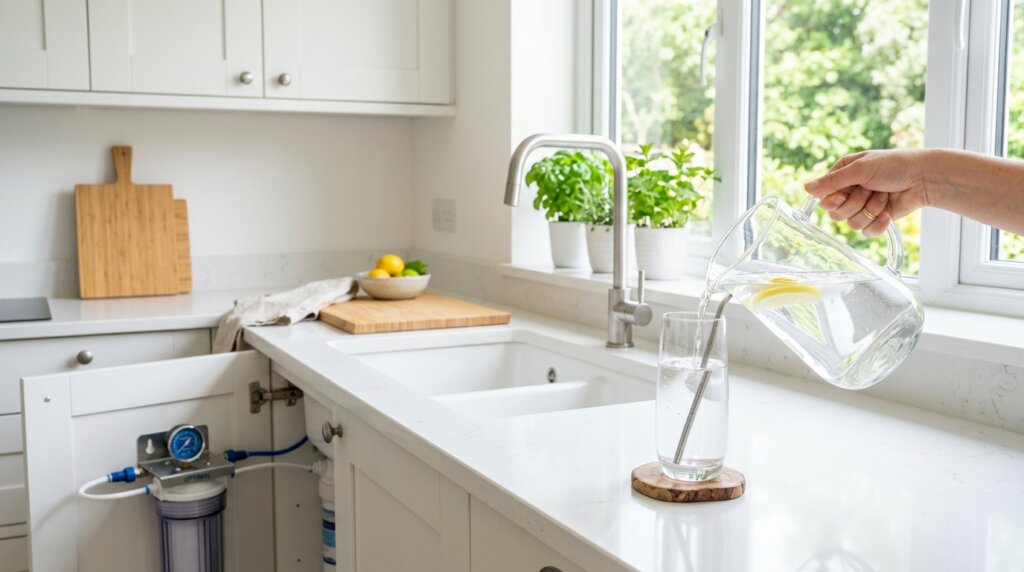
Quick answer: The best whole house water filter depends on your water source. For city water, a catalytic-carbon system removes chlorine, chloramine, taste, and odor across every tap. For well water, you typically need sediment pre-filtration plus targeted media for iron, sulfur, or hardness. Expect to pay roughly $500 to $2,500 plus installation. Always base your choice on a water test, and consider pairing a whole-house filter with an under-sink RO for the purest drinking water.
The best whole house water filter for your home depends entirely on your water source. A whole-house filter (also called point-of-entry) treats water where it enters your home, so every tap, shower, and appliance gets filtered water. That matters because contaminant exposure isn’t limited to drinking — showering and laundry count too. Here’s how to choose the right one.
City water vs well water changes everything
City water is already disinfected, so the main goals are removing chlorine or chloramine, improving taste, and cutting sediment. A catalytic-carbon whole-house system usually handles this well.
Well water is untreated and unpredictable. You may face iron staining, sulfur (rotten-egg) smell, sediment, hardness, or bacteria. The CDC recommends private well owners test their water at least annually, and well systems often need a sediment pre-filter plus specialty media matched to your specific problems. A water test is essential before buying.
Common whole-house configurations
- Sediment pre-filter — catches sand, rust, and dirt; protects the rest of the system.
- Catalytic/activated carbon — removes chlorine, chloramine, VOCs, taste, and odor.
- Specialty media — iron/manganese removal, sulfur oxidation, or KDF for well water.
- Water softener (separate) — for hard water; often paired with a filter. See our water softener cost guide.
What it costs
Whole-house units generally run $500-$2,500 for the equipment, plus installation if you hire a plumber. Systems with long-life media (5-7 years) cost more upfront but less per year. Well-water systems with multiple stages sit at the higher end.
Buying tip: match the system to your water test, prioritize certified media, and check filter/media replacement cost over 5 years — not just the sticker price.
Whole-house vs under-sink
Whole-house protects every outlet but usually can’t match RO purity at the tap. Under-sink RO gives the cleanest drinking water but only at one faucet. Many families use both. See whole-house vs under-sink to decide, and if PFAS is a concern, our PFAS filter guide.
Frequently asked questions
What is the best type of whole-house water filter?
It depends on your water. For city water, a carbon-based system handles chlorine, taste, and many contaminants. For well water, you may need sediment pre-filtration plus specialized media for iron, sulfur, or hardness. Match the system to a water test.
How much does a whole-house water filter cost?
Whole-house systems typically range from about $500 to $2,500 for the unit, plus installation. Multi-stage and well-water systems cost more. Long-life media (5-7 years) can lower the annual cost.
Does a whole-house filter remove PFAS?
Some do, but whole-house PFAS coverage is limited and must be specifically certified. Many households pair a whole-house filter for general protection with an under-sink RO for maximum-purity drinking water.
How long do whole-house filters last?
Depending on the media, cartridges or tanks last from 6 months to 5-7 years. Sediment pre-filters need the most frequent changes; catalytic carbon and specialty media last longest.
Do I need a plumber to install one?
Whole-house systems install at the main water line, so many homeowners hire a plumber. Some simpler cartridge systems are DIY-friendly if you’re comfortable cutting into the main line.
Reviewed by the Complete Water Guide team. This article is for general information and is not a substitute for professional water-quality or medical advice. We may earn a commission from some links on this page.