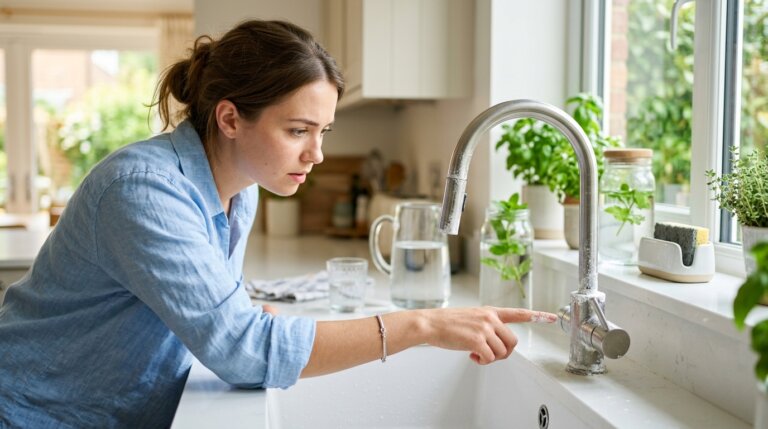
Those chalky white crusts on your faucets, the cloudy film on glassware, the stubborn ring in the toilet bowl — they are all the same enemy: hard water stains.
Caused by dissolved calcium and magnesium left behind when water evaporates, these mineral deposits are unsightly, but they are also completely removable with the right approach. This guide covers what causes hard water stains, how to remove them from every surface, and how to stop them coming back.
What Causes Hard Water Stains?
Hard water contains high levels of dissolved calcium and magnesium. When that water sits on a surface and evaporates, the minerals are left behind as solid deposits, commonly called limescale.
Over time these build into the white, chalky, or cloudy marks you see on taps, glass, tiles, and appliances. The harder your water, the faster and thicker the buildup. If you want to understand the underlying issue, our explainer on hard water vs soft water breaks down the difference.
These stains are not dirt in the usual sense, so ordinary wiping does little. Because the deposits are alkaline mineral compounds, they respond best to acidic cleaners that dissolve them — which is why vinegar and citric acid are the go-to solutions.
Understanding this chemistry is the key to removing them efficiently. You are not scrubbing away dirt; you are dissolving a mineral. That is why soaking time matters more than brute force, and why the right product beats the strongest scrubbing every time.
The Basic Method: Step by Step
Before getting into specific surfaces, it helps to understand the universal sequence that works for almost any hard water stain. Every method below is a variation on these five steps.
- Clear and rinse the surface so you are working on the deposit itself, not loose grime on top of it.
- Apply an acid — white vinegar, citric acid solution, or a dedicated descaler — directly to the stain.
- Give it soak time. This is the step people skip. The acid needs minutes (or longer for heavy buildup) to dissolve the minerals. Keep the surface wet with the acid by wrapping it in a soaked cloth if needed.
- Agitate gently with a soft brush or microfibre cloth once the deposit has softened. A baking soda paste adds mild scrubbing power for stubborn spots.
- Rinse and dry thoroughly. Removing all residue and drying the surface prevents fresh deposits forming as the water evaporates.
Master this sequence and the surface-specific instructions become obvious variations rather than separate techniques. The acid does the work; you just give it the right conditions and enough time.
What You’ll Need
Most hard water stains can be tackled with inexpensive items you probably already have. Gathering them first makes the job quicker.
- White vinegar — the workhorse acid for dissolving limescale on most surfaces.
- Baking soda — makes a mild abrasive paste for stubborn spots.
- Citric acid powder or lemon — an alternative acid, useful on tiles and kettles.
- Microfibre cloths — lift residue without scratching.
- An old toothbrush or soft brush — for crevices around taps and fittings.
- A spray bottle — for applying diluted vinegar to glass and tiles.
- Rubber gloves — to protect your hands during longer soaks.
How to Remove Hard Water Stains
The method depends on the surface, but the principle is the same: apply an acid, give it time to dissolve the minerals, then wipe away.
Faucets and Fixtures
Soak a cloth or paper towel in white vinegar and wrap it around the affected fixture. Leave it for 30 minutes to an hour, then scrub gently with an old toothbrush and rinse.
For heavy buildup around the base of a tap, a vinegar-soaked towel held in place with a rubber band works well. Avoid abrasive pads on chrome or brushed finishes, as they scratch.
Glass and Shower Doors
Spray a 50/50 mix of white vinegar and water onto the glass, let it sit for several minutes, then wipe with a microfibre cloth.
For tougher film, make a paste of baking soda and water, apply over the vinegar, and scrub gently. Rinse and squeegee dry. Repeated treatments may be needed for years of accumulated film.
Glassware and Dishes
Cloudy glasses can often be restored by soaking in white vinegar for 15 to 30 minutes, then washing as normal.
If your dishwasher leaves a chalky film, a rinse aid plus a periodic vinegar cycle helps. Persistent cloudy glassware is a strong sign of hard water in your supply.
Toilets, Tiles, and Sinks
For toilet bowl rings, pour in white vinegar, let it sit (overnight for stubborn rings), then scrub with a brush.
On tiles and sinks, a citric acid solution or a vinegar spray loosens deposits before scrubbing. Always rinse thoroughly afterward.
Showerheads
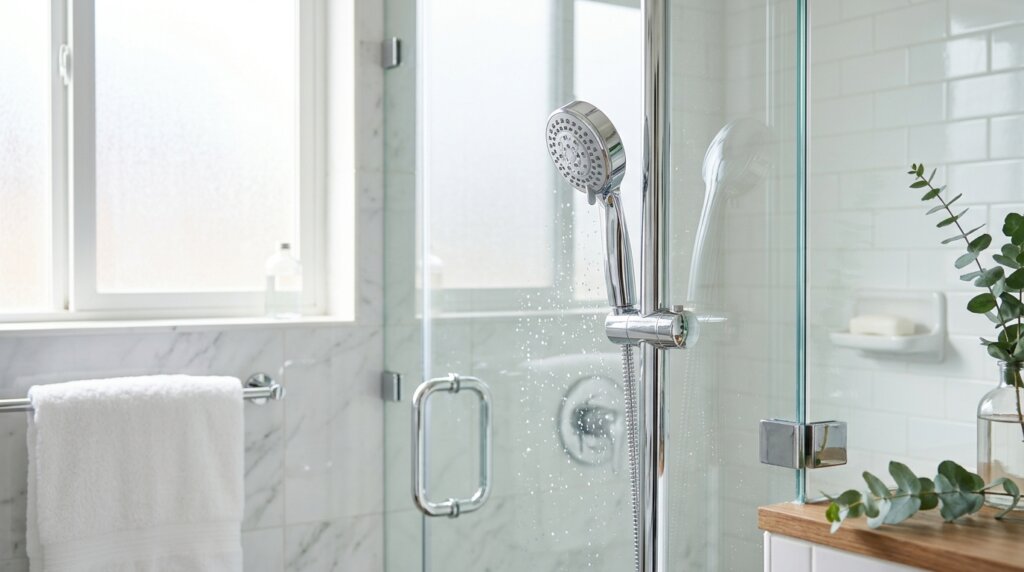
Clogged showerheads are a classic limescale problem. Fill a plastic bag with white vinegar, tie it around the showerhead so the holes are submerged, and leave it for an hour or overnight for heavy buildup.
Remove the bag, run the water to flush loosened deposits, and poke any remaining blocked holes with a pin. This restores flow without removing the fitting.
Kettles and Coffee Machines
Descale a kettle by filling it with a half-and-half mix of water and vinegar (or a citric acid solution), bringing it to a boil, and letting it sit before rinsing thoroughly.
Run a coffee machine’s descaling cycle with the manufacturer’s product or a vinegar solution, then run two or three cycles of clean water to clear any taste.
Laundry and Fabric
Hard water can leave clothes feeling stiff, looking dull, or developing white mineral residue over time. Adding white vinegar to the rinse cycle helps dissolve mineral buildup and softens fabrics naturally.
For existing stiffness or residue, soaking affected items in a vinegar-and-water solution before washing can restore softness. In genuinely hard water areas, a water softener makes the biggest difference to laundry over the long term.
Natural vs Commercial Removers
White vinegar and citric acid handle most household hard water stains cheaply and safely. For severe, long-established limescale, commercial descalers containing stronger acids work faster, but require ventilation and care.
For most homes, the natural acid approach is enough if you stay on top of buildup rather than letting it harden for months. The longer a deposit sits, the more aggressive a cleaner you will eventually need.
| Remover | Best For | Notes |
|---|---|---|
| White vinegar | Everyday stains, glass, taps | Cheap, safe, mild smell |
| Citric acid / lemon | Kettles, tiles, light film | Pleasant scent, food-safe |
| Baking soda paste | Stubborn spots (with vinegar) | Mild abrasive, use gently |
| Commercial descaler | Severe, old limescale | Faster; ventilate, never mix |
How to Prevent Hard Water Stains
Removing stains is satisfying, but preventing them saves far more effort. The strategies range from quick habits to permanent fixes:
- Dry surfaces after use. Squeegee shower glass and wipe down sinks and taps so water cannot evaporate and leave deposits.
- Use a daily shower spray to slow film buildup on glass and tiles.
- Address the source. The only way to truly stop hard water stains is to reduce the minerals in your water. Our guide on how to fix hard water problems at home walks through the options.
A Simple Weekly Prevention Routine
Prevention works best as a light, regular habit rather than an occasional deep clean. A manageable routine keeps limescale from ever getting a foothold.
- Daily: squeegee shower glass and wipe down taps and sinks after use.
- Weekly: give fixtures a quick vinegar spray and wipe to dissolve any early film before it hardens.
- Monthly: descale the kettle and showerhead, and run a vinegar cycle through the dishwasher.
- As needed: treat any visible buildup promptly, since fresh deposits come off far more easily than old ones.
Spending a few minutes regularly is far less work than periodic heavy scrubbing, and it keeps surfaces looking clear with minimal effort.
The Permanent Fix: A Water Softener
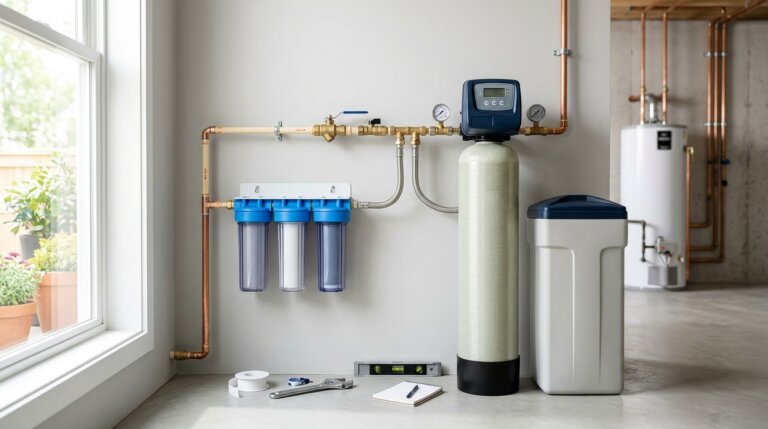
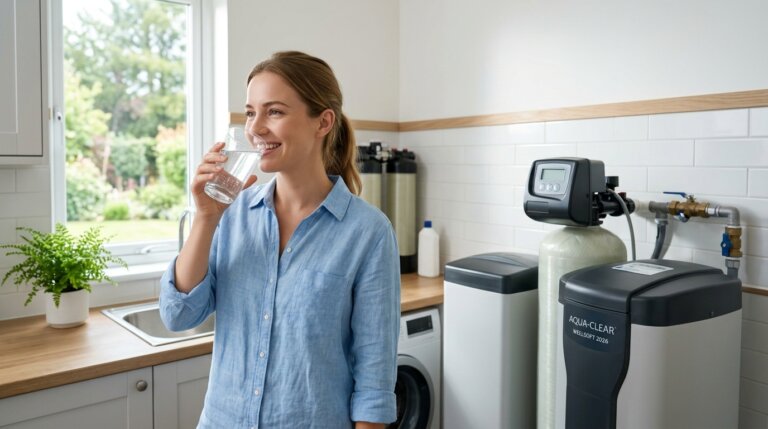
If hard water stains are a constant battle across your whole home, a water softener removes the calcium and magnesium before water reaches your fixtures, stopping deposits at the source.
It is the most thorough solution, though it involves upfront cost and ongoing maintenance. The payoff is no more limescale on taps, clearer glassware, longer-lasting appliances, and softer-feeling water throughout the house.
Our comparison of the best water softeners covers what to look for, and our guide on removing hardness from drinking water explains the underlying methods.
Where Hard Water Stains Form First
Hard water stains do not appear evenly around the home. They concentrate wherever water sits, drips, or evaporates repeatedly, so knowing the hotspots helps you target cleaning and prevention.
The worst offenders are usually shower glass and tiles, where warm water and steam accelerate evaporation, and taps and showerheads, where constant dripping leaves layered deposits.
Kettles, coffee machines, and dishwashers build internal limescale fastest because they heat water, and heating drives the minerals out of solution more quickly.
Toilet bowls develop rings at the waterline where standing water slowly evaporates. Once you recognise these patterns, you can focus your prevention — a daily squeegee on the shower, periodic descaling of the kettle — where it actually pays off.
Mistakes That Make Stains Worse
A few common errors actually make hard water stains harder to remove or damage your surfaces. Avoiding them saves both effort and money.
- Scrubbing with abrasive pads. Scratches on glass and chrome trap minerals and make future stains cling harder.
- Using vinegar on natural stone. Acids etch marble, granite, and other stone. Use a stone-safe cleaner instead.
- Not allowing soak time. Wiping acid off too soon means the minerals never fully dissolve; patience does the work.
- Letting deposits build for months. Fresh limescale wipes off easily; hardened layers need far stronger treatment.
- Mixing cleaning products. Combining acids with bleach is dangerous; always use one product at a time.
Steering clear of these keeps the job quick and protects your fixtures from accidental damage.
How Hard Is Your Water? Why It Matters
How quickly and severely you get hard water stains depends directly on how hard your water is — and that varies enormously from one area to another, even within the same country.
Water hardness is measured by the concentration of dissolved calcium and magnesium. Soft water leaves almost no deposits, moderately hard water produces occasional film, and very hard water can crust up fixtures within days of cleaning them.
If you are fighting a losing battle against limescale no matter how often you clean, your water is probably on the harder end of the scale. You can find out for certain with an inexpensive test strip or by checking your water supplier’s published hardness figures.
Knowing your hardness level helps you decide how far to go. Mildly hard water may only need occasional vinegar treatment, while genuinely hard water makes a stronger case for a whole-home softener that stops the problem at the source.
Why Ignoring Limescale Costs You
Hard water stains are not purely cosmetic. Left to build up, limescale coats heating elements in kettles, water heaters, and washing machines, forcing them to work harder and use more energy to reach the same temperature.
Over months and years, that buildup shortens appliance lifespan and can lead to breakdowns. Scale also narrows pipes and clogs showerheads, reducing water flow and pressure.
So the case for tackling hard water is partly aesthetic and partly financial. The cost of a descaling routine — or a softener for the whole home — is often offset by longer-lasting appliances and lower energy bills, which is worth weighing if your water is genuinely hard.
Frequently Asked Questions
What removes hard water stains best?
White vinegar is the most effective everyday remover because its acidity dissolves the calcium and magnesium deposits. For stubborn buildup, a baking soda paste over vinegar adds gentle scrubbing power, and commercial descalers handle severe limescale.
Are hard water stains permanent?
No. Even long-standing hard water stains can be removed with acidic cleaners and patience, though heavy buildup may need repeated treatments. If deposits have etched into glass over years, some cloudiness can be permanent, which is why prevention matters.
Does vinegar damage surfaces?
Vinegar is safe on most chrome, glass, ceramic, and tile, but it can damage natural stone like marble or granite and harm some finishes. Test on a small area first, and avoid using it on stone surfaces.
How do I stop hard water stains coming back?
Drying surfaces after use is the simplest prevention. For a permanent fix, a water softener removes the minerals that cause the stains before water reaches your fixtures, eliminating the problem at the source.
Why is my glassware cloudy even after washing?
Cloudy glassware is usually hard water film — mineral deposits left during the wash and dry cycle. Soaking in vinegar restores clarity, and a rinse aid plus periodic vinegar dishwasher cycle helps prevent it. Persistent cloudiness points to hard water in your supply.
Can hard water stains damage my appliances?
Yes. Limescale buildup inside kettles, water heaters, dishwashers, and washing machines reduces efficiency and shortens their lifespan over time. This is one of the strongest practical arguments for treating hard water at the source with a softener.
How often should I descale my showerhead and kettle?
In hard water areas, descaling a kettle every few weeks and a showerhead every month or two keeps buildup manageable. The exact frequency depends on how hard your water is and how often you use the appliance.
Is lemon juice as good as vinegar for limescale?
Lemon juice is also acidic and works well on lighter deposits, with a more pleasant smell. For heavy or old limescale, white vinegar or a dedicated descaler is usually stronger, but lemon is a good food-safe option for kettles and light stains.
Related Guides
- Hard Water vs Soft Water: What’s the Difference?
- How to Fix Hard Water Problems at Home
- Best Water Softeners 2026: Top Picks Compared
- Best Water Softener for Well Water: 2026 Buyer’s Guide
- Best Shower Filter for Hard Water — 5 Ranked by Filter Media
- How to Remove Hardness from Drinking Water
References & Sources
The Bottom Line
Hard water stains are dissolved minerals left behind by evaporating water, and because they are alkaline, acidic cleaners like white vinegar dissolve them effectively on almost any surface.
For lasting relief, drying surfaces helps, but the real cure is reducing the hardness of your water itself — either by treating problem areas or installing a softener for the whole home. Treat the buildup early, and you will rarely need anything stronger than vinegar.