
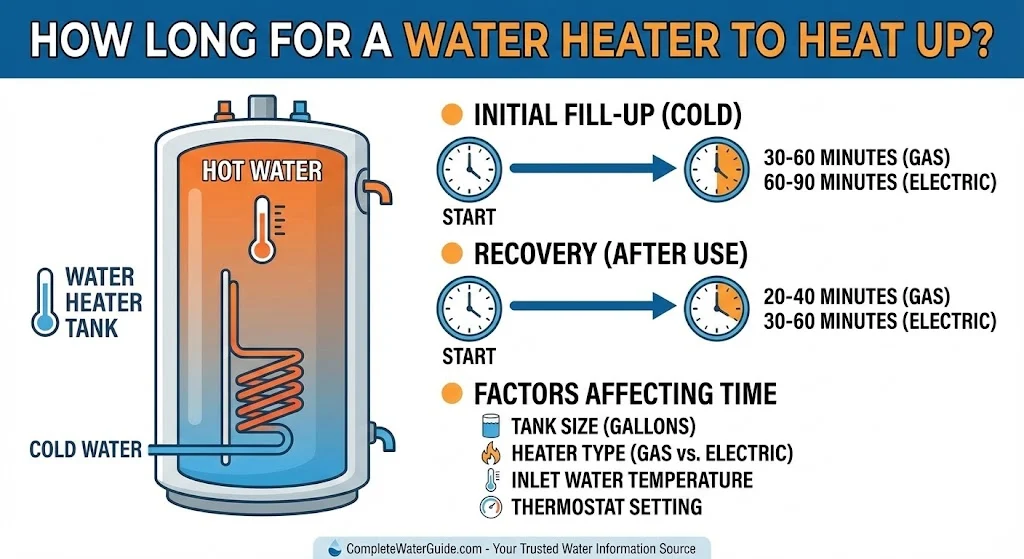

You just drained the tank after a long bath, and now the shower is running ice cold. The big question is: when can the next person shower? The answer depends entirely on your fuel source. Here’s an answer-first guide on recovery rates for gas vs. electric heaters, the math behind “First Hour Ratings,” and why your old tank might be taking longer than it used to.
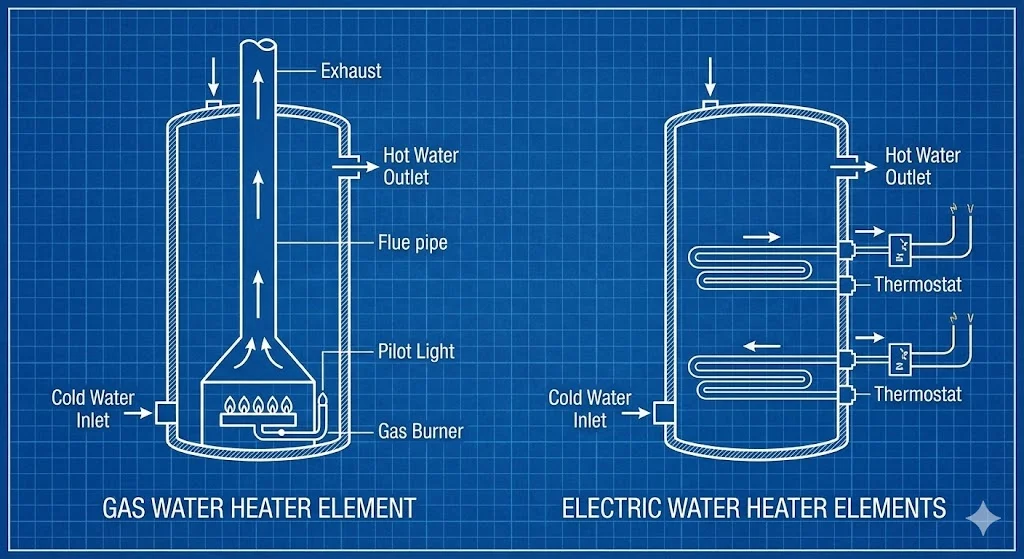
Understanding “Recovery Rate”
The speed at which a water heater heats cold water is called its Recovery Rate. This is measured in gallons per hour (GPH) based on a specific temperature rise (usually 90°F).
- Gas: A typical gas burner generates 30,000–40,000 BTUs. It heats the water from the bottom up rapidly.
- Electric: Typical elements operate at 4,500 watts. While 100% efficient, they simply can’t dump heat into the water as fast as a flame.
Estimated Heating Times (Cold to Hot)
| Tank Size | Gas Heater (Time) | Electric Heater (Time) | Showers Per Hour (Recovers) |
|---|---|---|---|
| 30 Gallons | ~30 mins | ~60 mins | 2-3 showers |
| 40 Gallons | ~35-45 mins | ~80 mins | 3-4 showers |
| 50 Gallons | ~45-60 mins | ~100 mins | 4-5 showers |
| 80 Gallons | ~60-70 mins | ~120+ mins | 5+ showers |
Note: These times assume incoming groundwater is 50°F and you are heating it to 120°F.
Why Is My Water Heater So Slow?
If your heater is taking hours to recover, something is wrong. Common culprits include:
1. Sediment Buildup
Over time, minerals settle at the bottom of the tank. In a gas heater, this layer of “rock” sits between the burner and the water, acting as insulation. The heat goes up the flue instead of into the water. In electric heaters, sediment can bury the lower element, causing it to burn out.
2. Broken Dip Tube
The dip tube directs cold water to the bottom of the tank to be heated. If it cracks, cold water mixes with the hot water at the top, making the water feel lukewarm instantly.
3. Burnt Out Element (Electric Only)
Electric heaters have two elements (top and bottom). If the lower element dies, the unit runs at 50% capacity, leading to very slow recovery.
Tips to Speed Up Recovery
- Flush the Tank: Perform a yearly flush to remove sediment and improve heat transfer.
- Check the Thermostat: Ensure both thermostats (on electric units) are set correctly. A standard setting is 120°F (49°C).
- Install a Booster: A “hot water booster” is a mixing valve that allows you to store water at 140°F (killing bacteria and effectively increasing capacity) but delivers it at 120°F to prevent scalding.
FAQs
Why does my hot water run out so fast?
This usually points to a broken lower heating element (electric) or a broken dip tube. If your tank is old, it might be filled with sediment, reducing the actual volume of water available.
Is it cheaper to leave the water heater on all the time?
Yes. Modern tanks are well-insulated. Turning it off and reheating the entire cold mass daily uses more energy than maintaining the temperature.
How long does a brand new water heater take to fill and heat?
Filling takes 2-3 minutes (open a hot tap to let air out). Heating takes 30-40 minutes for gas and 60-80 minutes for electric.
Does turning up the thermostat heat water faster?
No. The thermostat controls when the heater stops, not how fast it heats. It will just heat to a higher final temperature, which takes longer.
What Readers Say (Verified)
Verified
The breakdown of Gas vs Electric times was spot on. My electric takes forever, now I know why.
Verified
I didn’t know about the ‘broken dip tube’ issue. Checked mine and that was exactly the problem!
Verified
Good table. Helpful for planning showers in a large shared house.
Verified
Simple and direct. I switched to tankless because I was tired of waiting 40 minutes.
