Boiling water is the oldest trick in the book for making it safer to drink — it kills bacteria, viruses, and parasites. So it is natural to assume it handles PFAS, the “forever chemicals” now found in water supplies across the country.
Unfortunately, this is one case where boiling does the opposite of what you would hope. Here is exactly what happens to PFAS when you boil water, why it makes things worse, and what actually removes these chemicals.
What Are PFAS?
PFAS (per- and polyfluoroalkyl substances) are a large family of synthetic chemicals used since the mid-20th century in non-stick cookware, waterproof fabrics, firefighting foam, food packaging, and countless other products.
They earned the nickname “forever chemicals” because the carbon-fluorine bond at their core is one of the strongest in chemistry. That bond makes PFAS extraordinarily resistant to breaking down — in the environment and in the human body.
That same durability is exactly why heat does not help. To break a carbon-fluorine bond you need extreme industrial temperatures, far beyond anything a kitchen stove can produce. For more background, see our guide to PFAS in bottled water.
Why Boiling Doesn’t Work
Boiling water works against biological contaminants because heat destroys living organisms. PFAS are not alive — they are stable chemical compounds, and heat simply does not affect them the way it affects bacteria.
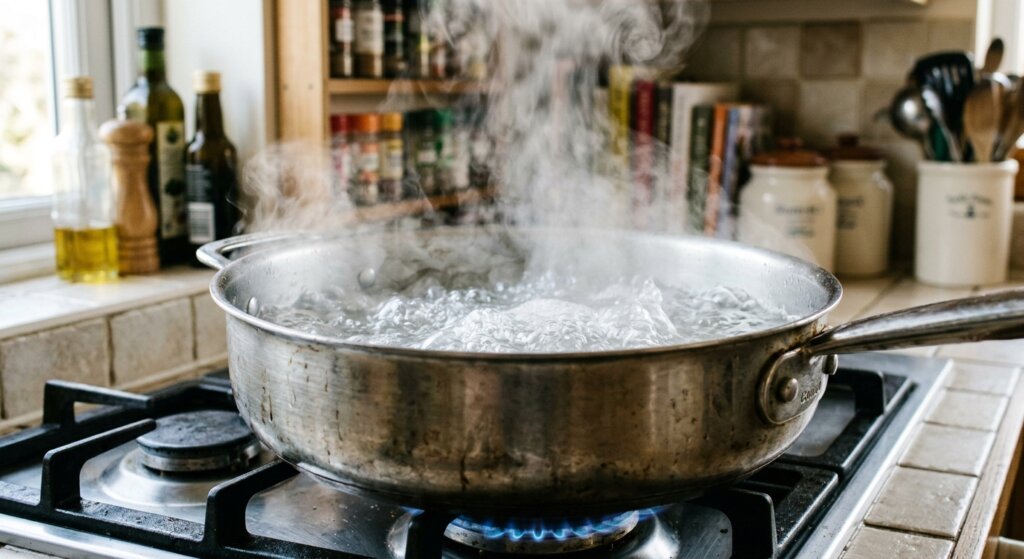
Water boils at 212°F (100°C). PFAS compounds remain completely intact at that temperature; they neither decompose nor evaporate. The heat that reliably sanitises water has essentially no effect on the forever-chemical molecules dissolved in it.
So after boiling, every PFAS molecule that was in your pot is still there. Nothing has been removed. This is the crucial point that a lot of well-meaning advice gets wrong.
Why It Actually Makes It Worse
Here is the part that surprises people. Because PFAS stay behind while water escapes as steam, boiling can actually raise the PFAS concentration in what remains.
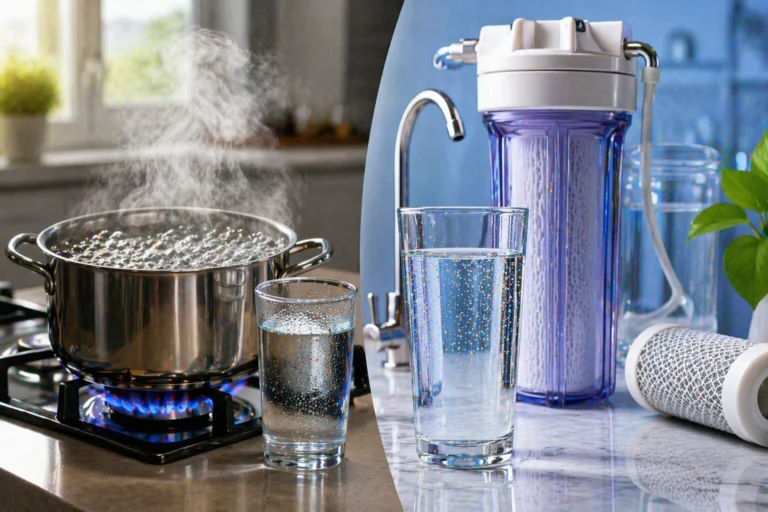
Think of it like reducing a sauce. As water evaporates, the volume shrinks but the PFAS quantity does not — so the same amount of chemical is now dissolved in less water. The longer and harder you boil, the more concentrated the remaining water becomes.
In practical terms, someone boiling water specifically to “purify” it of PFAS could end up drinking water with a higher concentration than straight from the tap. The intention is good; the chemistry works against it.
Where the Confusion Comes From
The myth persists because boiling genuinely is effective for the contaminants most people worry about. During a boil-water advisory after a pipe break or flood, boiling is the correct response — it kills the bacteria and pathogens involved.
The mental shortcut “boiling makes water safe” is true for microbes but false for chemical contaminants like PFAS, heavy metals, and nitrates. Boiling does nothing for any of those, and concentrates several of them.
Understanding that split — biological versus chemical contamination — is the key to knowing when boiling helps and when you need filtration instead.
What Actually Removes PFAS
The good news is that several proven filtration technologies do reduce PFAS effectively. These are the methods water agencies and independent testing consistently support.
| Method | PFAS Reduction | Notes |
|---|---|---|
| Reverse osmosis | Very high | Most thorough; removes a wide range of contaminants |
| Activated carbon | High (varies) | Effective when certified; must be replaced on schedule |
| Ion exchange | Very high | Specialised resins designed for PFAS |
| Boiling | None (worsens) | Concentrates PFAS; do not use for this purpose |
Look for filters independently certified to reduce PFAS (certifications reference standards specifically for these chemicals). A generic “improves taste” carbon filter is not the same as one tested and certified for PFAS reduction.
Choosing the Right Filter
The best option depends on your situation, budget, and how much water you need to treat.
- Under-sink reverse osmosis: the gold standard for drinking and cooking water, with the highest and most reliable PFAS reduction. Higher upfront cost and some water waste, but thorough.
- Certified activated carbon (pitcher or faucet): more affordable and easy to use, effective when the specific product is certified for PFAS and filters are changed on time.
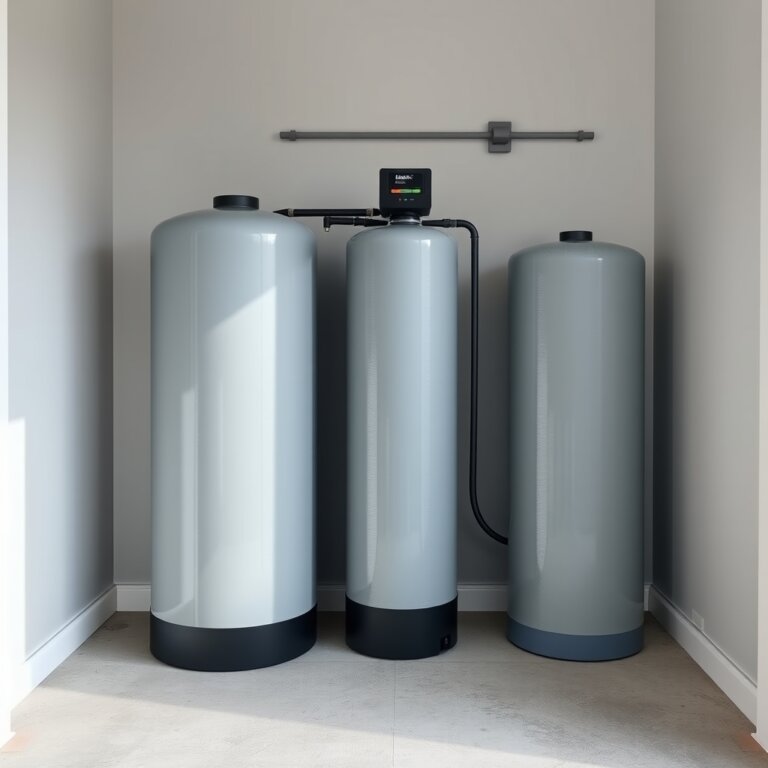
- Whole-house systems: treat all water entering the home, useful where PFAS levels are high, though drinking-water-focused systems are usually enough for ingestion concerns.
Whatever you choose, follow the replacement schedule strictly. A spent filter can stop working — and in some cases release accumulated contaminants — so lapsed maintenance undermines the whole point.
Should You Test Your Water?
If you are concerned about PFAS, testing tells you whether you have a problem and how big it is before you spend on filtration. Start with your local water utility’s annual water quality report, which increasingly includes PFAS data.
For well water or if you want your own numbers, certified laboratories offer PFAS-specific tests. These cost more than standard water tests because measuring PFAS at low levels requires specialised methods, but they give a definitive answer.
Testing also lets you verify a filter is working, by comparing before-and-after results. That confirmation is worth having if PFAS is a genuine concern in your area.
Practical Next Steps
If PFAS is on your mind, here is a sensible order of action.
- Check your water utility’s latest quality report for PFAS results.
- If levels are a concern, test your tap (or well) through a certified lab.
- Choose a filter certified specifically for PFAS reduction — reverse osmosis or certified activated carbon for drinking water.
- Install it, follow the replacement schedule, and optionally re-test to confirm it is working.
- Stop relying on boiling for PFAS — reserve boiling for microbial boil-water advisories only.
Frequently Asked Questions
Does boiling water remove PFAS?
No. Boiling does not remove PFAS and actually concentrates them. These forever chemicals do not break down or evaporate at boiling temperature, so as water turns to steam and volume drops, the PFAS left behind become more concentrated. Boiled water can contain more PFAS than you started with.
Why doesn’t boiling break down PFAS?
PFAS are built around carbon-fluorine bonds, among the strongest in chemistry. Breaking them requires extreme industrial temperatures far beyond a stove’s 212°F (100°C). At kitchen boiling temperatures the molecules stay completely intact, which is why heat has no effect on them.
What is the best way to remove PFAS from water?
Reverse osmosis offers the highest and most reliable PFAS reduction, followed by certified activated carbon and ion exchange systems. For drinking and cooking water, an under-sink reverse osmosis system or a filter independently certified for PFAS is the most dependable choice.
Does a Brita or standard carbon filter remove PFAS?
Only if that specific product is certified for PFAS reduction. Many basic carbon filters are designed to improve taste and odor, not to remove PFAS. Always check that the filter is independently certified against the standards for PFAS and replace it on schedule.
Does boiling remove other chemicals like lead or nitrates?
No. Like PFAS, chemical contaminants such as lead and nitrates are not removed by boiling and can be concentrated by it. Boiling is effective only against biological contaminants — bacteria, viruses, and parasites — not dissolved chemicals or heavy metals.
When should I actually boil my water?
Boil water during an official boil-water advisory, which is issued for microbial contamination after events like pipe breaks or flooding. In those cases boiling reliably kills pathogens. It is the wrong tool for chemical concerns like PFAS, which require filtration instead.
How do I know if my water has PFAS?
Check your water utility’s annual quality report, which increasingly lists PFAS results. For well water or your own confirmation, use a certified laboratory PFAS test. Testing also lets you verify that a filter is reducing PFAS by comparing before-and-after results.
Is bottled water free of PFAS?
Not automatically. Testing has found PFAS in some bottled waters, though many brands test low. Bottled water is not a guaranteed PFAS solution, so if this is a concern, choose brands that publish testing data or filter your own water with a certified system.
Related Guides
- Bottled Water and PFAS: Which Brands to Know
- LaCroix PFAS Testing: What to Know
- Best Reverse Osmosis Systems for Home
- Best Water Filters for Home
References & Sources
- EPA — PFAS Information and Drinking Water
- ATSDR/CDC — PFAS and Your Health
- EPA — Ground Water and Drinking Water
The Bottom Line
Boiling is the right move for bacteria and parasites, but it is exactly the wrong move for PFAS. Forever chemicals survive boiling untouched, and because water leaves as steam while they stay behind, boiling can leave you with a more concentrated dose.
If PFAS is a concern, skip the stove and reach for certified filtration — reverse osmosis, certified activated carbon, or ion exchange. Check your utility report, test if needed, install the right filter, and keep it maintained. That is what actually protects you.