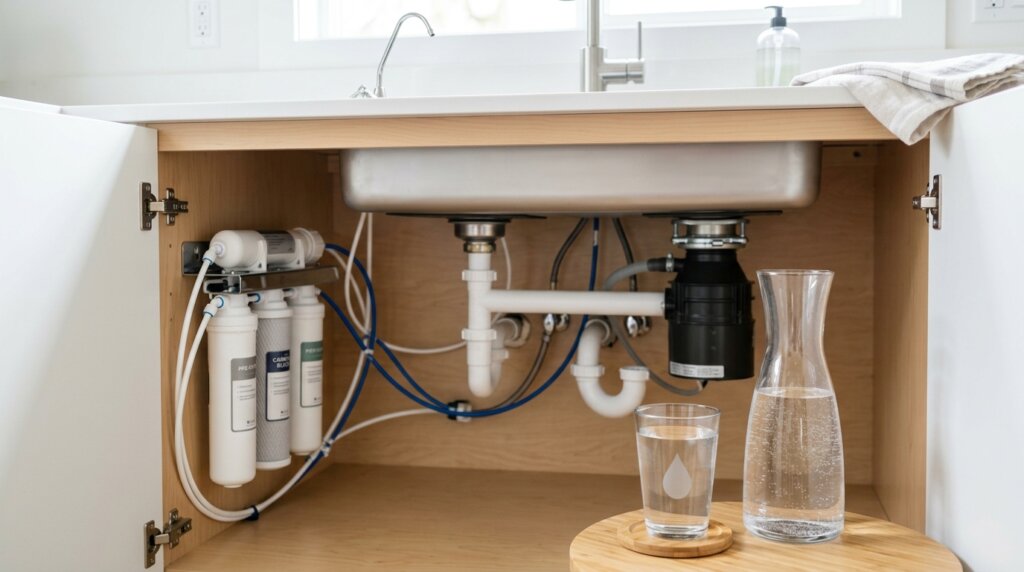
Quick answer: The best under sink water filter for PFAS is a reverse osmosis system or an NSF 53-certified carbon system. Look for NSF/ANSI 58 (reverse osmosis) or NSF/ANSI 53 (carbon) certification with a specific PFAS-reduction claim. Popular certified options include the iSpring RCC7AK, Aquasana Claryum, Waterdrop G3 P800, and AquaTru. Expect to pay roughly $125 to $600 depending on the system.
Choosing an under sink water filter for PFAS is one of the most practical ways to deal with “forever chemicals” in your tap water. It treats the water you drink and cook with, installs in a cabinet out of sight, and costs far less than replacing your plumbing. But not every under-sink filter removes PFAS — you have to choose one that is certified for it. Here is what actually works.
Why most filters don’t remove PFAS
PFAS are a family of thousands of synthetic “forever chemicals” built around extremely strong carbon-fluorine bonds. Ordinary pitcher filters and basic faucet filters are designed for chlorine, taste, and odor — not PFAS. According to the EPA, only specific treatment technologies reliably reduce PFAS, so unless a filter is certified for it, assume it does nothing.
The two technologies that work
Reverse osmosis (RO): Forces water through a semipermeable membrane with pores around 0.0001 microns. It removes both long-chain and short-chain PFAS, plus lead, arsenic, fluoride, and nitrates. This is the most thorough option. Look for NSF/ANSI 58 certification.
Activated carbon (GAC): High-quality carbon blocks certified to NSF/ANSI 53 can reduce long-chain PFAS below the EPA limit and also improve taste. They waste no water and often cost less than RO.
What to look for before buying
- NSF 53 or NSF 58 certification with a specific PFAS claim — verify it on the NSF, WQA, or IAPMO database, not just the box.
- Tested gallon capacity — a filter that removes 99% of PFAS for only 100 gallons is very different from one certified for 800-2,000 gallons.
- Flow rate — RO tank systems deliver slower; inline carbon systems run near tap speed.
- Filter replacement cost — a cheap filter replaced every 6 months can cost more per year than a pricier long-life one.
Popular certified under-sink options (2026)
- iSpring RCC7AK — 6-stage RO around $219, remineralization stage, strong value.
- Aquasana Claryum — carbon-based, NSF-certified for PFAS, keeps beneficial minerals, easy install.
- Waterdrop G3 P800 — tankless RO, IAPMO-certified for PFOA/PFOS.
- AquaTru — countertop RO if you can’t install under-sink (renters).
Prices and certifications change; verify current details before buying.
Our pick for most homes: a certified NSF 58 reverse osmosis system if PFAS is your main concern, or an NSF 53 carbon system if you also want to keep minerals and avoid water waste.
Our Top PFAS-Removing Systems (2026)
These three are certified to reduce PFAS, cover three budgets and installation styles, and are the ones we’d actually recommend to family. As an Amazon Associate we earn from qualifying purchases — it never affects our picks.
iSpring RCC7AK (6-Stage RO)
NSF/ANSI 58 certified, removes up to 99% of 1,000+ contaminants including PFOA/PFOS. Adds an alkaline remineralization stage so the water doesn’t taste flat. America’s most popular under-sink RO at a fair price.
- NSF 58 certified for PFAS
- 6-stage + remineralization
- DIY install, 75 GPD
Waterdrop G3P800 (Tankless RO)
IAPMO-certified to NSF/ANSI 42, 53, 58 & 372, lab-tested by SGS to reduce PFAS (99% of PFOA/PFOS). Tankless design saves 70% under-sink space, fast 800 GPD flow, smart TDS-display faucet. Highest-scoring tankless RO in independent lab tests.
- NSF 42/53/58/372 certified
- Tankless, space-saving
- 3:1 pure-to-drain ratio
AquaTru Classic (Countertop RO)
IAPMO-certified to NSF 42, 53, 58, 401 & P473 — removes 84 contaminants including PFOA/PFOS “forever chemicals,” lead, fluoride, and microplastics. Zero plumbing: sits on the counter, sets up in minutes. Perfect for renters and apartments.
- NSF 58 + 401 + P473 certified
- No plumbing / install
- Removes 84 contaminants
Certified PFAS Systems Compared
The four systems worth shortlisting, side by side. Certification is the column that matters most — everything else is preference.
| System | Type | Certification | Price | Filter cost/yr |
|---|---|---|---|---|
| iSpring RCC7AK | 6-stage RO | NSF 58 | ~$219 | ~$60 |
| Waterdrop G3P800 | Tankless RO | NSF 42/53/58/372 | ~$500 | ~$130 |
| Aquasana Claryum | Carbon block | NSF 42/53/401 | ~$180 | ~$140 |
| AquaTru Classic | Countertop RO | NSF 53/58/401/P473 | ~$450 | ~$100 |
RO vs Carbon: Which Should You Actually Buy?
The honest answer depends on one thing — whether your water report shows short-chain PFAS (PFBS, PFBA, GenX) or only the long-chain legacy compounds (PFOA, PFOS).
- Choose reverse osmosis if: your water shows short-chain PFAS, you also have lead, arsenic, nitrates or high TDS, or you simply want the most complete removal available. RO handles both chain lengths through physical size exclusion, so it does not depend on the contaminant binding to anything.
- Choose certified carbon if: your report shows only long-chain PFAS, you want to keep the natural minerals, you dislike the idea of wastewater, or you need full tap-speed flow. A well-made NSF 53 carbon block handles PFOA and PFOS well and costs less to install.
The trade-offs are real on both sides. RO sends roughly 1 to 3 gallons to drain for every gallon produced (tankless models are the efficient end of that range) and strips beneficial minerals unless the system has a remineralization stage. Carbon wastes no water and keeps minerals, but its performance degrades gradually as the media saturates — which is why replacing on schedule matters more with carbon than with RO. An exhausted carbon block can release what it captured.
Under-sink vs whole-house for PFAS
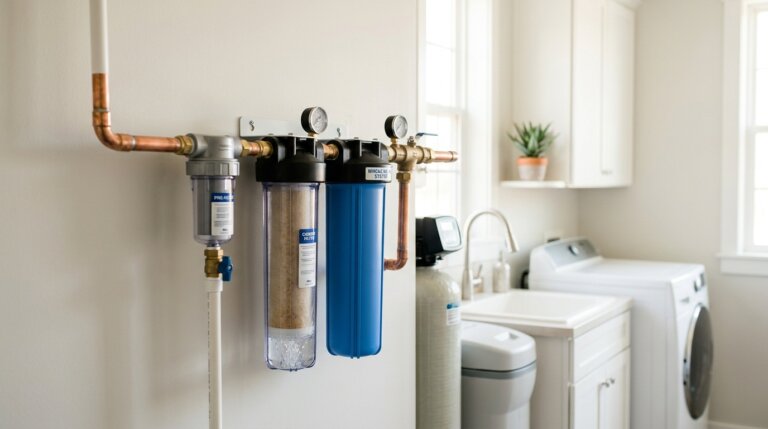
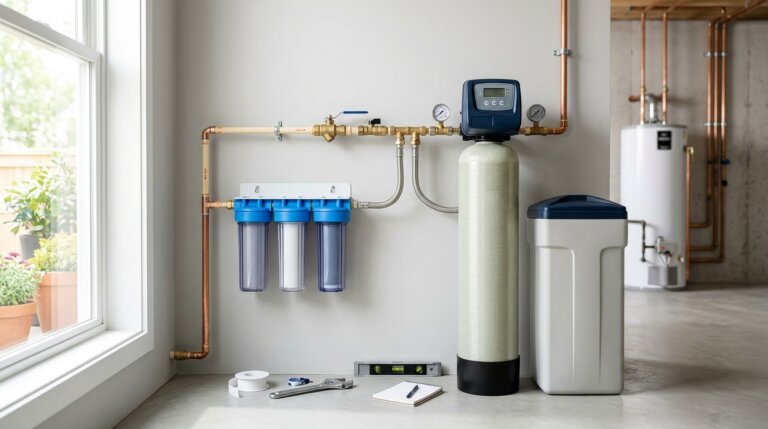
Under-sink systems protect drinking and cooking water at one tap — the most cost-effective choice for most families. Whole-house systems treat every tap and shower, which matters because PFAS exposure isn’t only from drinking. Before buying one, read what a whole house filter is actually certified to do and what whole-house reverse osmosis costs you in wasted water — the EPA’s own efficiency specification covers point-of-use units only, so every figure quoted for a whole-house RO comes from a smaller equipment class. Many households use both. See our guide on whole-house vs under-sink filters and the best PFAS filters overall.
Not sure if you even have PFAS? Start by learning how to test your water for PFAS at home before buying any system.
Frequently asked questions
What certification should a PFAS filter have?
Look for NSF/ANSI 53 for carbon filters or NSF/ANSI 58 for reverse osmosis systems, plus a specific manufacturer claim that the product reduces PFAS. Verify the certification directly on the NSF, WQA, or IAPMO database.
Do Brita filters remove PFAS?
No. Standard Brita pitcher filters are not certified to remove PFAS. They mainly improve taste and odor. Choose an NSF 53 or NSF 58 certified system instead.
Is reverse osmosis or carbon better for PFAS?
Reverse osmosis removes both long-chain and short-chain PFAS through physical size exclusion and is the strongest single technology. Certified activated carbon also works well for long-chain PFAS and improves taste.
How often do I replace an under-sink PFAS filter?
Sediment and carbon pre-filters usually every 6-12 months, post-carbon filters every 12 months, and RO membranes every 2-3 years, depending on your water quality and usage.
Does an under-sink filter lower water pressure?
A properly installed system has minimal impact at the dedicated faucet. RO systems deliver water from a storage tank, so flow depends on tank recovery rather than line pressure.
Reviewed by the Complete Water Guide team. This article is for general information and is not a substitute for professional water-quality or medical advice. We may earn a commission from some links on this page.