What Has Actually Been Verified
The distinction that matters in this category is between a brand saying its water is clean and a brand publishing the report. Icelandic Glacial does the second, across several layers:
| Verification | Covers | Who |
|---|---|---|
| NSF test reports (2025) | Source spring, spring water, sparkling water | NSF International |
| NSF facility certificate | Bottling facility standards | NSF International |
| 2026 microplastics report — GLASS | Glass-bottled product | Published by brand |
| 2026 microplastics report — PET | Plastic-bottled product | Published by brand |
| Regular inspections | PFAS and nanoplastics non-detection | Icelandic Public Health Authority |
| On-site daily testing | Ongoing quality control | In-house accredited lab |
Two things stand out. First, testing glass and PET separately is unusual and genuinely useful — it acknowledges that packaging is its own variable rather than folding it into a single source claim. Nearly every microplastics lawsuit in this category rests on exactly that gap. Second, a national public health authority conducting inspections is a different order of oversight from a company commissioning its own lab work.
The Ölfus Spring
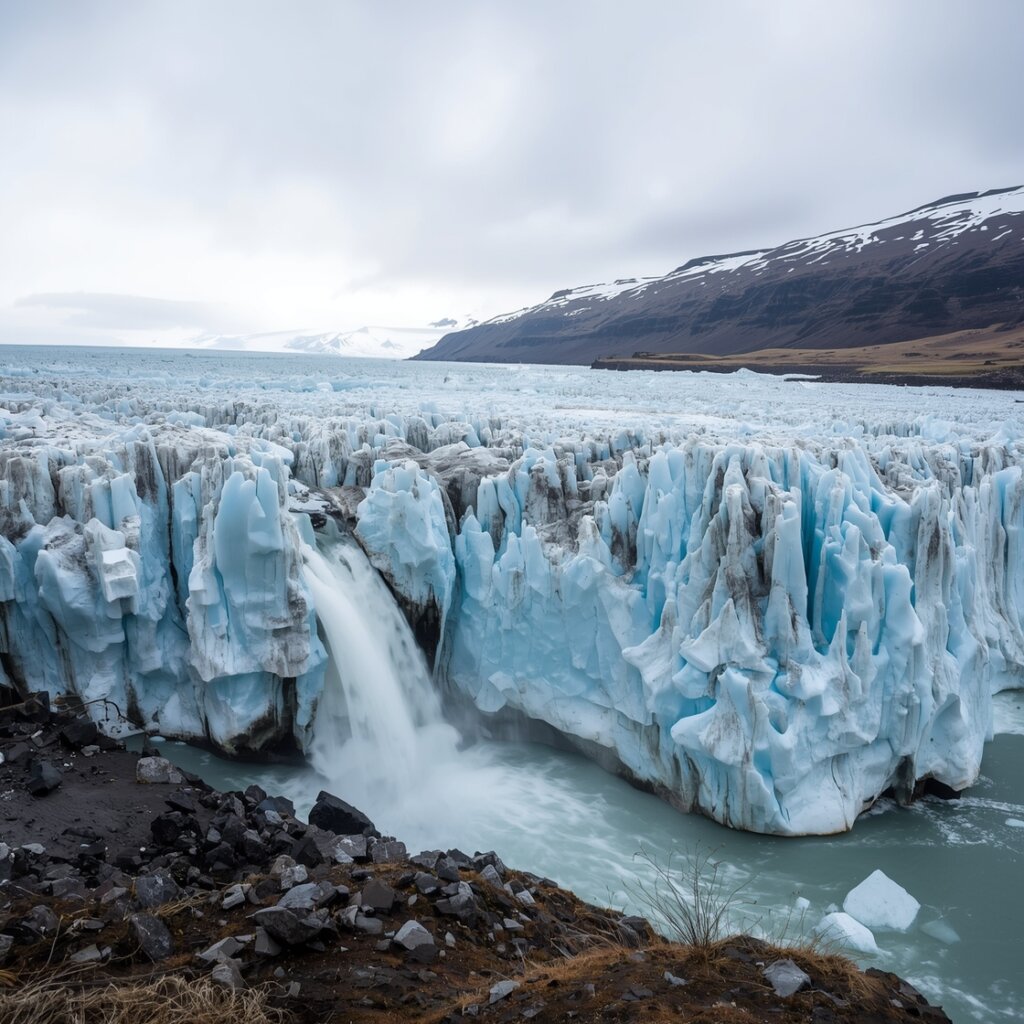
The source is a genuine outlier even by premium bottled water standards.
- Formed by ancient volcanic eruption — the spring sits deep below the surface in southwestern Iceland, created long before human settlement of the island.
- Roughly 5,000 years of filtration through layers of lava rock before the water reaches the spring. For context, PFAS entered widespread industrial use in the mid-20th century — water with a five-millennia residence time predates the contamination entirely.
- pH 8.4, naturally alkaline as a result of that volcanic filtration rather than any processing step.
- Low TDS, which produces the crisp, clean mouthfeel the brand is known for, with no metallic aftertaste.
- Naturally occurring calcium, magnesium and sodium — nothing added, nothing removed.
- No fluoride, naturally or added.
- High silica content, a characteristic of volcanic-filtered water.
The bottling facility sits adjacent to the spring in Hlidarendi, Ölfus, and runs entirely on geothermal and hydroelectric power. Icelandic Glacial was the first US-distributed bottled water certified carbon neutral, in 2007.
On the Alkaline Claim
Icelandic Glacial’s pH 8.4 is naturally occurring rather than produced by ionization — a meaningful difference from brands like Essentia, which reach pH 9.5 through electrical processing.
But the physiology is the same either way, and it is worth being straight about it: stomach acid sits at roughly pH 1.5 to 3.5 and neutralises any water you drink almost immediately. Blood pH is held between about 7.35 and 7.45 by the kidneys and lungs regardless. There is little robust evidence that drinking alkaline water changes anything systemic in healthy people.
What pH 8.4 does affect is taste. Higher-pH waters generally have a smoother, less sharp mouthfeel, which is a large part of why people prefer them. That is a legitimate reason to choose it. The health framing is not. Our full breakdown is in best water for hydration: electrolyte vs mineral vs alkaline.
Where the Gaps Remain
Two honest caveats, because “certified free of contaminants” is a strong phrase:
1. Not in the Consumer Reports dataset. The 2020 study tested 47 products across 30 PFAS compounds, and Icelandic Glacial was not among them. Its verification comes from NSF certification, brand-published reports and Icelandic regulatory inspection rather than from that independent comparative study. Those are credible sources, but they are not the same as a third-party lab ranking it against competitors.
2. Brand-published reports are still brand-published. The 2026 microplastics analyses for glass and PET are a genuine step beyond what competitors offer, and the NSF certifications are third-party. But a company choosing which reports to publish is a different thing from a consumer organisation choosing what to test. This is not a criticism specific to Icelandic Glacial — it applies to every brand’s own water quality report, including Essentia’s and Mountain Valley’s.
Should You Drink It?
Strong. NSF certification, Icelandic Public Health Authority inspections confirming non-detection, and a 5,000-year aquifer that predates industrial PFAS entirely.
Best-documented in the category. Separate published 2026 reports for glass and PET — a direct answer to the question driving six industry lawsuits.
Available in glass, PET and aluminum. Glass remains the cleanest option on principle regardless of testing.
Premium, and availability can be inconsistent. You are paying for the source and the verification, both of which are real.
Where to Buy
Icelandic Glacial and the other brands with meaningful published verification. As an Amazon Associate we earn from qualifying purchases; it never affects our rankings.
Icelandic Glacial (Glass)
NSF certified, Icelandic Public Health Authority inspected, with published 2026 microplastics reports for glass and PET. Naturally alkaline, fluoride-free, low TDS.
S.Pellegrino (Glass)
The only bottled water with a published Consumer Reports PFAS figure that is also genuinely low, in glass. Comparable verification, different basis.
Essentia Ionized Water
0.2 ppt PFAS from three-stage RO purification, with a published water quality report. Ionized to pH 9.5 rather than naturally alkaline.
Under-Sink RO System
An NSF/ANSI 58 certified system removes 94-99% of PFAS at roughly $0.05 per litre — the only route where the certification applies to your own tap.
Frequently Asked Questions
Does Icelandic Glacial have PFAS?
The brand states it is certified free of PFAS, microplastics and forever chemicals, supported by NSF test reports for its source spring, spring water and sparkling water, plus facility certification. The Icelandic Public Health Authority conducts regular inspections confirming non-detection of PFAS and nanoplastics. It was not included in Consumer Reports’ 2020 analysis, so it has no figure in that comparative dataset.
Does Icelandic Glacial contain microplastics?
The brand publishes separate 2026 microplastics reports for its glass and PET bottles — unusually specific disclosure in a category where six major brands face lawsuits over microplastics. Icelandic Public Health Authority inspections confirm non-detection of nanoplastics.
Why is Icelandic Glacial naturally alkaline?
The water filters through layers of lava rock for roughly 5,000 years before reaching the Ölfus Spring, which raises its pH to 8.4 naturally. This differs from brands like Essentia, which reach pH 9.5 through electrical ionization. Naturally alkaline water affects taste — smoother, less sharp — rather than body pH, which the kidneys and lungs regulate regardless.
Is Icelandic Glacial worth the price?
You are paying for an exceptionally protected volcanic source, a genuinely low mineral profile, and more third-party verification than most competitors offer — NSF certification, national regulatory inspection, and published packaging-specific microplastics reports. Whether that justifies the premium over filtered tap water at roughly $0.05 per litre is a personal judgement.
Does Icelandic Glacial contain fluoride?
No. Fluoride is neither naturally present nor added. The water contains only naturally occurring calcium, magnesium and sodium, with nothing added or removed during bottling.
How is Icelandic Glacial different from Fiji or Evian?
All three are premium spring or artesian waters, but the verification differs. Fiji and Evian both face microplastics-related lawsuits and have no published packaging-specific testing. Icelandic Glacial publishes separate glass and PET microplastics reports and is inspected by a national public health authority. It also offers glass, which Fiji does not.
What is the TDS of Icelandic Glacial?
Naturally low, which is what produces its crisp, clean mouthfeel with no metallic aftertaste. This puts it at the light end of the mineral spectrum — far below San Pellegrino at 1,109 mg/L or Gerolsteiner at 2,488 mg/L. If you want meaningful mineral intake rather than clean taste, a high-TDS mineral water is the better choice.
Is Icelandic Glacial sustainable?
Its bottling facility in Hlidarendi, Ölfus runs entirely on geothermal and hydroelectric power, and the brand was the first US-distributed bottled water certified carbon neutral, in 2007. Glass and aluminum formats are available alongside PET. That said, shipping water from Iceland carries transport emissions no certification eliminates.
Related Reading
- Bottled Water Brands & PFAS — Every Major Brand Ranked
- Safest Bottled Water Brands — Ranked by Published Data
- Does Fiji Water Have PFAS?
- Does Evian Have PFAS? Testing & Lawsuits
- Does Essentia Water Have PFAS? Tested at 0.2 ppt
- Mountain Valley: PFAS Data & the 2025 Class Action
- Best Water for Hydration — Electrolyte vs Mineral vs Alkaline
References & Sources
- Icelandic Glacial — NSF test reports (2025) for source spring, spring water, sparkling water and facility certification
- Icelandic Glacial — 2026 microplastics reports, glass and PET, published separately
- Icelandic Public Health Authority — regular facility and product inspections
- Consumer Reports — bottled water PFAS testing (2020), 47 products, 30 compounds
- EPA — PFAS National Primary Drinking Water Regulation (April 2024)
- FDA — bottled water PFAS survey (April 2025), 197 products
The Bottom Line
Icelandic Glacial does the thing this category mostly does not: it publishes the reports. NSF certification across source, still and sparkling products, national public health authority inspections confirming non-detection of PFAS and nanoplastics, and separate 2026 microplastics analyses for glass and PET bottles — the last of which directly addresses the gap that six industry lawsuits are built on. The source is equally strong: roughly 5,000 years of lava rock filtration, naturally alkaline at pH 8.4, low TDS, fluoride-free, nothing added. The honest caveat is that it has no Consumer Reports figure, so you cannot place it directly against tested competitors, and brand-published reports remain brand-published. But on the evidence available, this is one of the better-documented bottled waters you can buy — and in glass, it removes the packaging question too.