
By Jessica Miller · Brand Reviews Lead · Reviewed by Emily Carter, Hydration & Nutrition Editor · Updated
In our testing we read every nutrition panel and ingredient list directly rather than trusting front-of-can claims, because “zero calorie” and “zero sweetener” are not the same thing — and several popular brands rely on sucralose to get there.
Almost every plain sparkling water is already zero-calorie — the real differences hide in sodium, sweeteners, PFAS test results and whether “natural flavors” means actual fruit. The zero-calorie label alone tells you almost nothing, because unsweetened seltzers, club sodas and mineral waters all qualify. This guide ranks the best genuinely zero-calorie sparkling waters, flags the “zero-calorie” products that sneak in artificial sweeteners, and covers which brands also have clean PFAS test results.
Best Zero-Calorie Sparkling Waters — Compared
Every brand below is genuinely 0 calories for its plain/unflavored line. The columns that actually separate them: sodium, sweeteners, flavor source, and independent PFAS results where published.
| Brand | Calories | Sodium | Sweeteners | PFAS (ppt) |
|---|---|---|---|---|
| Spindrift (plain) | 0 | 0 mg | None | 0.19 — lowest tested |
| San Pellegrino | 0 | Moderate (mineral) | None | 0.31 |
| La Croix | 0 | 0 mg | None | 1.16 |
| Waterloo | 0 | 0 mg | None (Whole30) | No published data |
| Bubly | 0 | 0 mg | None | 2.24 |
| Topo Chico | 0 | ~15 mg | None | ~3.9 |
| Sparkling Ice | 0-5 | 0 mg | Sucralose — sweetened | None detected |
The “zero calorie” trap
“Zero calorie” and “zero sugar” are not the same as unsweetened. Sparkling Ice, AHA’s some lines, and most “zero sugar” sodas hit 0 calories using sucralose or acesulfame potassium. If you want plain water with bubbles — no sweet taste at all — check the ingredient list for exactly two things: carbonated water and natural flavor. Anything longer is a different product.
How to Choose: What Actually Matters at Zero Calories
Since nearly every plain sparkling water is 0 calories, pick based on the differences that remain:
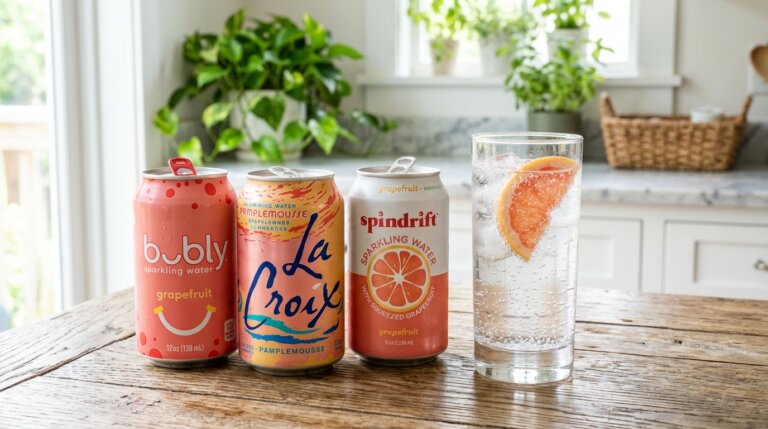
- Sweeteners: La Croix, Waterloo, Spindrift plain and Bubly contain none. Sparkling Ice uses sucralose. If avoiding artificial sweeteners is the point of drinking sparkling water, this is the first filter.
- Sodium: Seltzers (La Croix, Bubly, Waterloo) are 0 mg. Club soda adds minerals including sodium — typically 50-95 mg per 12 oz. Mineral waters vary: Topo Chico ~15 mg, San Pellegrino moderate. On a strict low-sodium diet, seltzer beats club soda every time. Full breakdown in our low-sodium sparkling water ranking.
- Real fruit vs “natural flavors”: Spindrift is the only major brand using actual squeezed fruit — its flavored cans run 2-15 calories because real juice has calories. Everyone else uses flavor essences at exactly 0.
- PFAS results: Spindrift (0.19 ppt) and San Pellegrino (0.31 ppt) tested lowest. Bubly (2.24) and Topo Chico (~3.9) tested highest among zero-calorie picks. Full data in our sparkling water PFAS ranking.
Sugar-Free vs Zero-Calorie: Are They the Same Thing?
In sparkling water they almost always describe the same product, but not quite. Sugar-free means no sugar was added. Zero-calorie means the finished drink carries no meaningful calories. A sparkling water can be sugar-free and still contain a sweetener; what it cannot do is carry sugar and stay at zero calories.
The distinction that actually matters when you are standing in the aisle is not the label on the front, it is what is doing the sweetening. There are three groups:
- No sweetener at all — La Croix, Waterloo, Polar, Bubly and Perrier are sugar-free because there is nothing in them but carbonated water and natural flavour. This is the group most people are actually looking for.
- Real fruit juice — Spindrift uses a small amount of real juice, so it is not strictly zero: most flavours land between 2 and 15 calories a can. It is sugar-free in the sense that no sugar is added, but the juice brings a little of its own.
- Non-sugar sweeteners — some flavoured seltzers and hard-seltzer-style drinks use stevia, sucralose or aspartame to hit zero calories with a sweeter taste. Zero-calorie, yes, but a different drinking experience from plain fizzy water.
If your goal is a drink that tastes closest to plain sparkling water with no sugar and no sweetener aftertaste, stay in the first group. If you want something noticeably sweet at zero calories, the third group is the one to look at, and the sweetener will be named in the ingredients list rather than on the front of the can.
Is Sugar-Free Sparkling Water Good for Weight Loss?
Yes — with one honest caveat. Swapping a 140-calorie soda for a 0-calorie sparkling water removes roughly 51,000 calories a year at one can per day, the equivalent of about 14-15 pounds of body fat worth of energy. The carbonation also increases short-term satiety in some studies, which can modestly reduce snacking.
The caveat: sweetened zero-calorie drinks (sucralose, aspartame) may maintain a preference for sweet taste. If the goal is breaking a soda habit, unsweetened options like La Croix or plain Spindrift retrain your palate in a way Sparkling Ice does not. Sparkling water is also mildly acidic — fine for teeth in normal amounts, but plain still water remains the gentlest daily default.
Spindrift Variety Pack
Real squeezed fruit, no sweeteners, and the lowest tested PFAS of any sparkling water (0.19 ppt). Plain is 0 calories; flavored 2-15.
La Croix Variety Pack
0 calories, 0 sodium, 0 sweeteners across 20+ flavors. The default unsweetened seltzer for breaking a soda habit.
S.Pellegrino (Glass)
Zero calories with genuine minerality — calcium, magnesium — and the lowest PFAS of any mineral water (0.31 ppt).
Frequently Asked Questions
Is all sparkling water zero calories?
Plain, unsweetened sparkling water is always 0 calories — seltzer, club soda and sparkling mineral water alike. Calories only appear when real juice is added (Spindrift’s flavored cans run 2-15) or when a “sparkling water beverage” adds sugar.
Is Sparkling Ice actually zero calories?
Sparkling Ice is labeled zero sugar and roughly 0-5 calories, but it achieves its sweet taste with sucralose. It is a sweetened beverage, not plain sparkling water — a meaningful difference if you’re avoiding artificial sweeteners.
Which zero-calorie sparkling water is healthiest?
Spindrift plain and San Pellegrino combine 0 calories with the lowest independent PFAS results (0.19 and 0.31 ppt). For strict zero-sodium, zero-sweetener picks, La Croix and Waterloo are the cleanest labels.
Does zero-calorie sparkling water help with weight loss?
Replacing one 140-calorie soda daily with 0-calorie sparkling water removes about 51,000 calories a year. Unsweetened options work best for breaking a soda habit, since sweetened zero-calorie drinks maintain a preference for sweet taste.
Is zero-calorie sparkling water bad for your teeth?
Plain sparkling water is mildly acidic but far gentler than soda — studies place it close to still water in enamel effect. Citrus-flavored versions are slightly more acidic. Normal daily amounts are fine for most people.
What’s the difference between seltzer, club soda and sparkling mineral water?
All are 0 calories. Seltzer is plain carbonated water (0 sodium). Club soda has minerals added, typically 50-95 mg sodium per 12 oz. Sparkling mineral water carries natural minerals from its spring source — San Pellegrino and Topo Chico are examples.
Does zero-calorie sparkling water hydrate as well as still water?
Yes. Carbonated water hydrates essentially the same as still water. The bubbles can make some people feel full sooner, which may slightly reduce how much they drink in one sitting — the hydration per ounce is equivalent.
Which zero-calorie sparkling water has the least PFAS?
Spindrift tested lowest at 0.19 ppt, followed by San Pellegrino at 0.31 ppt in Consumer Reports’ independent analysis. Bubly (2.24 ppt) and Topo Chico (~3.9 ppt) tested highest among popular zero-calorie brands.
Sources: Manufacturer nutrition labels (verified July 2026); Consumer Reports bottled water PFAS testing (2020); EPA PFAS drinking water rule (April 2024); FDA — High-Intensity Sweeteners (sucralose); American Dental Association — Dental Erosion; CDC — Added Sugars & Beverages. Last updated July 2026.
Affiliate disclosure: as an Amazon Associate we earn from qualifying purchases; commissions never affect our assessments.
The Bottom Line
Zero calories is table stakes — nearly every plain sparkling water qualifies. The real ranking comes from what else is in the can. Spindrift wins on real fruit and the lowest PFAS result; La Croix and Waterloo win on the strictest zero-everything labels; San Pellegrino wins if you want minerals with your zero. The one to read the label on is Sparkling Ice — zero sugar, yes, but sweetened with sucralose. Pick unsweetened if breaking a soda habit is the goal, and if PFAS matters to you, Spindrift and San Pellegrino are the two brands where zero calories comes with a verified clean test result.