


Is salt water good for your hair? The simple answer is: It is good for your scalp, but bad for your hair strands.
-
The Good Part: Salt water is great for oily hair. It dries up excess oil and helps with dandruff. Plus, it gives your hair that nice, thick “beach wave” volume that looks great.
-
The Bad Part: Salt sucks the moisture out of your hair. If you leave it in too long, your hair becomes dry, frizzy, and breaks easily. It can make your hair feel like straw.
My Simple Rule: Enjoy the beachy look for the day, but always wash it out with fresh water before you go to sleep. If you don’t rinse it, the damage starts.
The Good Side – Why We Love the Beach Look
Have you ever noticed that your hair looks thicker and has more volume after a day at the beach? That isn’t just in your head.
Before we talk about the damage, let’s talk about why salt water is actually kind of amazing for styling.
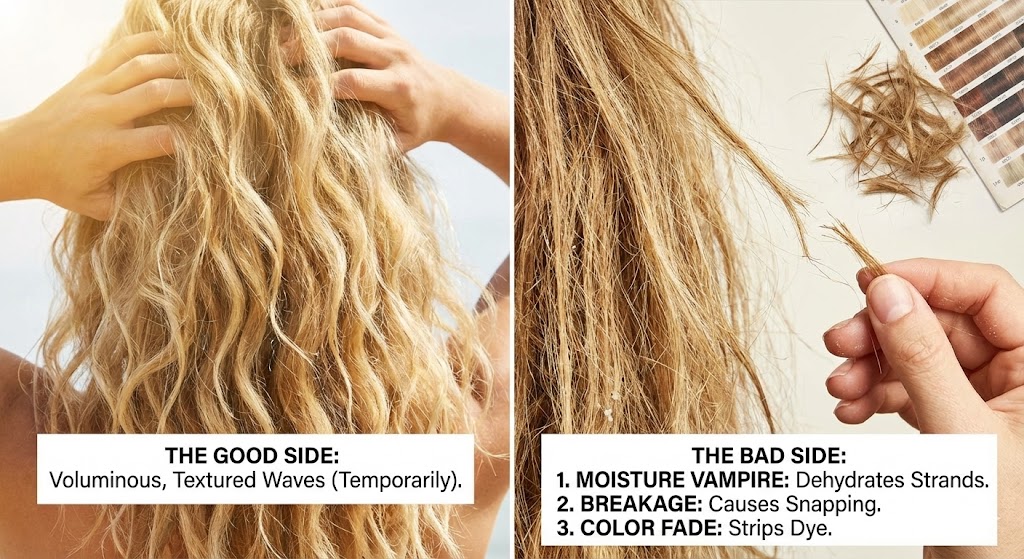
1. Instant Volume and Texture Salt crystals act like a natural hairspray. When the water dries, the tiny salt crystals stay on your hair. These crystals add “grit” or friction between your hair strands. This stops your hair from lying flat and gives you that messy, full “mermaid” look. It’s basically nature’s texturizing spray.
2. It acts like a Scalp Detox If you struggle with an oily scalp or dandruff, salt water can be a lifesaver.
-
Absorbs Oil: Salt is great at soaking up excess grease. It works almost like a dry shampoo.
-
Exfoliates: The salt granules act like a gentle scrub. They can help remove dead skin cells and dandruff flakes from your scalp, leaving it feeling fresh and clean.
So, if you have fine, flat, or oily hair, salt water feels like a miracle product at first.
The Bad Side – Why It Turns Into Straw
Now for the bad news. While the volume looks great in photos, the way it feels is a different story.
I learned this the hard way. I used to leave salt water in my hair for days to keep the waves, but I ended up damaging it. Here is why salt water can be your hair’s enemy:

1. It is a “Moisture Vampire” Salt loves water. In fact, it loves water so much that it pulls it out of everything else. When salt water sits on your hair, it sucks the natural moisture right out of your strands. This leaves your hair dehydrated, dry, and rough.
2. It Causes Breakage When your hair loses moisture, it loses elasticity (stretchiness). Healthy hair stretches; dry hair snaps. If you try to brush your hair while it is full of salt, it is very likely to break off because it has become brittle.
3. It Fades Hair Color If you dye your hair, be careful. The damage to the outer layer of your hair (the cuticle) makes it easier for color to slip out. Salt water + Sun exposure is the fastest way to turn an expensive dye job into a faded mess.
The takeaway: The “crunchy” feeling isn’t healthy texture—it is the sound of your hair crying for moisture.
How to Protect Your Hair Before You Swim
You don’t have to avoid the ocean to save your hair. You just need to prep it.
I used to just jump straight into the water with dry hair. That was a mistake. Over time, I learned two simple tricks that act like a shield against the salt.
1. The “Wet Sponge” Trick Think of your hair like a dry sponge. If you throw a dry sponge into a bucket of salt water, it will soak up a ton of it instantly.
But, if that sponge is already full of fresh water, it can’t absorb much more.
So, before I go into the ocean, I wet my hair completely with fresh tap water (from a shower or a water bottle). Since my hair is already full of clean water, it won’t soak up as much of the damaging salt water.
2. The Oil Shield If I know I’m going to be in the water for a long time, I add a layer of protection. I put a little bit of coconut oil or a leave-in conditioner on my damp hair.
Oil and water don’t mix. The oil coats your hair strands and pushes the salt water away. It keeps your hair soft and makes it much easier to detangle later.
What to Do AFTER the Beach
Okay, so you’ve enjoyed the waves and your hair looks amazing. But now you are heading home. What you do in the next hour makes a huge difference.
Here is my simple routine to fix the “straw” feeling:
1. Rinse Immediately Don’t wait until you get home if you don’t have to. Most beaches have those outdoor showers. Use them! Even a quick rinse with fresh water removes about 80% of the salt. The longer the salt sits and dries on your hair, the harder it is to remove later.
2. Use a Deep Conditioner Regular conditioner might not be enough after a beach day. Since salt strips moisture away, you need to put it back. When I shower, I skip the regular conditioner and use a hair mask or a deep conditioner. I leave it on for 5-10 minutes while I wash my face. This gives my hair a big drink of water and helps it bounce back.
3. Be Gentle with the Brush This is crucial. Wet, salty hair is very weak. Do not rip a brush through it. Use a wide-tooth comb and start from the bottom of your hair, slowly working your way up. If you start from the top, you just push all the tangles down into one giant knot.
Real Ocean Water vs. Sea Salt Sprays
Since real ocean water can be so drying, a lot of people ask: “Should I just buy a sea salt spray instead?”
The answer is usually yes. While real ocean water is free, it is also harsh. Store-bought sprays are designed to give you the same look without destroying your hair.
Here is a simple comparison so you can see the difference:
| Feature | Real Ocean Water | Store-Bought Sea Salt Spray |
| Cost | Free (if you are at the beach) | $10 – $30 per bottle |
| Ingredients | Salt, bacteria, sand, pollution | Salt + Oils (Coconut/Argan) + Aloe |
| Damage Level | High (Very drying) | Low (Contains moisturizers) |
| Texture | Gritty, crunchy, stiff | Soft, touchable waves |
| Convenience | Only at the beach | Use it anywhere, anytime |
My Advice:
If you want the look for daily use, buy a high-quality spray that has moisturizing ingredients (like aloe or oil) mixed in. Save the real ocean water for vacation days only.
So, should you stop swimming in the ocean to save your hair? Absolutely not.
Life is too short to skip the beach just because you are worried about dry ends. Salt water isn’t poison; it’s just very drying. As long as you treat it properly, you can have healthy hair and enjoy your vacation.
Here is my final summary to remember:
-
Salt water is great for: Adding volume, creating waves, and cleaning an oily scalp.
-
Salt water is bad for: Moisture. It will dry out your hair if you leave it in.
My Simple Rule: Go ahead and swim. Enjoy the messy, beachy look for the day. But never, ever go to sleep with salt water still in your hair. If you rinse it out and use a little hair oil or conditioner, your hair will survive the summer just fine.
