
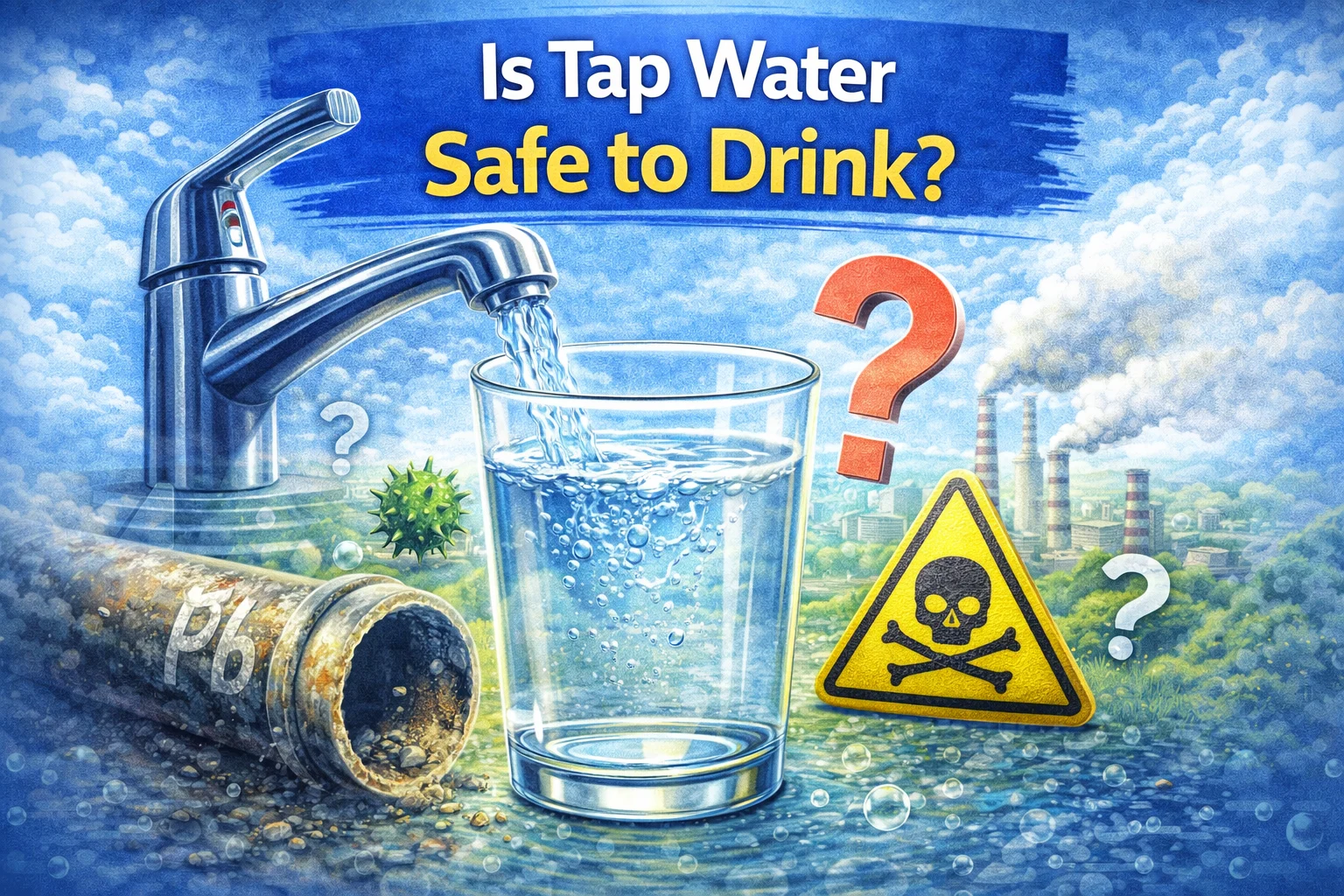

Tap water is one of the most common sources of drinking water worldwide. While it is treated and regulated in many regions, concerns about safety, taste, and contaminants still exist. This guide explains whether tap water is safe to drink and how you can ensure its quality.
What Is Tap Water?
Tap water is water supplied through public systems to homes and buildings. It is usually treated to remove contaminants and disinfected to kill harmful microorganisms.
Is Tap Water Safe to Drink?
In many developed regions, tap water is safe and meets regulatory standards. However, factors like aging pipes, contamination, or poor infrastructure can affect safety.
- Safe in regulated systems
- May vary by location
- Can be affected by plumbing
Common Contaminants in Tap Water
1. Chlorine and Chloramine
Used for disinfection but may affect taste and smell.
2. Heavy Metals
Lead, copper, and arsenic can enter water from pipes.
3. Bacteria and Microorganisms
Possible in poorly treated or contaminated systems.
4. Sediments and Rust
Often caused by old plumbing systems.
Tap Water vs Filtered Water
| Type | Purity | Taste |
|---|---|---|
| Tap Water | Moderate | May vary |
| Filtered Water | High | Better |
How to Make Tap Water Safer
1. Use Water Filters
Filters like activated carbon or RO systems improve quality.
2. Boil Water
Boiling removes bacteria and microorganisms.
3. Test Water Quality
Use home kits or lab testing to identify contaminants.
4. Maintain Plumbing
Replace old pipes to prevent contamination.
When Should You Avoid Tap Water?
- During contamination alerts
- If water smells or tastes unusual
- In areas with poor infrastructure
- If test results show contamination
FAQs
Is tap water safe everywhere?
No, safety depends on local water treatment and infrastructure.
Should I filter tap water?
Filtering improves taste and removes contaminants.
Is boiling tap water enough?
Boiling kills microbes but does not remove chemicals.
Can tap water make you sick?
If contaminated, it can cause health issues.
Conclusion
Tap water is generally safe in many regions, but its quality depends on various factors. Testing, filtering, and proper maintenance can help ensure safe and clean drinking water for your household.
