Updated on | Hydration & Functional Drinks
 sparkling water with bubbles” />
What Is Caffeinated Sparkling Water?
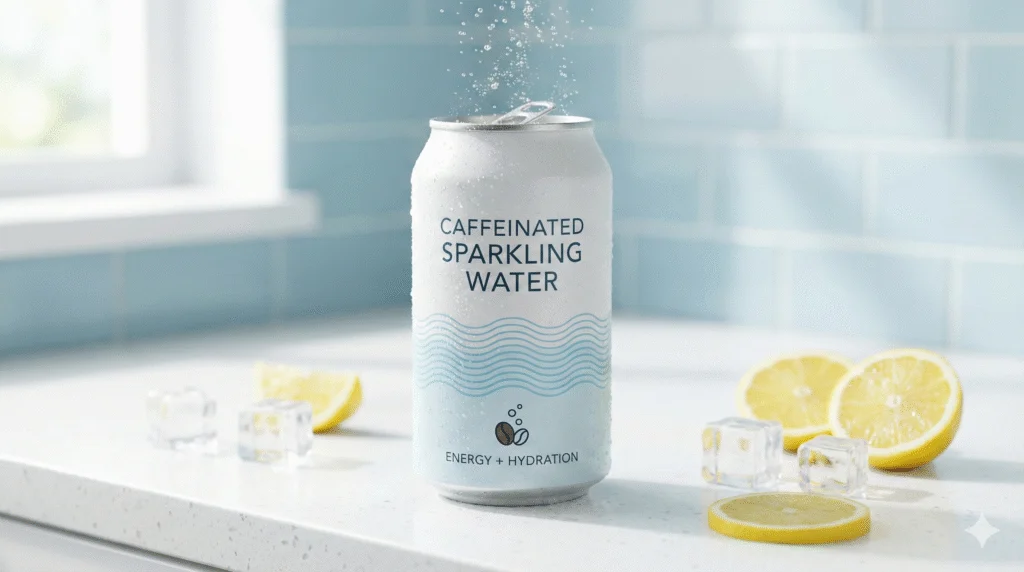
Caffeinated sparkling water is a refreshing drink combining carbonated water, natural flavors, and added caffeine. It creates a fizzy, flavorful beverage that offers a gentle energy boost without the sugar, dyes, or high caffeine levels found in sodas or energy drinks.
Over the past few years, this category has exploded in popularity because consumers want something lighter than coffee but cleaner than energy drinks. Brands market it as a functional hydration beverage meaning it hydrates like water but also boosts alertness.
- Usually 0 calories
- No sugar or artificial dyes
- 30–75 mg caffeine for steady energy
- Comes in fruity, citrus, berry, and botanical flavors
How Is Caffeinated Sparkling Water Made?
The process is surprisingly simple, but quality varies by brand. Most companies use:
- Purified water — filtered through reverse osmosis or carbon filtration.
- Carbonation — CO₂ gas is infused under pressure to create bubbles.
- Caffeine source — either synthetic caffeine or natural sources like green tea, yerba mate, or guayusa.
- Natural flavors — fruit oils, citrus extracts, or botanical essences.
- Optional electrolytes — for hydration and taste enhancement.
High-quality brands avoid preservatives and artificial flavorings. Budget brands may use artificial sweeteners to improve taste always read the label if you want a “clean” ingredient profile.
Benefits of Caffeinated Sparkling Water
1. A Cleaner Energy Boost
You get caffeine without the sugar crash. Compared to sodas (40–60g sugar) and energy drinks with 150–200 mg caffeine, this is a smoother, lighter option.
2. Helps Increase Water Intake
People who dislike plain water often drink more when carbonation is included. This helps with hydration, digestion, and mental clarity.
3. Zero Calories
Great for weight management and for replacing sugary beverages. Replacing just one soda daily can save 30,000+ calories per year.
4. Less Acidic Than Coffee or Soda
People sensitive to acidic drinks may tolerate caffeinated sparkling water better.
5. No Artificial Colors or Heavy Additives
Most brands pride themselves on clean-label ingredients a big plus for health-conscious consumers.
6. Convenient for On-the-Go Energy
Light, refreshing, and easy to drink during work, travel, workouts, or creative work sessions.
Potential Downsides
- Bloating or gas: Carbonation can cause belching or stomach pressure.
- Caffeine sensitivity: Can cause jitters, anxiety, or sleep issues if consumed late.
- Artificial sweeteners (in some brands): May cause digestive discomfort.
- Not ideal for kids or pregnant women: Due to caffeine content.
- Dental concerns: Carbonation makes water mildly acidic not harmful alone, but avoid sipping all day.
Is Caffeinated Sparkling Water Healthy?
Yes, for most adults, caffeinated sparkling water is considered a safe and healthy beverage choice when consumed in moderation. It is far healthier than sodas and significantly cleaner than energy drinks. The main health considerations relate to caffeine intake and carbonation tolerance.
According to FDA guidelines, healthy adults can consume up to 400 mg caffeine per day. One can of caffeinated sparkling water typically provides only 30–75 mg, making it a low to moderate caffeine source.
Caffeine Content vs Other Drinks
| Drink | Caffeine (Average) |
|---|---|
| Caffeinated Sparkling Water | 30–75 mg |
| Coffee (8 oz) | 90–120 mg |
| Black Tea (8 oz) | 40–60 mg |
| Energy Drink (12–16 oz) | 120–200 mg |
Common Ingredients in Caffeinated Sparkling Water
- Carbonated water
- Caffeine — natural or synthetic
- Natural fruit flavors
- Botanical extracts (e.g., mint, hibiscus, basil)
- Electrolytes such as magnesium, potassium
- Citrus acid to enhance brightness
- Sweeteners (only in some brands)
Popular Caffeinated Sparkling Water Brands
Each brand approaches flavor, caffeine levels, and ingredients differently. Here are top options:
- AHA Caffeinated — 30 mg caffeine, minimal flavors.
- Phocus — 75 mg caffeine, tea-based extract, very clean taste.
- Bubly Bounce — 35 mg caffeine with simple fruit flavors.
- Hint Caffeine Kick — zero bubbles but flavored caffeinated water.
- Yerbae — plant-based caffeine (yerba mate, white tea).
- Vita Coco Energy Water — coconut water + caffeine combo.
If you prefer a clean-label drink, Phocus and AHA are excellent choices. If you want plant energy, Yerbae is appealing.
Who Should Avoid Caffeinated Sparkling Water?
- Children and teens
- Pregnant or breastfeeding women (consult doctor)
- People with caffeine sensitivity
- Those with acid reflux (carbonation may trigger symptoms)
- Individuals with IBS or digestive issues
Best Times to Drink It
- Morning — a lighter alternative to coffee.
- Afternoon slump — replaces soda without sugar.
- Pre-workout — provides mild energy without heaviness.
- During work — keeps you alert and hydrated.
- As a mixer — healthier choice for cocktails.
FAQs
Is caffeinated sparkling water safe?
Yes, it’s safe for most adults when consumed in moderation.
Does it hydrate you?
Yes. The caffeine amount is not high enough to dehydrate you.
Can kids drink caffeinated sparkling water?
Not recommended due to caffeine intake.
Is it healthier than energy drinks?
Definitely. It contains no sugar, fewer chemicals, and lower caffeine.
Can it replace coffee?
Yes for light caffeine users; heavy coffee drinkers may need more caffeine.
Will carbonation harm my teeth?
Mildly acidic but not harmful unless you sip all day. Drink with meals or in one sitting.
![Is Lemon Water Good for You? [Benefits, Risks & Tips]](https://completewaterguide.com/wp-content/uploads/2025/09/8-768x416.webp)