
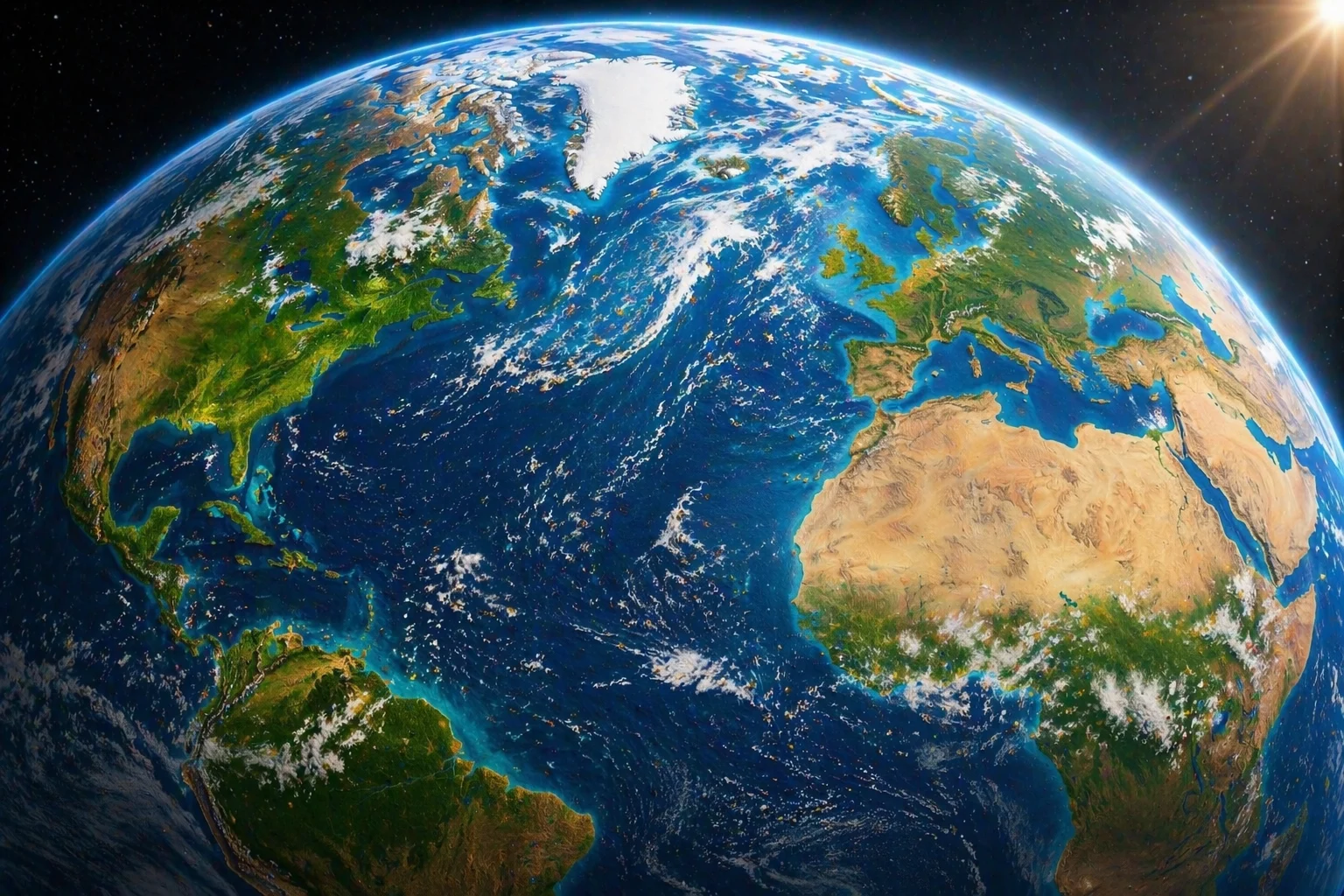

Water covers most of our planet, but how much of it is actually available for use? The numbers might surprise you. While Earth is often called the “blue planet,” only a small percentage of its water is safe and accessible for human consumption.
How Much Water Is on Earth?
Earth contains approximately 1.386 billion cubic kilometers of water. This includes water in oceans, rivers, lakes, glaciers, and underground sources.
Where Is Earth’s Water Located?
| Water Source | Percentage |
|---|---|
| Oceans (saltwater) | ~97% |
| Glaciers & ice caps | ~2% |
| Groundwater | ~0.5% |
| Rivers & lakes | ~0.01% |
Why Is So Little Water Usable?
- Most water is salty and not suitable for drinking
- Freshwater is locked in glaciers and ice caps
- Some water is deep underground and hard to access
Surprising Facts About Earth’s Water
- Less than 1% of water is available for human use
- Water on Earth is constantly recycled through the water cycle
- The amount of water on Earth has remained nearly constant for billions of years
- A large portion of freshwater is frozen in polar ice
Why Water Conservation Matters
Since usable freshwater is limited, conserving water is essential for sustainability, agriculture, and human survival.
Simple Ways to Save Water
- Fix leaks in pipes and faucets
- Use water-efficient appliances
- Avoid unnecessary water wastage
- Reuse water where possible
FAQs
What percentage of Earth is water?
About 71% of Earth’s surface is covered with water.
How much freshwater is available?
Only about 2.5%, with less than 1% usable.
Why can’t we use ocean water?
Because it contains high salt levels.
Is Earth running out of water?
No, but usable freshwater is limited.
Conclusion
Although water covers most of our planet, only a small fraction is available for human use. Understanding how water is distributed helps us appreciate its value and the importance of conserving it for future generations.
